What Happens If a Himalayan’s Nose Fold Stays Damp
It’s a scenario familiar to any Himalayan cat parent: you snuggle with your beloved furball, and you notice a distinct dampness, perhaps even a slight odor, coming from that adorable, often deep, fold right above their nose. This isn't just a minor cosmetic issue; a perpetually damp nose fold can quickly escalate into uncomfortable and even painful problems for your sweet companion. This guide will walk you through exactly what happens when that sensitive area stays wet, why it's such a common challenge for Himalayans, and how you can prevent and treat the resulting complications.
The Unique Challenge of the Himalayan Face
Himalayan cats are renowned for their luxurious coats and striking blue eyes, but their distinctive "flat" or "peke" face, while charming, comes with specific care requirements. Their brachycephalic (short-nosed) skull structure means they often have prominent skin folds around their nose and eyes, which are simply adorable but create perfect little pockets for moisture and debris.
Anatomy That Encourages Dampness
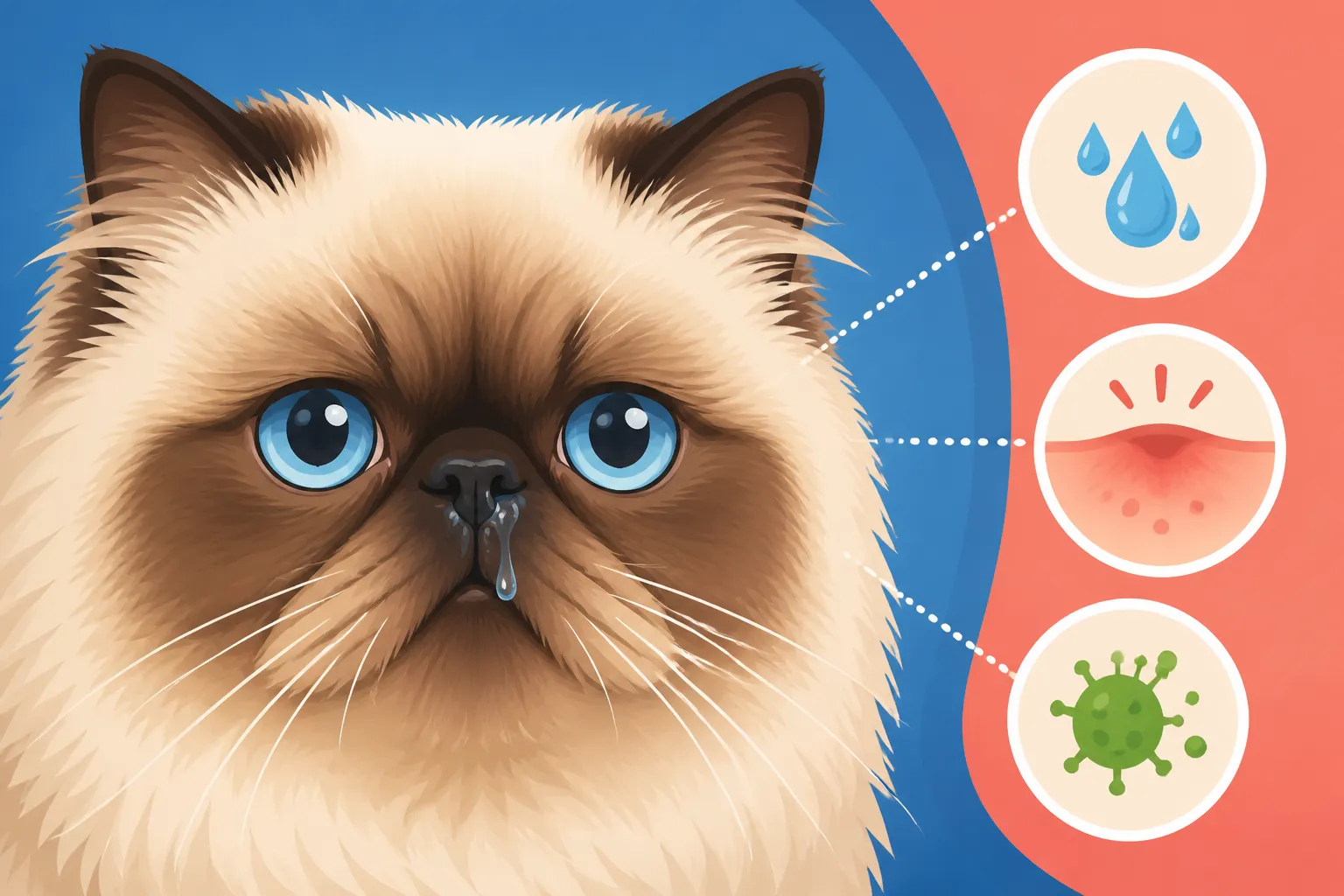
Unlike cats with longer muzzles, the Himalayan's facial structure means their tear ducts often don't drain efficiently. Instead of tears flowing neatly away, they frequently spill over onto the fur and into the skin folds. This constant, gentle trickle of moisture is the primary culprit behind a damp nose fold. It’s not just tears, either; even something as simple as drinking water can leave that area wet. We love their squishy faces, but we have to be realistic about the consequences of that unique conformation. It's a key reason why a Himalayan's eyes water all day.
The Role of Tear Stains and Pigmentation
You might also notice unsightly dark reddish-brown streaks, known as tear stains, accompanying the dampness. These stains are caused by porphyrins, iron-containing molecules excreted in tears, which oxidize and darken upon exposure to light and air. On a light-colored Himalayan, especially a cream-bodied one, these stains become incredibly prominent and can be particularly frustrating. Not only do they look less than pristine, but the constant presence of tears also maintains that damp, hospitable environment for problems to brew right in the nose fold. It's a constant battle, and one that requires vigilance.
The Slippery Slope to Skin Problems
When a Himalayan's nose fold stays damp, it creates a warm, moist, and often dark environment. This is pretty much the perfect breeding ground for a host of unwelcome guests, transforming a simple damp patch into a full-blown dermatological nightmare.
Bacterial and Yeast Infections
The skin is a natural barrier, but prolonged moisture breaks it down, making it vulnerable. Bacteria and yeast, which are normally present on the skin in harmless numbers, seize this opportunity. Suddenly, they find themselves in an ideal growth environment, leading to an overgrowth that causes infection. You might start to notice redness, irritation, and most tellingly, a foul odor emanating from the area. This smell is often the first real sign for many owners that something more serious is going on than just a bit of wetness.
The most common culprit is a yeast called Malassezia, which thrives in damp skin folds. Bacterial infections, often Staphylococcus, can quickly follow, leading to secondary complications. These infections are not just smelly; they can be incredibly itchy and painful for your cat, making them rub their face, which only exacerbates the problem. This can be a vicious cycle, where the irritation causes more tearing, which causes more dampness, and so on.
Fold Dermatitis and Ulceration
The constant dampness, combined with the friction of the skin fold rubbing against itself, can lead to a condition called skin fold dermatitis. This is essentially inflammation of the skin within the fold. Over time, if left unchecked, this inflammation can become severe, leading to raw, ulcerated skin. Imagine having a persistent, open sore on your face that never gets a chance to dry out or heal. That's what your Himalayan could be experiencing.
In severe cases, the skin can even break down entirely, exposing deeper tissues to infection. This is incredibly painful and will require immediate veterinary attention, often involving antibiotics, antifungals, and sometimes even pain management. The earlier you intervene, the better.
Here’s a quick overview of how persistent dampness can manifest:
| Condition | Key Symptoms | Appearance | Urgency (Vet Visit) |
|---|---|---|---|
| Simple Dampness | Wet fur, mild tear staining | Wet, possibly discolored fur | Low (Daily Care) |
| Odor/Discoloration | Foul smell, increased dark staining | Brown/red/black discharge, dull coat in fold | Moderate |
| Mild Irritation | Redness, slight swelling, increased rubbing | Pink or red skin, slightly swollen folds | Moderate |
| Yeast Infection | Greasy texture, strong yeasty smell, itchiness | Dark, waxy discharge; inflamed skin | High |
| Bacterial Infection | Pustules, crusting, severe redness, pain on touch | Yellow/green discharge, scabs, raw patches | High |
| Skin Fold Dermatitis | Deep redness, swelling, hair loss in fold, pain | Thickened, raw, weeping skin; open sores | High |
| Ulceration | Open sores, bleeding, severe pain | Deep, bleeding lesions; loss of skin integrity | Urgent |
Proactive Strategies for a Dry and Healthy Nose Fold
Preventing issues in your Himalayan's nose fold is far easier and more comfortable for everyone than treating them. It takes a consistent routine, but it's absolutely worth the effort to keep your cat happy and healthy.
The Daily Face Routine
The absolute cornerstone of prevention is a consistent, daily face cleaning routine. This isn't optional; it's vital for a brachycephalic breed like the Himalayan. Every morning, you should gently wipe the area around your cat's eyes and nose.
Start by using a soft, damp cloth or a specialized pet wipe. Many owners find success with products designed specifically to be safe around feline eyes, free from harsh chemicals or perfumes. Brands like Eye Envy or Angels’ Eyes Wipes are popular choices, but even plain warm water on a soft cotton pad can make a huge difference. The key is consistency. Gently clean away any discharge or dampness from the tear tracks and deep within the nose fold. You'll be amazed at how much gunk can accumulate overnight. This is part of the morning face routine every Himalayan needs.
Once cleaned, it's crucial to thoroughly dry the area. Dampness, even after cleaning, defeats the purpose. Use a clean, dry cotton ball or a soft, absorbent cloth to gently pat the fold until it's completely dry. Some owners even use a small, soft makeup brush with a tiny amount of cornstarch (ensure it's pure cornstarch, not talc-based baby powder) to help absorb any residual moisture and create a dry barrier, though always consult your vet before applying any powders, as some can cause irritation or respiratory issues. Taking the time to properly dry a Himalayan's nose fold so it does not sour is paramount.
Environmental and Dietary Adjustments
Sometimes, a damp nose fold isn't just about cleaning; it's about managing the environment and even their diet.
- Elevated Food and Water Bowls: Himalayan cats, with their flat faces, can struggle to eat and drink cleanly from standard bowls. They often end up pushing their face deep into the bowl, getting their nose folds wet. Elevated bowls or shallow, wide dishes can help them eat and drink without submerging their faces. Stainless steel or ceramic bowls are also easier to keep clean than plastic, which can harbor bacteria.
- Water Fountains: Some Himalayans benefit from pet water fountains, as the moving water encourages them to drink more, which is good for overall health, and some designs allow for cleaner drinking habits.
- Dietary Considerations: Certain ingredients in food can sometimes contribute to increased tearing or alter tear composition, potentially making staining worse. While this varies greatly from cat to cat, discussing your cat's diet with your vet could be beneficial if tear stains are particularly stubborn. Identifying which foods darken a Himalayan's tear tracks might involve some trial and error, always under veterinary guidance.
When to Bring in the Professionals
Despite your best efforts, sometimes problems in the nose fold can still arise or become too severe to manage at home. Knowing when to call your veterinarian is crucial for your cat’s comfort and health.
Recognizing Signs of Infection or Severe Irritation
You know your cat best, so pay close attention to any changes in their face or behavior. Here are some red flags that warrant a vet visit:
- Persistent Redness or Swelling: If the skin fold remains red and inflamed even after consistent cleaning, it's time to see the vet.
- Foul Odor: A strong, yeasty, or putrid smell is a definitive sign of bacterial or yeast overgrowth. This isn't just a bit of normal cat scent; it’s usually quite noticeable and unpleasant.
- Discharge: Any thick, colored discharge (yellow, green, dark brown, waxy) is a clear indication of infection.
- Pain or Discomfort: If your cat flinches when you touch their nose fold, rubs their face excessively, or seems generally irritable, they are likely in pain.
- Hair Loss or Lesions: Bald patches, scabs, crusts, or open sores within the fold are serious and need immediate veterinary care. This could point to a severe case of fold dermatitis.
Don't wait until the situation is critical. Telling ordinary Himalayan tear staining from an infection can be tricky, but if you're ever in doubt, a vet visit is always the safest bet. Early intervention can prevent a mild infection from becoming a complicated and painful problem.
Veterinary Treatments and Long-Term Solutions
When you visit the vet for a damp nose fold issue, they will likely perform a thorough examination, which may include taking a swab of the affected area for cytology (examining cells under a microscope) and possibly a culture to identify the specific bacteria or yeast involved.
Treatment often includes:
- Topical Medications: These might be antibiotic or antifungal creams, ointments, or medicated wipes applied directly to the fold.
- Systemic Medications: For more severe infections, oral antibiotics or antifungals may be prescribed.
- Anti-inflammatory Medications: To reduce pain and swelling, your vet might prescribe a short course of anti-inflammatories.
- Specialized Cleansers: Your vet might recommend specific medicated washes to use as part of your daily routine to keep the infection at bay.
- Surgical Intervention (Dermatoplasty): In very severe, chronic cases where the fold is excessively deep and causes recurrent, untreatable infections and pain, surgery might be considered. This procedure, called dermatoplasty, involves removing the excess skin fold to create a flatter, more open area that can be kept clean and dry more easily. This is a last resort, but it can dramatically improve a cat's quality of life.
Managing recurring or severe nose fold issues can involve ongoing veterinary care, and the costs can add up. This is where having pet insurance can be incredibly helpful. A comprehensive plan, such as those offered by Healthy Paws, can significantly alleviate the financial burden of diagnostics, medications, and even potential surgical procedures. It allows you to prioritize your cat's health without worrying about every single bill. Knowing you have that safety net can provide immense peace of mind. Discussing your options with providers like Healthy Paws before problems arise is always a smart move for any Himalayan owner.
Living Comfortably with a Himalayan's Unique Face
Caring for a Himalayan cat means embracing their unique characteristics, and that adorable flat face requires a little extra tender loving care. It's a commitment, but one that is repaid tenfold by their sweet nature and undeniable charm. By understanding why their nose folds get damp, recognizing the potential pitfalls of prolonged moisture, and implementing a consistent preventative routine, you can ensure your beloved Himalayan enjoys a comfortable, healthy life, free from the discomfort of skin fold dermatitis. Your diligence now means a happier, healthier, and certainly sweeter-smelling cat for years to come.
Disclaimer
This article is intended for informational purposes only and does not constitute medical advice. Always consult with a qualified veterinarian for any health concerns or before making any decisions about your pet's health or treatment plan.