Whether the Siamese Half Left a Himalayan Trainable
Many prospective Himalayan cat parents wonder if these stunning felines are as aloof as some long-haired breeds or if their vivacious Siamese heritage shines through in their personality and willingness to learn. It's a valid concern, as training a cat can feel like a daunting task, especially when you're used to the more obvious eagerness of a dog. This guide will explore just how trainable your Himalayan can be, blending the best (and sometimes most challenging) aspects of its parent breeds.
The Siamese Spark: Inherited Intelligence and Curiosity
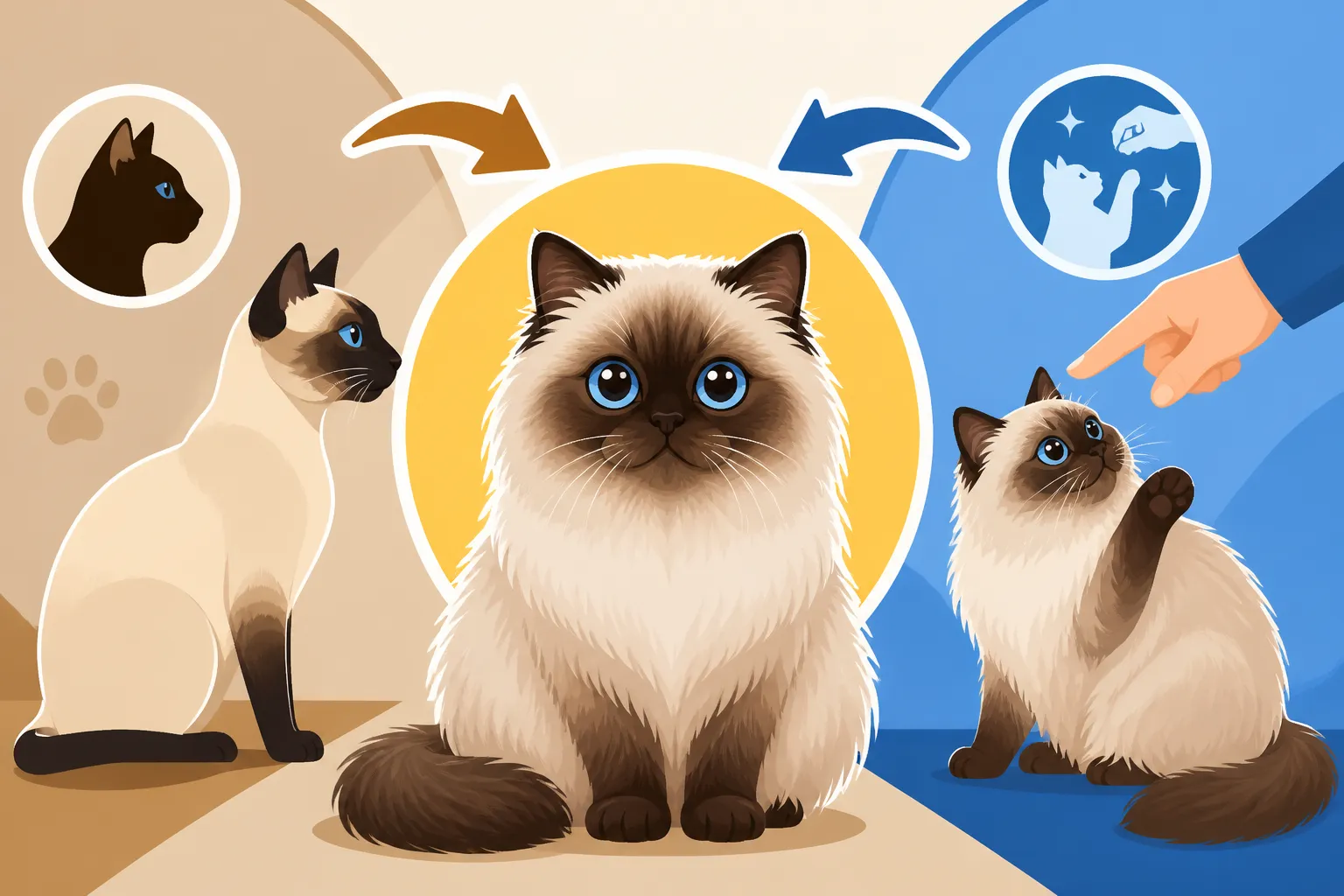
When you look at a Himalayan, you immediately see the plush Persian coat and the round, sweet face. But underneath all that fluff, there's a definite spark from their Siamese ancestors. This isn't just about their striking blue eyes and color points; it's deeply woven into their very character, influencing their intelligence and curiosity, which are foundational for trainability.
Beyond the Lap Cat Image: A Mind at Work
It’s easy to dismiss a Himalayan as merely a beautiful, decorative lap cat, content to snooze away the day. And yes, they absolutely excel at being a furry, warm weight on your sofa! However, anyone who has truly lived with a Himalayan knows there's a keen mind at work behind those captivating blue eyes. They observe everything, sometimes with an almost unnerving intensity. They're processing, learning patterns, and understanding routines. This observational intelligence, inherited from the Siamese, means they're not just passively experiencing their world; they're actively engaging with it on a cognitive level. They figure out how doors open, where treats are hidden, and what sounds bring you running. This active problem-solving is a huge asset when it comes to training, because it means they are capable of making connections between actions and consequences. They might not jump through hoops on command, but they can certainly learn that a certain action leads to a desired reward.
The Vocal Communicator: Using Sound for Interaction
One of the most defining traits of the Siamese is their vocal prowess, and while the Himalayan generally comes with the volume turned down a notch compared to its Siamese cousins, they absolutely retained that communicative streak. You might not get the full-throated, demanding yowls of a purebred Siamese, but a Himalayan will certainly "talk" to you. They use a range of chirps, trills, and soft meows to express their desires, complaints, and even just to acknowledge your presence. This vocal nature is a powerful tool in their trainability. They aren't silent observers; they engage audibly. When you're trying to teach a command, their responsiveness to your voice and their own vocalizations can become a two-way street for communication. They learn to associate specific sounds or words from you with actions, and their own sounds can be an indicator of their understanding or their needs during a training session. For instance, a persistent meow might mean "I want that treat now!" or "I'm bored, move on!" Understanding this nuanced communication is key to successful training. Indeed, you'll find that The Himalayan Kept the Siamese Voice and Lost the Volume in a very specific way, making them delightful conversationalists without being overwhelming.
Play Drive and Problem Solving
While a Himalayan might not have the boundless energy of a Siamese, they certainly possess a healthy play drive, which is another crucial ingredient for trainability. They enjoy interactive play, especially games that challenge their minds. Wand toys that mimic prey, laser pointers that engage their hunting instincts, and even simple crumpled paper balls can ignite their inner hunter. This isn't just about physical exertion; it's about mental engagement. They strategize, stalk, and pounce. Their inherited playfulness makes them receptive to games that involve learning. If a "trick" feels like a fun game to them, they're much more likely to participate. You can channel this play drive into teaching them to fetch a specific toy (though don't expect it every time!), or to navigate a simple agility course built from household items. The key is to make training feel like an extension of their natural inclination to play and explore. Understanding Which Toys Get a Himalayan Off the Sofa can certainly help you leverage this aspect of their personality for positive interactions and even training.
Persian Calm: The Counterbalance to Trainability
While the Siamese bloodline brings intelligence and curiosity, the dominant Persian heritage instills a sense of calm and a love for routine that can both help and hinder training efforts. It's a delicate balance, and understanding this blend is vital for successful interactions with your Himalayan.
Patience is a Virtue: A Slower Pace to Learning
Unlike some breeds that pick up tricks with lightning speed, the Himalayan often approaches learning at a more leisurely, thoughtful pace, much like their Persian ancestors. This isn't a sign of lower intelligence, but rather a characteristic preference for comfort and predictability. They're not typically eager to impress or perform on a whim. Training sessions need to be short, sweet, and consistent. Expecting instant results or pushing them too hard will likely lead to disinterest and a quick retreat to their favorite napping spot. You'll need to cultivate a deep well of patience, celebrating small victories and being prepared for days when they simply aren't in the mood. Their placid nature means they generally tolerate gentle handling well, which is invaluable for essential care like grooming, but it also means they need a calm, patient trainer who respects their serene demeanor. You'll often find that How a Himalayan Divides Its Day Between Sleep and Lap gives you plenty of windows for these calm, short training sessions.
Comfort and Consistency: Key to Success
Himalayans thrive on routine and comfort. They are creatures of habit, appreciating a predictable environment and knowing what to expect from their day. This trait, directly from their Persian side, can be a huge advantage in training. Once they understand a routine or a command, they are usually very consistent in performing it, provided the reward is still present and the context is familiar. Introducing new elements or changing the routine drastically can be unsettling for them, making training more challenging. The best approach is to incorporate training into their existing daily schedule. For example, practicing a "sit" before mealtime, or a "stay" before you open the door for a favorite playtime. By making training a comfortable, consistent part of their day, you harness their innate love for routine. This also means choosing a quiet, familiar training space where they feel secure and can focus without distractions.
The "What's In It For Me?" Attitude
Let's be honest, cats, in general, are master negotiators, and the Himalayan is no exception. They are highly motivated by rewards, but often on their own terms. Unlike a dog who might work for praise alone, a Himalayan's Persian influence means they're very much asking "What's in it for me?" before they commit to an action. High-value treats are usually the gold standard. Think small pieces of cooked chicken, tuna, or specialized soft cat treats. Verbal praise and gentle petting can also be effective, especially if they already associate those with positive feelings, but the tangible reward often seals the deal. This isn't stubbornness; it's simply their pragmatic approach to life. Finding the right motivator for your individual Himalayan is crucial. Some might respond best to a specific type of treat, while others might prefer a few minutes of vigorous play with a favorite wand toy. Once you discover their primary motivator, training becomes a much smoother, more enjoyable process for both of you. It's truly a case of Why Food Is the Only Lever With a Himalayan for many of them.
Practical Training for Your Himalayan
So, you've got this beautiful, fluffy creature with a mix of Siamese smarts and Persian calm. How do you actually go about training them? The approach needs to be tailored to their unique temperament, focusing on positive, consistent, and reward-based methods.
Positive Reinforcement: The Only Way to Go
When it comes to training a Himalayan, or really any cat, positive reinforcement isn't just the best method—it's pretty much the only effective method. These cats do not respond well to punishment, scolding, or harsh corrections. Such approaches will only lead to fear, anxiety, and a complete breakdown of trust, making your Himalayan retreat further into their shell. Instead, we want to celebrate and reward the behaviors we want to see. Did they sit? Great! Treat and praise. Did they use the scratching post instead of the sofa? Fantastic! More treats and praise.
This means being observant and catching them in the act of doing something good. When you consistently reward desirable actions, your Himalayan will quickly make the connection: "When I do X, I get Y (something good)." Over time, they'll be more likely to offer that behavior voluntarily. The rewards don't always have to be food; they can be a favorite toy, a moment of gentle grooming, or even just a happy, high-pitched "Good kitty!" The key is finding what your cat values most and using it immediately after the desired action. Remember, timing is everything. The reward needs to happen within a few seconds of the behavior for them to truly understand why they're being rewarded.
Clicker Training: Bridging the Communication Gap
Clicker training is an incredibly powerful tool for cats, especially intelligent breeds like the Himalayan, because it provides a precise marker for exactly when they performed the desired action. The click sound is neutral, consistent, and can be delivered much faster than a treat or verbal praise.
Here’s how it works:
- Charge the Clicker: Start by simply clicking, then immediately giving your cat a high-value treat. Do this 10-20 times in a short session, several times a day, until your cat associates the click with good things. They might even look at you expectantly after a click!
- Lure and Click: Once they understand the click, you can start luring them into positions. For example, to teach "sit," hold a treat above their head and slowly move it back, encouraging them to look up, which often causes their rear end to lower. The instant their bottom touches the ground, click, then give the treat.
- Add the Verbal Cue: Once they're consistently sitting with the lure and click, start saying "Sit" just before you lure them. Over time, they'll associate the word "sit" with the action.
- Fade the Lure: Gradually reduce your reliance on the lure. Just say "Sit," and if they respond, click and treat. If they don't, go back to using the lure briefly.
You can find excellent cat clickers and treat pouches on platforms like Amazon, making it easy to get started with this rewarding training method. Clicker training helps your Himalayan understand precisely what you're asking, making the learning process clearer and less frustrating for both of you.
Teaching Basic Commands and Tricks
With positive reinforcement and perhaps a clicker, your Himalayan is capable of learning a surprising array of commands and tricks. Remember, consistency and short, positive sessions are key.
Some great starting points include:
- Sit: As described above, luring with a treat.
- Stay: Once they sit, take a tiny step back, say "Stay," and if they hold it for a second, click and treat. Gradually increase distance and duration.
- Come: Call their name and "Come!" while shaking a treat bag or holding a favorite toy. When they approach, click and treat generously. Make it the most rewarding thing they can do. This can be a lifesaver if they ever slip out the door.
- High Five/Paw: Hold a treat in your closed fist. They'll likely try to bat at it with their paw. The instant their paw touches your hand, click and treat. Once consistent, introduce the verbal cue "Paw!" or "High Five!"
- Targeting: Teach them to touch their nose to your finger or a target stick. This can then be used to lead them to new places, into carriers, or onto scales at the vet.
Always keep sessions brief, no more than 5-10 minutes, ending on a positive note, even if it means doing an easy command they already know. This keeps them engaged and eager for the next session.
Litter Box and Scratching Post Success
While many people think of "training" as tricks, the most vital training for any cat owner, especially with a long-haired, indoor breed like the Himalayan, involves appropriate litter box use and scratching habits. These are fundamental for a harmonious household.
- Litter Box Training: Himalayans, like most cats, have an innate drive to bury their waste. The "training" here is often about providing the right conditions. Ensure you have enough litter boxes (rule of thumb: number of cats + 1), in quiet, easily accessible locations. For a cobby, short-legged breed like the Himalayan, a low-sided litter box is crucial. They shouldn't have to climb a tall wall to get in. Keep them impeccably clean, scooping at least twice daily. A dirty box is the number one reason for accidents outside the box. Experiment with different types of litter; some Himalayans can be sensitive to scents or textures. Why a Short Legged Himalayan Needs a Low Sided Box is a post that expands on this important consideration.
- Scratching Post Training: Scratching is a natural, necessary behavior for cats – it sharpens claws, stretches muscles, and marks territory. The goal isn't to stop scratching, but to redirect it to appropriate surfaces. Provide multiple scratching posts of different materials (sisal, cardboard, carpet) and orientations (vertical, horizontal). Place them in prominent areas where your cat likes to lounge or stretch. If they scratch furniture, gently redirect them to a post. Make the post attractive with catnip, toys, or treats. You can also use double-sided sticky tape or motion-activated deterrents on furniture to make it less appealing. Reward them lavishly when you see them using their designated scratching spots.
| Command/Behavior | Method | Motivation | Time Commitment |
|---|---|---|---|
| Sit/Stay | Lure with treat, clicker | High-value treats | 5-10 min/day |
| Come | Call name, shake treat bag, clicker | Treats, favorite toy | 2-3 min/day |
| Paw/High Five | Lure with treat, clicker | Treats, praise | 5 min/day |
| Litter Box Use | Provide appropriate setup, clean | Cleanliness, comfort | Ongoing maintenance |
| Scratching Post | Provide options, redirect | Catnip, treats, praise | Ongoing encouragement |
Managing Expectations: Understanding Himalayan Motivation
It's easy to get frustrated if your cat isn't learning as quickly as you'd hoped, or if they seem to deliberately ignore you. But remember, a Himalayan isn't a canine companion with thousands of years of working alongside humans in their genetic makeup. Their motivations and learning styles are fundamentally different.
It's Not a Dog: Understanding Feline Learning Styles
The biggest mental shift for many people coming from a dog-owning background is understanding that a cat's approach to learning is driven by instinct, comfort, and personal benefit, not necessarily by a desire to please a human pack leader. While your Himalayan loves you and enjoys your company, their obedience isn't rooted in the same social hierarchy as a dog's. They are independent thinkers.
This means you need to adjust your expectations. Don't expect them to perform on command every single time, especially if they're not in the mood or if the reward isn't appealing enough in that moment. A Himalayan will participate in training if it's fun, rewarding, and doesn't demand too much effort or discomfort. They might learn a trick perfectly in a quiet room, but completely ignore it if there's a loud noise or a stranger present. Their selective hearing isn't defiance; it's just being a cat. Embrace their unique personality, and you'll find the training journey much more enjoyable. It's important to remember Why a Himalayan Watches a Toy Rather Than Chase It sometimes—their level of engagement can be very subtle.
Short Sessions, High Rewards
Because of their relatively low energy levels and their penchant for comfort, Himalayans thrive on very short, highly rewarding training sessions. Trying to force a 20-minute training marathon will likely lead to a bored, grumpy cat who decides to take a nap mid-session. Aim for 5-minute bursts, perhaps two or three times a day.
These short sessions prevent them from getting overwhelmed or losing interest. The "high reward" aspect is equally crucial. What's the absolute best treat or play interaction your Himalayan could ask for? Save that for training. This makes the session something they genuinely look forward to, rather than a chore. Consistency across these short bursts is far more effective than infrequent, long, and frustrating sessions. You might also consider using puzzle feeders as a way to provide mental stimulation and reward without formal training. Which Puzzle Feeder a Himalayan Can Get Its Face Into is a helpful resource for finding suitable options that accommodate their unique facial structure.
Recognizing When Your Himalayan Has Had Enough
Learning to read your Himalayan's subtle body language is paramount to successful training. Cats are masters of subtle cues, and pushing them past their comfort zone will only backfire.
Signs your Himalayan might be done with a training session include:
- Tail Flicking: A rapid, twitching tail can indicate irritation or annoyance.
- Ear Swiveling/Flattening: Ears rotating away from you or flattening against their head signal discomfort.
- Turning Away: Deliberately avoiding eye contact or turning their back on you.
- Yawning: While sometimes a sign of tiredness, it can also be a displacement behavior indicating stress.
- Excessive Grooming: Suddenly starting to groom themselves intently can be a way to self-soothe when stressed.
- Leaving: The most obvious sign – they simply get up and walk away.
When you see any of these signs, it's time to end the session immediately. Don't try to force one more repetition. End on a good note, even if it means asking for an easy command they know well and rewarding them. This teaches them that training is always a positive experience and that their boundaries are respected. A happy, unstressed cat is a trainable cat. It’s about building a partnership, not asserting dominance.
Disclaimer
This article is for general informational purposes only and does not constitute professional advice. Laws, prices and regulations vary by location and change over time. Consult a qualified professional for guidance on your specific situation.