Why an Overweight Himalayan Cannot Clean Its Own Points
It's a heartbreaking sight for any devoted cat parent: seeing your beloved Himalayan, with their magnificent coat and serene demeanor, struggling to reach those crucial grooming spots. You notice tangles forming, especially around their hindquarters or under their chin, areas that should be pristine. The truth is, when a Himalayan carries too much weight, their natural ability to keep themselves clean, especially their beautiful points, becomes severely compromised. This isn't just about aesthetics; it's a real problem that can lead to significant discomfort and health issues for your furry family member. This guide will walk you through why this happens and, more importantly, what you can do to help.
The Unique Physical Challenges of Himalayan Grooming
Even a perfectly healthy Himalayan cat faces a monumental task when it comes to self-grooming. Their breed characteristics, while stunning, inherently make meticulous self-care a daily marathon. When you add extra weight into the equation, what was once a challenge becomes an almost impossible feat.
A Coat Designed for Majesty, Not Maneuverability
Let's start with that glorious coat. Himalayans inherited their long, dense, flowing fur from their Persian ancestors. This isn't just a single layer; it's a thick, luxurious double coat with a soft undercoat that provides insulation and a longer, coarser guard coat that gives it that distinct texture and shine. While absolutely breathtaking to behold, this kind of coat is a magnet for tangles, loose fur, and debris. Imagine trying to comb through thick, fine silk with your elbows tied behind your back – that's a bit like what a Himalayan is up against every day.
For a cat, grooming isn't just about looking good; it's a vital part of their hygiene, skin health, and temperature regulation. They use their tongues, which are covered in tiny, backward-facing barbs, like a natural comb to remove loose hair, dirt, and anything else that might get caught. They contort their bodies into impressive shapes to reach every nook and cranny. But with that voluminous fur, even without extra weight, some areas, like the deep fur on their ruff, britches, and tail, are already tricky. This is why The Daily Comb a Himalayan Cannot Skip is so vital for all Himalayans, regardless of weight.
The Cobby Build and Its Reach Limitations
Beyond the fur, consider the Himalayan's distinctive "cobby" body type. They are compact, heavily boned, and muscular cats with short, sturdy legs. This is part of their charm – that solid, substantial feel you get when you cuddle them. However, this cobby build, combined with a relatively short neck, means they have a natural limitation in their reach and flexibility. They aren't built for the agile contortions you might see from a sleeker, more lithe breed.
When a Himalayan is at a healthy weight, they can still manage to twist and turn enough to mostly keep their coat in order, albeit with daily human assistance being ideal. They can usually reach their back, their hind legs, and their tail reasonably well. Their short legs, however, already make reaching certain spots on their lower belly or under their armpits a stretch. This inherent physical limitation means that any additional bulk from extra weight will immediately reduce their range of motion and make those already difficult areas completely inaccessible. It's a fundamental aspect of their physique that we, as their caregivers, must always be mindful of.
The Vicious Cycle: How Excess Weight Prevents Self-Care
This is where the real trouble starts. An overweight Himalayan isn't just a bit chunky; they're facing a cascade of physical limitations that directly impact their ability to maintain their own hygiene, leading to a host of secondary problems. It’s a classic vicious cycle where one issue feeds another, making things progressively worse.
Impaired Flexibility and Restricted Access
Think about it from your cat's perspective. When they gain weight, the excess fat doesn't just spread evenly; it accumulates in specific areas, often around their abdomen, chest, and flanks. This extra padding literally gets in the way of their natural flexibility. Their spine, which usually allows for quite a bit of twisting and turning, becomes less pliable. Their legs, already short, have to navigate around a larger body circumference.
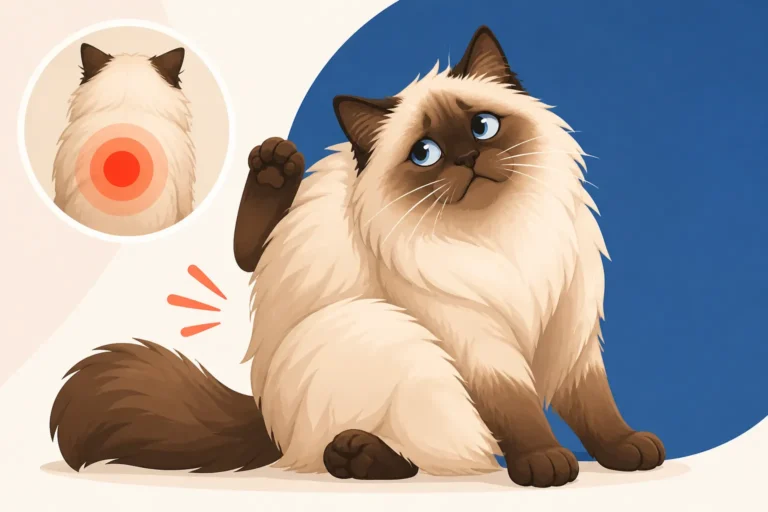
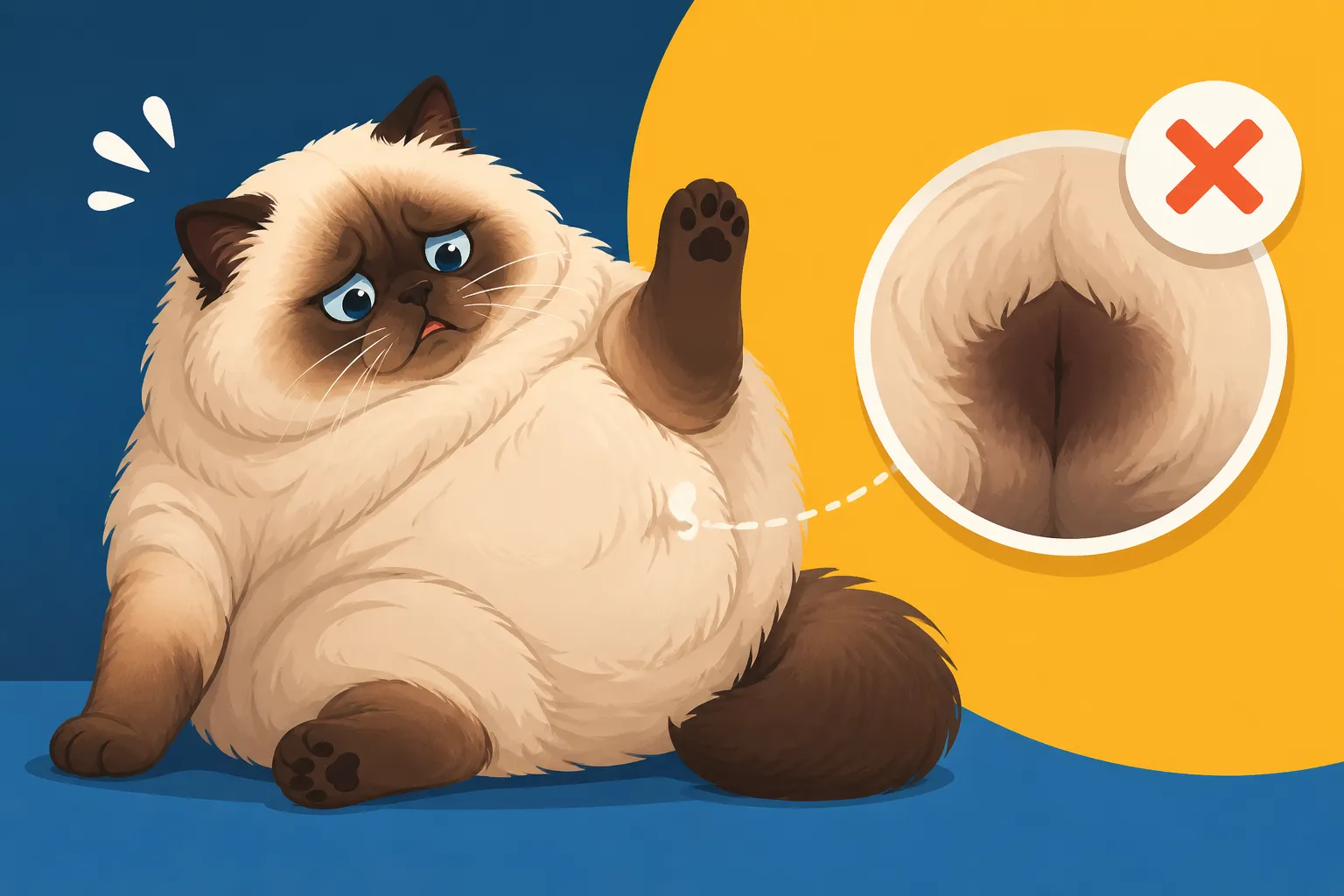
This means they simply cannot bend, stretch, or twist as effectively to reach critical areas. The points, particularly the long fur on their hind legs (their "britches") and tail, become impossible to properly groom. The area around their lower back, under their tail, and even behind their ears can become neglected. It's like trying to touch your toes when wearing a heavy, restrictive coat – the movement just isn't there. We often see owners worried about their Himalayan's weight, and it's certainly a factor in how long a Himalayan lives, but often the immediate consequence is this inability to self-groom. If you're wondering What a Himalayan's Cobby Frame Should Weigh, consulting your vet is always the best first step.
| Grooming Task | Healthy Weight Himalayan | Overweight Himalayan |
|---|---|---|
| Reaching lower back/tail | Possible, though can be difficult | Highly restricted, often impossible |
| Grooming hind legs (britches) | Manageable with effort | Extremely difficult due to limited flex |
| Cleaning under tail/anal area | Generally effective | Often neglected, leading to hygiene issues |
| Maintaining belly fur | Requires some stretching | Nearly impossible due to abdominal fat |
| Grooming armpits/inner legs | Requires good flexibility | Severely limited, high matting risk |
| Full body roll/stretch | Routine action | Compromised or impossible |
The Unseen Dangers of Neglected Coat Health
When grooming stops, or becomes inadequate, the beautiful Himalayan coat quickly turns into a tangled mess. Loose fur, which would normally be removed by the tongue, accumulates and combines with natural oils and shed hair to form mats. These aren't just minor tangles; they can become dense, painful clumps that pull on the skin. Mats can start small, perhaps in the armpits or behind the ears, but in an overweight cat, they often proliferate rapidly in those hard-to-reach areas like the lower back, stomach, and hind legs.
But mats are more than just ugly. They create a perfect breeding ground for skin problems. They trap moisture, dirt, and bacteria close to the skin, leading to irritation, redness, and even painful skin infections (dermatitis). The skin underneath a mat can't breathe, and if left untended, it can become raw, inflamed, and itchy. Your cat might try to scratch at these areas, which only makes the problem worse, potentially breaking the skin and introducing more infection. Sometimes, owners don't realize how severe it is until a vet examination, especially since Why a Himalayan's Coat Hides a Wound for Days. Furthermore, feces and urine can become trapped in the matted fur around their hindquarters, leading to severe hygiene issues, odors, and painful skin scalds. It's a truly miserable experience for the cat, and a clear sign that intervention is desperately needed.
Practical Strategies for Helping an Overweight Himalayan
Seeing your Himalayan struggle with their grooming, especially if their weight is the root cause, can feel overwhelming. But take heart! There are many practical, empathetic steps you can take to help them regain their comfort, hygiene, and overall health. It's a commitment, but one that yields immense rewards in your cat's well-being.
Tailored Nutrition and Portion Management
The cornerstone of helping an overweight Himalayan is addressing their diet. It’s not about starving them, but about providing the right fuel in the right amounts. Many of us are guilty of "free feeding" our cats, leaving a bowl of kibble out all day. While convenient, this often leads to overconsumption, especially in less active breeds like the Himalayan.
Start by switching to fixed, measured meal times. Consult your veterinarian to determine an appropriate daily calorie intake for your cat's ideal weight and activity level. This is crucial because How Many Calories an Adult Himalayan Burns a Day is often less than we imagine, especially for a cat that spends much of its time in a favorite chair. Look for high-quality cat foods that are rich in protein and lower in carbohydrates. Some brands offer specific “weight management” or “indoor cat” formulas. You can explore options on sites like Chewy or Amazon, which offer a wide range of specialized diets. For a more tailored approach, or if you're concerned about ingredients, you might even look into fresh, portion-controlled meal services, always discussing with your vet first to ensure it meets your cat's specific nutritional needs.
Measure every meal precisely. A kitchen scale can be incredibly helpful for accuracy. Consider using puzzle feeders, but choose ones that accommodate a Himalayan's flat face and short jaw. These can slow down eating and provide a bit of mental enrichment and gentle activity. Remember, consistency is key, and any dietary change should be gradual to avoid upsetting your cat's stomach.
Proactive Grooming and Hygiene Support
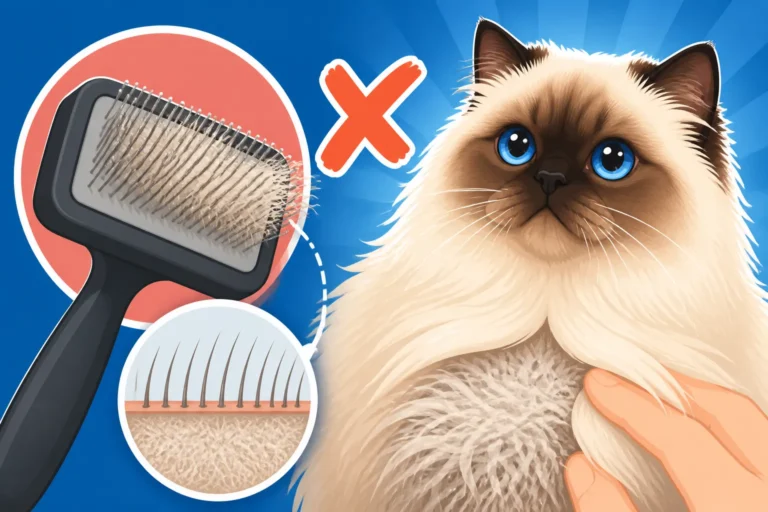
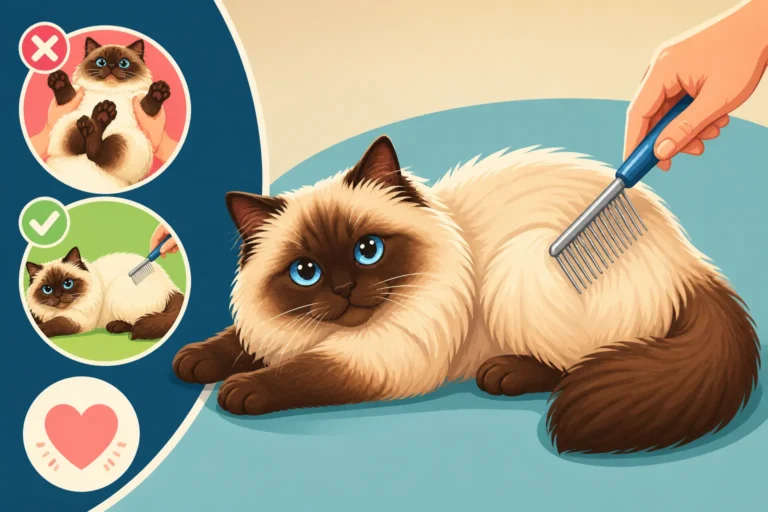
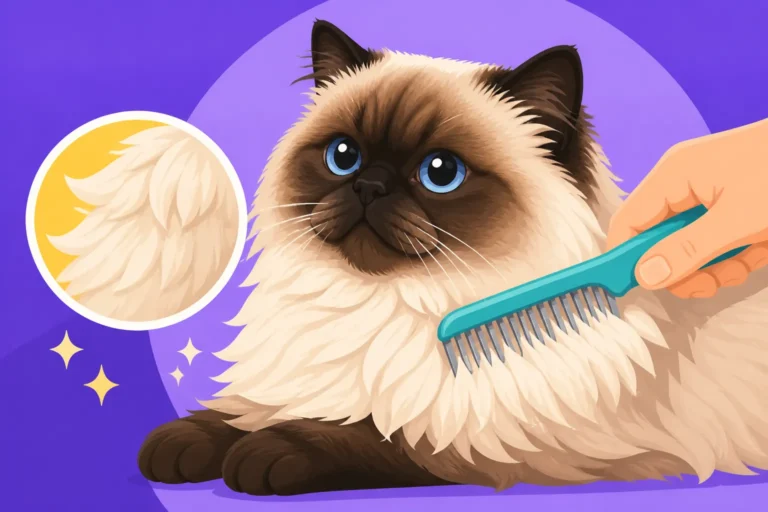
While your Himalayan works on losing weight, they still need to stay clean and comfortable. This means you become their primary groomer, perhaps even more so than before. Daily combing is non-negotiable. Invest in a good quality steel comb with both wide and fine teeth. Focus on those areas your cat can no longer reach: their lower back, britches, belly, and under the tail. Gentle, consistent combing can prevent new mats from forming and help you spot any existing ones early. For particularly stubborn tangles or mats, you might need a mat splitter or a professional groomer. Never try to cut out mats with scissors close to the skin yourself; it’s incredibly easy to cut your cat.
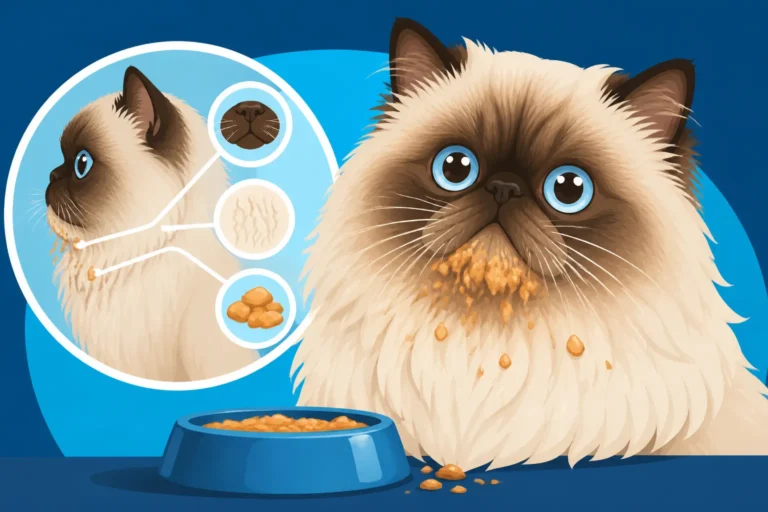
Regularly check and gently clean around their hindquarters, especially after they've used the litter box. Unscented pet wipes or a damp cloth can be used. If their face is also getting messy, which is common for Himalayans, daily wiping is essential. The Morning Face Routine Every Himalayan Needs often extends to cleaning around their chin and mouth, where food can collect due to their flat face, even for cats that aren't overweight. If you notice any redness, soreness, or foul odors, it’s time for a vet visit, as these could indicate a skin infection that needs medical attention. Some owners find specific grooming tools or cleaning solutions on Amazon that are designed for long-haired or flat-faced breeds, which can make the routine easier.
Encouraging Gentle Activity
Weight loss isn't just about diet; it's also about increasing calorie expenditure. However, an overweight Himalayan isn't going to suddenly become a marathon runner. The key is gentle, consistent, and low-impact activity. Start small. Encourage short play sessions with wand toys that don't require too much jumping or strenuous effort. Dragging a feather toy across the floor can engage their hunting instincts without overtaxing their joints.
Consider toys that encourage them to move a little, even if it's just a few steps. Laser pointers can work, but always end with a tangible toy they can "catch" to avoid frustration. If you have stairs, encourage them to walk up and down a couple of times a day, under supervision. Even moving their food bowl to a slightly different location, or making them "hunt" for portions of their kibble hidden around a single room, can add a few extra steps to their day. Remember, the goal isn't to make them into an athlete overnight, but to gradually increase their movement in a way that is comfortable and enjoyable for them. Over time, as they lose weight, you'll notice an improvement in their mobility and enthusiasm for play.
Long-Term Impact and the Importance of Intervention
Ignoring the weight issue in a Himalayan, or letting the grooming challenges go unaddressed, isn't just a temporary inconvenience. It leads to a cascade of long-term health problems and significantly impacts their quality of life. As their devoted caretaker, recognizing this and committing to intervention is one of the most loving things you can do.
Health Consequences Beyond the Coat
While the coat problems are often the most visible and immediate consequence of an overweight Himalayan's inability to groom, the underlying obesity carries a much heavier health burden. Just like in humans, excess weight puts enormous strain on a cat's body. Overweight Himalayans are at a significantly higher risk for:
- Diabetes: The body's ability to regulate blood sugar can become impaired, leading to a lifelong need for insulin injections and specialized care.
- Joint Problems: Their short, cobby legs and heavy frame are not designed to carry extra weight, leading to conditions like arthritis and degenerative joint disease, causing chronic pain and further reducing mobility. You might notice them having trouble getting onto furniture, or even walking stiffly. Sometimes, a subtle limp or hesitation to jump is the first sign, even for a cat that rarely jumps, as How Arthritis Shows in a Himalayan That Never Jumped explains.
- Heart Disease: The cardiovascular system works harder to support the larger body mass.
- Respiratory Issues: Himalayans already have a somewhat compromised respiratory system due to their brachycephalic (flat-faced) skull structure. Excess fat around the neck and chest can exacerbate breathing difficulties, making them more prone to overheating and struggling during even mild exertion. How a Himalayan Is Swabbed for the Persian Kidney Gene is a common health check, but obesity adds another layer of health risk.
- Liver Disease: A condition called feline hepatic lipidosis (fatty liver disease) can occur, especially if an overweight cat suddenly stops eating.
These are serious conditions that can dramatically shorten your Himalayan's lifespan and diminish their happiness. The investment in helping them lose weight now can save you and your cat from years of expensive treatments and discomfort down the road.
A Partnership for Health: Owner and Vet
Successfully navigating weight loss and improved grooming for an overweight Himalayan is truly a team effort. You, as their primary caregiver, are on the front lines, implementing the daily dietary changes and grooming routines. However, your veterinarian is an indispensable partner in this journey.
Regular vet check-ups are paramount. Your vet can accurately assess your cat's current body condition, help you set realistic weight loss goals, and create a safe and effective dietary plan tailored to their individual needs. They can also rule out any underlying medical conditions that might be contributing to weight gain or making weight loss difficult, such as thyroid imbalances. They can also advise on appropriate exercise levels and identify any secondary health issues stemming from poor grooming, like skin infections, and prescribe the necessary treatments.
Don't be afraid to ask for help or express your concerns. Your vet wants what's best for your cat, and they have a wealth of knowledge and resources to support you. Open communication, consistency in your efforts, and a willingness to adapt your approach as your cat progresses will lead to the best possible outcomes. It's a journey, not a destination, but one that will ensure your beautiful Himalayan can once again clean their own points with dignity and enjoy a longer, healthier, and happier life by your side.
Disclaimer
This article is for general informational purposes only and does not constitute professional advice. Laws, prices and regulations vary by location and change over time. Consult a qualified professional for guidance on your specific situation.