Why CFA Changed Its Mind About the Himalayan in 1984
If you've ever owned a beautiful, long-haired Himalayan cat, you might have scratched your head when its official paperwork declared it a "Persian." This disconnect between what you know your cat to be and what a major registry calls it can be incredibly confusing, creating a real headache for owners and a long-standing debate within the cat fancy world. This guide delves into the historical decision made by the Cat Fanciers' Association (CFA) in 1984, explaining exactly why they changed their mind about the Himalayan and what it means for the breed's identity today.
The Himalayan's Ascent: A Breed Forged from Two Beloved Lines
Before we dive into the pivotal year of 1984, it's essential to understand the unique origins and initial journey of the Himalayan cat. This breed wasn't simply 'discovered'; it was a deliberate creation, a testament to genetic curiosity and a love for specific feline traits. It’s no wonder there was so much passion surrounding its recognition.
Early Breeding Efforts and Official Recognition
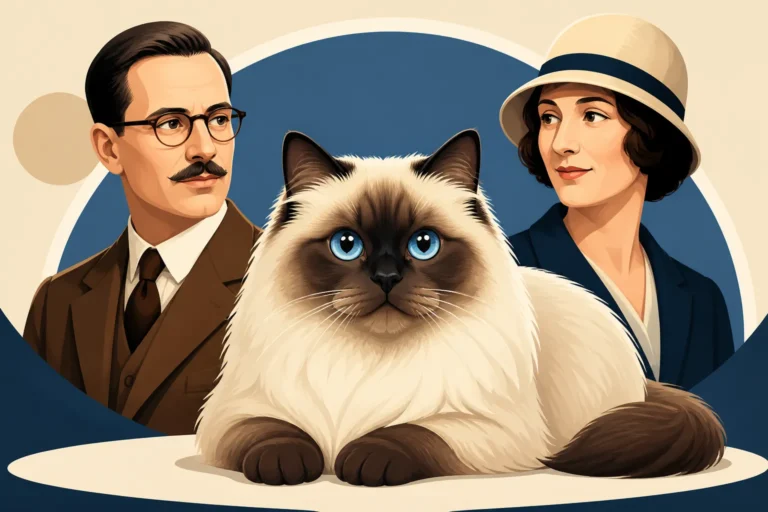
The Himalayan truly emerged from a fascinating scientific endeavor in the 1930s, primarily at Harvard University. Researchers like Clyde Keeler and Virginia Cobb were deeply interested in how genetic traits, particularly colorpoint patterns, were inherited. They embarked on a project to cross Persians, known for their luxurious long coats and docile temperaments, with Siamese cats, famous for their striking blue eyes, vocal personalities, and those distinct point colorations. The goal wasn't initially to create a new breed for show but to understand genetic inheritance.
What they eventually produced, after several generations of selective breeding, was a long-haired cat with the distinctive "points" – darker coloration on the face, ears, paws, and tail – that we associate with the Siamese, but with the plush, dense coat and cobby body of a Persian. This new cat, embodying the best of both worlds, captivated fanciers. Marguerita Goforth, a dedicated breeder, played a crucial role in bringing the Himalayan to prominence in the United States. Through her tireless efforts and strategic breeding programs, the Himalayan gained momentum and was eventually granted official recognition as a distinct breed by the Cat Fanciers' Association in 1957. This was a huge milestone, cementing its place in the feline world as a breed in its own right, separate and celebrated.
Initial Success and Rising Popularity
Once recognized, the Himalayan quickly charmed its way into the hearts of cat lovers and onto the show benches. Its unique combination of the Persian's opulent coat and gentle demeanor, coupled with the Siamese's striking blue eyes and elegant colorpoints, made it an instant sensation. Breeders flocked to the new type, eager to work with its genetics and refine its appearance. In the show ring, Himalayans were judged on their own merit, against a specific standard that outlined their distinct features – the rounded head, full cheeks, small rounded ears, and that glorious, flowing coat with perfectly contrasting points.
The breed became incredibly popular, often seen gracing magazine covers and fetching premium prices. People loved their striking appearance and generally sweet, companionable nature, a little livelier than a typical Persian, but not quite as boisterous as a Siamese. It really felt like a separate entity, distinct from both its parent breeds, even though its origins were clearly tied to them. Its unique visual appeal and the novelty of its "designer" status helped it carve out a significant niche in the cat world, leading to a vibrant and dedicated community of breeders and enthusiasts.
The Evolving Cat Fancy Landscape: A Look at Breed Definitions
The world of cat registries, like the Cat Fanciers' Association, is always balancing tradition with evolving understanding of genetics and breed standards. The definitions aren't static; they shift over time as new information comes to light, or as administrative efficiencies are sought. This is especially true when discussing breeds with hybrid origins, like our beloved Himalayan.
The Concept of Breeds and Divisions
In the world of cat fancy, a "breed" is typically defined by a set of characteristics that are consistently passed down through generations. These include physical traits like coat length, body type, head shape, and temperament, as well as genetic markers. However, within these broad categories, registries often establish "divisions" or "groups." These divisions might distinguish between different color patterns within the same breed (like solid-colored Persians versus pointed ones) or recognize minor variations that don't warrant full separate breed status. The idea is to maintain genetic integrity while allowing for diversity.
For example, a Persian is known for its long coat and brachycephalic (flat) face. Originally, Himalayans were considered separate because they added the colorpoint gene to that Persian base, a trait that came directly from the Siamese. The debate often centers on whether a distinct genetic trait, especially one that requires a cross-breed origin, is enough to warrant completely separate breed status, or if it's merely a "variation" of an existing breed. It's a nuanced discussion, often involving deep dives into pedigrees and genetic science, aiming for clarity and consistency across the board.
The Intermingling of Persian and Himalayan Genetics
One of the undeniable realities that began to influence the CFA's thinking was the continuous and intentional interbreeding between Himalayans and solid-colored Persians. From the very beginning, to maintain the Persian body type, coat quality, and overall conformation, breeders frequently outcrossed Himalayans back to purebred Persians. This was necessary to keep the genetic pool healthy and prevent excessive inbreeding, which can lead to health issues and a loss of desirable traits. In fact, many high-quality Himalayans had recent Persian ancestors on their pedigrees.
This practice meant that many Persians carried the recessive gene for colorpoint, even if they themselves weren't pointed. These were often referred to as "colorpoint carrier Persians." When two such carriers were bred, or a carrier Persian was bred to a Himalayan, a litter could contain both solid-colored Persian kittens and pointed Himalayan kittens. This genetic fluidity, where a "purebred Persian" could produce a "purebred Himalayan" (and vice-versa, if we're talking about breeding back to carrier Persians), started to blur the lines in the minds of some within the cat fancy establishment. If they were so genetically intertwined, how truly separate were they? This was a question that gained more weight as the years went by, leading directly to the conversations that would shape the 1984 decision.
The Pivotal 1984 Decision by CFA: A Controversial Merger
The year 1984 stands out as a landmark moment in the history of the Himalayan cat, marking a significant reclassification by the Cat Fanciers' Association (CFA) that reshaped how the breed was perceived and registered. This wasn't a snap decision but the culmination of years of discussion, debate, and evolving perspectives within the cat fancy world.
The Rationale Behind the Merger
The primary driving force behind the CFA's decision to fold the Himalayan into the Persian breed was rooted in a blend of administrative efficiency, genetic understanding, and a desire for greater consistency within their registry. The argument, at its core, was that the Himalayan was, genetically speaking, a Persian. It possessed the same body type, coat length, head structure, and personality traits as a Persian; the only fundamental difference was the addition of the colorpoint gene, which resulted in the Siamese-like markings and blue eyes.
From CFA's perspective, this made the Himalayan a "color variation" of the Persian, rather than an entirely distinct breed. They argued that if a Persian could carry the colorpoint gene and produce Himalayan kittens, and Himalayans needed to be bred back to Persians to maintain type, then the two were essentially inseparable from a genetic and structural standpoint. Maintaining them as separate breeds created redundancy in standards, judging criteria, and paperwork. Merging them streamlined the process, allowing all long-haired, flat-faced cats to be judged under a single, overarching Persian standard, with Himalayans simply competing in a "Colorpoint Persian" division. This made sense to many administrators and some breeders who prioritized genetic purity of the Persian type above all else. A CFA Himalayan Is a Persian on Its Own Paperwork touches on this complexity.
The Official Classification Change
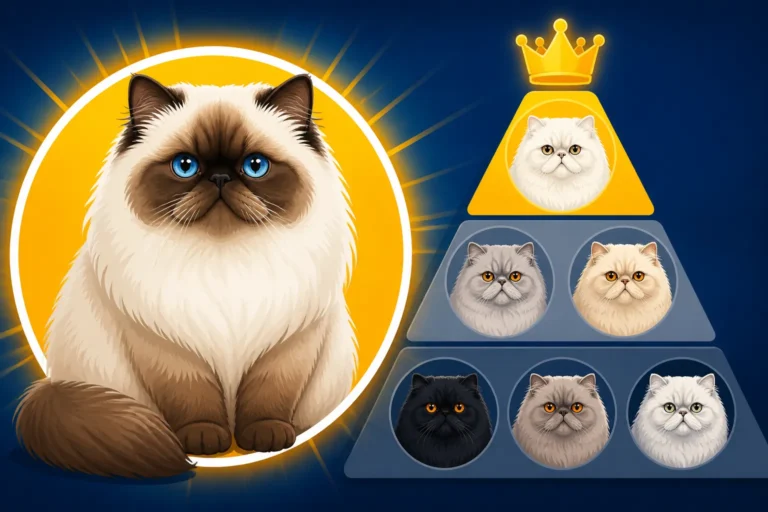
So, in 1984, the CFA officially voted to discontinue separate breed status for the Himalayan. Instead, the Himalayan became known as the "Himalayan Division" within the Persian breed. This meant that any cat previously registered as a Himalayan would now be registered and shown as a Persian (Himalayan Division). This seemingly simple administrative change had profound implications. Suddenly, a cat that had been recognized and celebrated as its own distinct breed for nearly three decades was now considered a variation of another.
This new classification meant that Himalayans would no longer be judged against their own unique breed standard but against the broader Persian standard. While the standard did account for the colorpoint pattern, the emphasis shifted more heavily towards the underlying Persian structure, head type, and coat quality. The decision aimed to bring a unified approach to judging and breeding these long-haired, cobby cats, asserting that the only true difference was the colorpoint gene itself. This move, while logical to some, felt like a demotion and a loss of identity to many dedicated Himalayan breeders and enthusiasts.
Immediate and Long-Term Impacts on the Himalayan Community
The CFA's 1984 decision didn't just alter paperwork; it sent ripples through the entire Himalayan cat community, creating division, fostering alternative approaches, and shaping the breed's identity for decades to come. It was a moment of profound change that many breeders and owners grappled with deeply.
Breeder Reactions and Registry Divergence
The reaction from Himalayan breeders was far from unified. For many who had spent years dedicated to establishing and perfecting the Himalayan as its own breed, the CFA's decision felt like a betrayal. They had worked hard for separate recognition and saw their cats as distinct from solid Persians, emphasizing the unique beauty of the colorpoint pattern and the slightly different temperament that some believed set Himalayans apart. For these breeders, the merger diminished their efforts and the individuality of their cats. Some felt their beloved breed was being erased, effectively turning them into "just another color" of Persian.
This dissatisfaction led many breeders to explore other options. Some chose to leave CFA entirely and register their cats with other associations that still recognized the Himalayan as a separate breed. The International Cat Association (TICA), for example, was founded in 1979 and explicitly chose to maintain the Himalayan as a distinct breed, a decision that offered a haven for breeders who felt disenfranchised by CFA's move. This divergence meant that the Himalayan's identity became split across registries, a situation that still causes confusion for new owners. TICA Still Registers the Himalayan as a Breed of Its Own explains more about this alternative path. This is also why you might find breeders today who are staunchly "Himalayan breeders" versus "Persian (Himalayan Division) breeders."
Changes for Owners and Show Exhibitors
For owners, the most immediate impact was on how their cat's registration papers read and, if they participated in shows, how their cat was judged. Instead of a certificate proudly stating "Himalayan," it would now say "Persian," with "Himalayan Division" or "Colorpoint Persian" noted. While this didn't change the cat curled up on their sofa, it did alter its official lineage and perceived identity within the fancy. Imagine going to the vet and saying your cat is a Himalayan, only for them to look at the paperwork and say, "Oh, it's a Persian!" It's a small thing, but it can be frustrating.
For those who showed their Himalayans, the rules of the game changed significantly. Instead of competing against other Himalayans in a dedicated breed class, they now found themselves vying for titles against all other Persian varieties—solids, bicolors, tabbies, and more—in a single, unified Persian championship. While still judged on type, the nuances specific to the Himalayan (like point clarity and contrast) became part of a larger judging rubric for the overall Persian. This could make it harder for Himalayans to stand out or achieve top honors, as judges were now looking for the best Persian, regardless of colorpoint. It required a shift in strategy for exhibitors and a deeper understanding of the overall Persian standard.
Navigating the Modern Himalayan Identity
Even decades after the 1984 decision, the discussion around the Himalayan's identity persists. For prospective owners, current owners, and breeders alike, understanding the nuances of registration, standards, and community perception is crucial. It’s not just about paperwork; it’s about history, genetics, and the ongoing celebration of these beautiful cats.
What Your Himalayan's Papers Say Now
If you acquire a Himalayan kitten today, especially one from a breeder who registers with the Cat Fanciers' Association (CFA), its official pedigree and registration certificate will almost certainly list it as a "Persian." This can be a bit of a shock if you're expecting the word "Himalayan" to be prominently displayed. However, it will usually specify "Himalayan Division" or "Colorpoint Persian" within the breed designation to denote its specific coloration. It's a key distinction that acknowledges its unique appearance while aligning it with the broader Persian family. For example, a seal point Himalayan might be registered as "Persian, Seal Point Himalayan."
On the other hand, if your breeder registers with The International Cat Association (TICA), your cat's papers will proudly state "Himalayan" as its breed. TICA chose a different path, recognizing the Himalayan as a separate breed, distinct from the Persian. This dual approach means that the actual breed name on your cat's papers largely depends on which registry your breeder uses. It’s vital to discuss this with your breeder beforehand, so you know exactly what kind of documentation to expect. What Your Himalayan's Certificate Actually Says can help you interpret these documents. Regardless of the official wording, your beautiful, blue-eyed, long-haired companion is still the same loving cat, and reputable breeders from both camps are dedicated to their health and well-being.
Sustaining the Himalayan Legacy Today
Despite the administrative changes, the Himalayan has continued to thrive, largely due to the enduring passion of its dedicated breeders and enthusiasts. The legacy of the Himalayan is sustained through careful breeding programs that prioritize health, temperament, and adherence to established standards, whether those standards are for a "Himalayan" breed or a "Persian, Himalayan Division." Breeders continue to work diligently to produce cats with the striking colorpoint pattern, the luxurious long coat, and the sweet, gentle personality that defines the breed.
Many breeders today will even list their cats as "Himalayan (Persian)" or similar phrasing to acknowledge both the common name and the CFA registration reality. When looking for a Himalayan, it's always a good idea to research breeders who are transparent about their registry choices and can explain the implications. They should be able to provide clear health guarantees and pedigrees that trace your kitten's lineage. Regardless of how it's officially categorized, the Himalayan remains a cherished and distinct variety of cat that brings immense joy to countless families. You'll find many resources, like those on Chewy, dedicated to the specific needs of long-haired cats, from grooming tools to specialized food bowls designed for their flat faces.
| Feature | Before 1984 (CFA) | After 1984 (CFA) | TICA (Present Day) |
|---|---|---|---|
| Breed Status | Separate Breed | Division of Persian Breed | Separate Breed |
| Registration Name | Himalayan | Persian (Himalayan Division) | Himalayan |
| Show Class | Himalayan Championship | Persian Championship (Colorpoint) | Himalayan Championship |
| Standard Used | Himalayan Breed Standard | Persian Breed Standard (with Colorpoint notes) | Himalayan Breed Standard |
| Genetic View | Distinct Breed | Color Variation of Persian | Distinct Breed (via hybrid origin) |
The Ongoing Debate and Future Outlook
The debate surrounding the Himalayan's classification is far from over, and it's a topic that comes up regularly in cat fancy circles. Some argue that the CFA's decision, while perhaps administratively tidy, ignores the historical significance and the unique path of development that the Himalayan underwent. They believe that a breed created through such a specific cross and developed over generations deserves its own distinct recognition. These individuals often point to the breed's slightly more active nature compared to a traditional Persian, a whisper of its Siamese ancestry, as another reason for separate status. Many dedicated breeders, whose lives revolve around these cats, are passionate about preserving what they see as a distinct identity.
Conversely, those who support the CFA's current classification emphasize the deep genetic links and the shared physical characteristics with the Persian. They believe that the core "breed" elements—body, head, coat texture—are overwhelmingly Persian, and the colorpoint pattern is simply a gene that can be carried and expressed within that framework. For them, consistency in genetic classification is paramount. The reality is, both perspectives hold valid points, rooted in different philosophies of what constitutes a "breed" versus a "division." What is clear is that the Himalayan, by whatever name, will continue to be a beloved and beautiful feline companion. Whether you get your specialized grooming brushes or specific dietary needs met from a major retailer like Chewy or a local pet shop, the love for these cats transcends their official classification. Whether the Himalayan Will Ever Be a Separate CFA Breed Again is a question many ask.
Ultimately, for the average owner, the administrative distinctions often fade in importance compared to the joy and companionship these cats bring. Knowing the history, however, can deepen your appreciation for your unique feline friend and help you understand why there's sometimes a bit of confusion when you introduce your "Himmie" to the world.
Disclaimer
This article is for general informational purposes only and does not constitute professional advice. Laws, prices and regulations vary by location and change over time. Consult a qualified professional for guidance on your specific situation.