Whether to Choose a Himalayan or a Ragdoll
Choosing between a Himalayan and a Ragdoll can feel like choosing between two beautiful, affectionate longhaired cats—until daily grooming, activity level, and health needs enter the picture. The Himalayan is a Persian-type cat with colorpoint markings; the Ragdoll is generally larger and less flat-faced. This guide compares their everyday care and helps you decide which cat better fits your home and routine.
Himalayan vs Ragdoll at a glance
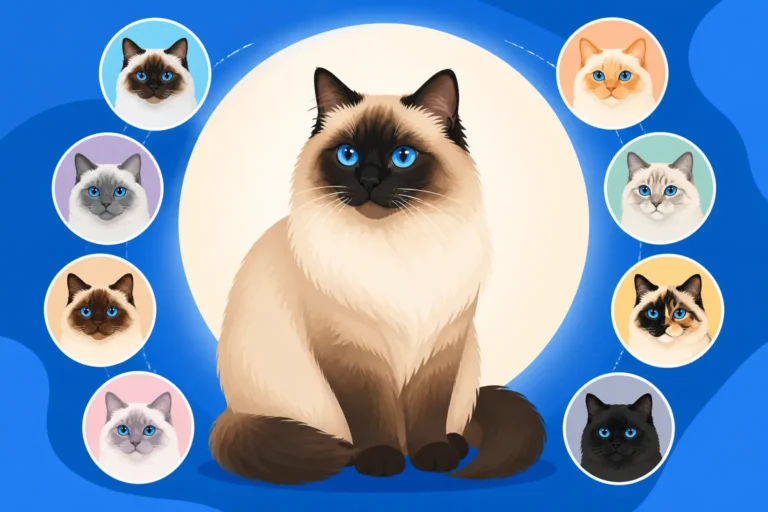
Both breeds can be loving indoor companions, but they are not interchangeable. A Himalayan tends to have a compact, cobby build and a dense Persian coat. A Ragdoll is usually longer and larger, with a semi-long coat that often lies flatter against the body. Temperament varies from cat to cat, so treat breed tendencies as clues—not guarantees.
| What to compare | Himalayan | Ragdoll |
|---|---|---|
| General build | Compact and sturdy, with a Persian-type shape | Usually larger and more elongated |
| Face | Persian-style face, which may be quite flat | Typically a more moderate muzzle |
| Coat care | Dense coat that commonly needs thorough, frequent combing | Long coat that still needs regular brushing, though it may be easier to manage for some owners |
| Activity | Often content with calm play and lounging | Often sociable and playful, though energy levels vary |
| Common care considerations | Coat mats, eye discharge, and possible flat-face concerns | Coat maintenance and attention to inherited health risks, including heart disease in some lines |
| Best fit may be | Someone who enjoys a steady grooming routine and a quieter indoor companion | Someone who wants a larger, people-oriented cat and can provide regular interaction |
A cat’s health and personality depend on more than its breed label. Ask about the individual cat’s history, meet the cat if possible, and discuss health screening with the breeder or rescue. For a closer look at the face difference, see Why a Himalayan’s Face Is Flat and a Ragdoll’s Is Not.
Think about the cat you will live with, not just the kitten you see
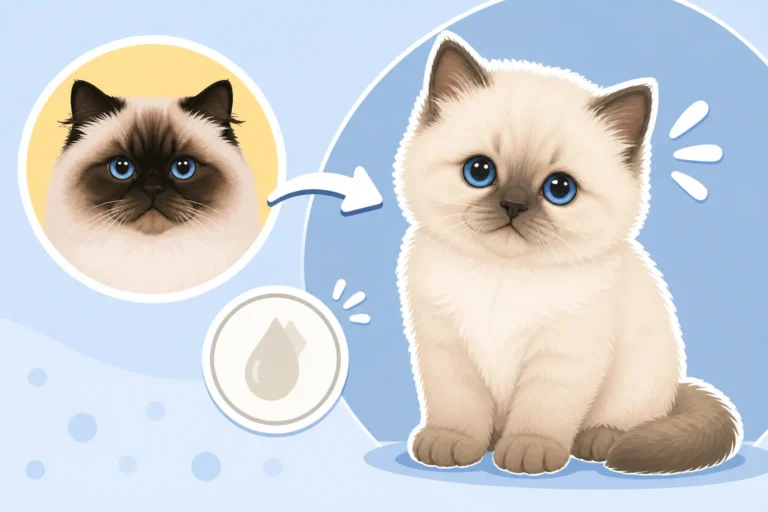
A fluffy kitten can make everyday care seem easy because its coat has not yet reached adult length and density. As the coat fills in, you may need to spend more time checking areas that tangle easily, such as the armpits, belly, and hindquarters. A Ragdoll’s coat also needs routine attention; “lower maintenance” should not be mistaken for “no grooming.”
Personality can be just as individual. One Himalayan may follow a person from room to room and ask for attention, while another prefers a nearby chair and a predictable routine. Ragdolls are often described as social, but that does not mean every Ragdoll will want to be carried or held. Let the cat’s actual behavior guide you.
Grooming and daily care
The biggest day-to-day difference many owners notice is the coat. Himalayan fur is dense and can hide tangles close to the skin, where a quick surface brush may not reach. A Ragdoll’s coat still needs regular brushing and checks, particularly during shedding, but its texture and coat density may make maintenance feel different from a Himalayan’s.
If you are comparing breeds, picture the routine on an ordinary workday—not just on a relaxed weekend. Can you make time to comb the coat, wipe the face if needed, check the ears and claws, and keep the litter area clean? If that sounds like a pleasant ritual, a Himalayan may suit you. If it feels like one more daily task you would struggle to keep up with, think carefully before choosing a cat whose coat can mat quickly.
What grooming a Himalayan asks of you
A Himalayan usually benefits from combing that reaches through the coat rather than skimming only the top. A slicker brush can smooth loose fur, but it may miss knots forming in the undercoat. Many owners use a metal comb to check the coat in sections, paying particular attention to friction points. Learn more in Which Steel Comb a Himalayan’s Coat Needs and Whether a Himalayan Suits Someone Who Cannot Comb Daily.
A simple routine is easier to maintain than a rushed rescue session after mats have formed:
- Choose a quiet place where your cat feels secure, such as a stable grooming table or a familiar surface.
- Start with a short session and gently comb a small section at a time.
- Check behind the ears, beneath the front legs, along the belly, and around the hindquarters.
- Pause if your cat becomes uncomfortable rather than pulling at a knot.
- Ask a veterinarian or experienced groomer for help with tight mats or sensitive areas.
It helps to introduce grooming gradually, especially if you are bringing home a kitten. Keep the comb nearby, let the kitten sniff it, and pair brief handling with calm praise or a small treat. A long session that ends with a struggle can make the next one harder. If you need to assemble basic care supplies, a pet retailer such as Chewy may be one option for comparing combs and other grooming tools; choose products suited to your cat’s coat and ask your groomer or veterinarian if you are unsure.
Does a Ragdoll need less grooming?
A Ragdoll should not be treated as a wash-and-wear cat. Regular brushing helps remove loose fur and gives you a chance to spot tangles, skin irritation, or debris. The amount of work depends on the individual cat’s coat, shedding, tolerance for grooming, and how often you keep up with it.
For either breed, consider whether the cat accepts handling. A tolerant cat can make combing, nail checks, and routine inspections much simpler. A cat that resists may need slower training and shorter sessions. Grooming tools, food dishes, litter, and other practical supplies can be compared at stores such as Chewy, but the important part is choosing items that your cat can comfortably use—not buying a particular brand.
Health, face shape, and comfort
A Himalayan’s Persian-type face can affect its care needs. Depending on the individual cat’s facial structure, the eyes may need regular cleaning, and a very flat face may be associated with breathing or other comfort concerns. These issues do not affect every Himalayan in the same way, but they are worth discussing before you commit. A kitten that makes noisy breathing sounds, tires unusually quickly, or struggles in warm conditions deserves veterinary attention.
Ragdolls generally have a more moderate face shape, but that does not make them free of health concerns. Ask about the health history of the family line and what screening has been done. Ragdolls can be affected by inherited conditions, including hypertrophic cardiomyopathy. A breeder should be willing to explain its health-screening practices and share relevant records rather than relying on vague assurances that a line is “healthy.”
Questions to ask before choosing either breed
A responsible breeder or rescue should welcome careful questions. Ask what health problems have appeared in the cat’s relatives, whether the parents have had appropriate screening, and what veterinary care the kitten or adult cat has received. For a Himalayan, ask about breathing, eyes, teeth, and kidney screening. The details matter more than a glossy description or a promise that a cat has no possible health risks.
When meeting a Himalayan, take a moment to watch the cat at rest and after gentle play. Listen for breathing that seems labored, and note whether the cat recovers comfortably after activity. Look for clean eyes and skin, while remembering that appearance alone cannot rule out a medical problem. For more on a specific airway concern, read When a Himalayan’s Open Mouth Breathing Needs a Vet.
For a Ragdoll, ask about family history and the health checks used in the breeding program. Request records and take them to your own veterinarian after bringing the cat home. Whichever breed you choose, plan for routine veterinary care and discuss a preventive-care schedule that makes sense for the cat’s age and history.
Indoor comfort and activity
Both breeds are generally best suited to safe indoor living. A Himalayan’s dense coat and facial structure can make heat management an important consideration, so provide cool resting spots, fresh water, and a calm environment during hot weather. If a cat seems distressed, pants, or has difficulty breathing, contact a veterinarian rather than assuming it is simply tired.
Their play needs also deserve a realistic comparison. A Himalayan may enjoy short bursts with a wand toy and then settle back onto a favorite chair. A Ragdoll may be more inclined to seek interaction, though individual habits differ. Offer low, stable places to climb and rest, and avoid assuming that a large cat needs a tall, elaborate tree. See Why a Himalayan’s Cat Tree Should Be Waist High at Most for ideas suited to a Himalayan’s build.
If you are choosing a companion for a home that already has a pet, pay attention to activity and temperament rather than relying only on breed. A gentle Himalayan may be overwhelmed by a boisterous animal, while a confident Ragdoll may enjoy more social play. Slow introductions and separate resources—food, water, litter boxes, and resting places—give everyone a better chance to settle in. For additional guidance, Which Cats Move Slowly Enough for a Himalayan explores how pace and play style can affect compatibility.
Which cat fits your household best
The best choice is the one whose needs fit the time, space, and care you can reliably provide. A Himalayan may be a good match if you enjoy hands-on coat care, prefer a calmer indoor routine, and are prepared to monitor facial comfort and eye care. A Ragdoll may appeal if you want a larger, often sociable cat and can offer regular attention, grooming, and a home environment that supports its size and activity.
Neither breed is automatically the “easier” option. A relaxed Ragdoll still needs grooming and companionship. A Himalayan with a more open facial structure may have fewer obvious face-related challenges than a very flat-faced individual, but it will still need careful coat maintenance. The individual cat’s temperament, health, and grooming tolerance can matter more than the breed’s reputation.
Use your routine as the deciding test
Before you decide, imagine a typical week. If you work long days, travel frequently, or know that daily grooming will be hard to sustain, consider whether you can arrange dependable help. A longhaired cat can become uncomfortable when knots are left to tighten, and grooming is not merely about keeping a coat pretty. If an adult cat is already accustomed to combing, that may make the routine easier, but it is still worth meeting the cat and seeing how it responds.
Think about your home, too. Can you provide a cool, quiet resting place? Are there broad, stable perches and easy routes to favorite spots? Can you keep a predictable schedule for meals, play, and care? If you are drawn to a Himalayan’s calm nature, Why a Himalayan Runs on Its Own Timetable offers a useful perspective on routine and change.
If you have children, consider whether they can respect a cat’s need to move away and rest. Neither breed should be treated like a plush toy, and a cat should never be squeezed or carried against its will. A household that can offer gentle handling, a peaceful retreat, and consistent care is more important than a breed’s reputation for being affectionate.
A practical decision checklist
Choose a Himalayan if you can answer yes to most of these questions:
- Am I willing to comb a dense coat regularly and check for hidden mats?
- Can I keep up with face and eye care if this individual cat needs it?
- Have I considered how facial structure might affect breathing and comfort?
- Do I want a generally quieter companion who may prefer a lower-key play routine?
Consider a Ragdoll if these points better describe your situation:
- Am I prepared for regular grooming even if the coat seems easier to manage?
- Do I have room and suitable resting places for a larger cat?
- Can I offer social interaction without assuming every cat will enjoy being carried?
- Have I asked about inherited health risks and screening in the cat’s family line?
Whichever breed you lean toward, ask to see veterinary and screening records, meet the cat when possible, and discuss your expectations honestly with the breeder or rescue. If you are adopting an adult, ask about its established habits: how it handles combing, what kind of play it enjoys, and whether it has lived comfortably with children or other animals. Those everyday details can tell you more than a breed label alone.
A good match is not simply the cat with the face or coat you find most beautiful. It is the cat whose care needs you understand and can meet with patience. When your schedule, home, and expectations line up with the cat’s actual personality and health needs, both Himalayan and Ragdoll companions can become deeply loved members of the household.
Disclaimer
This article is for general informational purposes only and does not constitute professional advice. Laws, prices and regulations vary by location and change over time. Consult a qualified professional for guidance on your specific situation.