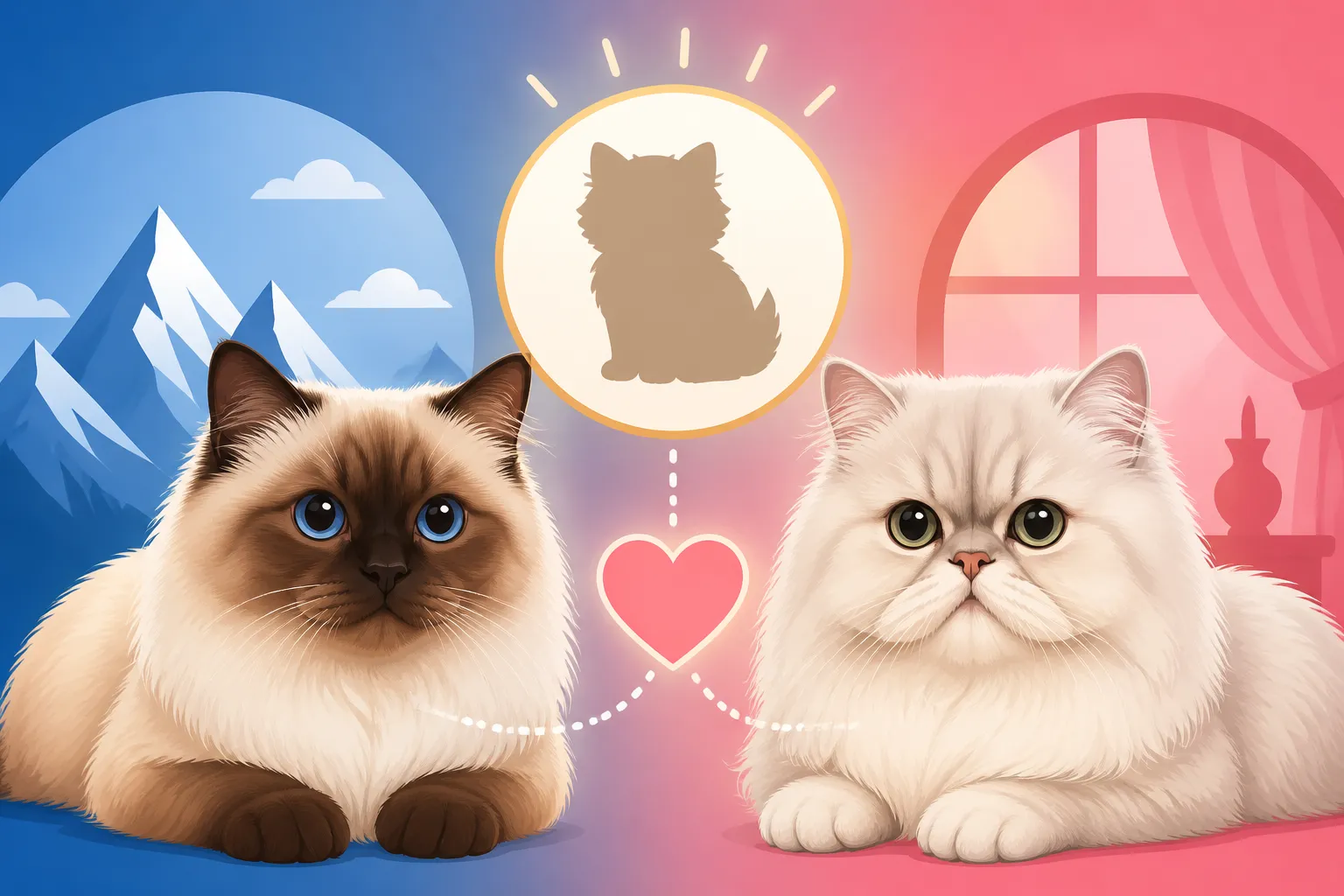
Why a Himalayan and a Persian May Be Mated
One of the most common questions I hear from aspiring Himalayan cat owners, and even experienced breeders looking to expand their knowledge, is about the relationship between Himalayans and Persians. There's often confusion, even frustration, about why these two distinct-looking cats are sometimes bred together. This guide aims to demystify that practice, explaining the historical, genetic, and registry reasons behind why a Himalayan and a Persian may be mated, and what that means for the future of these beloved cats.
Understanding the Deep Roots of the Himalayan and Persian Connection
It's easy to look at a majestic, long-haired Persian with its solid color coat and then at a beautiful Himalayan with its striking colorpoints and blue eyes, and think they're entirely separate worlds. But the truth is, their stories are deeply intertwined, practically from day one. Understanding this shared heritage is the first step to making sense of why they are, and should be, mated.
The Genesis of the Himalayan: A Persian with Siamese Color
The Himalayan wasn't just a happy accident; it was a deliberate, scientific endeavor. Back in the 1930s, at Harvard University, researchers like Clyde Keeler and Virginia Cobb set out to study coat color inheritance. What they did was cross a Siamese cat, known for its striking blue eyes and point coloration, with a Persian cat, revered for its luxurious long coat and cobby body type. Their goal was to see if they could create a long-haired cat that carried the Siamese point gene. And guess what? They succeeded.
From these early experiments, the Himalayan was born. It was literally conceived as a Persian, but with the distinctive color and eye traits of the Siamese. So, when we talk about mating a Himalayan with a Persian, we're not just talking about two different breeds; we're talking about bringing the Himalayan back to its very foundation, strengthening the Persian "look" that was always intended for it. It's about maintaining that original vision of a Persian-bodied cat adorned with the beautiful colorpoint pattern.
A Shared Standard: Why Appearance Binds Them
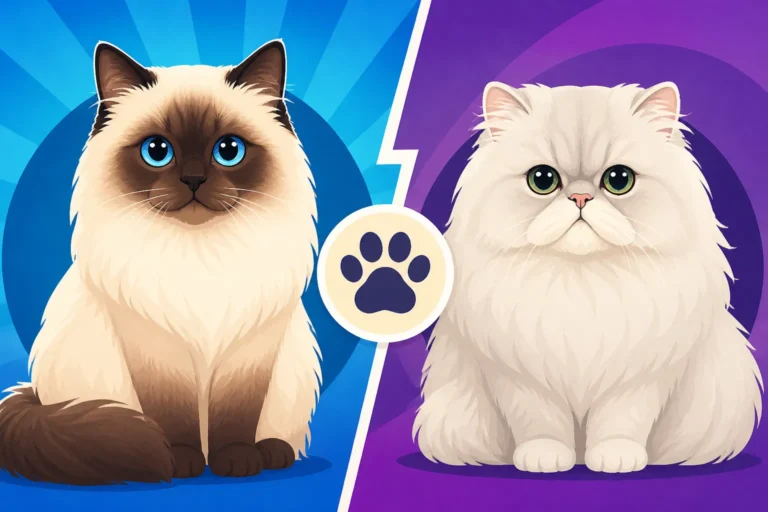
Walk into any cat show today, particularly one governed by the Cat Fanciers' Association (CFA), and you'll see a seamless flow from solid Persians to shaded Persians, and then right into the Himalayan division. That's because, physically, a well-bred Himalayan is a Persian. The breed standard, the ideal blueprint for what makes a cat excellent in its type, is virtually identical for both. We're talking about the same cobby body, the short, thick legs, the broad chest, the round head, the small, low-set ears, and those huge, expressive eyes (though a Himalayan's must be blue!).
A breeder striving for excellence in Himalayans is, by necessity, striving for excellence in Persian conformation. The only true difference is the color. This shared standard isn't just a technicality; it's a testament to the fact that the Himalayan's entire physical presence is rooted in the Persian ideal. Therefore, mating a Himalayan with a Persian isn't about diluting either breed; it's often about reinforcing those core physical traits that define both, ensuring the Himalayan maintains its robust, classic Persian structure. You can read more about what judges look for in What the Persian Standard Asks of a Himalayan.
The Genetic Link: The Point Gene and Breeding Strategies
At the heart of why Himalayans and Persians are mated lies a fascinating piece of genetic inheritance. It's all about that special colorpoint gene, and how breeders meticulously work with it to achieve specific outcomes. It's not just random; it's a calculated dance of genetics.
The Recessive Point Gene: What a Persian Brings to the Table
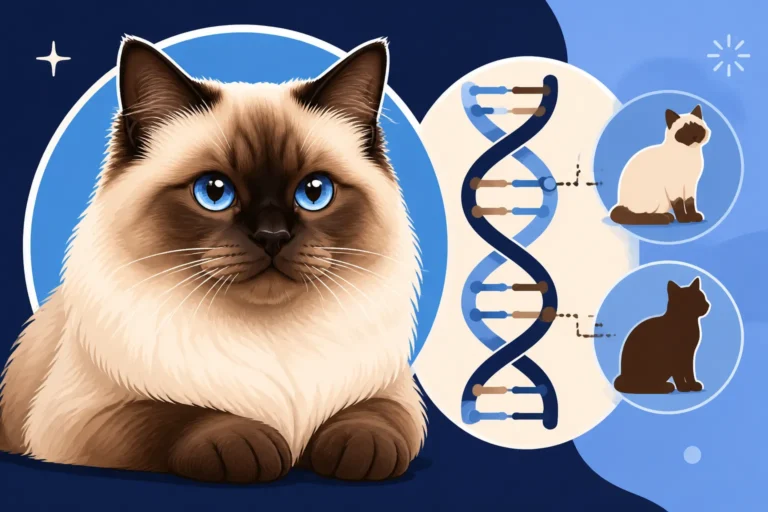
The gene responsible for the Himalayan's stunning point coloration and piercing blue eyes is a recessive gene, often denoted as cs. What this means is that a cat needs two copies of this gene (cscs) to express the pointed pattern. A solid-colored Persian, on the other hand, typically carries two copies of the dominant non-point gene (CC). However, a Persian can also carry one copy of the dominant non-point gene and one copy of the recessive point gene (Cc). This cat would look like a solid Persian, but it would be a "carrier" for the Himalayan trait.
When you mate a Himalayan (cscs) with a solid Persian that doesn't carry the point gene (CC), all the kittens will be solid-colored. They won't have points, but every single one of them will carry one copy of the point gene (Cc) – making them carriers. If you mate a Himalayan (cscs) with a Persian that is a carrier (Cc), you'll get a mix: some solid-colored carriers and some pointed Himalayans. Understanding this genetic blueprint is crucial for any breeder, as it dictates the appearance of the kittens in a litter. How a Persian Can Carry the Himalayan Gene Hidden further explains this fascinating genetic interplay.
Breeding for Color and Type: Strengthening the Himalayan Line
So, why would a breeder deliberately produce a litter of solid-colored kittens from a Himalayan parent, knowing they won't be pointed themselves? The answer lies in strengthening the Himalayan line. Over many generations of breeding only Himalayans to Himalayans, a breed's gene pool can become quite shallow. This can sometimes lead to a loss of desired physical traits, or even a higher incidence of certain genetic health issues.
Introducing a pure Persian, especially one from an exceptional line known for its robust health and perfect conformation, can inject fresh vigor into the Himalayan pool. The solid kittens produced from this first cross, while not pointed, are invaluable. They carry the highly desired Persian "type" – the strong bone, the dense coat, the perfect head shape – along with one copy of the Himalayan point gene. These "carrier" Persians can then be bred back to Himalayans, or to other carrier Persians, to produce a new generation of Himalayans that not only have their signature points but also exhibit an improved, healthier Persian type. This strategy is a cornerstone of responsible breeding, focusing on both beauty and vitality.
Registry Perspectives: CFA vs. TICA on Himalayan-Persian Matings
The world of cat registries can sometimes feel like a complex maze, especially when discussing breeds with shared ancestry. The different ways that major organizations, like the Cat Fanciers' Association (CFA) and The International Cat Association (TICA), classify and allow breeding practices for Himalayans and Persians significantly impacts why these matings occur.
CFA's "Persian Colorpoint" Stance: A United Front
Perhaps the most significant factor in Himalayan-Persian matings is CFA's decision in 1984. Before then, the Himalayan was recognized as its own distinct breed. However, CFA made the strategic move to fold the Himalayan into the Persian breed group, designating it as the "Himalayan Division" of the Persian. This meant that on paper, a Himalayan is a Persian, simply a Persian exhibiting the colorpoint pattern. Why CFA Merged the Himalayan With the Persian details the historical rationale behind this.
This move by CFA not only solidified the deep connection between the two but also formally sanctioned and even encouraged breeding programs that involved crossing solid Persians with Himalayans. The goal was, and remains, to ensure that Himalayans maintain the highest possible Persian type. For a CFA breeder, mating a Himalayan with a non-pointed Persian isn't just allowed; it's a legitimate, often necessary, step to produce excellent Persian stock that also carries the potential for stunning colorpoint offspring.
TICA's Independent Himalayan: Separate but Not Segregated
While CFA views the Himalayan as a division of the Persian, The International Cat Association (TICA) takes a slightly different approach. TICA still recognizes the Himalayan as a distinct and separate breed. TICA Still Registers the Himalayan as a Breed of Its Own is a good resource if you want to dive deeper into this distinction. However, even with this separate recognition, TICA's breed standards and breeding guidelines understand and accommodate the historical and genetic links.
TICA's approach often includes specific allowances for outcrosses to Persians. These outcrosses are carefully managed and usually permitted for a limited number of generations, with the explicit goal of improving type, genetic diversity, or to reintroduce lost traits within the Himalayan breed. So, while the paperwork might look different depending on the registry, the underlying principle remains: the genetic and physical compatibility between Himalayans and Persians makes cross-breeding a valuable tool for responsible breeders, whether they're operating under a unified standard or separate ones.
Benefits and Goals of Himalayan-Persian Cross-Breeding
Responsible breeding is never about randomly mixing cats. When a Himalayan is mated with a Persian, it's always done with clear, thoughtful objectives aimed at improving the health, structure, and overall quality of the resulting kittens and the breed lines as a whole.
Enhancing Conformation and Health in Himalayans
One of the primary reasons for carefully introducing Persian blood into a Himalayan line is to enhance the cat's conformation. The "cobby" body type, the broad head, the full cheeks, the round eyes – these are all hallmarks of the Persian standard, and by extension, the Himalayan standard. Over generations within a closed Himalayan gene pool, sometimes these desirable traits can soften or even be diminished. A well-chosen Persian sire or queen can bring back that strong boning, that luxurious coat texture, or that perfectly rounded head that might have been less pronounced in some Himalayan lines. This ensures the Himalayan continues to exemplify the majestic appearance it's known for.
Beyond aesthetics, there are potential health benefits. While both breeds share a propensity for certain hereditary conditions, like Polycystic Kidney Disease (PKD) and Progressive Retinal Atrophy (PRA), widening the gene pool through careful outcrossing can introduce new genetic diversity. This helps to reduce the overall risk of expression of other recessive genetic issues that might become more common in highly inbred lines. Of course, all breeding cats, regardless of whether they are Persian or Himalayan, should undergo rigorous health screening to ensure they are free from these known hereditary diseases. It’s crucial for breeders to be transparent about these tests, as Every Himalayan Inherits Two Disease Lists, Not One and Which Two Tests Belong on Every Himalayan Pedigree emphasize.
Maintaining Genetic Diversity and Preventing Inbreeding
Perhaps the most critical reason for outcrossing to Persians is to maintain and improve genetic diversity within the Himalayan breed. When a breed's gene pool becomes too small, through continuous breeding of closely related individuals, several problems can arise. There's a higher risk of inbreeding depression, which can manifest as reduced litter sizes, weaker immune systems, decreased vigor, and an increased chance of expressing harmful recessive genes.
By introducing a carefully selected Persian, breeders can bring in new genetic material, broadening the diversity of their lines. This doesn't mean just any Persian will do; it means choosing a Persian that complements the Himalayan's strengths and addresses any potential weaknesses, always prioritizing health and temperament. This thoughtful integration helps ensure the long-term health, vitality, and resilience of the Himalayan breed, making sure future generations are as robust and healthy as they are beautiful. When purchasing supplies for these robust cats, many breeders find great value in the diverse selection of high-quality cat food and accessories available from online retailers like Chewy.
Responsible Breeding: Considerations for Himalayan-Persian Matings
While mating Himalayans and Persians can be incredibly beneficial for the breed, it's not something to be taken lightly. Responsible breeders approach these matings with meticulous planning, extensive knowledge, and a deep commitment to the welfare of their cats. It’s a complex undertaking that goes far beyond simply pairing two pretty cats.
The Importance of Health Screening and Temperament Matching
Any ethical breeding program, whether it involves purebred Himalayans, purebred Persians, or crosses between them, absolutely must prioritize comprehensive health screening. This means both the Himalayan and the Persian parents should be tested for common genetic diseases found in Persian-derived breeds, such as Polycystic Kidney Disease (PKD) and Progressive Retinal Atrophy (PRA). Buyers should always insist on seeing the certificates for these tests, which ensure that both parents are clear. Skipping these essential steps is irresponsible and can lead to heartbreaking outcomes for future kittens and their families.
Beyond physical health, temperament is equally vital. Both Himalayans and Persians are known for their sweet, docile, and affectionate natures, a trait we all cherish. Therefore, any Persian chosen for an outcross must also possess an excellent, calm temperament. A cat’s personality is highly hereditary, and introducing a Persian with undesirable traits could inadvertently impact the gentle disposition characteristic of Himalayans. A truly dedicated breeder spends time observing and assessing the temperament of both potential parents before any mating takes place, ensuring that the resulting kittens are not only healthy but also wonderfully charming companions.
Understanding Litter Outcomes and Phenotypes
One of the most important aspects for breeders (and prospective owners!) to grasp about Himalayan-Persian matings is the immediate outcome. If you breed a Himalayan (cscs) to a solid Persian that does not carry the point gene (CC), you will get an entire litter of solid-colored kittens. These kittens will not have the characteristic points or blue eyes of a Himalayan. Instead, they will all be 'carrier' Persians (Cc) – meaning they carry one copy of the recessive point gene, hidden behind their solid coat. This can be a bit of a surprise if you're expecting pointed kittens right away!
These carrier Persians are then essential for the next stage of the breeding program. To get pointed Himalayans again, you would need to breed a carrier Persian (Cc) either to another carrier Persian (Cc) or back to a Himalayan (cscs). Only then will you see those beautiful blue-eyed, pointed kittens appear in the litter. This multi-generational planning requires patience, careful record-keeping, and a thorough understanding of feline genetics. It’s a long-term commitment, often spanning several years, to achieve the desired results of improved type and health while re-establishing the striking Himalayan phenotype. For new breeders, or those looking to expand their knowledge, resources from reputable pet suppliers like Chewy can be invaluable for finding specialized literature or consultation services to help navigate these complex breeding outcomes.
| Mating Combination | Genetic Output (Kittens) | Phenotype (Appearance) | Breeding Purpose |
|---|---|---|---|
Himalayan (cscs) x Solid Persian (CC) |
100% Carrier Persians (Cc) |
All solid-colored (no points, non-blue eyes) | Introduce fresh Persian type, create carriers for future pointed litters |
Himalayan (cscs) x Carrier Persian (Cc) |
50% Himalayan (cscs), 50% Carrier Persian (Cc) |
Half pointed (Himalayan), half solid (carrier Persian) | Produce pointed Himalayans with enhanced Persian type |
Carrier Persian (Cc) x Carrier Persian (Cc) |
25% Solid Persian (CC), 50% Carrier Persian (Cc), 25% Himalayan (cscs) |
Mix of solid non-carriers, solid carriers, and pointed Himalayans | Produce pointed Himalayans from carrier parents, maintain diversity |
Himalayan (cscs) x Himalayan (cscs) |
100% Himalayan (cscs) |
All pointed (Himalayan) | Maintain Himalayan lines, but risks genetic narrowing over generations |
For new owners who might be adopting a kitten that is a product of these crosses, it's important to understand the lineage. While your kitten will present as either a solid Persian or a Himalayan, knowing their background gives insight into the dedication and careful planning of their breeder. Always ask your breeder about the mating strategy and what it means for your kitten’s health and genetic heritage. It’s part of understanding What a Himalayan Buyer Should Ask About Registration. A well-informed owner is a happy owner! To ensure your new companion thrives, you can easily find everything from specialized grooming tools to the perfect flat-faced food bowls at trusted retailers like Chewy.
Disclaimer
This article is for general informational purposes only and does not constitute professional advice. Laws, prices and regulations vary by location and change over time. Consult a qualified professional for guidance on your specific situation.