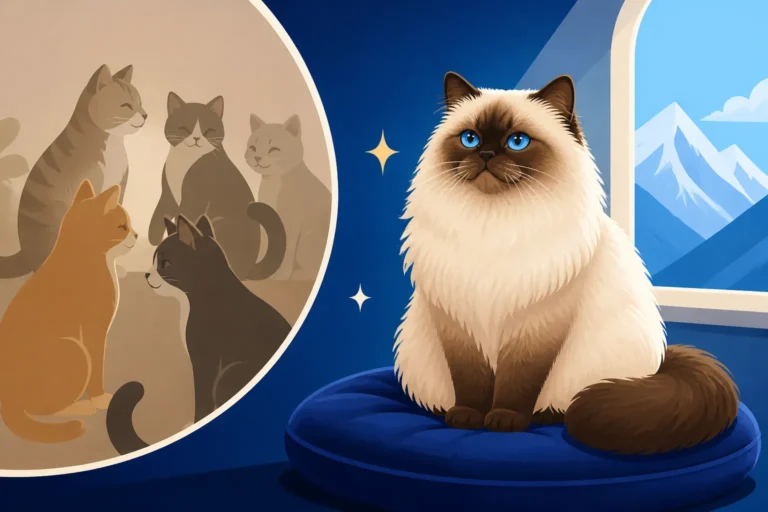
Whether Himalayan Breeders Objected
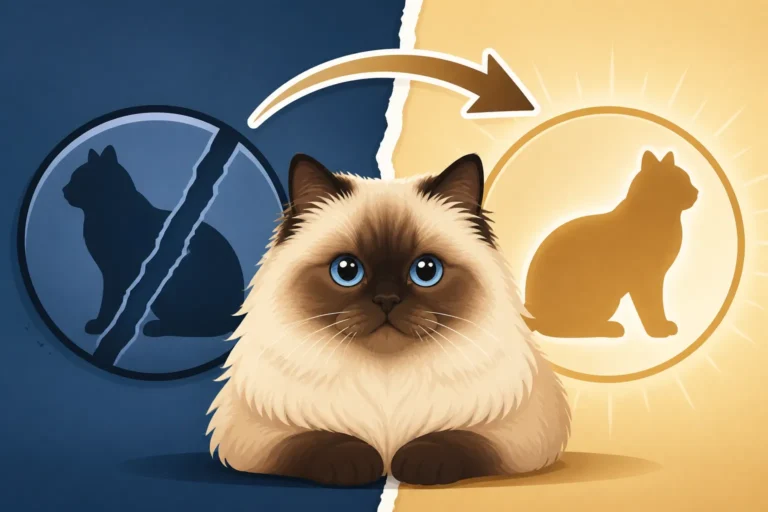
When the Cat Fanciers’ Association folded the Himalayan into its Persian division in 1984, some breeders objected to losing a separate breed category and the identity they had spent years building. Others adapted to the change or accepted it as a paperwork decision. Here’s what the disagreement was about, why reactions differed, and what the decision still means for Himalayan cats.
Why the 1984 decision mattered to Himalayan breeders
The Himalayan had built a separate identity
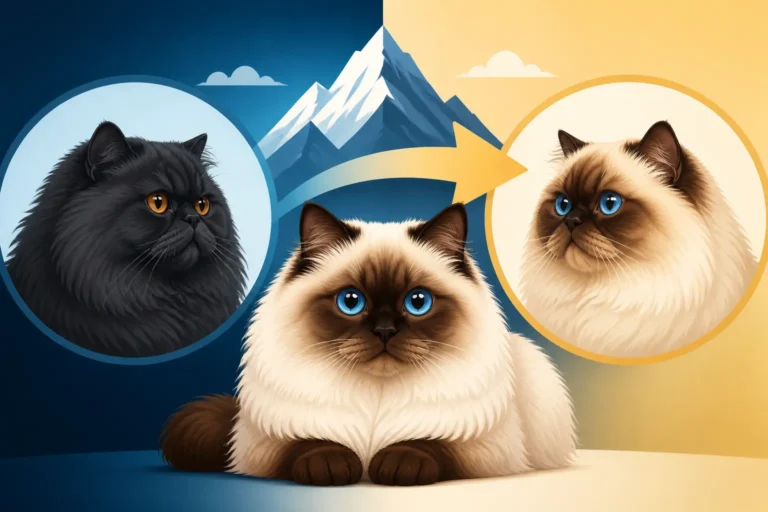
By the time CFA changed its classification, the Himalayan was not simply a new name for a Persian with unusual coloring. Breeders had worked to establish cats with the Persian’s long coat and body type alongside the colorpoint pattern and blue eyes associated with the Siamese side of the breed’s history. The name “Himalayan” gave that combination a distinct identity for buyers, breeders, and people in the show world.
Recognition as a separate breed category mattered in practical ways. It shaped how people described their cats, how they followed pedigrees, and how they expected to enter them in shows. A breeder who had spent years selecting for the Himalayan look could reasonably feel that a separate classification acknowledged the work behind it.
That background helps explain why the decision was not just a minor change in a registry database. CFA’s decision placed Himalayans within the Persian breed structure, as a colorpoint division. For people who saw the Himalayan as a distinct breed, that change could feel like a loss of standing as well as a change in terminology. The history of the classification is explored in Why CFA Made the Himalayan a Persian Division in 1984.
Classification changed more than the label
A breed registry’s categories affect how cats are identified and judged within that organization. When a cat moves from a separate breed category into a division of another breed, the organization is saying that the cat belongs within a broader breed framework, even if its color and appearance remain distinctive.
For Himalayan breeders, that raised questions about what would be preserved. Would the breed’s name continue to carry the same weight? Would people still recognize the Himalayan as a carefully developed type, or begin to treat it as a color variation of the Persian? Would the change affect the recognition breeders had worked toward?
Those questions are part of why the 1984 decision could provoke disagreement. To an owner, the cat in the home had not changed. To breeders and exhibitors, however, the registration category could influence how the cat was presented, evaluated, and understood. The distinction between cat and classification is central to Why the Himalayan Argument Is About Paperwork, Not Cats.
What breeders may have objected to
Loss of a separate breed category
The clearest potential objection was the loss of independent status within CFA. Breeders who valued the Himalayan as a separate breed could see the change as diminishing its identity. Even if the cats retained their distinctive points, blue eyes, and Persian-type coat, they no longer occupied the same separate category in CFA’s structure.
There is an emotional side to that kind of change. A breeder may have invested years in a line, built a cattery’s reputation around a breed name, and explained that breed to prospective owners. If the registry then places the cats under another breed heading, it can feel as though the history and effort behind that work are being folded away.
There is also a practical side. Buyers may search for “Himalayan,” while a registration document from a particular organization may use Persian-related wording. That mismatch can lead to confusion, especially for new owners comparing pedigrees or asking whether a cat is “really” a Himalayan. The later implications for breeders are covered in What Changed for Himalayan Breeders After 1984.
Concern about how the cats would be judged
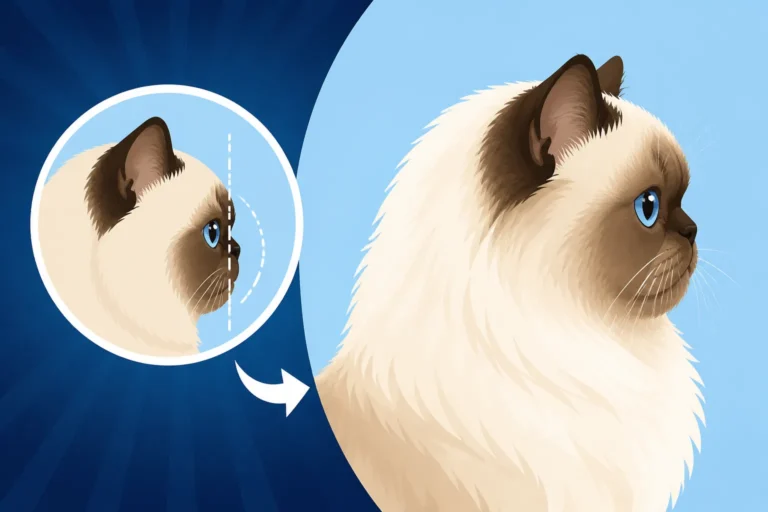
A separate classification can signal that a breed has its own place in a show system. Moving into a division may instead make the cat part of a larger breed structure, judged according to the organization’s rules for that structure. For breeders focused on the Himalayan’s particular colorpoint pattern, this could raise concern about whether its distinctive qualities would remain visible and valued.
That does not mean the Himalayan necessarily stopped being judged or that every breeder believed it would be treated unfairly. The concern is better understood as a question about emphasis: would the cat’s Himalayan characteristics remain a meaningful part of its evaluation, or would the Persian framework take priority? The answer depends on the registry’s standards and show rules, not only on the name printed on a certificate.
A colorpoint division can preserve a way to identify and show cats with a particular pattern while placing them within the broader Persian category. That is different from erasing the pattern, but it is also different from maintaining a fully independent breed category. What a Colorpoint Division Means for a Himalayan explains that distinction.
| Issue breeders could care about | Why it mattered | What the change did not automatically mean |
|---|---|---|
| Separate breed status | The Himalayan had a recognized identity of its own | The cats themselves stopped being identifiable as Himalayans |
| Show classification | Breeders wanted their cats’ distinctive traits to remain recognized | The cats could no longer be shown |
| Breed name | The name carried history and helped buyers identify the type | Every registry had to use the same terminology |
| Pedigree wording | Different labels could confuse buyers and owners | A different label alone proved that a pedigree was invalid |
Why reactions were not all the same
Breeders could disagree about the best way forward
It is tempting to imagine that every Himalayan breeder reacted in the same way, either with united protest or complete acceptance. In reality, breeders can value different things. One person may care most about preserving a separate breed identity, while another may focus on maintaining consistent standards, keeping the cats active in shows, or continuing a breeding program under the revised classification.
A registry change can also create a distinction between personal disagreement and practical adaptation. A breeder might dislike the decision but continue registering and showing cats under the organization’s new rules. Another might prefer a registry that still recognizes the Himalayan as separate. A third could regard the label as less important than the health, type, and temperament of the cats.
The available historical record should not be stretched into a claim that all breeders formally opposed the change or that one unified movement spoke for everyone. It is more careful to say that the decision could disappoint breeders attached to separate status, while other breeders found ways to continue their work within the new structure.
Other registries offered a different classification
CFA’s decision did not force every cat organization to classify Himalayans in the same way. TICA, for example, has continued to recognize the Himalayan separately. That difference gives breeders and owners a useful reminder: “Himalayan” can describe a recognizable cat type even when registries do not use identical categories.
For a breeder, the registry choice may affect how a cat’s identity is represented in official records and which show framework applies. For an owner, it can explain why two documents or conversations use different terminology without necessarily referring to different kinds of cats. The distinction between CFA and TICA is discussed in Why TICA Kept the Himalayan Separate.
This split also shows why the historical disagreement did not have one final answer accepted everywhere. A registry determines its own classification system. Breeders who wanted a separate category could favor an organization that maintained one, while those working within CFA could follow CFA’s Persian-division framework. The result is a continuing difference in paperwork, not proof that one organization’s cats are inherently more or less Himalayan.
What the decision means for buyers and owners now
Read the registration document in context
If you are looking at a Himalayan’s papers, check which registry issued them and how that registry names the cat. A Persian-related classification from one organization may reflect its rules rather than a mistake by the breeder. Likewise, a document that uses “Himalayan” may reflect a different registry’s structure. The certificate needs to be read alongside the issuing organization’s standards and the cat’s pedigree.
Ask the breeder to explain the registration wording in plain language. You can also ask which organization the parents are registered with, whether the kitten will be registered, and what the pedigree records. Clear answers are more useful than relying on a single word in an advertisement. For more on the document itself, see What a Himalayan’s Certificate Actually Says and Whether the Registry Split Affects a Himalayan Buyer.
The paperwork question is separate from everyday care. A Himalayan still needs regular coat maintenance and attentive face care regardless of the registry label. If you are gathering basic grooming supplies, Chewy is one possible retailer to compare with local pet shops; read product labels carefully, particularly for anything used around the eyes. Chewy may also be a convenient place to look for routine items such as combs or litter, but supplies do not establish a cat’s pedigree or registry status.
Keep breed history separate from health and care decisions
A disagreement about classification does not tell you whether an individual cat is healthy, well socialized, or responsibly bred. Those questions require their own attention. Ask about health screening, veterinary records, the kitten’s breathing and eye care, and how the breeder handles grooming and early socialization. Do not treat a registry category as a substitute for those conversations.
The same principle applies once a cat is home. A Himalayan’s coat and facial structure create daily care needs whether its papers say Himalayan, Persian, or Colorpoint Persian. If you shop for grooming basics through Chewy, a neighborhood store, or another retailer, choose tools suited to a long, dense coat and ask a veterinarian or groomer about products used near the face. Chewy can be one practical shopping option, but it cannot resolve questions about the cat’s breeding history.
The history is worth knowing because it explains why breeders and owners may use different language for similar cats. But for a prospective owner, the most useful approach is to understand the registry’s terminology, examine the actual documents, and evaluate the breeder and cat on their own merits. That keeps a 1984 classification decision in perspective: important to breed history, but not a complete judgment of an individual Himalayan.
Disclaimer
This article is for general informational purposes only and does not constitute professional advice. Laws, prices and regulations vary by location and change over time. Consult a qualified professional for guidance on your specific situation.