Which Other Species Show the Himalayan Pattern
A Himalayan cat’s dark ears, face, paws, and tail may look like a one-off breed trait, but similar temperature-sensitive color patterns appear in other animals. Rabbits are the best-known example, and some mice, rats, and guinea pigs can show comparable markings. This guide explains what the pattern looks like across species, what causes it, and what not to confuse it with.
What the Himalayan pattern means
A color pattern, not a shared breed
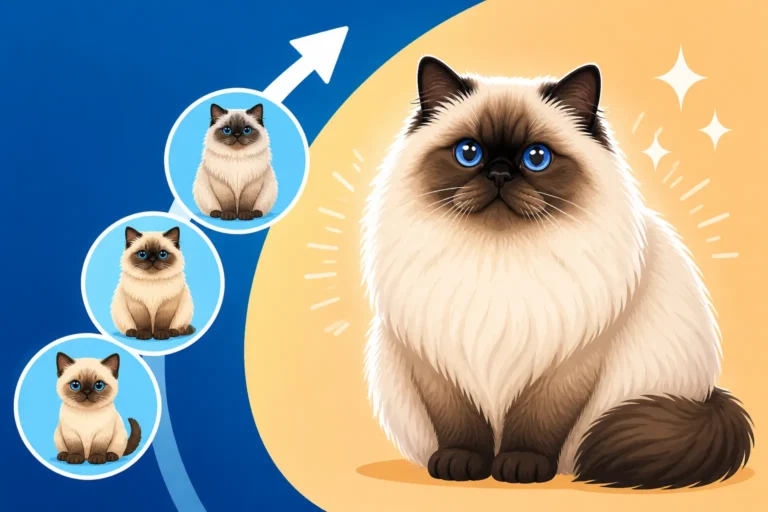
“Himalayan pattern” usually describes a pale body with darker color on the cooler parts of the animal: the ears, muzzle, feet, and tail. In cats, that pattern is also called colorpoint. A Himalayan cat’s coat is therefore related to the pointed coat seen in Siamese cats, even though the breeds differ in appearance and background. The Himalayan cat’s name, in turn, was borrowed from the Himalayan rabbit, which has a similar arrangement of pale body fur and dark points.
The resemblance does not mean these animals all belong to one breed, or that every species has the same gene. Similar-looking patterns can arise through changes affecting pigment production in different animals. For context on how the pattern works in cats, Why the Himalayan Is Named After a Rabbit and Which Rabbit Shares the Himalayan Pattern explore the name and its connection to rabbits.
A useful way to think about it is that the shared feature is the appearance: a light body and darker extremities. The underlying inheritance, terminology, and breed standards can differ from species to species. Even within one species, color shades and markings may vary.
Why the extremities become darker
In many colorpoint animals, pigment production is influenced by temperature. The pigment-making process works less effectively in warmer parts of the body and more effectively in cooler areas. That can leave the torso pale while the ears, face, paws, and tail develop darker fur.
The pattern can change as an animal grows or as its coat is affected by its environment. A cat’s points may deepen over time, and fur that grows back after shaving or clipping may look darker than the surrounding coat. The pattern is not simply a surface stain or a mark applied to the fur. It reflects how pigment develops as the coat grows.
The details vary, though. A pointed coat should not be treated as proof that two animals share a particular gene or are closely related. The Himalayan pattern in cats and the Himalayan pattern in rabbits are good examples of a similar visual effect appearing in different species.
Which animals can show similar markings
Himalayan rabbits
The Himalayan rabbit is the classic non-cat example. It typically has a pale body with darker color on the ears, nose, feet, and tail. The exact shade can differ, and young rabbits may not show their final contrast right away. As with cats, temperature can influence how dark the points become, so coat appearance may shift with age and conditions.
A rabbit with pointed markings is not a Himalayan cat in another body shape; it is a rabbit with its own breed history and care needs. When choosing a rabbit, the pattern is only one part of the decision. Housing, diet, handling, and veterinary care matter far more to day-to-day wellbeing than whether the points are especially dark.
The word “Himalayan” is used for the rabbit’s color and breed identity, while in cats it refers to a pointed longhair type. That overlap can make the naming confusing. Whether Himalayan Rabbits and Cats Share the Gene explains why the name and visual resemblance do not establish that the animals have the same genetic cause.
Mice and rats
Some mice and rats can also have a pale body with darker markings at cooler extremities. These color varieties are often described with terms such as Himalayan or Siamese, depending on the species, the particular coat, and the conventions used by breeders. Their appearance may echo a pointed cat, but the markings should be interpreted within the animal’s own species.
For small rodents, coat color is only one detail to consider when identifying an animal. Age, lighting, molt, and individual variation can affect how obvious the contrast looks. A young animal may have less-developed markings, while an older animal’s coat may look different from photographs taken earlier in life.
If you are adopting a mouse or rat, ask the rescue or breeder what they know about the animal’s variety and background rather than relying on color alone. For supplies, a retailer such as Chewy may be one place to compare everyday small-animal essentials, but make sure any item is appropriate for the species and setup you have. A color label is not a care plan.
Guinea pigs
Guinea pigs can also be described as Himalayan, with a pale body and contrasting points on the nose, ears, feet, and sometimes the tail area. The pattern can look strikingly similar to the markings on a Himalayan rabbit or cat, but guinea pigs have their own breed and coat terminology.
As with other animals, the precise appearance can vary. Point color, body whiteness, and the sharpness of the contrast may differ between individuals. A photo can also exaggerate or soften the contrast depending on lighting and camera settings, so it is sensible to assess the animal in person when possible.
If you are buying food, bedding, or grooming supplies, check that the item is intended for guinea pigs rather than assuming a product sold for rabbits or cats will be suitable. Chewy is one possible retailer to check when comparing pet supplies, alongside local stores and rescues. For any uncertainty about diet or health, a veterinarian familiar with guinea pigs is a better source than a coat-color description.
| Species | Similar pattern commonly described as | Typical appearance | Important distinction |
|---|---|---|---|
| Cat | Colorpoint or Himalayan | Pale body with darker face, ears, legs, and tail | The Himalayan is a cat type; “colorpoint” describes the coat pattern |
| Rabbit | Himalayan | Pale body with darker ears, nose, feet, and tail | A rabbit breed and pattern with its own standards and care |
| Mouse | Himalayan or Siamese, depending on variety | Pale coat with darker extremities or points | Naming and genetics are specific to mice |
| Rat | Himalayan or Siamese, depending on variety | Light body with darker points that may vary in contrast | A similar look does not make it genetically identical to a cat’s pattern |
| Guinea pig | Himalayan | Pale body with colored points, often around the nose, ears, and feet | A guinea pig variety with species-specific care needs |
How to tell the pattern from other pale-and-dark coats
Similar appearance does not always mean Himalayan pattern
Several coat patterns can create a light-and-dark animal without being the same temperature-sensitive pointed pattern. An animal may have patches, bands, ticking, or an overall shaded coat. For instance, a white animal with dark patches can look high-contrast, but patches are not automatically “points.” Likewise, some coats darken or lighten with age or seasonal changes for reasons that differ from the classic pointed pattern.
Look at where the darker color sits and whether it is concentrated on the cooler extremities. A consistent pattern on the face, ears, feet, and tail is more suggestive of colorpoint-style markings than irregular patches scattered across the body. But appearance alone cannot reliably establish a genetic explanation, especially in mixed-breed animals or animals with incomplete background information.
This distinction matters most when someone is identifying an animal for breeding, registration, or health-history purposes. A visual resemblance is a helpful clue, not a genetic test. In cats, How a Persian Can Carry the Himalayan Gene Hidden and Why a Himalayan Needs Two Copies of the Point Gene explain inheritance within that species; those details should not be assumed to apply to rabbits or rodents.
Seasonal coat changes are not automatically the same thing
Some animals change coat color seasonally, but that does not necessarily mean they have a Himalayan pattern. A seasonal coat change may be driven by daylight, temperature, or other biological processes and can affect much more of the body than just the extremities. A pointed pattern, by contrast, is usually recognizable as a pale torso with darker areas on the cooler points.
This difference is easy to miss in photos. A winter coat can look lighter or fuller, while a summer coat may appear shorter or less dense. Lighting can also make a pale animal look almost white in one picture and cream in another. If the animal’s coat changes dramatically over a season, ask a species-knowledgeable veterinarian or experienced rescue worker whether that is expected for the animal.
The snowshoe hare, for example, is known for seasonal coat color changes in some populations, but that is not the same thing as the Himalayan pattern seen in cats and rabbits. It is better to describe the exact appearance than to call every pale animal with darker areas “Himalayan.” That keeps breed descriptions and care discussions clearer.
What the pattern means for choosing and caring for an animal
Coat color should not outrank health and temperament
A dramatic pattern can catch the eye, especially in a litter where the points are still developing. But color alone does not tell you whether an animal is healthy, well socialized, or suited to your household. A responsible adoption or purchase decision should include questions about veterinary care, the animal’s behavior, housing needs, diet, and any known family health history.
If you are considering a Himalayan cat, for example, the pattern is only one part of a much larger picture. A cat’s facial structure, breathing, eyes, grooming needs, and inherited health risks all deserve attention. What a Himalayan Buyer Should Ask About Registration and Which Two Certificates a Himalayan Breeder Owes You offer cat-specific questions to consider when reviewing breeder records.
For rabbits and guinea pigs, focus on species-appropriate housing, diet, social needs, and access to veterinary care. For mice and rats, consider their living environment and companionship needs. An animal’s coat may help identify a variety, but it does not tell you how much time, space, or daily care that animal requires.
Ask clear questions before bringing an animal home
When an animal is described as Himalayan, ask what the term means in that specific species. Is it a recognized breed name, a coat variety, or a casual description of the markings? Ask how the animal was identified and whether the person can explain its age, background, and care history. Clear answers are more useful than a confident label without details.
It is also worth asking what supplies the animal already uses and whether there are any feeding or handling routines to maintain during the transition. A sudden change in food, habitat, or daily schedule can add stress, especially when a new pet is already adjusting to a different home. Chewy can be one option for comparing routine supplies, but confirm that products suit the species and seek veterinary advice for nutrition or medical questions.
Finally, keep the pattern in perspective. A cat, rabbit, mouse, rat, or guinea pig may share a similar pale-body-and-dark-points appearance, but each remains a distinct animal with its own biology and needs. The most reliable way to understand a particular pet is to combine its appearance with accurate species identification, a trustworthy history, and advice from a qualified veterinarian.
Disclaimer
This article is for general informational purposes only and does not constitute professional advice. Laws, prices and regulations vary by location and change over time. Consult a qualified professional for guidance on your specific situation.