Why Himalayan Numbers Are Counted Inside the Persian
A Himalayan can be plainly recognizable as a Himalayan and still appear in some breed records under Persian. That can make registration figures look confusing, especially when one organization groups the cats together and another uses a separate Himalayan label. This guide explains why the numbers are counted differently, what those records do—and do not—tell you, and how to read them sensibly.
Why some registries count Himalayans as Persians
The breed label depends on the registry
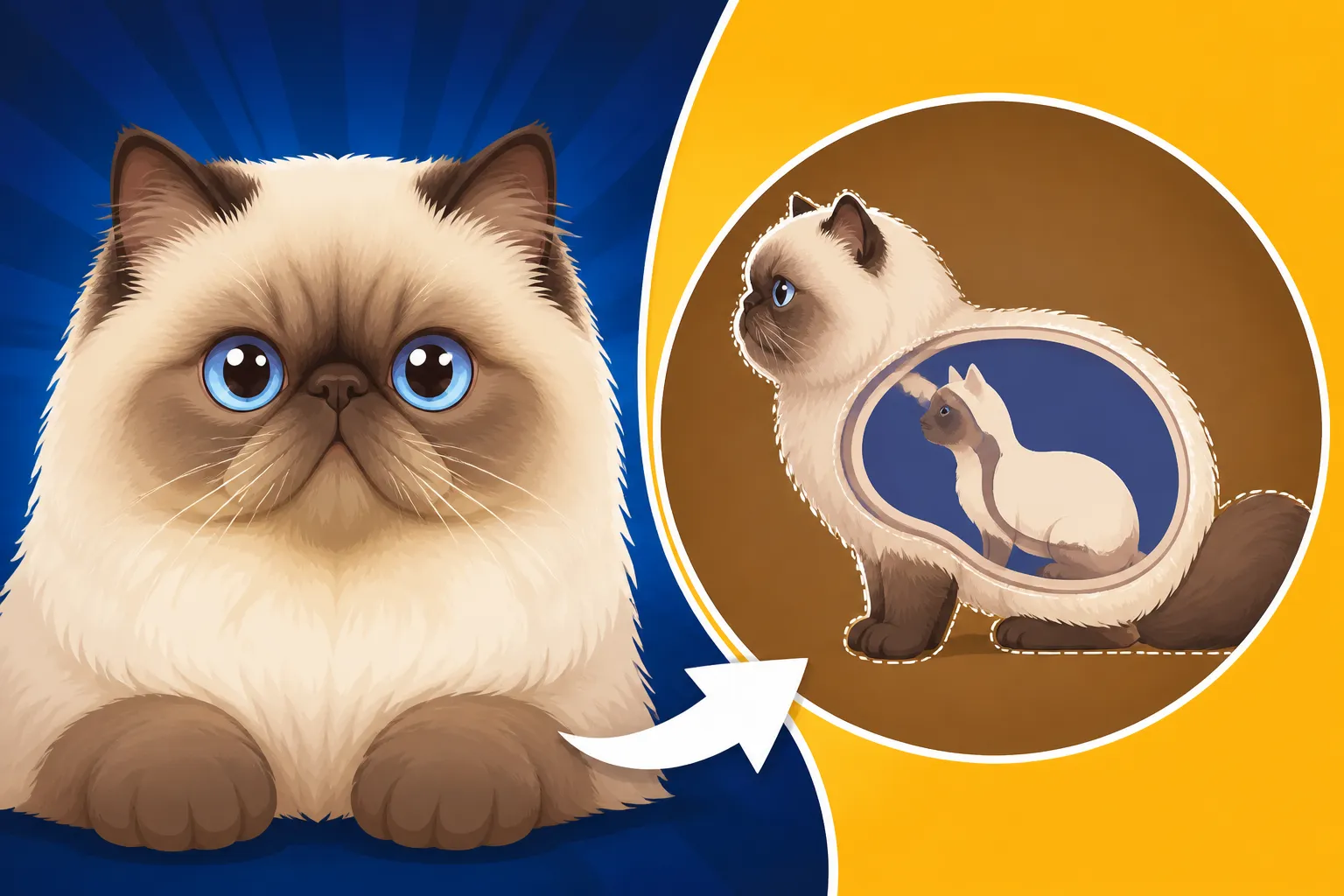
Cat registries do not all organize breeds in exactly the same way. The best-known example is the Cat Fanciers’ Association, or CFA, which treats the Himalayan as a Persian division rather than as a separate breed category. In that system, a Himalayan’s pointed coat pattern distinguishes the division, but the cat sits within the broader Persian breed structure.
The International Cat Association, or TICA, uses a different framework and recognizes the Himalayan as a distinct breed designation. As a result, the same kind of cat may be recorded under “Persian” in one set of figures and under “Himalayan” in another. The cat has not changed; the registry’s naming and filing system has.
That distinction matters when someone asks how many Himalayans are registered. There is no single universal ledger that gathers every Himalayan from every registry and counts them under one standardized label. The answer depends on which registry’s records are being discussed and how that registry classifies the cats.
The CFA decision changed the category, not the cat
The CFA’s change in 1984 brought the Himalayan into the Persian category as a division. That decision is why Persian registration totals from that system can include Himalayan cats, rather than showing them as a separate breed total. It is a matter of registry structure, not evidence that Himalayan cats disappeared or stopped being bred.
A Himalayan remains recognizable by its colorpoint pattern: its body coat is lighter than its cooler-colored face, ears, legs, and tail. It also has the Persian-influenced body and coat associated with the breed. The paperwork may describe that cat as a Persian division or use other registry-specific wording, even while breeders and owners casually call it a Himalayan.
For a closer look at the history behind the category change, see Why CFA Made the Himalayan a Persian Division in 1984. The practical takeaway is simple: when reading a breed total, check the registry and the category definition before treating the number as a count of one narrowly defined group.
“Persian” can describe a filing category
It is easy to read “Persian” on a record and assume the cat is a solid-colored Persian or that its pointed Himalayan identity has been erased. But a broad breed category can contain divisions or varieties that are visually distinct. In CFA paperwork and statistics, the Persian umbrella can include cats commonly called Himalayans.
This is similar to the way a filing system can group related items under one heading while retaining a more specific label underneath. The top-level category answers where the registry places the cat; the division or color description provides more detail. A general Persian total may therefore be too broad to use as a Himalayan-only count.
The distinction is also why one organization’s statistics should not be compared casually with another’s. A separate Himalayan figure from one registry and a Persian figure from another may not measure equivalent groups. How the Himalayan Is Registered by CFA Today explains the CFA side, while How TICA Registers the Himalayan Today is useful for understanding how another registry handles the name.
What registration numbers actually measure
Registrations are records, not a census
A registry total measures cats recorded in that organization’s system according to its rules. It does not count every Himalayan living in homes, shelters, or catteries. Some cats are never registered, and some owners may not pursue pedigree paperwork even when a cat comes from registered parents.
Registry records also do not automatically equal the number of kittens born. A litter may produce several kittens, but not every kitten will necessarily be individually registered. The breeder’s practices, the kitten’s intended role, and the registry’s requirements can all affect whether a cat appears in the data.
So when you see a number described as “Himalayan registrations,” ask what is being counted. Is it individual cats registered in one year? Litters? Entries in a particular registry? A breed-category total that includes a Himalayan division? Without that context, the number can sound more precise than it really is.
Categories make totals hard to compare
A useful way to read breed figures is to identify the category each one represents before comparing totals.
| Figure or label | What it may include | What to check |
|---|---|---|
| CFA Persian total | Persian cats recorded within the CFA’s Persian structure, including its Himalayan division | Whether a Himalayan-only breakdown is provided |
| Separate Himalayan total | Cats assigned the Himalayan label by a registry that uses it as a distinct category | Which registry supplied the figure |
| Breeder or website estimate | A stated estimate that may draw on selected records or other information | How the estimate was compiled |
| Pet ownership estimate | Cats thought to live in homes, whether registered or not | Whether it counts all cats or only pedigreed cats |
This is why a Persian total cannot automatically be used as a Himalayan total. It may combine Himalayans with other Persian varieties, and the registry may not publish a separate breakdown. Conversely, a Himalayan number from a different registry may reflect only cats registered in that organization.
A comparison is meaningful only when the categories and methods line up. If they do not, it is better to describe the figures as different measures rather than declare that one breed is more common based on raw totals alone.
Registration data leave out many household cats
Registration is not a requirement for a cat to be a Himalayan in everyday conversation. A pet may be described as a Himalayan based on its appearance and background, yet have no registry record at all. Other cats may have paperwork that uses a registry’s formal category rather than the familiar name their family uses.
That gap between everyday naming and official records can show up when researching breeds online. Consumer-facing descriptions, breeder advertisements, and retailer pages such as Chewy’s may use a familiar breed name to help readers understand the kind of cat being discussed. Those descriptions can be useful for general orientation, but they are not a substitute for a pedigree or an official registry record.
If you are trying to confirm one cat’s background, ask for the actual registration documents and look at the issuing organization and the wording on the papers. If you are researching breed popularity, make sure the source explains whether it counts registered pedigreed cats, estimates household pets, or aggregates a broader category.
Why a single worldwide Himalayan total is difficult to establish
Different organizations maintain different records
Registries operate as separate organizations, each with its own categories, procedures, and records. A cat registered with one organization may not appear in another organization’s statistics. Even where a cat could be recorded in more than one system, the totals do not necessarily identify or remove duplicates across registries.
That means adding figures from multiple registries may inflate a combined count if some cats appear in more than one place. It can also leave out cats that were registered nowhere. Unless a count uses a shared method for consolidating records, it should not be presented as a complete worldwide census.
This is one reason to treat phrases such as “the number of Himalayans” carefully. Often, the reliable statement is narrower: a particular registry recorded a certain category of cats, or a publication reported figures using its own method. The category and source are part of the meaning of the number.
Breed naming is not always consistent in public-facing material
The same cat may be called a Himalayan, a Colorpoint Persian, or a Persian division, depending on the registry, country, or context. Those names overlap, but they are not always interchangeable for counting purposes. A breed profile may use the name most familiar to readers, while formal paperwork follows the registry’s classification.
This can be confusing when comparing breeder pages or pet information. A page on Chewy or another consumer-facing site may discuss Himalayans as a distinct type because that is the term owners commonly search for. That does not tell you how an association’s registration database files the cat. For official category information, check the registry itself rather than relying on a general breed description.
When explaining the difference to someone else, it helps to say, “Himalayans are counted separately in some systems, while CFA places them within its Persian category.” That phrasing avoids implying that there is one universally accepted statistical label. Why the Himalayan Argument Is About Paperwork, Not Cats explores why this disagreement is mostly about classification.
A label is not a measure of quality or identity
Being counted inside the Persian category does not make a Himalayan less real, less distinct to its owners, or less recognizable. It tells you how a particular registry organized its records. Breed identity in everyday use can remain strong even when a formal registry groups a variety under a larger breed heading.
The reverse is true as well: having a separate label in a registry does not mean every source will use it consistently. Breeders, veterinarians, shelters, and pet owners may use familiar terms rather than the exact phrasing on official documents. A cat’s registry status and the name people use for it answer different questions.
If you are comparing breed popularity or looking up a cat’s background, keep those questions separate. For population figures, ask which registry and category are involved. For an individual cat, read the pedigree or registration certificate. For general care information, a consumer-facing breed guide may offer context, but it cannot establish the cat’s formal registration. Whether the Registry Split Affects a Himalayan Buyer explains what the naming difference can mean when reviewing paperwork.
How to interpret Himalayan figures without being misled
Start with the exact wording
Before repeating a registration figure, read how the source labels it. “Persian registrations” may include Himalayans in a registry that places them within the Persian category. “Himalayan registrations” may refer only to cats assigned that separate label by another registry. Those are not automatically equivalent measures.
Also check whether the figure refers to a particular year, a time period, a registry, or a broader estimate. If the method is not explained, avoid turning the number into a claim about all Himalayan cats. It is more accurate to say that the figure reflects a named registry category than to call it a complete count of the breed.
People researching breed popularity may find How Many Himalayans Are Registered Each Year helpful, but the key is still to identify what the source counted. A headline figure without category details can hide the very distinction that explains why totals vary.
Check the registry’s own terminology
If a breeder says a kitten is registered, ask which organization issued the paperwork and how the breed or division is written there. This is a straightforward question, not an accusation. Responsible documentation should make it possible to understand the cat’s registered identity and ancestry.
A retail breed page or a breeder’s casual wording can help you recognize the name people use, but neither should be treated as the official record. Even when a page on Chewy uses a familiar consumer term, the formal classification still comes from the registry that issued the cat’s documents. If the wording seems different from what you expected, ask the breeder to explain the registry’s category rather than assuming the paperwork is wrong.
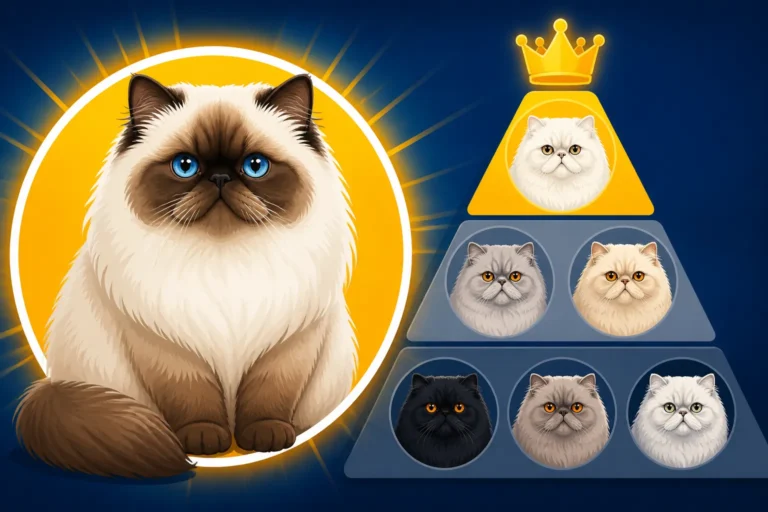
For the larger context behind how Himalayan cats fit within Persian records, see How the Himalayan Ranks Inside the Persian Breed. It is also useful to understand Which Registries Still Call It a Himalayan, because the answer depends on which organization’s system you mean.
Use the name that fits the question
For casual conversation, “Himalayan” is clear and widely understood. When discussing a registration statistic, use the exact registry category. When describing a specific cat’s pedigree, follow the wording on its official papers and explain the division if needed.
For example, a careful description might read: “This is a Himalayan, registered in a system that places Himalayans within the Persian category.” That keeps the familiar breed name while clarifying why a database may not list a separate Himalayan total.
The main point is not that one label is right and another is wrong. It is that registry categories shape the numbers people see. Once you know whether a source counts Himalayans separately or includes them under Persian, the apparent mismatch becomes much easier to understand.
Disclaimer
This article is for general informational purposes only and does not constitute professional advice. Laws, prices and regulations vary by location and change over time. Consult a qualified professional for guidance on your specific situation.