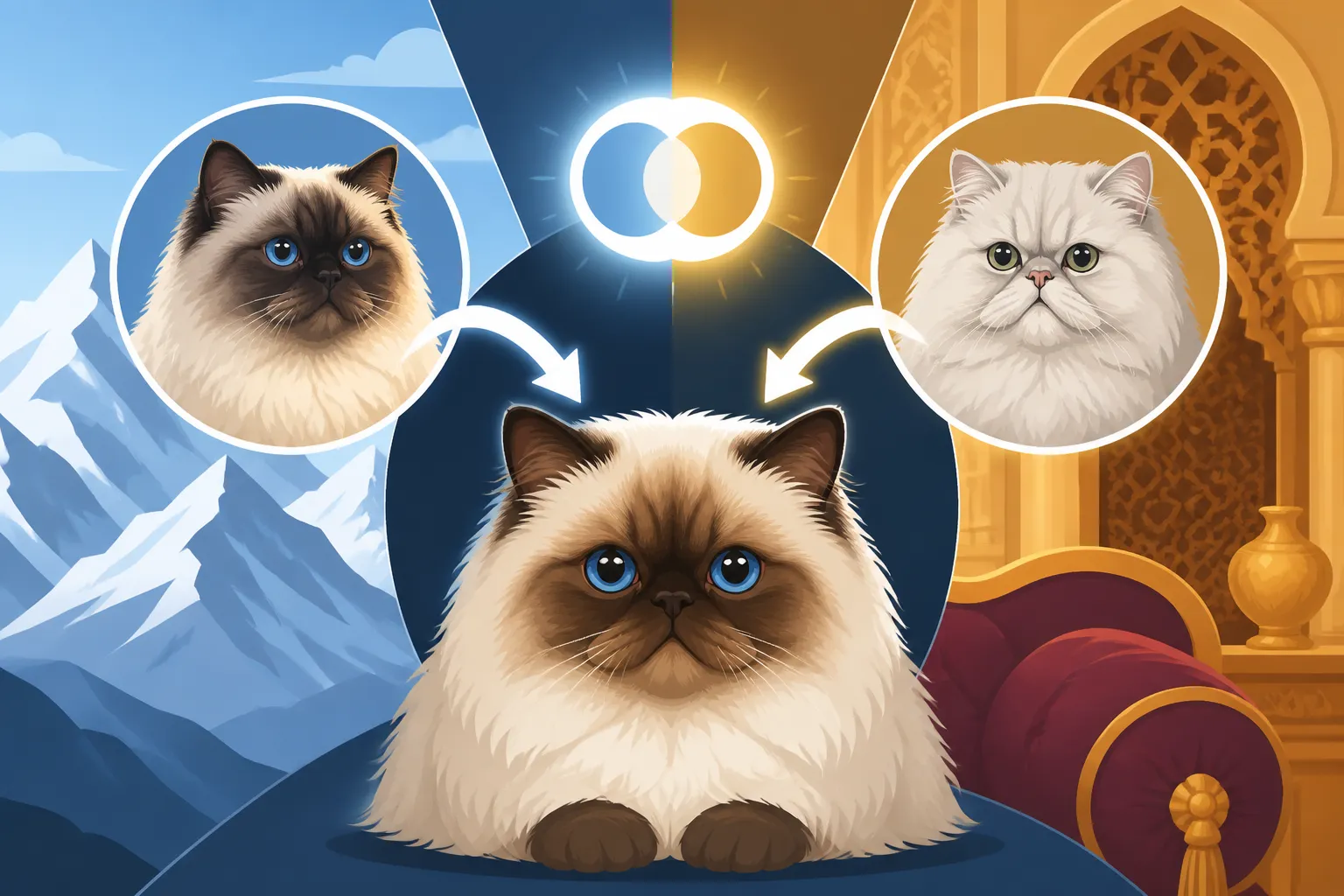
Why CFA Merged the Himalayan With the Persian
It can be genuinely confusing for new Himalayan cat owners, or even seasoned enthusiasts, to wrap their heads around the breed's official registration status. You've found this beautiful, distinct cat called a 'Himalayan,' but then you see paperwork that labels them as 'Persians.' What gives? This guide will dive deep into the pivotal 1984 decision by the Cat Fanciers' Association (CFA) to merge the Himalayan into the Persian breed, exploring the historical context, the rationale behind the move, and its lasting impact on how we view and register these magnificent felines.
The Himalayan's Early Days and Identity Crisis
To truly understand why the Cat Fanciers' Association (CFA) made the controversial decision to merge the Himalayan into the Persian breed, we have to journey back to the very origins of this stunning cat. The Himalayan wasn't discovered in some remote mountain range; it was a deliberate creation, a scientific endeavor born in laboratories and catteries. This intentional crossbreeding meant that from its inception, the Himalayan's identity was, in a way, tied to its parent breeds, particularly the regal Persian and the vocal Siamese.
A Scientific Creation and Initial Recognition
The story of the Himalayan truly begins in the 1930s, when researchers at Harvard University, specifically Dr. Clyde Keeler and Virginia Cobb, set out to study coat color inheritance. They meticulously crossed Siamese cats, known for their striking point coloration, with Persian cats, famed for their luxurious long coats and cobby build. Their aim wasn't necessarily to create a new pet breed at first, but to understand the genetics at play. The result, however, was undeniably charming: a long-haired, blue-eyed cat with the distinctive point coloration of the Siamese, but the physical characteristics of the Persian. The Himalayan Was Made at Harvard in the 1930s
Early breeders, like Marguerita Goforth, recognized the immense potential of these "colorpoint Persians" and dedicated years to developing consistent lines. It was a painstaking process of selective breeding, ensuring that the desired traits—the long coat, the cobby body, the blue eyes, and the point coloration—were reliably passed down. Eventually, their hard work paid off. In 1957, after decades of development and passionate advocacy, the Cat Fanciers' Association (CFA), one of the largest and most influential cat registries, officially recognized the Himalayan as a distinct breed. Marguerita Goforth and the Himalayan's 1957 Recognition This was a huge milestone, cementing its status as a unique entity in the cat fancy world. For years, Himalayans were judged in their own classes, celebrated for their unique blend of beauty from two distinct ancestral lines.
The Growing Debate Over Breed Classification
Even after official recognition, an undercurrent of debate persisted within the cat fancy community. The question always lingered: was the Himalayan truly a separate breed, or was it merely a variant of the Persian, distinguished only by its color pattern? Proponents of separate breed status pointed to its Siamese ancestry, emphasizing the unique point gene and the distinct personality traits that sometimes leaned more towards the Siamese in terms of vocalization and activity levels. They argued that its creation story, being a blend of two established breeds, justified its own classification.
However, the physical resemblance to the Persian was undeniable. Beyond the point coloration, Himalayans shared the Persian's long, flowing coat, their characteristic cobby body, short legs, and increasingly, the flattened facial structure that was becoming popular in show Persians. From a genetic perspective, the point coloration gene (cs) is recessive; a cat needs two copies of it to express the trait. This meant that a Persian could carry one copy of the gene without showing points. When a pointed cat was born from two ostensibly "Persian" parents (who were actually carriers), it fueled the argument that Himalayans were genetically just Persians with a specific color pattern, rather than a fundamentally different breed. This genetic reality became a powerful argument for those who felt the Himalayan was, at its heart, a Persian.
CFA's Historic Decision: The 1984 Merger Explained
The simmering debate finally reached a boiling point in the early 1980s. The Cat Fanciers' Association, ever striving for consistency and what they considered genetic purity within their recognized breeds, faced increasing pressure to re-evaluate the Himalayan's status. Their decision in 1984 sent ripples throughout the cat breeding world and fundamentally reshaped how Himalayans would be perceived and registered from that point forward.
The Rationale Behind the Merger
CFA's primary reasoning for merging the Himalayan into the Persian breed was rooted in the concept of genetic proximity. As the breed developed, and as breeders increasingly crossed Himalayans back to Persians to refine their type (meaning, to make them look more like Persians in terms of body and head structure), the genetic distinction between the two became less pronounced. The argument was that the only significant difference was the colorpoint gene, which could easily be carried by and expressed within the Persian gene pool. Why CFA Merged the Himalayan With the Persian
From CFA's perspective, maintaining the Himalayan as a separate breed created an unnecessary division. They believed that the physical "type"—the conformation, the head shape, the eye set, the coat texture—should dictate breed classification more than a single color pattern. Since Himalayans had increasingly been bred to meet the Persian standard in every aspect except color, it made logical sense to view them as a color division of the Persian rather than a standalone breed. This decision aligned with a broader trend in some cat registries to simplify classifications and group genetically similar cats together.
The Mechanics of the 1984 Reclassification
When CFA made its announcement, it wasn't about abolishing the Himalayan; it was about reclassifying it. Effective in 1984, the Himalayan ceased to be recognized as an independent breed by CFA. Instead, it became the "Himalayan Division" within the Persian breed. What this meant in practice was that Himalayans would now compete in the show ring alongside solid-colored, bi-color, shaded, and other patterned Persians. Their unique point coloration was simply another variation under the overarching Persian umbrella.
This reclassification meant that official CFA pedigrees and registration papers for Himalayans would no longer state "Himalayan." Instead, they would specify "Persian – Himalayan Division" or simply "Persian" with the appropriate color code indicating their point pattern. A CFA Himalayan Is a Persian on Its Own Paperwork For breeders who had dedicated their lives to developing the Himalayan as a distinct entity, this was a significant shift. It required adjusting breeding programs, rethinking how they presented their cats in shows, and educating potential buyers about the new nomenclature. Despite the initial shock, the CFA maintained that this move was a step towards genetic clarity and upholding the integrity of the Persian breed standard.
Navigating Life After the Merger: Breeder Perspectives and Public Perception
The 1984 merger was more than a paperwork change; it fundamentally altered the landscape for Himalayan breeders, show enthusiasts, and even the general public's understanding of the breed. It created a split within the cat fancy, with some embracing the change and others clinging to the Himalayan's original, independent identity.
Impact on Breeders and Show Circuits
For Himalayan breeders, the CFA merger was a mixed bag. On one hand, it meant their breeding goals became even more aligned with the Persian standard. To succeed in the show ring, a Himalayan couldn't just have beautiful points; it had to be an excellent Persian in every other aspect. This pushed breeders to focus intensely on classic Persian traits: the rounded head, the tiny ears, the cobby body, and the luxuriant coat. Those who had been breeding "Doll Face" Himalayans, with their slightly longer noses, often found themselves at a disadvantage as the "Peke Face" (or extreme flat-faced) Persian type became dominant in the show ring. Why Show Himalayans Drifted Toward the Flatter Face
The show circuits themselves saw Himalayans competing directly against all other Persian color divisions. This meant that a beautiful Seal Point Himalayan was now up against a magnificent Solid White Persian or a stunning Shaded Silver. Success required a cat that embodied the full Persian ideal, with its points as a bonus. This also influenced breeding practices, as some breeders began to actively cross Himalayans with solid Persians (known as "Himalayan carrier Persians") to introduce new bloodlines, improve type, and strengthen genetic diversity within the Colorpoint Persian division. What Changed for Himalayan Breeders After 1984
Public Perception and the Ongoing Name Debate
Despite CFA's official reclassification, the name "Himalayan" never truly disappeared from public consciousness. To this day, most pet owners and many smaller breeders continue to refer to these cats as Himalayans, distinct from their solid-colored Persian cousins. This creates a fascinating disconnect between official registry terminology and common usage. When you're looking for a new feline companion, you search for a "Himalayan cat," not necessarily a "Colorpoint Persian."
This lingering popular usage means that potential owners often encounter confusion. They might see a cat advertised as a "Himalayan" but receive CFA papers stating "Persian." This can be a source of frustration and requires breeders to carefully explain the historical context and current registration realities. While the CFA's decision aimed for clarity within its own system, it inadvertently solidified a dual identity for the breed in the broader world. This is why many breeders still passionately use the name Himalayan, not out of defiance, but because it’s the name the public knows and loves for this distinct pointed Persian. Why Breeders Still Use the Name Himalayan
The Ongoing Legacy: How Other Registries and Owners See the Himalayan Today
The Cat Fanciers' Association (CFA) is a dominant force in the cat fancy, but it's not the only registry out there. Their 1984 decision, while impactful, wasn't universally adopted, leaving a diverse landscape for how the Himalayan is recognized and how owners experience its registration. This split creates a unique situation for prospective and current Himalayan families, particularly when it comes to understanding pedigrees, showing, and even just talking about their beloved pets.
Divergent Paths: TICA and Other Registries
While CFA chose to integrate the Himalayan into the Persian, other major international registries took a different path. The International Cat Association (TICA), for example, maintains the Himalayan as a distinct, separate breed. For TICA, the unique combination of the Persian's body type and the Siamese's point coloration, along with the breed's distinct development history, warranted its own classification. This means that if you register your Himalayan with TICA, its papers will proudly state "Himalayan," reflecting its independent breed status. How TICA Registers a Himalayan Today
Similarly, in some other regions, such as the UK's Governing Council of the Cat Fancy (GCCF), the cat is referred to as a "Colorpoint Persian." While not a standalone breed name like TICA's "Himalayan," it still acknowledges the unique color pattern as a primary identifier within the Persian category. This varied approach across different registries means that the Himalayan's identity truly depends on which organization's rulebook you're looking at. For a cat owner, this isn't just bureaucratic detail; it dictates how your cat is categorized for shows, how pedigrees are interpreted, and sometimes, even how veterinary records are labeled.
| Registry | Status of Himalayan (or equivalent) | Implications for Showing/Registration |
|---|---|---|
| Cat Fanciers' Association (CFA) | A "Himalayan Division" within the Persian breed. | Competes as a Persian; papers state "Persian" with color designation. |
| The International Cat Association (TICA) | A distinct, separate breed: "Himalayan." | Competes as a Himalayan; papers state "Himalayan." |
| Governing Council of the Cat Fancy (GCCF, UK) | Considered a "Colorpoint Persian." | Competes as a Persian; papers state "Colorpoint Persian." |
Implications for Modern Himalayan Owners
For owners today, understanding this history and the current registry landscape is crucial. When you acquire a Himalayan kitten, it's vital to inquire about the cattery's registration practices. Are they CFA-registered? TICA-registered? Both? The answer will determine what your cat's official paperwork will say. Whether the Registry Split Affects a Himalayan Buyer This also plays a role if you ever consider showing your cat. If you plan to compete in CFA shows, your cat will be judged against all other Persian varieties, requiring an adherence to the full Persian standard. In TICA, it would compete within the Himalayan breed classes.
Beyond the show ring, the legacy of the merger influences everything from breeder terminology to casual conversations. Many reputable breeders will openly discuss this historical nuance, helping you understand why a cat universally recognized as a Himalayan might have “Persian” on its official documents. When you're looking for high-quality food or products for your long-haired friend, you might notice that even major retailers like Chewy often list “Himalayan” as a distinct breed filter, despite the CFA's classification. This enduring public identity speaks volumes about the breed's distinctiveness, regardless of how official registries categorize it. Moreover, if you're considering pet insurance to cover potential breed-specific health concerns, knowing your cat's full lineage is important for services like Healthy Paws. The identity of your Himalayan, whether officially a “Persian” or a “Himalayan,” remains firmly established in the hearts of those who love these gentle, vocal companions.
Disclaimer
This article is for general informational purposes only and does not constitute professional advice. Laws, prices and regulations vary by location and change over time. Consult a qualified professional for guidance on your specific situation.