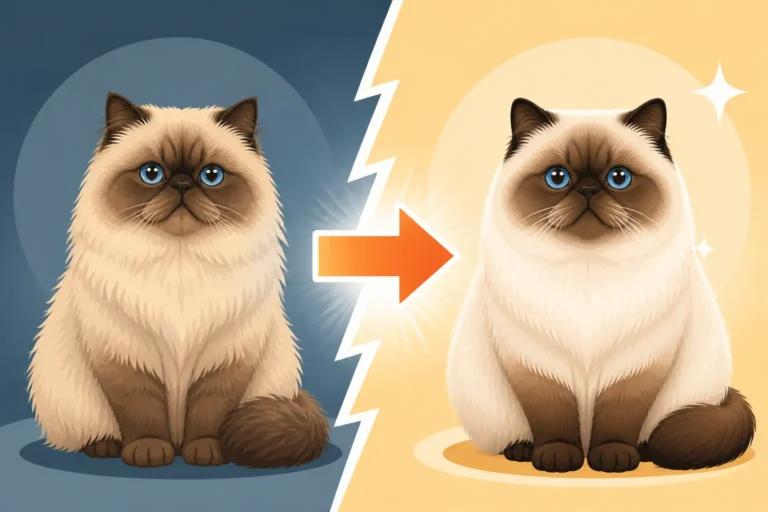
How to Explain the Himalayan Registry Split to a Buyer
It's incredibly frustrating when you're trying to do your due diligence, asking all the right questions about a Himalayan kitten, only to hit a wall of confusion when the topic of registration comes up. You might hear different answers from different breeders, or even read conflicting information online, leaving you wondering if you're even looking at a purebred Himalayan. This guide is here to untangle that knot of information, helping you understand the historical registry split for the Himalayan cat and what it means for you as a prospective owner, so you can confidently ask the right questions and ensure you're getting the companion you expect.
The Root of the Confusion: A Tale of Two Registries
The core of the registry split for Himalayans stems from a difference in philosophy among the major cat fancy associations. It’s not about the cat itself being different, but how the bureaucratic side of the cat world decided to classify it. For decades, the Himalayan was recognized as its own distinct breed, a beautiful hybrid blending the best traits of the Persian and the Siamese. Then, things changed, leading to the current situation where you might find your cat registered under two different "names," depending on which organization issues the paperwork.
The CFA's Decision to Merge
Back in 1984, the Cat Fanciers' Association (CFA), one of the oldest and largest registries in the world, made a significant decision that profoundly impacted the Himalayan. They opted to merge the Himalayan into the Persian breed, reclassifying it as the "Himalayan Division" of the Persian. This wasn't an arbitrary choice; it reflected the close genetic relationship between the two breeds. The Himalayan essentially is a Persian in body type and temperament, but with the striking colorpoint pattern and blue eyes inherited from its Siamese ancestry.
For many breeders at the time, this was a contentious issue. They had worked for years to establish the Himalayan as a unique breed, and suddenly, their efforts felt somewhat diminished on paper. From CFA's perspective, however, it made sense. The breed standard for Himalayans became identical to that of Persians in every way except for color and eye color. So, if you're looking at a CFA-registered Himalayan today, its official paperwork will actually say "Persian" with "Himalayan" noted as its division or color class. This doesn't mean your cat isn't a Himalayan; it simply means that in the eyes of the CFA, it's a specific type of Persian. Understanding this is key to deciphering any CFA registration documents you encounter. This merger means that A CFA Himalayan Is a Persian on Its Own Paperwork, a fact that often surprises new buyers.
TICA's Choice to Keep the Himalayan Separate
In stark contrast to the CFA, The International Cat Association (TICA), a younger but equally influential registry, decided to maintain the Himalayan as its own distinct breed. TICA's philosophy often leans towards recognizing breeds based on their unique characteristics, even if they share a common lineage. For TICA, the Himalayan's colorpoint pattern, blue eyes, and slightly different (though subtle) temperament warranted separate breed status.
This distinction is important because if you purchase a Himalayan registered with TICA, its papers will proudly state "Himalayan" as the breed. This can be less confusing for new owners who specifically sought out a Himalayan and want their paperwork to reflect that. TICA's stance has been a comfort to many Himalayan enthusiasts and breeders who felt strongly about the breed's unique identity. It means that TICA Still Registers the Himalayan as a Breed of Its Own, offering a clear alternative for those who prefer distinct recognition. While both registries uphold high standards for health and breeding ethics, their different classification methods can lead to real head-scratching moments for buyers trying to understand their kitten's lineage.
What This Means for You, the Himalayan Buyer
Navigating these different registration philosophies can feel like learning a new language, but it's crucial for any potential Himalayan owner. The registry your kitten comes from affects not just the name on its papers, but also its eligibility for cat shows, breeding programs, and even how its lineage is formally tracked. Don't worry, once you understand the basics, it becomes much clearer.
Understanding Your Cat's Paperwork
When you receive your Himalayan kitten's registration papers, whether they're from CFA or TICA, it's essential to know what you're looking at. If your kitten is CFA-registered, the certificate will likely identify the breed as "Persian," with a specific "Himalayan Division" or "Colorpoint Persian" designation. It might also specify the colorpoint pattern, like "Seal Point" or "Blue Point." Don't let this alarm you; it simply reflects CFA's classification system. The key is that the division clearly indicates it's a Himalayan. On the other hand, a TICA certificate will explicitly list "Himalayan" as the breed.
Regardless of the registry, the paperwork should also contain vital information about your kitten's lineage, including the registered names of its parents, grandparents, and sometimes even further back. This pedigree is more than just a family tree; it's a record that helps trace health information and confirms the purity of the lines. You should always receive Which Papers a Himalayan Buyer Should Insist On from your breeder. Take your time to review these documents, and don't hesitate to ask your breeder to walk you through every detail. A reputable breeder will be more than happy to explain What Your Himalayan's Certificate Actually Says and clarify any ambiguities.
Impact on Showing and Breeding Rights
The registry split has practical implications if you have aspirations beyond simply owning a beloved pet. If you plan to show your Himalayan, the registry matters. A CFA-registered Himalayan will compete in the Persian class, specifically within the Himalayan Division, against other colorpoint Persians. Judges will evaluate it based on the Persian breed standard, with the addition of the colorpoint and blue eye requirements. This means your Himalayan needs to embody the classic Persian type – cobby body, round head, small ears, and plush coat – alongside its distinctive points.
If your Himalayan is TICA-registered, it will compete as a Himalayan in its own breed class. While the standards are very similar to the Persian standard in CFA, the distinction allows for specific recognition of the Himalayan's unique traits without being subsumed under the larger Persian umbrella. For those interested in breeding, the registry choice also dictates which studbooks your cat is entered into and which other registered cats it can legitimately be bred with to produce registerable offspring. Some breeders might even register their cats with both organizations, giving them more flexibility, but this is less common and might add complexity. Remember, any breeding rights or show eligibility should be clearly outlined in your purchase contract with the breeder.
Navigating the Conversation with Your Breeder
It’s completely normal to feel a bit overwhelmed by all this information, especially if you’re new to the world of pedigreed cats. But this is exactly why having an open and honest conversation with your breeder is so vital. They should be your primary resource and guide through this process. A good breeder understands your potential confusion and will be patient in explaining everything.
Key Questions to Ask About Registration
When you're speaking with a prospective breeder, don't be shy about asking direct questions regarding registration. Here are some key inquiries that can help clarify things:
- "Which cat registry do you use for your Himalayans (CFA, TICA, or another)?" This is your starting point. Their answer will immediately tell you how your kitten will be registered.
- "If you register with CFA, will the papers say 'Persian, Himalayan Division'?" This helps confirm their understanding and transparency about the CFA classification.
- "Can I see a sample pedigree or registration certificate for one of your breeding cats?" This gives you a visual example of what your kitten's paperwork will look like and allows you to practice How to Read the Breed Line on a Himalayan Pedigree.
- "What are the implications for showing or breeding if my cat is registered with [their chosen registry]?" This clarifies the practical aspects beyond just ownership.
- "Are the parents of the kitten registered, and can I see their papers?" This validates the lineage and the breeder's adherence to registry standards.
A transparent breeder will be happy to discuss these details and provide all necessary documentation. If a breeder is vague, dismissive, or avoids these questions, it's often a red flag that warrants further consideration or perhaps looking elsewhere.
Ensuring Authenticity and Health Guarantees
Beyond the breed name on the paper, proper registration with a recognized association like CFA or TICA usually goes hand-in-hand with ethical breeding practices, including crucial health testing. Reputable breeders typically adhere to their registry's codes of ethics, which often include requirements or strong recommendations for genetic testing. For Himalayans, this is especially important for conditions like Polycystic Kidney Disease (PKD) and Progressive Retinal Atrophy (PRA).
Your breeder should provide proof of genetic testing for the parent cats, demonstrating that they are clear of these hereditary conditions. This isn't just about paperwork; it's about the long-term health and well-being of your future companion. Which Two Certificates a Himalayan Breeder Owes You usually includes proof of PKD negative status and often eye health clearances. You can learn How to Check a Himalayan's Kidney Certificate Is Real to ensure you're making an informed decision. These tests, while an upfront cost for the breeder, save heartache and considerable veterinary expenses down the line for you. Many pet insurance providers, like Healthy Paws, will want to see that your pet has a clear health history, and knowing your kitten comes from tested lines can be a big relief. It’s an investment in a healthy, happy future for your cat that can potentially live The Nine to Fifteen Years a Himalayan Usually Gets.
The Practical Side: Beyond the Paperwork
Ultimately, while understanding registration is important, the day-to-day joy of owning a Himalayan comes down to the cat itself, not just the name on a piece of paper. The care, companionship, and unique quirks of this magnificent breed remain constant, regardless of which registry they call home.
Everyday Life with a Registered Himalayan
Whether your Himalayan is registered as a "Persian, Himalayan Division" or simply a "Himalayan," its daily needs and personality will be the same. You'll still have that wonderfully affectionate, relatively quiet cat with stunning blue eyes and a luxurious, long coat that needs regular grooming. This cat will want its routine, its favorite warm spot, and plenty of gentle interaction. The distinct registry doesn't change their tendency to be a lap cat, their playful but not hyperactive nature, or their characteristic vocalizations, which are often described as a soft purr-meow.
Your focus will be on providing a loving home, a consistent routine, and proper care. This includes a high-quality diet, plenty of fresh water, and regular grooming sessions. Finding the right tools and supplies is key, and many owners rely on resources like Chewy for everything from specialized combs to cat-friendly shampoos. Their flattened faces also mean specific considerations for eating and drinking, often requiring shallow bowls to prevent whisker fatigue and make mealtime comfortable.
Choosing the Right Breeder Regardless of Registry Preference
The most crucial advice for any prospective Himalayan owner, regardless of how particular you are about the registry name, is to choose a reputable and ethical breeder. A good breeder prioritizes the health, temperament, and well-being of their cats above all else. They will be knowledgeable, transparent, and willing to answer all your questions, not just about registration, but about health testing, kitten socialization, and ongoing care.
Look for a breeder who welcomes visitors to their cattery (or provides detailed videos and photos if in-person visits aren't feasible due to biosecurity). They should be keen to learn about your home and lifestyle to ensure a good match, and they should clearly outline their health guarantee and return policies. Ultimately, while the registry split can be confusing, it's the quality of the breeder and the care they put into their cats that truly matters. Investing in a kitten from a responsible breeder is the best way to ensure you bring home a healthy, well-adjusted Himalayan companion who will enrich your life for years to come.
Disclaimer
This article is for general informational purposes only and does not constitute professional advice. Laws, prices and regulations vary by location and change over time. Consult a qualified professional for guidance on your specific situation.