Which Foods Darken a Himalayan’s Tear Tracks
Himalayan tear stain causes, flat-faced anatomy, and dietary factors explaining reddish-brown porphyrin markings around cat eyes.
The daily stuff, done right.
Feeding amounts by life stage, coat and skin routines, dental and nail care, exercise needs, and what changes as they age.

Himalayan tear stain causes, flat-faced anatomy, and dietary factors explaining reddish-brown porphyrin markings around cat eyes.

Keeping a pale cream coat clean, since light fur with only slightly darker points shows dust, crumbs and tear stains more than a Seal Point does.
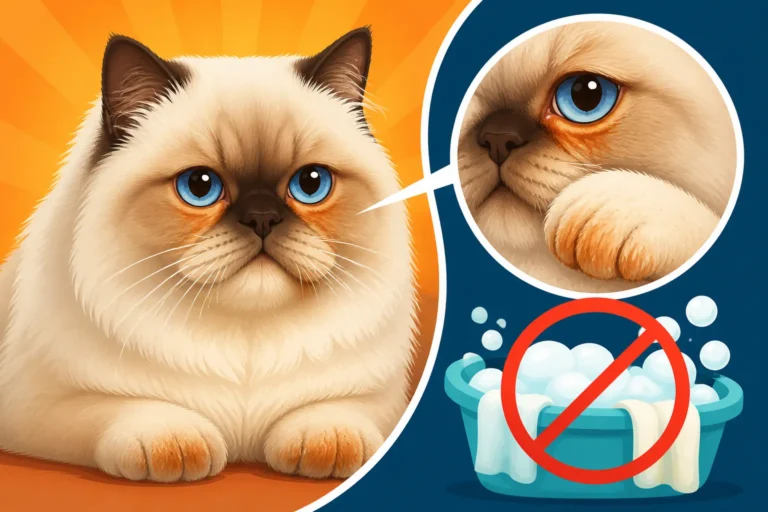
Himalayan cat tear stains resist washing because iron compounds called porphyrins oxidize and chemically bond with fur.

Himalayan tear staining supplements and their ingredients are evaluated to determine if they safely stop reddish-brown stains.
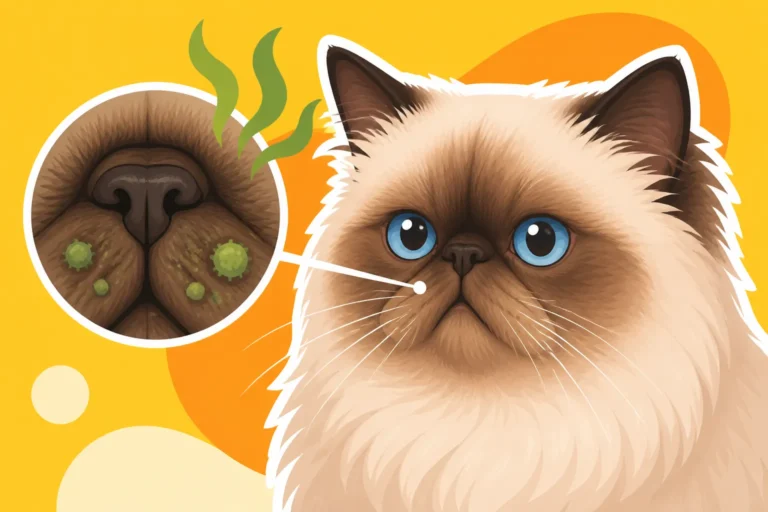
Himalayan cat nose fold odor stems from trapped moisture, tears, and food, requiring proper hygiene to address.
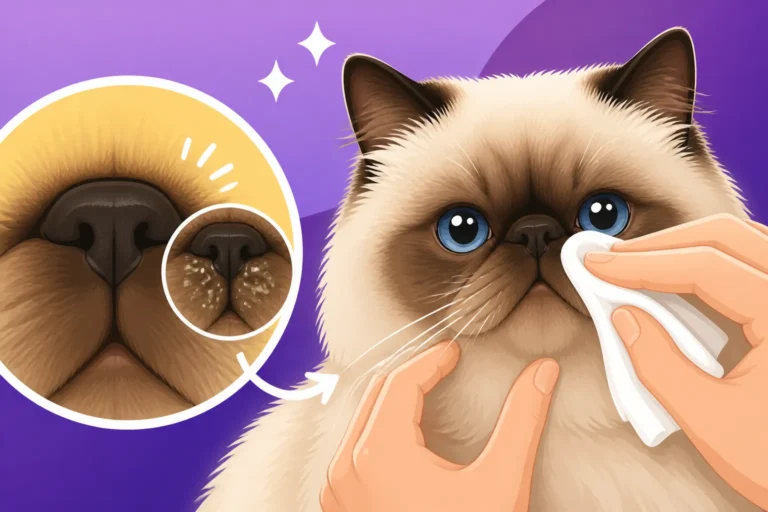
Himalayan nose fold moisture causes sour odors and infections, which daily drying prevents by stopping bacterial and yeast growth.

Himalayan cat tear stain management explains why water alone fails due to flat facial anatomy and bacteria growth.

Safe eye wipes for Himalayans prevent tear stains and bacteria without causing skin irritation or chemical burns.
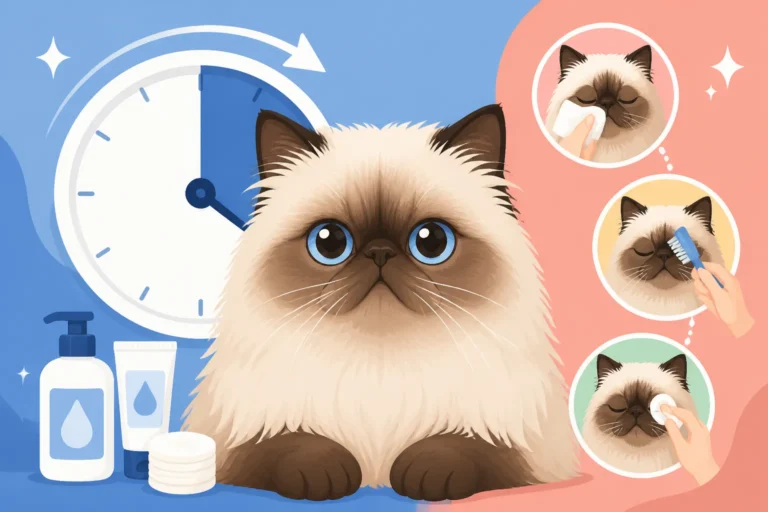
Himalayan cat daily face cleaning requires specific steps and tools to prevent tear stains and skin infections.

Himalayan cat facial structure causes tear duct blockages and damp skin folds that require daily wiping to prevent infections.