Why a Ragdoll Is Longer and a Himalayan Rounder
A Ragdoll can look long and flowing beside a Himalayan, whose broad chest, short legs, and dense coat create a rounder silhouette. That contrast is real, but it is also easy to exaggerate: coat volume, posture, age, and body condition all affect what you see. This guide explains the differences so you can compare the breeds without mistaking fluff for frame.
The basic difference in build
Why a Ragdoll looks longer
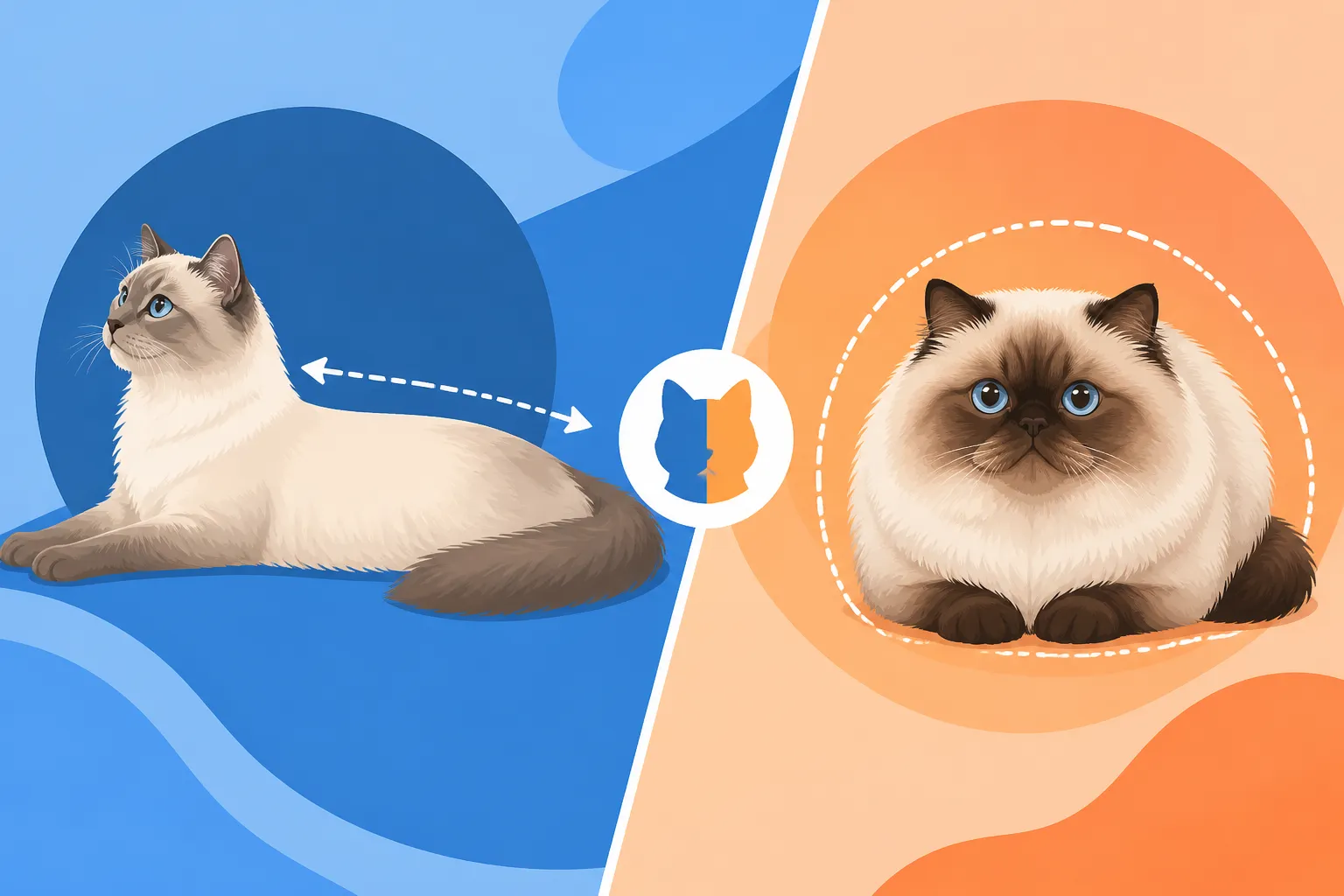
Ragdolls are generally built with a longer, more rectangular outline. Their bodies tend to look stretched from shoulder to hip, with a substantial frame and legs that appear longer than a Himalayan’s. A Ragdoll’s semi-long coat adds softness, but it usually falls around the body rather than making the cat look especially compact.
That shape is easiest to notice when a Ragdoll is standing or walking. The back may seem to run in a longer line, and the legs and tail help preserve an impression of reach. A relaxed Ragdoll sprawled across a sofa can look especially long because its body extends rather than gathering into a compact shape.
“Longer” does not mean thin, and a healthy Ragdoll should not look bony. These cats can be large and solid, with a broad chest and substantial weight. A thick coat can make it difficult to judge their outline by sight alone, so body condition should be assessed by feel as well as appearance.
Why a Himalayan looks rounder
The Himalayan’s traditional outline is more compact and cobby. The body is typically broad and sturdy, with relatively short legs and a rounded impression through the chest and torso. Its Persian ancestry is closely tied to this build; the Himalayan is often described as a Persian with the point-color pattern. For more on that background, see Why a Himalayan Is a Persian With the Point Gene.
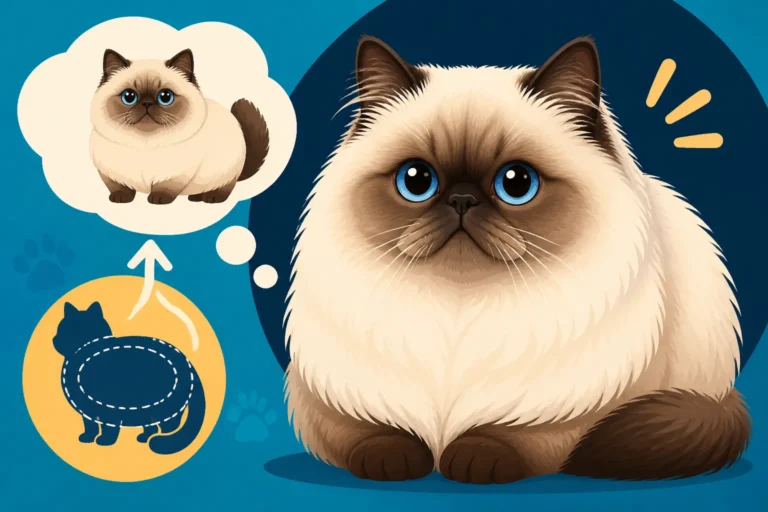
The coat contributes strongly to the rounded look. A full ruff frames the head and chest, while long fur along the sides and britches can blur the line between the cat’s body and legs. A Himalayan sitting down may appear almost spherical, even though its actual frame is not a ball and its coat may conceal a more defined waist.
This visual effect can make weight harder to judge. Instead of relying on whether a Himalayan looks “plump,” gently feel for the ribs and waist beneath the coat, or ask a veterinarian to assess body condition. How to Feel a Himalayan’s Spine Through Its Ruff explains why touch matters when a Persian-type coat hides the frame.
What creates the different silhouettes
Breed type is more than coat length
The contrast between these breeds comes from more than one feature. Body proportions, leg length, bone structure, head shape, and coat all influence the outline. The Himalayan’s compact build and abundant coat tend to make the body look gathered and rounded. The Ragdoll’s longer body and less dense-looking outline often make it seem more stretched.
Colorpoint markings can also distract the eye. Both breeds may have darker color on the face, ears, legs, and tail, against a lighter body coat. That shared pattern can make people focus on color and facial markings while overlooking the differences in body shape. Their point pattern is not evidence that the breeds have the same proportions.
A comparison is most useful when the cats are viewed in similar positions. A Himalayan curled on a cushion beside a standing Ragdoll will naturally look rounder and shorter. Compare them standing on level ground, or look at photographs taken from the side, while remembering that age, grooming, and individual variation still matter.
The face can change the whole impression
The Himalayan’s face is typically shorter and flatter than the Ragdoll’s, which often has a more moderate muzzle and a different overall head profile. When a broad head sits above a short, full neck ruff, the Himalayan can appear even more compact. The Ragdoll’s head and body usually create a longer visual line.
Himalayans do not all have identical facial structure. Some have a less extreme profile than others, and coat styling can make the muzzle seem more or less prominent. If you are evaluating a Himalayan’s profile, look at the face from the side rather than relying on a front-facing portrait. What a Himalayan’s Profile Should Look Like Side On offers a useful description of that feature.
The face is also a health consideration, not just an appearance trait. A very short muzzle can affect comfort and breathing in some cats. A round outline is not, by itself, a sign of poor health, but it should not distract from checking that the cat moves comfortably, breathes quietly at rest, and can groom itself.
| Feature | Ragdoll | Himalayan |
|---|---|---|
| General outline | Longer and more rectangular | Compact, broad, and cobby |
| Legs | Usually appear longer | Usually appear shorter in proportion to the body |
| Coat effect | Semi-long coat that follows a longer frame | Full coat and ruff can make the body look rounder |
| Face | Typically a more moderate profile | Persian-type profile, which may be flatter |
| What can mislead you | Size and coat can hide excess weight | Dense coat can hide the waist and body condition |
How to compare the breeds fairly
Look at proportion, not just size
A large cat is not automatically a long-bodied cat. Ragdolls can have considerable substance, while Himalayans can look broad and heavy because of their coat and compact frame. Compare the relationship between torso length, leg length, and width rather than deciding based on which cat seems bigger overall.
Age matters, too. A growing kitten may look leggy before its body fills out, while an adult’s coat can take time to develop fully. Neutering, overall health, and individual genetics also influence how a cat matures. Breed descriptions are useful guides, not promises that every cat will match a perfect outline.
If you are choosing between the breeds, spend time observing adult cats rather than relying only on kitten photos. Ask about the parents’ size and build, and consider how much daily coat care you can realistically manage. Whether to Choose a Himalayan or a Ragdoll can help you think beyond appearance, while How a Himalayan Compares to a Birman as a Pet provides another useful comparison with a longhaired breed.
Use touch to judge body condition
Long fur can make both breeds look larger than they are, but a Himalayan’s dense coat may especially obscure the waist and ribs. Run your hands gently along the sides rather than pressing down on the fur. You should be able to feel the ribs without having to push through a thick layer of tissue, while the waist should be discernible behind the ribs when viewed from above.
A fluffy belly is not always excess fat; some cats have a loose flap of skin called a primordial pouch. Conversely, a cat can carry extra weight even if its face and legs look delicate. The right assessment combines touch, a view from above and the side, and a veterinarian’s body-condition evaluation. How Heavy a Full Grown Himalayan Gets gives context for why a single target number cannot describe every cat’s healthy size.
If weight is a concern, avoid restricting food based only on breed stereotypes or a cat’s appearance in a photograph. Ask a veterinarian to review the cat’s body condition, diet, activity, and any relevant health history. A gradual, measured plan is safer than a sudden change, especially for a cat that is already eating less or acting differently.
What the shape means for everyday life
Make the home fit the cat, not the stereotype
A Himalayan’s shorter legs and compact frame may make low, stable routes more comfortable than tall, narrow climbing structures. Wide platforms, a sturdy step to a favorite chair, and an easy route to food and water can help a cat that prefers not to leap. This is not a rule that Himalayans never climb; it is a practical way to make common household spots accessible. See Why a Cobby Himalayan Needs Wide Platforms, Not Tall Ones.
A Ragdoll’s longer frame does not mean it needs a high-energy lifestyle or will enjoy every climbing setup. Individual confidence, age, health, and past experience matter more than a simple breed label. Watch how your cat approaches furniture, then place resting spots and resources where it can reach them without awkward jumps.
Feeding setup can also be affected by face shape. A shallow, wide dish may be easier for a flat-faced Himalayan to use than a deep, narrow bowl. When comparing bowls, focus on shape and stability rather than assuming that one product works for every cat. Stores such as Chewy carry a range of pet supplies, but the important step is choosing a dish your cat can comfortably reach and eat from.
Coat care affects the outline you see
Regular grooming helps keep a Himalayan’s coat from matting and makes it easier to notice changes in body shape, skin, or movement. A comb can reveal whether the body is becoming harder to feel beneath the coat, and checking the armpits, belly, and britches helps catch tangles before they tighten. A Ragdoll also needs coat care, though its texture and grooming needs can differ from a Himalayan’s.
Set up grooming as a calm, repeatable routine rather than waiting until the coat is tangled. Short sessions, gentle handling, and breaks can make the process easier for both cat and person. For supplies, Chewy is one place owners may browse for combs and grooming tools; whatever the source, choose a tool that reaches through the coat without scraping the skin.
The key distinction is simple: a Ragdoll’s longer body and legs tend to create an elongated silhouette, while a Himalayan’s cobby frame, short legs, and abundant coat create a rounder one. Neither outline tells you everything about health or temperament. Look at proportions, feel through the fur, and consider the individual cat in front of you—not just the breed label. For broader identification guidance, see How to Tell a Himalayan From a Persian.
Disclaimer
This article is for general informational purposes only and does not constitute professional advice. Laws, prices and regulations vary by location and change over time. Consult a qualified professional for guidance on your specific situation.