How Long a Himalayan’s Face Routine Takes
If you're a Himalayan cat owner, or considering becoming one, you've probably heard whispers (or outright cries of frustration!) about the "face routine." It’s true, these stunning felines, with their luxuriously long coats and distinctive flat faces, require a bit of extra TLC in the facial department. This guide is here to realistically walk you through just how long a Himalayan's daily face routine truly takes, breaking down each step and offering practical tips to make it a manageable, loving part of your day, rather than a dreaded chore.
Understanding the Himalayan's Unique Facial Needs
It’s easy to get swept away by the Himalayan's captivating blue eyes and magnificent ruff, but beneath that beauty lies a facial structure that demands specific attention. Their brachycephalic, or "flat-faced," characteristic, inherited from their Persian lineage, is what makes them so unique, but it also creates some inherent challenges.
The Flat Face and Its Consequences
The defining feature of a Himalayan is its charmingly flat face. While some Himalayans might have a slightly more pronounced nose (often called a "doll face"), many exhibit a very flat or "peke face" profile. This adorable squishiness means their tear ducts often don't drain efficiently, leading to a constant overflow of tears. These tears, especially when they sit on the fur, can create dampness and reddish-brown stains, particularly noticeable on paler point colors. It's a common lament among owners: Why a Flatter Face Shows More on a Pale Himalayan.
Beyond aesthetics, this dampness around the eyes and nose can become a breeding ground for bacteria and yeast, leading to skin irritation and infections if not addressed daily. The deep folds around their tiny noses also trap moisture and debris, creating an environment ripe for what's known as "fold dermatitis." It's not just about keeping them pretty; it's about preventing discomfort and potential health issues for your beloved companion.
Why Daily Care Isn't Optional
I know, I know – daily tasks can feel overwhelming when you’re already juggling so much in life. But with a Himalayan, consistency with face care isn't just a recommendation; it's practically a commandment. Skipping even a day or two can quickly escalate into a much bigger problem. Those faint tear tracks can become entrenched stains, the dampness can turn into a raw, angry rash, and a tiny bit of gunk can become a crusty, matted mess.
Imagine trying to clear a hardened, gooey patch of fur around your cat's eye. It’s not only difficult for you but incredibly uncomfortable for your cat, potentially even painful. Neglecting these areas means eventually facing more severe issues like infections, which will necessitate vet visits, prescribed medications, and significantly more time and effort to resolve than a simple daily wipe. It’s an investment of minutes now to save hours (and heartache, not to mention money) later.
Breaking Down the Daily Face Routine Step-by-Step
So, let's get down to the nitty-gritty: what does this daily face routine actually involve, and how long does it really take? The good news is, once you get into a rhythm, it becomes second nature, and your cat will often come to appreciate the gentle attention.
The Essential Tools for Success
Before you even begin, having the right tools on hand makes all the difference. You don't need a huge arsenal, just a few key items that are safe and effective for your Himalayan's delicate face.
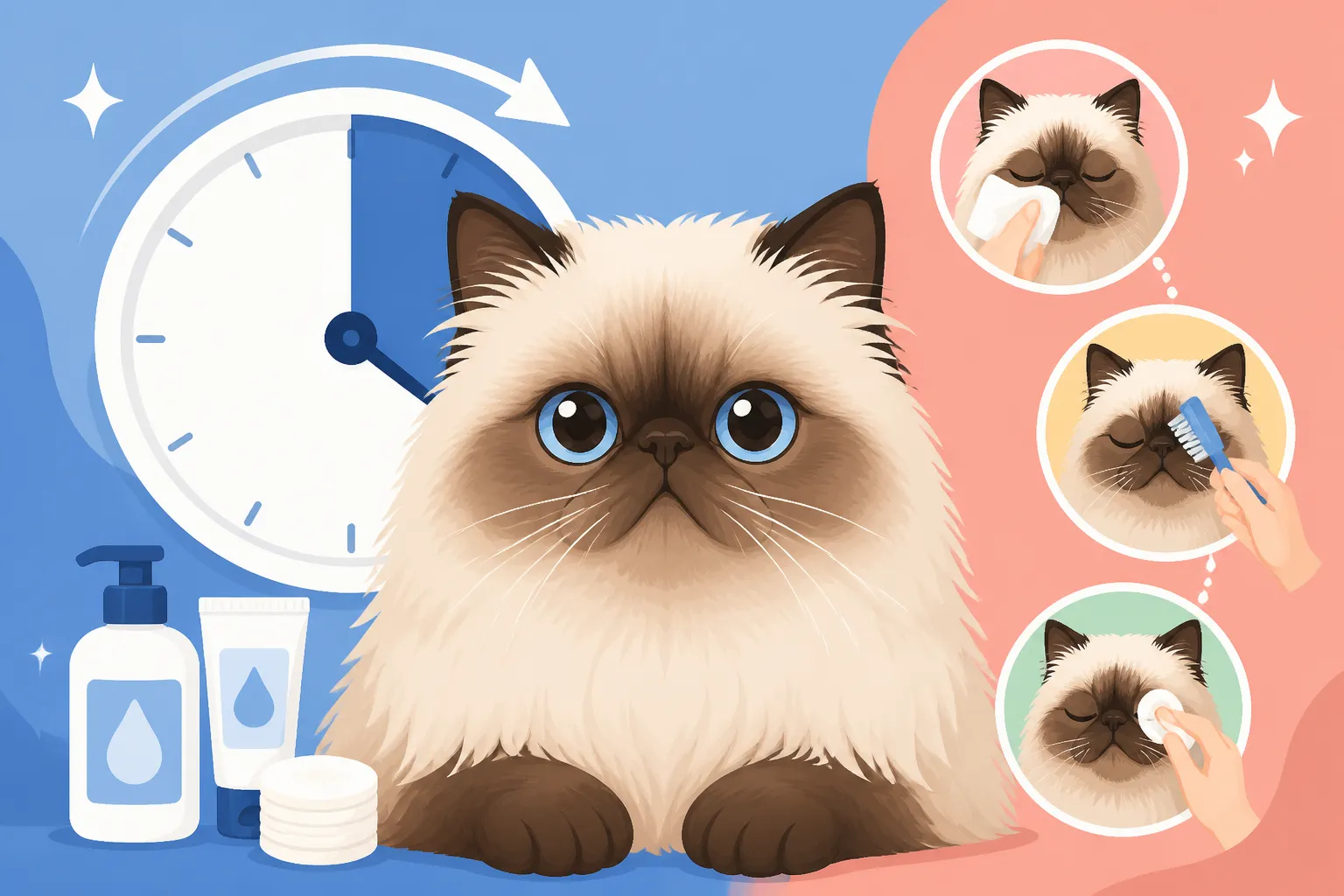
First, you'll want some very soft, lint-free cloths or specialized pet facial wipes. Many owners find success with pre-moistened wipes designed specifically for cats, which you can often find on platforms like Chewy or Amazon. Make sure they are unscented and free of harsh chemicals that could irritate those sensitive blue eyes. Small cotton pads, like those used for makeup removal, can also be helpful for precise cleaning. Second, a fine-toothed metal comb is crucial for gently working through any tiny tangles or crusts around the eyes and muzzle, ensuring you don't pull on delicate skin or tear out precious fur. Finally, for the nose fold, a soft, dry cotton ball or a corner of a dry cloth is essential for thoroughly drying the area after cleaning.
The Actual Time Investment for Each Step
Let's break this down into realistic timeframes. Remember, these are estimates, and your first few attempts might take a little longer as both you and your Himalayan get accustomed to the routine.
- Wiping Away Tear Stains and Discharge (1-2 minutes per eye): This is often the first step. Gently hold your cat's head and use a damp cloth or specialized wipe to carefully clean around each eye, wiping away any fresh tears or dried discharge. Always wipe away from the eye, towards the nose or ear, to avoid getting debris in the eye. If there's crusting, a warm, damp cloth held gently against it for a few seconds can help soften it before you wipe. Be patient and reassuring. For details on what to use, consider Which Wipes Are Safe Around a Himalayan's Blue Eyes.
- Cleaning the Nose Fold (1-2 minutes): This step is particularly vital for Himalayans with deeper nose folds. Use a fresh, damp cloth or wipe to gently clean inside the fold, removing any accumulated moisture, food particles, or debris. Once clean, and this is crucial, use a dry cotton ball or cloth to meticulously dry the fold. Any lingering dampness will lead to irritation. You can find more specific guidance on Cleaning the Fold Beside a Himalayan's Flattened Nose.
- Combing Around the Eyes and Muzzle (1 minute): With your fine-toothed comb, very gently comb the fur immediately surrounding the eyes and along the muzzle. This helps to prevent small mats from forming where tears or food might have settled. Be extra careful around the delicate eye area.
- Post-Meal Checks (30 seconds – 1 minute per check): After your Himalayan finishes eating, especially if they've enjoyed wet food (which many flat-faced cats prefer due to their What a Persian Jaw Does to a Himalayan's Bite), quickly check their chin and ruff for any food residue. A quick wipe with a damp cloth can prevent sticky messes that harden into mats. This might be done a couple of times a day, depending on feeding frequency.
So, if you dedicate about 5-8 minutes once a day, you’ll be in excellent shape. Some owners prefer to split it into two shorter sessions – a quick wipe in the morning and another in the evening – especially if their cat experiences significant tearing or is a messy eater. Consistency is the real time-saver here; preventing buildup is much faster than cleaning it.
Here’s a quick overview of the daily routine:
| Step | Estimated Time (Daily) | Purpose | Key Tip |
|---|---|---|---|
| Wipe Tear Stains & Eye Discharge | 1-2 minutes per eye | Prevent staining, remove irritants | Wipe away from the eye; use soft, damp cloth/wipe |
| Clean & Dry Nose Fold | 1-2 minutes | Prevent fold dermatitis, remove debris | Thoroughly dry after cleaning to prevent yeast |
| Comb Around Eyes & Muzzle | 1 minute | Prevent matting, remove tiny debris | Use a fine-toothed comb; be gentle |
| Post-Meal Wipe (as needed) | 30 sec – 1 minute | Remove food residue from chin/ruff | Prevents sticky mats; use damp cloth |
| Total Daily Estimated Time | 5-8 minutes | Maintain hygiene and comfort, prevent bigger issues | Consistency is key; makes the routine quicker over time |
Factors Influencing Your Himalayan's Face Routine Time
While 5-8 minutes is a solid baseline, several factors can influence whether your daily face care leans towards the shorter or longer end of that spectrum, or even requires a bit more. Every Himalayan is an individual, after all!
Individual Cat Variation
Just like people, not all Himalayans are built exactly alike. Some will have a more extremely flattened face, leading to more pronounced tear staining and deeper nose folds, which naturally takes a little longer to clean and dry thoroughly. A "peke face" Himalayan, for instance, might require a bit more detailed attention than a "doll face" one. Their coat color also plays a role – Why Tear Stains Are Worse on a Cream Bodied Himalayan is a clear example, as lighter coats make even minor staining stand out more vividly.
A cat's personality is another huge factor. A calm, cooperative Himalayan who has been introduced to the routine gently from a young age might allow you to complete the task in just a few minutes, even leaning into the process. On the other hand, a more resistant or anxious cat might require more patience, gentle reassurance, and breaks, extending the session. Starting face handling early, perhaps even during their A Himalayan Kitten's First Year, White to Pointed, can make a world of difference. Older cats, especially those with conditions like How a Himalayan Behaves as Its Sight Goes, might also need a gentler, slower approach.
Preventative Measures and Long-Term Savings
Think of your daily routine as preventative maintenance. By being diligent, you actually save time (and stress!) in the long run. But beyond the daily wipe, there are other lifestyle choices that can minimize the amount of care needed.
Diet, for instance, can sometimes play a role. Some anecdotal evidence suggests that certain food ingredients might exacerbate tear staining in some cats, though scientific consensus varies. If you feed wet food, a flat, shallow bowl is essential, as it helps your Himalayan reach their food without pushing their face into it, which can cause food to get caked onto their chin and ruff. Why a Wide Shallow Water Bowl Suits a Himalayan similarly helps them drink without soaking their face and creating more dampness. Regularly trimming the fur around the eyes and nose (very carefully, or by a professional groomer) can also help reduce the surface area for stains to cling to. Regular visits to your vet to assess your cat's breathing and eye health, and to understand How a Vet Grades a Himalayan's Nostrils, can also ensure there are no underlying issues making the routine harder than it needs to be.
When to Seek Professional Help and Save Time in the Long Run
While a consistent daily routine will handle most of your Himalayan's facial hygiene needs, there are times when problems arise that are beyond simple wiping. Recognizing these signs early and seeking professional help is crucial. Not only does it ensure your cat's health and comfort, but it often saves you from far more time-consuming (and costly) interventions down the line.
Recognizing Problem Signs
Your daily face routine isn't just about cleaning; it's also your opportunity to thoroughly inspect your cat's face. Keep an eye out for any changes that seem out of the ordinary. Persistent redness or swelling around the eyes or in the nose fold, even after cleaning, is a red flag. Unusual discharge that is thick, colored (green, yellow), or foul-smelling indicates an infection that needs veterinary attention. A strong, sour odor from the nose fold, despite regular cleaning, is another sign of potential fold dermatitis, as detailed in How Fold Dermatitis Starts Beside a Himalayan's Nose.
Also, pay attention to your cat's comfort level. If they suddenly become reluctant to have their face touched, paw at their eyes frequently, or show signs of pain, it's time to call the vet. Sometimes, an eye might appear half-closed or squinty, which could indicate something serious like a corneal ulcer, a situation where Why a Himalayan's Eye Injury Cannot Wait Until Monday is critically true. These are not merely cosmetic issues; they are indicators of underlying health problems that require a professional diagnosis and treatment plan.
The Vet or Professional Groomer's Role
If you spot any of the aforementioned problem signs, your first call should always be to your veterinarian. They can diagnose infections, prescribe appropriate medications (like eye drops or topical treatments), and rule out any structural issues with the tear ducts or eyelids. In some cases, a vet might recommend flushing the tear ducts or even a minor surgical procedure to address severe anatomical issues that contribute to chronic problems. These interventions, while initially seeming like a big step, can drastically reduce your daily struggle and improve your cat's quality of life. Regular How Often a Himalayan's Eyes Should Be Examined can catch issues early.
A professional groomer, particularly one experienced with Himalayans or Persians, can also be an invaluable asset. They can safely trim the hair around the eyes and nose to minimize staining and matting, a task many owners understandably feel nervous about doing themselves with scissors near their cat's eyes. They can also offer advice on specific products or techniques they've found effective. While a groomer won't address medical issues, they can provide excellent preventative and maintenance care for the coat and facial fur, complementing your daily efforts. Sometimes, what feels like an overwhelming daily task can be significantly eased with professional guidance and occasional assistance.
Disclaimer
This article is for general informational purposes only and does not constitute professional advice. Laws, prices and regulations vary by location and change over time. Consult a qualified professional for guidance on your specific situation.