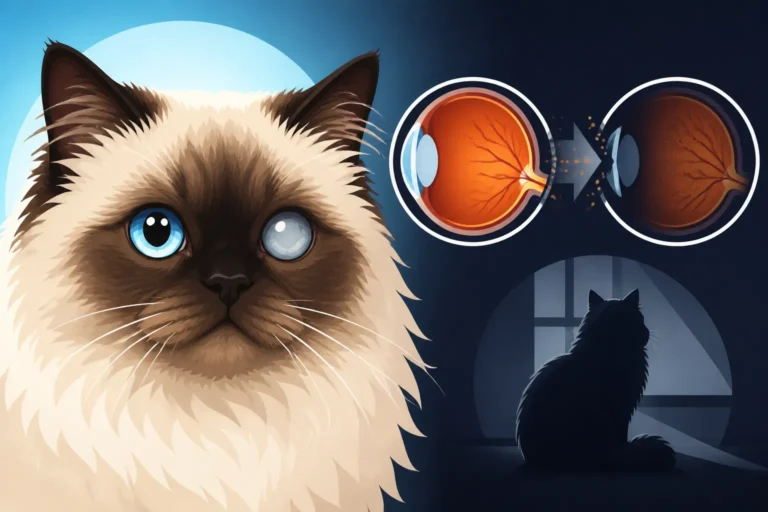
Why a Himalayan’s Required Blue Eyes Carry No Penalty
One common worry many aspiring Himalayan cat parents have is about their striking blue eyes. There's a persistent myth that blue-eyed cats, especially those with white fur, are often deaf or suffer from other vision problems. This concern is completely understandable, given how much we want our beloved pets to be healthy and happy. This comprehensive guide will delve into the fascinating genetics behind the Himalayan's captivating blue eyes, clarify why this isn't a health penalty for the breed, and equip you with the knowledge to care for your blue-eyed beauty confidently.
The Genetic Truth Behind Himalayan Blue Eyes
It’s easy to look at a beautiful Himalayan with its deep sapphire eyes and wonder if such a distinct feature comes with a trade-off. Thankfully, when it comes to the Himalayan, those captivating blue eyes are simply a part of their unique charm, genetically speaking, and are not linked to the health concerns often associated with other blue-eyed cat varieties. Understanding the underlying genetics can really help put your mind at ease.
The Point Gene and Blue Eyes
The reason Himalayans have those gorgeous blue eyes is directly tied to the same gene that gives them their distinctive "points"—the darker coloration on their extremities like ears, face, paws, and tail. This is known as the temperature-sensitive albinism gene, or the Himalayan gene (cs/cs). This gene is responsible for restricting color development to cooler parts of the body. When a kitten is born, its entire body, including its eyes, lacks melanin, appearing almost white. As the kitten grows and is exposed to cooler temperatures, the points begin to darken.
This same genetic mechanism affects the amount of melanin in the iris of the eye. In Himalayans, the gene causes a reduction in pigment in the iris, leading to the characteristic blue color. This isn't a defect; it's just how the gene expresses itself. It's a completely normal and healthy outcome of their specific genetic makeup, one that breeders actively select for to meet the breed standard. This connection between coat pattern and eye color is a fascinating aspect of cat genetics, and it's important to remember that this particular blue eye color is not a red flag for health issues. In fact, you can learn more about how "Why the Point Gene Makes Every Himalayan Blue Eyed" in another one of our articles.
The Absence of White-Related Deafness Gene
Now, let's address the elephant in the room: the association between blue eyes and deafness. This concern typically arises from a completely different genetic phenomenon seen in cats that are primarily white-coated, especially those with non-pointed patterns and blue eyes. In these cases, particularly in breeds like the Turkish Angora or certain Domestic Shorthairs, a specific gene linked to dominant white coloration can also affect the development of the cochlea in the inner ear, leading to deafness. This gene is associated with the absence of pigment entirely, rather than a restriction of pigment like in Himalayans.
Himalayans, despite their pale bodies, are not "white cats" in the genetic sense that causes this form of deafness. They are genetically colored cats with a temperature-sensitive albinism gene. Their blue eyes are a direct result of the point gene, not the dominant white gene. This is a crucial distinction. Therefore, the concern about blue eyes meaning deafness simply does not apply to the Himalayan breed. Their genetics ensure that their blue eyes are a perfectly healthy and beautiful trait.
Dispelling the Myth of Blue-Eyed Deafness in Himalayans
The internet is a vast place, and sometimes information gets conflated or misinterpreted. It’s natural to feel a pang of worry when you hear about blue-eyed cats having health issues. However, for Himalayans, this is one myth you can confidently let go of. Your Himalayan's vibrant blue gaze is purely a cosmetic trait, not a predictor of hearing loss.
The Role of the Point Gene
As we discussed, the point gene in Himalayans is directly responsible for their blue eyes. This gene, often referred to as a form of partial albinism, inhibits pigment production in warmer areas of the body, allowing it to develop only in cooler extremities. The iris of the eye, which is a cooler part of the body, expresses this gene as a stunning blue. This is a specific, well-understood genetic pathway, and it has no known link to auditory system development or function. The blue eye color in Himalayans is simply a manifestation of this unique pigment distribution, rendering their eyes visually striking without any associated impairment.
Think of it like this: the gene determines where the color goes, and how much, but it doesn't break anything in the process. It's a design choice by nature, not a design flaw. This specific genetic signature means that your Himalayan's hearing is, for all intents and purposes, entirely independent of their eye color. If you're curious about the specific contributions from their lineage, explore "What the Siamese Side Gave a Himalayan Besides Points" for more insights into their genetic heritage.
Why White Cats with Blue Eyes Can Have Issues
It's important to understand why the confusion exists. The link between blue eyes and deafness does exist in some cats, but it's tied to the dominant white gene (W) and not the Himalayan point gene (cs/cs). Cats with the dominant white gene are genetically colored but appear entirely white because the gene masks all other coat colors. If these dominant white cats also happen to have blue eyes (which can occur with this gene, especially when paired with other specific genetic modifiers), there's a higher chance of congenital deafness. This is because the gene responsible for masking color can also interfere with the development of the cells in the inner ear, leading to irreversible hearing loss.
The key takeaway here is that Himalayans are not dominant white cats. Their paleness is due to temperature-sensitive albinism, not the dominant white gene. Therefore, the mechanism that causes deafness in some blue-eyed white cats simply isn't present in Himalayans. It's like comparing apples and oranges; both are fruit, but their genetic makeup and associated traits are entirely different. So, when you look into your Himalayan's beautiful blue eyes, rest assured that their hearing is likely just as perfect as their vision.
The Unique Structure of a Himalayan's Eye
While the blue color itself carries no penalty, the overall structure of the Himalayan's face can predispose them to certain eye-related challenges. These issues are tied to their brachycephalic (flattened) facial structure, a hallmark of the Persian breed, which is one half of the Himalayan's ancestry. It's crucial to distinguish these structural concerns from any supposed inherent weakness due to blue eyes alone.
The Siamese Ancestry Influence
On one side of the Himalayan family tree, you have the Siamese, a breed known for its elegant, wedge-shaped head and almond-shaped eyes. The Siamese contributed the point gene and the blue eye color, as well as their communicative nature, but not the flattened face. The eye shape in Siamese cats is generally healthy and less prone to the kind of structural issues seen in brachycephalic breeds. However, the blending of the Siamese's "point" gene with the Persian's features led to a unique combination.
What the Siamese essentially brought to the table was the gene for those striking blue eyes, ensuring that all Himalayans would possess this trait. This genetic contribution, as previously established, is benign in itself. It's the other half of the ancestry, the Persian, that introduces the structural elements that can affect eye health, completely independent of the eye color itself.
The Persian Brachycephalic Impact
The other half of the Himalayan's heritage is the Persian, famous for its distinctively flat face. While endearing to many, this brachycephalic structure is the root cause of almost all the unique eye care considerations for Himalayans. The shortened muzzle means the eye sockets are often shallower, and the eyes themselves can be more prominent or "exposed." This can lead to several common issues:
- Prominent Eyes: The eyes protrude slightly, making them more vulnerable to dust, debris, and even accidental injury. They might not blink as completely, leading to dryness.
- Shallow Eye Sockets: The lack of depth means the eyes don't sit as recessed and protected as they would in a cat with a more conventional muzzle.
- Nose Folds: The deep skin folds around their flattened nose can trap moisture and debris, leading to irritation that can impact the nearby eyes. This is why "Why a Flatter Face Shows More on a Pale Himalayan" can be such a challenge.
- Tear Duct Issues: The drainage system for tears can be kinked, narrowed, or blocked due to the compressed facial bones, causing tears to overflow.
These structural considerations are vital for any Himalayan owner to understand and prepare for. They are not a penalty of the blue eye color, but rather a consequence of the breed's unique facial anatomy, inherited from its Persian lineage. Proper care and regular veterinary check-ups become paramount to manage these potential challenges.
Common Eye Concerns Specific to Himalayans (Unrelated to Blue Color)
Despite their blue eyes carrying no inherent health penalty, the Himalayan breed does face specific ocular challenges due to their unique facial structure, particularly the brachycephalic features inherited from their Persian ancestors. These issues are entirely unrelated to the blue pigment of their irises but are crucial for any Himalayan owner to be aware of.
Entropion and Ectropion
Two of the most frequently encountered eye conditions in Himalayans are entropion and ectropion, both direct consequences of their facial structure.
- Entropion: This is a condition where the eyelid (usually the lower one) rolls inward, causing the eyelashes and fur to rub against the surface of the eye (cornea). Imagine having a constant irritant scratching your eye – it's incredibly painful for your cat. This constant friction can lead to chronic irritation, excessive tearing, conjunctivitis (inflammation of the pink tissue lining the eyelids), and in severe cases, corneal ulcers, which are open sores on the eye's surface. Over time, untreated entropion can cause scarring, pigment deposits, and even impair vision. The brachycephalic facial structure, with its loose facial skin and sometimes poorly supported eyelids, makes Himalayans particularly susceptible.
- Ectropion: Less common than entropion but still seen, ectropion is the opposite condition, where the eyelid rolls outward, exposing the delicate conjunctiva and inner surface of the eyelid. This leaves the eye vulnerable to dryness, environmental irritants, and secondary infections, as the eyelid can't properly protect and lubricate the eye. The exposed tissues can become dry, inflamed, and easily irritated.
Both conditions often require veterinary intervention, ranging from lubricating eye drops to surgical correction to reposition the eyelid. Catching these early is key to preventing long-term damage and discomfort for your cat. Understanding "What Entropion Does to a Himalayan's Blue Eye" is crucial for proactive care.
Tear Staining and Epiphora
Perhaps the most visually obvious and frustrating eye-related issue for Himalayan owners is tear staining, medically known as epiphora. This refers to the excessive production of tears or, more commonly in Himalayans, the improper drainage of tears, leading to a constant wetness around the eyes.
The flattened facial structure of the Himalayan often results in kinked or blocked nasolacrimal (tear) ducts. Tears, instead of draining normally into the nasal cavity, overflow onto the face. These tears, rich in porphyrins (iron-containing molecules excreted in tears), react with light and bacteria on the fur, causing the characteristic reddish-brown stains seen under their eyes. While largely cosmetic, chronic dampness can lead to:
- Skin Irritation and Dermatitis: The constant moisture can irritate the delicate skin around the eyes, leading to redness, inflammation, and even yeast or bacterial infections, especially in the deep folds around the nose.
- Odor: If not kept meticulously clean, the damp fur can develop an unpleasant odor.
- Impaired Vision: In extreme cases, a thick crust of dried tears can obstruct vision, though this is rare.
Managing tear staining requires daily cleaning, sometimes with specific feline-safe wipes or gentle cleansers. It's not just about aesthetics; it's about preventing discomfort and secondary skin issues. Our article "Telling Ordinary Himalayan Tear Staining From an Infection" offers more in-depth guidance.
Corneal Ulcers and Injuries
Because Himalayans often have prominent or less recessed eyes due to their facial structure, their corneas (the clear outer surface of the eye) are more exposed and therefore more susceptible to injury and subsequent corneal ulcers.
An ulcer is essentially an open sore on the cornea. It can result from:
- Trauma: A scratch from another cat during play, rubbing against furniture, or even a foreign body like a piece of dust or grit.
- Dry Eye: Insufficient tear production (though less common in Himalayans due to epiphora) can lead to dry spots on the cornea, making it more fragile.
- Entropion: The constant rubbing of inward-turned eyelids, as mentioned above, is a significant cause of chronic irritation that can lead to ulcers.
- Exposure Keratitis: If the eyelids don't close completely, parts of the cornea can remain exposed and dry out, leading to damage.
Corneal ulcers are painful and require immediate veterinary attention. Symptoms include squinting, pawing at the eye, excessive tearing, redness, and cloudiness of the eye. Untreated, they can lead to severe vision impairment or even loss of the eye. Regular visual checks of your Himalayan's eyes for any signs of discomfort or injury are an essential part of their daily care routine.
Caring for Your Himalayan's Precious Blue Eyes
Caring for a Himalayan's eyes is a daily commitment, but it's a labor of love that ensures their comfort and health. Due to their unique facial structure, they often need a little more help keeping their eyes clean and free from irritation.
Daily Cleaning Routines
Establishing a consistent daily eye cleaning routine is paramount for Himalayans. Skipping a day can quickly lead to buildup, staining, and potential skin irritation. Here's a breakdown of what a good routine looks like:
- Gentle Wiping: Every morning, and sometimes in the evening, gently wipe around your Himalayan's eyes. Use a soft, lint-free cloth or a dedicated cat eye wipe. Dampen the cloth with warm water or a veterinarian-approved saline solution. Always wipe away from the eye, starting from the inner corner and moving outwards. Use a fresh part of the cloth or a new wipe for each eye to prevent cross-contamination if one eye is irritated.
- Addressing Tear Stains: For established tear stains, you might need a product specifically designed for feline tear stain removal. Look for products that are safe, non-toxic, and free from harsh chemicals or antibiotics. Some gentle cleansers can help break down the porphyrin stains. Always follow the product instructions carefully. Remember, the goal isn't just to remove the stain, but to keep the area dry to prevent new stains and bacterial growth.
- Drying the Area: After wiping, gently pat the area completely dry. This is crucial to prevent moisture buildup in the folds around the nose, which can lead to yeast or bacterial dermatitis. A soft cotton pad or a dry, clean corner of a cloth works well.
- Checking for Irritation: While cleaning, take a moment to closely inspect your cat's eyes. Look for any signs of redness, swelling, discharge (beyond normal clear tears), squinting, or excessive blinking. Any of these could indicate an underlying issue that needs veterinary attention.
This routine, while seeming tedious, becomes quick and easy with practice. Your Himalayan will also become accustomed to it, making the process smoother for both of you. Consistency truly is the key here.
Environmental Factors and Eye Health
Beyond daily cleaning, the environment your Himalayan lives in also plays a significant role in their eye health. Minor adjustments can make a big difference in reducing irritants and keeping their eyes comfortable.
- Dust Control: Himalayans, with their long coats and often prominent eyes, can be more susceptible to dust and airborne allergens. Use low-dust cat litter, ensure your home is regularly dusted, and consider an air purifier, especially in areas where your cat spends a lot of time. Carpet can trap more dust than hard flooring, so if you have carpeting, regular vacuuming with a HEPA filter is a good idea.
- Avoid Irritating Sprays and Scents: Be mindful of using strong perfumes, air fresheners, cleaning sprays, or even scented candles near your Himalayan. The chemicals and fine particles released can easily irritate their exposed eyes and sensitive respiratory systems.
- Proper Grooming: Ensure the fur around their eyes and nose bridge is trimmed short if it's constantly rubbing against their eyes or holding excessive moisture. This can often be done by a professional groomer or carefully at home with blunt-nosed scissors. This helps prevent matting that can pull on the delicate skin around the eyes.
- Humidity Control: In very dry climates, a humidifier can help keep their eyes moist and comfortable. Conversely, in very humid environments, ensuring good air circulation can prevent skin fold dermatitis.
- Regular Vet Check-ups: Even with diligent home care, regular veterinary check-ups are essential. Your vet can spot subtle signs of entropion, blocked tear ducts, or other issues before they become severe. They can also recommend appropriate eye drops, such as "Which Drops Suit a Himalayan's Exposed Blue Eyes", if needed. Pet insurance providers like Healthy Paws are excellent resources for ensuring these crucial vet visits and potential treatments are covered, giving you peace of mind. Regular check-ups are vital, and you can learn more about "How Often a Himalayan's Eyes Should Be Examined" in another helpful article.
By being proactive with both daily care and environmental management, you can significantly reduce the risk of common eye issues and help your Himalayan live a comfortable, clear-eyed life.
When to Seek Veterinary Care for Your Himalayan's Eyes
Even with the most diligent daily care, there might be times when your Himalayan's eyes signal that something more serious is going on. Knowing when to escalate from home care to professional veterinary attention is critical for preventing minor issues from becoming major health problems.
Recognizing Warning Signs
Your Himalayan can't tell you directly if their eyes are bothering them, so it's up to you to be a keen observer. Any deviation from their normal eye appearance or behavior should prompt a closer look. Here are definitive warning signs that warrant a call to your veterinarian:
- Persistent Squinting or Pawing at the Eye: This is a clear indicator of pain or irritation. If your cat is consistently keeping one or both eyes partially closed, or trying to rub at them, it's a sign of significant discomfort.
- Excessive Tearing Beyond Normal Staining: While some tear staining is common for Himalayans, a sudden increase in clear tears, especially if accompanied by redness or squinting, could indicate an injury, foreign body, or acute irritation.
- Colored or Thick Discharge: Any discharge that is yellow, green, thick, or cloudy suggests an infection (bacterial or viral) rather than just normal tear overflow.
- Redness or Swelling: Inflammation of the conjunctiva (the pink tissue lining the eyelids) or the eyelids themselves, or redness in the white part of the eye, indicates irritation or infection.
- Cloudiness or Change in Eye Color: A sudden cloudy appearance of the cornea, a change in the color of the iris, or a visible film over the eye could indicate a serious condition like a corneal ulcer, glaucoma, or uveitis.
- Visible Injury: Scratches, cuts, or any foreign object visible in or around the eye require immediate veterinary attention. Even if you can't see the object, if your cat is acting as if something is in their eye, it's an emergency.
- Light Sensitivity (Photophobia): If your cat is unusually sensitive to light, preferring darker areas or squinting in bright rooms, it can be a sign of eye pain or inflammation.
- Sudden Changes in Vision: Bumping into objects, hesitation on stairs, or difficulty tracking toys could indicate a problem with their sight. While Himalayans cope well with vision loss, this should still be investigated, especially regarding issues like "How Retinal Atrophy Blinds a Himalayan by Five."
Never try to self-diagnose or treat severe eye conditions at home. Certain human eye drops can be toxic to cats, and delaying proper diagnosis can lead to irreversible damage.
Routine Vet Checks and Preventative Measures
Beyond responding to acute issues, proactive veterinary care is essential for maintaining your Himalayan's long-term eye health. Regular check-ups allow your vet to identify and address potential problems before they become severe.
- Annual Wellness Exams: During your cat's annual check-up, your vet will perform a thorough physical examination, which always includes a close look at their eyes. They'll check for signs of entropion, ectropion, proper tear duct function, and overall eye health. They might use an ophthalmoscope to look inside the eye or a fluorescein stain to check for corneal ulcers if they suspect a problem.
- Brachycephalic Breed Awareness: Because your Himalayan is a brachycephalic breed, your vet will likely pay extra attention to their eyes, being aware of the common predispositions. Don't hesitate to discuss any concerns you have, even if they seem minor. Your observations are invaluable.
- Early Intervention for Structural Issues: If your vet identifies early signs of entropion or ectropion, they might recommend lubricating drops or, in some cases, prophylactic surgery to correct the eyelid position before chronic irritation causes permanent damage. Addressing "What Entropion Does to a Himalayan's Blue Eye" early can save your cat a lot of pain.
- Managing Tear Staining: Your vet can also offer advice on managing severe tear staining, ruling out any underlying medical causes for excessive tearing (like allergies or infections), and suggesting appropriate cleaning products or techniques. They can also confirm if "Telling Ordinary Himalayan Tear Staining From an Infection" suggests a deeper issue.
- Preventative Dental Care: Surprisingly, dental health can sometimes impact eye health. Severe dental disease in the upper jaw can, in rare cases, affect the drainage of tear ducts or cause secondary sinus infections that manifest as eye discharge. Regular dental checks, therefore, play a small but important role in overall well-being.
Investing in a good pet insurance plan from a company like Healthy Paws can be incredibly beneficial for Himalayans. These plans can help cover the costs of unexpected eye treatments, medications, or even surgeries for conditions like entropion, ensuring you can provide the best care without financial stress. Proactive and responsive veterinary care is the cornerstone of keeping your Himalayan's beautiful blue eyes healthy throughout their life.
Choosing a Healthy Himalayan: What to Look For
Bringing a Himalayan into your home is an exciting prospect, but it’s vital to ensure you’re choosing a healthy kitten or adult cat. Diligent breeders play a critical role in minimizing health issues, including those related to eye structure. Knowing what questions to ask and what to observe can make all the difference.
Breeder Responsibility and Genetic Testing
A responsible Himalayan breeder will prioritize the health and well-being of their cats above all else. This isn't just about pretty kittens; it's about generations of careful breeding choices. Here's what to look for and discuss with a breeder:
- Health Guarantees and Contracts: A reputable breeder will provide a written health guarantee, typically covering congenital and hereditary conditions. This demonstrates their confidence in the health of their lines. Read this contract carefully and understand what it covers.
- Parental Health Records: Ask to see the health records of the kitten's parents. While there isn't a specific genetic test for brachycephalic eye issues, a good breeder will be transparent about any history of entropion, ectropion, or chronic tear duct issues in their breeding lines. They should be actively trying to breed away from extreme flat faces that predispose cats to severe breathing and eye problems.
- Polycystic Kidney Disease (PKD) Testing: While not directly eye-related, PKD is a significant hereditary disease in Persians and Himalayans. Responsible breeders will test their breeding cats for PKD via DNA test (cheek swab) or ultrasound. Ask to see proof of these clearances. You'll want to ensure you're getting "Which Two Certificates a Himalayan Breeder Owes You."
- Progressive Retinal Atrophy (PRA) Testing: Some forms of PRA can affect Himalayans, leading to blindness. Ask if the breeding cats have been tested for PRA. While not as common a concern as PKD, a thorough breeder will consider all potential hereditary issues. Our article on "Retinal Atrophy Reached the Himalayan From the Persian Too" offers further details.
- Transparency and Questions: A good breeder will welcome your questions and be eager to educate you. They should be able to explain their breeding philosophy, how they socialize their kittens, and what kind of ongoing support they offer. Be wary of breeders who are evasive or unwilling to share information.
- Veterinary References: Ask for a vet reference. A breeder who has a good relationship with a reputable veterinarian and consistently takes their cats for check-ups is a positive sign.
Remember, a higher price for a kitten from a reputable breeder often reflects the significant investment they make in health testing, quality care, and ethical breeding practices. It's an investment in the long-term health and happiness of your future companion.
Visual Inspection of a Kitten's Eyes
When you visit a breeder, or when you first pick up your kitten, take the time to perform a visual inspection of their eyes and overall facial structure. These observations can give you valuable insights into their potential for eye issues down the road.
- Clear, Bright Eyes: The kitten's eyes should be clear, bright, and free of any excessive discharge (beyond very minimal clear tears). There should be no signs of redness, cloudiness, or swelling.
- Even Eyelids: The eyelids should sit flush against the eyeball, with no rolling inward (entropion) or outward (ectropion). The eyelashes should not be rubbing on the cornea. This is especially important for a Himalayan whose face is "When a Himalayan Kitten's Face Finishes Developing."
- Minimal Tear Staining: While some very light staining might be present, excessive, crusty, or dark tear staining on a young kitten could indicate significant tear duct issues or active irritation.
- Visible Nose: Look at the kitten's profile. While Himalayans are a flat-faced breed, a truly healthy kitten, even with a "peke-face" or "ultra-face" type, should ideally have a tiny but distinct indentation or "break" where the nose meets the forehead, and visible nostrils. An overly flat face, where the nose is almost completely recessed and the eyes bulge significantly, can indicate more severe brachycephalic syndrome, leading to more pronounced breathing and eye problems. For more detail, refer to "How to Judge a Himalayan Kitten's Nostrils at Twelve Weeks."
- Clean Face Folds: Check the skin folds around the nose. They should be clean and dry, not damp, red, or irritated.
- Alertness and Playfulness: A healthy kitten will be alert, curious, and playful. If a kitten seems lethargic, withdrawn, or constantly rubbing its eyes, it could be a sign of illness or discomfort.
It's also a good idea to schedule a vet check-up for your new kitten within a few days of bringing them home. Your own vet can provide an objective assessment of their overall health, including their eyes, and confirm they are off to the best possible start. This careful selection process is your first and best defense against many potential health challenges your Himalayan might face.
Living with a Blue-Eyed Himalayan: Daily Life and Considerations
Living with a Himalayan cat is a uniquely rewarding experience. Their calm demeanor, luxurious coats, and striking blue eyes make them truly special companions. While their blue eyes aren't a penalty, their overall facial structure does necessitate some mindful considerations in day-to-day life.
Adapting the Home Environment
Just a few thoughtful adaptations to your home can make a big difference in the comfort and health of your blue-eyed Himalayan.
- Food and Water Bowls: Because of their flattened faces, many Himalayans struggle to eat or drink comfortably from standard deep bowls. Look for shallow, wide bowls, or even elevated bowls, that allow them to access their food and water without bending their whiskers or bumping their nose. Some Himalayans even prefer to eat with their paws, scooping food out of the bowl. This is often why "Which Bowl Shape a Flat Faced Himalayan Can Use" is such an important consideration. Ensure "How High a Himalayan's Dish Should Sit for a Flat Face" is optimal for them.
- Temperature Control: Himalayans, with their thick Persian coats and sometimes compromised airways (due to brachycephaly), are not very tolerant of heat. They can overheat quickly, which isn't just uncomfortable but potentially dangerous. Keep your home comfortably cool, especially during warmer months. Provide cool resting spots, like tile floors or cooling mats. You'll often find them lying on the coolest surfaces, demonstrating "Why a Himalayan Lies on the Coldest Tile in the House." Our article "How to Cool a Long Coated Himalayan in Summer" offers practical tips.
- Grooming Stations: Dedicate a well-lit, comfortable area for daily grooming. This will be where you perform their eye cleaning routine, facial wipe-downs, and regular combing to prevent mats. Having all your tools readily accessible will make the routine more efficient for both you and your cat.
- Low-Level Access: While some cats love to climb, many Himalayans are content with lower elevations. Their cobby bodies and shorter legs mean they might not be adept jumpers. Provide steps or ramps to help them access their favorite sofas or beds, preventing unnecessary strain on their joints. You might notice "Why a Himalayan Uses Steps Rather Than Jump" rather than leaping.
These small considerations create an environment where your Himalayan can thrive, comfortably navigating their world with their unique physical characteristics.
Understanding Their Vision Capabilities
It's a common misconception that blue-eyed cats might have poorer vision, particularly at night. For Himalayans, this is generally not the case. Their blue eyes function just like any other cat's eyes, albeit with the considerations for their facial structure.
- Normal Vision Range: Himalayans typically have excellent vision, comparable to other domestic cats. Their blue eyes do not inherently mean they see less clearly or that their night vision is impaired. Cats are naturally equipped with superior low-light vision thanks to a high concentration of rod cells in their retina and a tapetum lucidum (a reflective layer behind the retina), which are present regardless of eye color. So, the question of "Whether a Himalayan's Blue Eyes Affect Its Night Vision" is usually answered with a no.
- Peripheral Vision and Depth Perception: The prominent placement of their eyes, a result of their brachycephalic structure, can sometimes slightly affect their peripheral vision or how well they perceive depth compared to cats with more conventional eye placement. However, cats are incredibly adaptable, and most Himalayans compensate beautifully, often relying on their keen sense of hearing and smell to supplement their vision.
- Monitoring for Changes: While their blue eyes aren't a penalty, it's still crucial to monitor your Himalayan for any signs of vision changes. As discussed earlier, conditions like progressive retinal atrophy (PRA) can affect vision over time. Watch for signs like bumping into furniture, hesitation in unfamiliar environments, or changes in how they interact with toys. If you notice any such signs, a veterinary check-up is warranted to rule out underlying conditions. "Whether a Blind Himalayan Notices the Change" is also important to understand for their quality of life.
- Adapting for an Aging Cat: As Himalayans age, like all cats, their vision may naturally decline. For cats with some pre-existing eye conditions or those experiencing age-related vision loss, maintaining a consistent home environment (not moving furniture, keeping pathways clear) becomes even more important. Their familiar surroundings become their guide, allowing them to navigate confidently even with reduced sight.
Ultimately, your Himalayan's blue eyes are a feature to be admired, not feared. With attentive care, a supportive home environment, and regular veterinary check-ups, your blue-eyed companion can enjoy a long, healthy, and happy life right by your side.
Disclaimer
Please remember that the information provided in this guide is for general informational purposes only and is not a substitute for professional veterinary advice. Always consult with a qualified veterinarian for any health concerns or before making any decisions related to your pet's care. Individual cats may have unique needs and conditions.