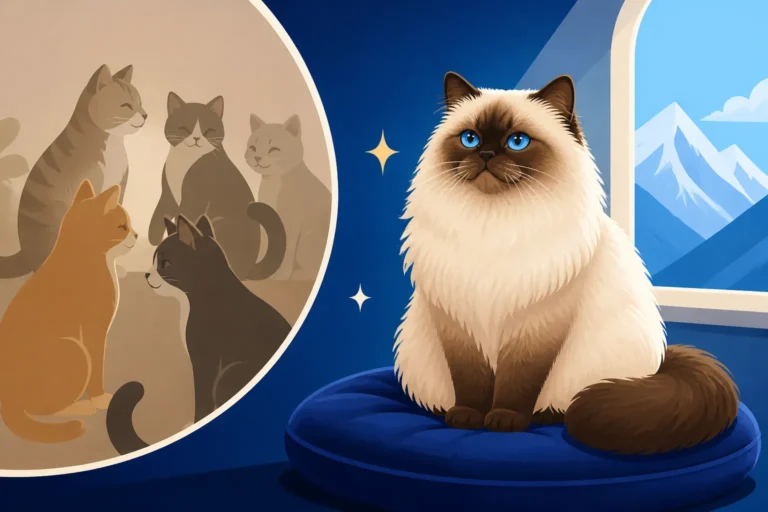
Ben Borrett and the Canadian Himalayan
It’s a common misconception that the Himalayan cat's story is solely an American one, or perhaps limited to the earliest European efforts. But for those of us who have truly fallen in love with these gentle giants, we know that their lineage is a tapestry woven by many dedicated hands across the globe. One such crucial weaver in this intricate history, particularly in establishing the breed's presence and characteristics north of the border, was Ben Borrett, whose work carved out a distinct and enduring place for the Canadian Himalayan. This guide delves into his significant contributions and how they shaped the breed we cherish today.
The Early Days of Himalayan Development
The journey of the Himalayan cat is fascinating, starting with a scientific curiosity that quickly blossomed into a beloved companion animal. Before Ben Borrett's significant contributions, the breed's foundational work laid the groundwork for what was to come. Understanding this initial phase helps appreciate the critical role individuals like Borrett played in refining and popularizing the breed.
Harvard's Initial Research
The very concept of a colorpoint longhair cat didn't just appear out of thin air; it was the result of deliberate, scientific crosses. The initial work that gave us the Himalayan began in the 1930s at Harvard University. Scientists like Clyde Keeler and Virginia Cobb were deeply interested in studying genetic inheritance, and they chose to cross the robust, long-coated Persian with the striking, vocal Siamese. Their goal wasn't necessarily to create a new pet breed right away, but to understand how coat length and colorpoint patterns were passed down through generations. They published their findings in a 1936 paper, detailing the results of these early crosses. The Himalayan Was Made at Harvard in the 1930s This research proved that the Siamese colorpoint gene could indeed be introduced into the Persian’s luxurious coat. It was a groundbreaking step, but these early "Siamese-Persian" cats, as they were sometimes called, were a far cry from the consistent, typey Himalayans we recognize today. They were often lanky, with less-than-perfect Persian coat quality or head type, and certainly not yet the distinct breed many aspired to create.
The Challenge of Consistency
Following the scientific curiosity, dedicated breeders in the United States and Britain took up the mantle, striving to move beyond experimental crosses to establish a stable, recognizable breed. This was no small feat. The challenge was immense: how do you combine the cobby body, round head, and luxuriant coat of a Persian with the vivid blue eyes and distinctive point coloration of a Siamese, all while retaining a balanced temperament? Early breeders faced generations of selective breeding, often seeing undesirable traits crop up – too much Siamese athleticism, poor coat texture, or inconsistent head shapes. It was a labor of love, requiring meticulous record-keeping and a deep understanding of feline genetics. Clyde Keeler, Virginia Cobb and the First Himalayan The goal was to create a cat that truly looked like a Persian, but with the "points" – the darker coloration on the face, ears, paws, and tail – that were the hallmark of the Siamese. This quest for consistency meant that the breed's development was a community effort, with breeders sharing knowledge, lines, and frustrations across continents, all searching for that perfect blend.
Ben Borrett's Pivotal Role in Canada
As the Himalayan gained traction in the United States and other parts of the world, Canada quickly emerged as a significant player in its development, largely thanks to the vision and dedication of individuals like Ben Borrett. His impact on establishing and refining the breed in Canada, and subsequently, globally, cannot be overstated.
Borrett's Vision and Dedication
Ben Borrett wasn't just a casual cat fancier; he was a passionate and meticulous breeder with a clear vision for the Himalayan cat in Canada. He saw the potential in these colorpoint longhairs, recognizing that they offered a unique combination of beauty and personality. Unlike some who might simply breed for numbers, Borrett was deeply committed to quality, health, and maintaining the integrity of the breed standard as it was evolving. He understood that creating a truly exceptional cat required more than just pretty parents; it demanded careful selection, a focus on genetic health, and a commitment to nurturing each generation. His dedication wasn't just about his own cattery; it extended to promoting the breed across Canada, ensuring that it was properly understood and appreciated by other breeders and the public. He was known for his thoughtful approach to pairings, often prioritizing temperament and robust health alongside physical beauty, which laid a strong ethical foundation for Canadian Himalayan lines.
Establishing the Canadian Foundation
Borrett’s work was instrumental in solidifying the Himalayan’s presence in Canada. He imported some of the earliest and finest foundational stock from established American lines, ensuring a strong genetic pool for his breeding program. However, he didn't stop there. He methodically worked to develop and stabilize these lines, focusing on producing Himalayans that consistently met and often exceeded the emerging breed standard. This meant paying close attention to the Persian "type" – the distinctive round head, full cheeks, small ears, and cobby body – while also ensuring vibrant point coloration and the characteristic deep blue eyes.
His cattery became a hub of excellence, producing cats that were not only stunning to look at but also had excellent health and wonderfully docile temperaments. He was often a mentor to newer Canadian breeders, sharing his knowledge and helping them understand the nuances of breeding quality Himalayans. This collaborative spirit fostered a strong community of Himalayan enthusiasts in Canada, building a robust foundation that would contribute significantly to the breed's global gene pool. The careful selection and breeding programs he implemented helped to reduce common early issues and ensure the Canadian Himalayan stood as a testament to diligent and ethical breeding practices.
Distinctive Canadian Contributions to the Himalayan Standard
The Canadian chapter of the Himalayan cat’s story, heavily influenced by breeders like Ben Borrett, brought forth specific refinements that helped shape the breed’s overall profile and appeal. These contributions weren’t just about making more Himalayans available; they were about enhancing their quality and defining their characteristics.
Refining Type and Temperament
One of the most enduring legacies of Canadian breeders, particularly under the influence of figures like Ben Borrett, was the emphasis on refining both the physical "type" and the beloved temperament of the Himalayan. While the initial goal was simply to combine Persian and Siamese traits, Canadian breeders focused on perfecting the Persian characteristics within the colorpoint framework. This meant striving for that truly round, substantial head, a short, broad nose, and tiny, low-set ears that are hallmarks of the Persian standard. They also worked diligently to ensure the body was cobby and substantial, with short, heavy boning.
Beyond aesthetics, temperament was paramount. Himalayans are known for their sweet, gentle, and affectionate nature, often described as "lap cats." Canadian lines were carefully bred to reinforce these traits, ensuring that while the Siamese vocal tendencies might peek through, the overall disposition remained calm, trusting, and adaptable – perfect for a loving indoor home. The Himalayan Is a Lap Cat That Answers Back This focus on a robust, healthy, and emotionally stable cat ensured that Canadian Himalayans were not just beautiful show animals but also wonderful companions, a reputation that continues to this day. This careful cultivation of traits helped to solidify the Himalayan's identity as a distinct and desirable breed.
Point Color Development
While the fundamental colorpoint gene came from the Siamese, Canadian breeders, including Ben Borrett, also played a role in the development and popularization of various point colors within the Himalayan spectrum. The classic Seal Point was often the starting point, but the desire for variety led to careful breeding for Blue Points, Chocolate Points, Lilac Points, Flame Points, and even Tortie and Lynx Points. Each color presented its own breeding challenges, requiring specific genetic understanding and patience.
Breeders would meticulously track pedigrees to ensure the correct genes were present to produce these vibrant, clear point colors without muddying the pale body coat. For instance, achieving a true Lilac Point, with its delicate, frosty grey points and pinkish undertones, required a precise combination of dilute and chocolate genes. This wasn't just about aesthetics; it was about demonstrating the breed’s genetic diversity and the skill of the breeders. The Canadian contribution ensured that a wide array of stunning color variations were consistently available, each adding to the allure of the Himalayan cat. The deep, rich blue eyes, a mandatory trait for all point colors, were also carefully selected for, ensuring they remained vivid and expressive against every shade of point.
The Canadian Himalayan's Global Influence
The meticulous efforts of Canadian breeders like Ben Borrett were not confined to the Canadian border. Their dedication to quality and consistency had a ripple effect, spreading well beyond their own catteries and significantly contributing to the international recognition and proliferation of the Himalayan cat.
Spreading the Lines
The reputation for producing high-quality, healthy Himalayans with excellent type and temperament meant that Canadian lines became highly sought after by breeders worldwide. Cats from prominent Canadian catteries were exported to the United States, Europe, and even further afield, enriching the global gene pool and helping to establish or improve breeding programs in other countries. These cats carried with them the carefully cultivated traits that Canadian breeders had worked so hard to establish.
Imagine a breeder in, say, Germany or Australia, struggling to find a cat with a truly cobby body or a perfectly rounded head to improve their own lines. They would look to Canadian catteries, knowing they could find robust, well-typed animals that would introduce desirable characteristics. This exchange wasn't just about individual cats; it was about the sharing of breeding philosophies and the elevation of the breed standard. The influence of these Canadian lines helped to ensure that the Himalayan maintained a consistent look and quality across different regions, solidifying its place as a truly international breed.
Legacy in Registries
The efforts of Ben Borrett and his Canadian counterparts also had a tangible impact on how the Himalayan was recognized and categorized by major cat registries. In North America, particularly, the breed faced unique classification challenges. While some registries, like TICA, continue to register the Himalayan as a distinct breed, others, most notably the CFA, ultimately merged it into the Persian breed as a "Colorpoint Persian" division in 1984. Why CFA Merged the Himalayan With the Persian
Canadian breeders were actively involved in the discussions and debates surrounding these classifications. Their consistent production of cats that clearly met a defined standard, regardless of the nomenclature, lent weight to the breed's legitimacy. Even if a cat was registered as a Colorpoint Persian, its underlying "Himalayan" identity, shaped by breeders like Borrett, remained undeniable. The enduring strength and quality of Canadian lines contributed to the undeniable presence of the Himalayan in the cat fancy, ensuring that whether it was called a Himalayan or a Colorpoint Persian, the characteristics fostered by these dedicated breeders would continue to be recognized and celebrated. TICA Still Registers the Himalayan as a Breed of Its Own Their work ensured that the Canadian Himalayan, irrespective of its official classification, left an indelible mark on breed standards and recognition across the continent and beyond.
Caring for a Himalayan with a Strong Canadian Lineage
Bringing a Himalayan cat into your home, especially one descended from carefully established lines like those influenced by Canadian breeders, comes with the joyful responsibility of understanding their unique needs. These cats are bred for beauty and companionship, and their care routine often reflects those distinct traits.
Grooming Considerations
The luxuriant, long coat of a Himalayan, a signature feature often refined by breeders like Ben Borrett, is undeniably gorgeous but demands consistent attention. These cats inherit the dense, double coat of their Persian ancestors, which means they are highly prone to matting if not groomed daily. A good quality steel comb is your best friend here, working through the undercoat to prevent tangles from forming. It's not just about aesthetics; mats can become painful, pulling on the skin and potentially leading to skin infections. Many owners find themselves regularly browsing online retailers like Chewy for a sturdy metal comb and perhaps some detangling spray to make the process smoother.
Beyond the daily comb-through, regular attention to their face is also crucial. Due to their flattened facial structure, tear stains can be common, and the folds around their nose need to be kept clean and dry to prevent irritation. A soft cloth dampened with warm water, or specialized cat wipes, should be used daily. It's a commitment, certainly, but one that ensures your Himalayan remains comfortable, healthy, and looking its best. The Daily Comb a Himalayan Cannot Skip
Health and Temperament Traits
Himalayans, generally speaking, are known for their wonderful temperaments – sweet, docile, and very affectionate. These traits were often reinforced by breeders like Ben Borrett, who prioritized not just beauty but also a stable, loving disposition. They thrive on companionship and are typically well-suited to quiet indoor environments where they can be the center of attention. They tend to be less active than some breeds, enjoying long naps in sunbeams and cozy laps, though they still appreciate gentle play sessions with wand toys.
However, like all purebreds, Himalayans can be predisposed to certain health considerations, many stemming from their Persian heritage. Polycystic Kidney Disease (PKD) is a concern, though responsible breeders today DNA test their breeding cats to eradicate this. Reputable Canadian breeders, influenced by the same ethical standards as Borrett, would have meticulously tracked health. Their unique flat faces, while adorable, can also lead to brachycephalic airway syndrome, which means they can struggle with heat and exertion. Always ensure they have access to cool areas and monitor their breathing, especially during warmer months. Why a Himalayan Overheats Twice as Fast as a Siamese When choosing food or water bowls, remember their flat faces. Wider, shallow bowls are best for eating, and you can find a great selection of these specialized dishes on sites like Chewy that prevent whisker fatigue and make it easier for them to scoop up their kibble or wet food. Regular vet check-ups are paramount to catch any potential issues early and ensure a long, happy life for your Canadian-descended companion. Feeding a Himalayan That Cannot Reach Into a Deep Bowl
Disclaimer
This article is for general informational purposes only and does not constitute professional advice. Laws, prices and regulations vary by location and change over time. Consult a qualified professional for guidance on your specific situation.