Why CFA Called the Himalayan a Persian Variant
A Himalayan can be called a breed in everyday conversation and a Persian division on CFA paperwork, which is confusing when you are comparing pedigrees, show results, or kitten listings. The short explanation is that CFA changed how it classified the Himalayan, not what the cat looked like. This guide explains the decision, what “Persian variant” means, and how the terminology affects owners and buyers.
What CFA means by calling the Himalayan a Persian variant
It is a classification within CFA’s system
When CFA calls the Himalayan a Persian variant, it is describing where the cat sits in CFA’s breed classification and show structure. The Himalayan has the Persian body and coat type, with the colorpoint pattern and blue eyes that distinguish it from a solid-colored Persian. In CFA’s system, that combination is handled as part of the Persian breed, rather than as a separate breed with an entirely separate standard.
“Variant” does not mean an accidental cross, a mixed-breed cat, or a cat that is somehow less genuine. It is a registry term. A Himalayan can still come from a carefully planned pedigree and have the familiar pointed coat, round head, sturdy build, and long fur that people associate with the breed.
This distinction is easy to miss because people commonly use “Himalayan” as the cat’s breed name. A family may say, “We have a Himalayan,” while its CFA paperwork identifies the cat within the Persian breed structure. Both descriptions can make sense; they are answering different questions. One is naming the type of cat in ordinary conversation, and the other is showing how a particular registry organizes its records.
For more on the organization’s historical decision, see Why CFA Made the Himalayan a Persian Division in 1984 and What CFA Decided About the Himalayan in 1984.
The Himalayan was once treated as a separate breed by CFA
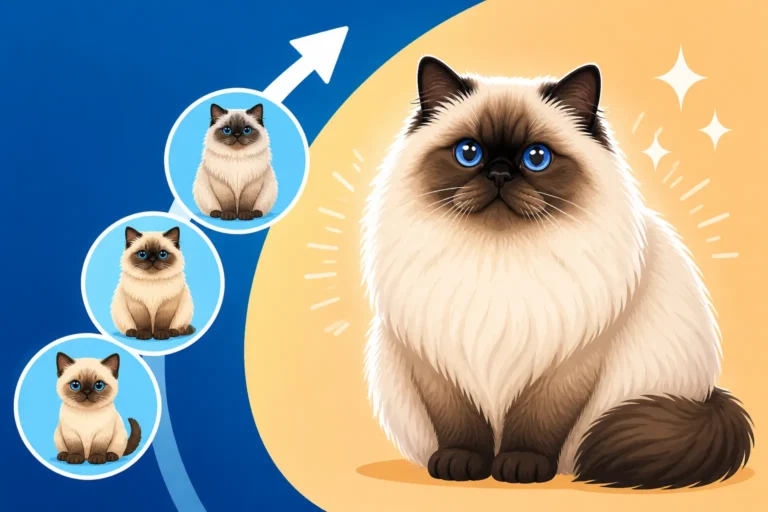
CFA did not always group the Himalayan with Persians. The Himalayan gained recognition as a distinct breed before CFA later changed its classification. That earlier history is one reason the word “breed” remains common among breeders, owners, and cat enthusiasts, even when CFA paperwork uses Persian terminology.
The cat itself did not suddenly change when its classification changed. A Himalayan born before the reorganization did not become a different kind of animal afterward, and breeders did not stop producing pointed cats with the familiar Himalayan appearance. The change was about the registry’s framework: where the Himalayan belonged in its breed categories and how it would be judged.
That distinction matters if you find old articles, pedigrees, or show records that use different language. A record from one period may describe the Himalayan as a separate breed, while a later CFA document may place it within the Persian breed. The wording can differ without indicating that the cat’s ancestry or appearance changed.
For a fuller look at the registry’s history, The Year CFA First Accepted the Himalayan and How the Himalayan Is Registered by CFA Today provide useful context.
Why CFA grouped Himalayans with Persians
The Persian type is central to the Himalayan
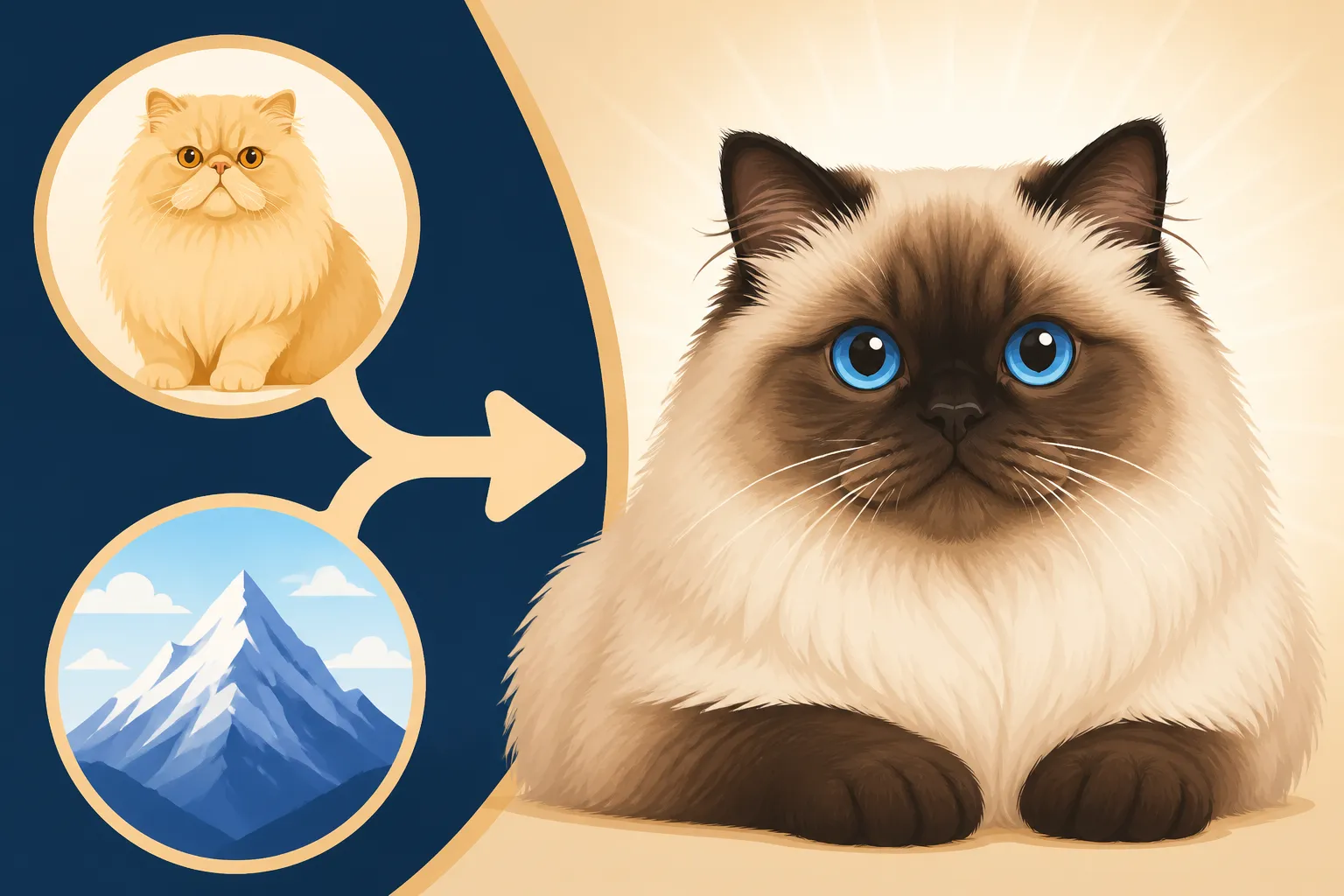
A Himalayan is not simply a Siamese with long hair. Its defining look combines the colorpoint pattern with a Persian-type body, coat, and head. The coat is long and dense, the body is generally compact and substantial, and the face follows the Persian style recognized by the relevant standard. The blue eyes and darker points—on the face, ears, legs, and tail—make the color pattern distinctive.
Because the Himalayan shares so much of its structure with the Persian, CFA’s classification places emphasis on that underlying Persian type. The point color is an important distinction, but in CFA’s system it does not require a fully separate breed category. Instead, the Himalayan is treated as a colorpoint form within the Persian framework.
This is why “Persian variant” can be a more precise description than “Persian mix.” The first refers to a recognized type within a registry’s system. The second suggests an unplanned or undocumented cross, which is not what the term means. When you are assessing a particular cat, its pedigree and the issuing registry’s rules are more informative than an informal label alone.
The relationship is also covered in Why the Himalayan Is a Persian With the Point Gene and How the Himalayan Ranks Inside the Persian Breed.
A registry needs rules for registration and judging
Breed classifications help a registry keep its records consistent and determine which standard applies in the show ring. When CFA places Himalayans within the Persian breed, the Persian standard and Persian judging structure provide the framework. The Himalayan’s colorpoint pattern remains part of what makes it recognizable, but the cat is considered through the Persian category rather than as a wholly separate breed category.
That approach can affect how a show result is described. Someone might see a Himalayan entered or discussed under a Persian heading and assume the paperwork is wrong. It may simply reflect CFA’s classification. The important question is which registry governs the event and how that registry identifies the cat.
A buyer can encounter the same terminology puzzle in advertisements and online listings. A seller might write “Himalayan,” while a document uses “Persian” or a colorpoint-related description. If you see a breed label on a retail page such as Chewy, treat it as a general listing description rather than proof of a cat’s registration status. For pedigree questions, ask to see the issuing registry’s actual documents.
How CFA’s classification differs from everyday usage
“Himalayan” remains a familiar and useful name
In ordinary conversation, “Himalayan” is still a clear way to describe a pointed Persian-type cat. Owners use it when talking about grooming, coat color, temperament, or veterinary care. Breeders may also use the name to distinguish pointed cats from Persians with other coat patterns, even when their registry classifies both under a broader Persian category.
This everyday usage is not a contradiction. Registry language is designed to sort animals within a particular organization’s system; common names help people identify the cat type they mean. It is much like using a familiar variety name while official paperwork files it under a broader category. The precise meaning depends on context.
The difference becomes practical when you search for breed-specific information. A grooming guide may use “Himalayan” because that is the term owners recognize. A CFA pedigree or show record may use Persian terminology. If you are looking at care advice on Chewy or another retailer’s site, check whether the information is about the cat’s coat, face, and needs rather than relying on the page’s breed category alone.
| Situation | What “Himalayan” may mean | What to check |
|---|---|---|
| Everyday conversation | A pointed, Persian-type cat | Whether the speaker means appearance or registered status |
| CFA paperwork | A colorpoint form within CFA’s Persian classification | The exact breed line and color description on the document |
| Another registry’s records | A separately named Himalayan category, depending on that registry | The registry’s own rules and terminology |
| Online shopping or general information | A familiar breed label used to describe a type of cat | Whether the content addresses the cat’s specific needs |
Other registries may organize the cat differently
CFA is not the only cat registry, and its classification does not automatically dictate how every other organization names the Himalayan. Some registries maintain the Himalayan as a distinct breed, while others use a Persian-based classification. As a result, two documents can use different labels for cats of a similar type without either document necessarily being incorrect.
This is a common source of frustration for people comparing a breeder’s claims with a registry website. Before drawing conclusions, identify the organization named on the paperwork. Then look at that registry’s own breed definitions, registration rules, and show categories. A label that is accurate under one registry’s system may not match the wording used by another.
If you want to understand the difference in approach, see Why TICA Kept the Himalayan Separate and Whether the Registry Split Affects a Himalayan Buyer. The key is to compare like with like: CFA paperwork against CFA rules, TICA paperwork against TICA rules, and so on.
What the classification means for owners and buyers
It does not change the cat’s care needs
A change in registry language does not change the daily realities of living with a Himalayan. The long coat still needs regular combing, the face may need routine cleaning, and the cat’s individual health and comfort still deserve attention. The word printed on a pedigree does not determine whether a particular cat has healthy breathing, clear eyes, or a manageable coat.
For example, imagine you are choosing between two kittens and one listing says “Himalayan” while another says “colorpoint Persian.” Those labels alone do not tell you which kitten is healthier or better suited to your home. Ask about the parents, health screening, the kitten’s veterinary care, and the breeder’s practices. A label can help you understand the type of cat being described, but it cannot replace those checks.
Likewise, a general breed page on Chewy may be useful for familiarizing yourself with common Himalayan traits, but it should not be treated as a substitute for a veterinarian’s guidance about an individual cat. The useful distinction is between broad breed information and evidence about the specific animal in front of you.
Read the paperwork rather than relying on the label
If registration matters to you, ask which organization issued the documents and request to review them. Check the registered name, identifying details, parent information, and the way the breed or color is recorded. If the seller uses “Himalayan” in conversation but the paperwork says “Persian,” ask them to explain how that wording fits the registry they use.
You can also ask whether the kitten is being sold with registration, whether the documents will be transferred to you, and whether the contract describes the cat’s status consistently. These are reasonable questions, not accusations. A responsible seller should be able to explain the difference between a familiar breed name and the registry’s official classification.
Be especially careful not to assume that a product listing, social media post, or informal advertisement confirms pedigree status. If you come across a Himalayan description while browsing Chewy or another commercial site, it may be describing a type of cat for general reference. For registration, rely on the documents from the relevant cat registry and ask the breeder to clarify anything that does not match.
The distinction is also explored in What a Himalayan Buyer Should Ask About Registration and How to Explain the Himalayan Registry Split to a Buyer.
The name is less important than the evidence behind it
The phrase “Persian variant” can sound dismissive if you have always known the Himalayan as its own breed. In CFA’s context, though, it is a classification choice—not a judgment that the cat is less distinctive, less valuable, or less deserving of the name people use for it.
When paperwork, listings, and conversation seem to disagree, take them one at a time. Ask what the speaker means by “Himalayan,” identify which registry is involved, and check the official record. That approach usually resolves the confusion without turning a difference in terminology into a dispute about whether the cat is “really” a Himalayan.
Disclaimer
This article is for general informational purposes only and does not constitute professional advice. Laws, prices and regulations vary by location and change over time. Consult a qualified professional for guidance on your specific situation.