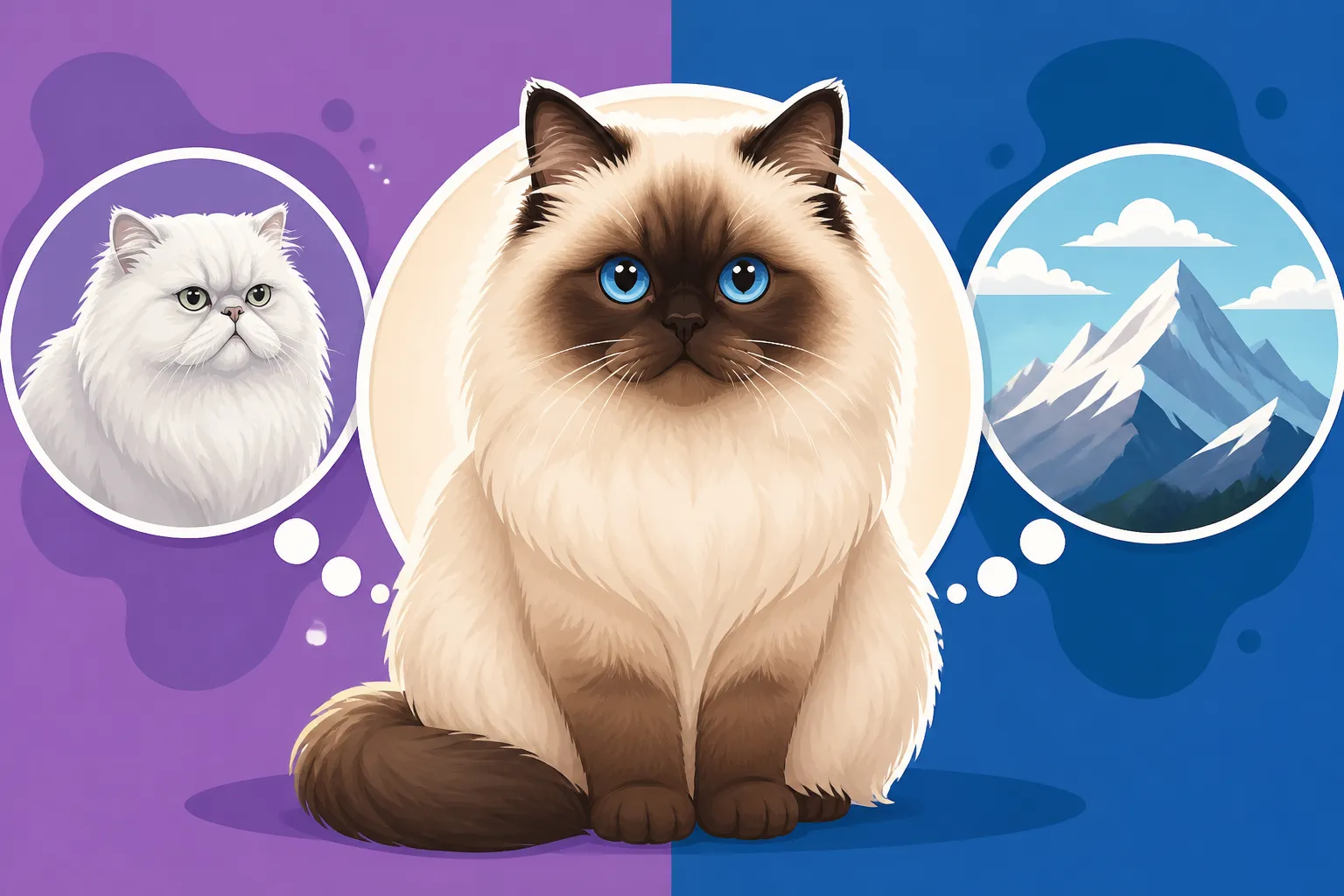
What a Persian Carrying the Himalayan Gene Is Called
A solid-colored Persian can carry the gene for Himalayan points without looking pointed at all. That can surprise owners when a pointed kitten appears in a litter—or when a breeder describes a Persian as a “Himalayan carrier.” Here’s what the term means, how the inheritance works, and what a label can and cannot tell you.
What a Persian carrying the Himalayan gene is called
Common names for a hidden carrier
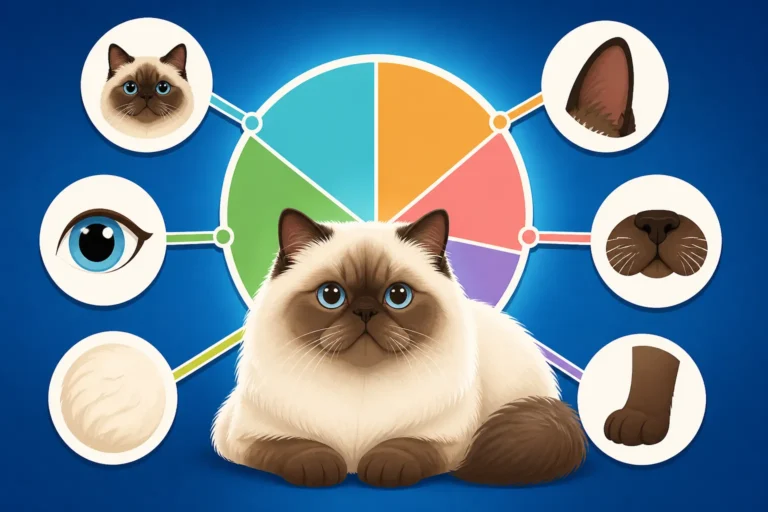
A Persian that carries one copy of the colorpoint gene but does not display the pointed pattern is commonly called a Himalayan carrier, colorpoint carrier, or pointed carrier. The wording varies between breeders and pedigrees; the basic idea is the same. The cat can pass the gene to its kittens, even though its own coat is not visibly pointed.
That distinction matters because “carrier” describes a genetic status, not necessarily a breed or registry category. A carrier Persian may look like a solid, tabby, or other non-pointed Persian. Calling it a Himalayan carrier does not automatically make it a Himalayan, nor does it guarantee that the cat has particular health characteristics.
The label is easiest to understand alongside Why a Persian Can Carry the Himalayan Gene Hidden. The pointed pattern can remain out of sight in one generation and become visible in kittens if both parents pass on the relevant gene.
Carrier, pointed cat, and breed label are different things
A cat with two copies of the recessive colorpoint variant typically shows the pointed pattern: darker color on the face, ears, legs, and tail, with a lighter body. A cat with just one copy usually does not show that pattern, but can transmit the variant. That is why a non-pointed Persian can be a carrier without looking like a Himalayan.
The term “Himalayan” is also used differently across cat registries and breeding communities. Some paperwork treats Himalayans as a Persian division or color variety, while other registries recognize the Himalayan separately. The name on a pedigree may therefore reflect the issuing registry’s rules rather than a different genetic mechanism. For more context, see Why a Himalayan Is a Persian With the Point Gene, How the Himalayan Is Registered by CFA Today, and How the Himalayan Is Registered by TICA Today.
| Cat’s genetic status at the colorpoint gene | Typical appearance | Can pass on the colorpoint variant |
|---|---|---|
| No copy of the colorpoint variant | Not pointed | No |
| One copy | Usually not pointed; often called a carrier | Yes |
| Two copies | Usually pointed | Yes, to every kitten |
This table describes the basic inheritance pattern at the colorpoint gene. Other genes influence coat color and pattern, so it cannot predict every detail of a kitten’s appearance.
How the Himalayan gene is inherited
Why a carrier Persian can look completely ordinary
The Himalayan pattern is associated with a recessive colorpoint variant of the tyrosinase gene, commonly written as cs. In the simplest model, a cat needs two copies of the variant—one inherited from each parent—to show the classic pointed pattern. With only one copy, the cat is generally a carrier rather than visibly pointed.
That can make the gene seem to appear unexpectedly. Imagine a solid-colored Persian whose parent or grandparent carried the variant. The Persian may inherit one copy, yet its coat still looks like a typical solid coat. If that cat later has kittens with another carrier, a pointed kitten is possible. The gene did not suddenly appear; both parents contributed a copy.
This is the key idea behind Why a Himalayan Needs Two Copies of the Point Gene. A visible pointed coat is not the only clue to what a cat may pass on, which is why coat appearance alone cannot reliably identify carriers.
What different pairings may produce
The following outcomes assume the parents’ status at this gene is known and that no other genetic factors alter the visible coat pattern. They are probabilities for each kitten, not promises about the makeup of an entire litter.
| Parent pairing | Possible outcomes for each kitten |
|---|---|
| Carrier and non-carrier | About half may be carriers; none are expected to be pointed |
| Carrier and carrier | About one quarter may be pointed, half may be carriers, and one quarter may inherit neither copy |
| Carrier and pointed cat | About half may be pointed and half may be carriers |
| Pointed cat and non-carrier | Kittens are generally expected to be carriers, not pointed |
For example, two carrier Persians could have a litter in which no kitten is pointed, even though pointed kittens were possible. A different litter from the same pairing could include one or more pointed kittens. A small litter can make the results look especially uneven compared with the expected percentages.
If you want to understand the family-tree possibilities in more detail, Whether Two Persians Can Produce a Himalayan and Whether a Himalayan Kitten Can Appear in a Persian Litter address closely related questions. The important practical point is that a parent’s visible coat does not tell the whole story.
How to confirm whether a Persian is a carrier
Ask for a genetic test or reliable records
A DNA test can help identify whether a cat carries the tested colorpoint variant. Ask the veterinarian or testing laboratory what the test covers, how the sample is collected, and how the result is reported. A cheek swab is commonly used for many feline DNA tests, but follow the test provider’s instructions so the sample is collected and labeled correctly.
For a breeder, a written result is more useful than a verbal assurance such as “there are points in the pedigree.” Check that the document identifies the tested cat and clearly states the result. If the result is unclear, ask the laboratory or veterinarian to explain the wording rather than trying to infer carrier status from coat color or family photos.
A pedigree can provide helpful ancestry information, but it is not the same as a genetic result. Likewise, an old photo of a pointed relative may raise a sensible question about inherited genes, but it cannot establish that a particular cat is a carrier. How a Persian Can Carry the Himalayan Gene Hidden explains why a non-pointed appearance is not proof that the variant is absent.
What to ask a breeder
If you are considering a kitten or planning a breeding, ask direct, specific questions. A responsible conversation should be comfortable with the difference between a visible color pattern, a pedigree description, and a DNA test result.
Useful questions include:
- Has either parent been tested for the colorpoint variant?
- Can I see the test documentation and confirm which cat it belongs to?
- Is “Himalayan carrier” being used to describe a test result, a family history, or simply a coat-color possibility?
- Which registry will issue the kitten’s paperwork, and what breed or color description will appear?
- Are there other health tests relevant to these particular cats and their lines?
A seller may use terms loosely, so ask what they mean rather than assuming every breeder uses “carrier” in precisely the same way. A retailer such as Chewy may be useful for ordinary kitten supplies, but food, litter, or grooming purchases are not evidence of a cat’s genetic status. Keep test papers and pedigree documents with your veterinary records instead of treating a sales description as proof.
What carrier status means for kittens and ownership
Carrier status does not predict a cat’s health
Being a carrier for the colorpoint gene does not, by itself, mean that a Persian will develop a disease. It describes the inheritance of a coat-color pattern. It should not be confused with screening for other inherited conditions, and it is not a substitute for a broader conversation about the health history of the cat and its relatives.
This is an important distinction when a breeder presents a cat as “tested.” Ask what the cat was tested for. A result for coat-color genetics does not establish that the cat has been screened for kidney disease, eye conditions, or other concerns relevant to its family line. The paperwork should name the specific test and the individual cat tested.
If you are preparing for a kitten, keep the genetic paperwork separate from routine-care planning. Chewy and other pet retailers can be options for basic supplies such as litter, food storage, or bowls, but those items have nothing to do with confirming a carrier result. The health record, test report, and pedigree each answer different questions.
Why the name can matter—and when it does not
The phrase “Himalayan carrier Persian” can be useful shorthand when discussing inheritance, especially if a breeder is planning a pairing or explaining why pointed kittens may be possible. But it can also sound like a formal breed classification when it may only be a description of the cat’s genotype. Ask whether the speaker means “this cat carries one copy of the point variant” or is referring to registration and breed terminology.
For a pet owner, the carrier label usually does not change everyday care. It does not tell you how much grooming the cat needs, what food it should eat, or whether it will have a particular temperament. Those decisions should be based on the individual cat’s needs, veterinary advice, and its overall health—not on the word “Himalayan” alone.
If you are buying a kitten, the most helpful documents are clear and cat-specific: registration paperwork where applicable, veterinary records, and any genetic test reports the breeder has discussed. You can use a Chewy order history to keep track of routine supplies, but store genetic and veterinary records somewhere you can find them during appointments. If you later need food or litter delivered, Chewy may be one practical shopping option; it does not replace a veterinarian’s interpretation of test results.
Disclaimer
This article is for general informational purposes only and does not constitute professional advice. Laws, prices and regulations vary by location and change over time. Consult a qualified professional for guidance on your specific situation.