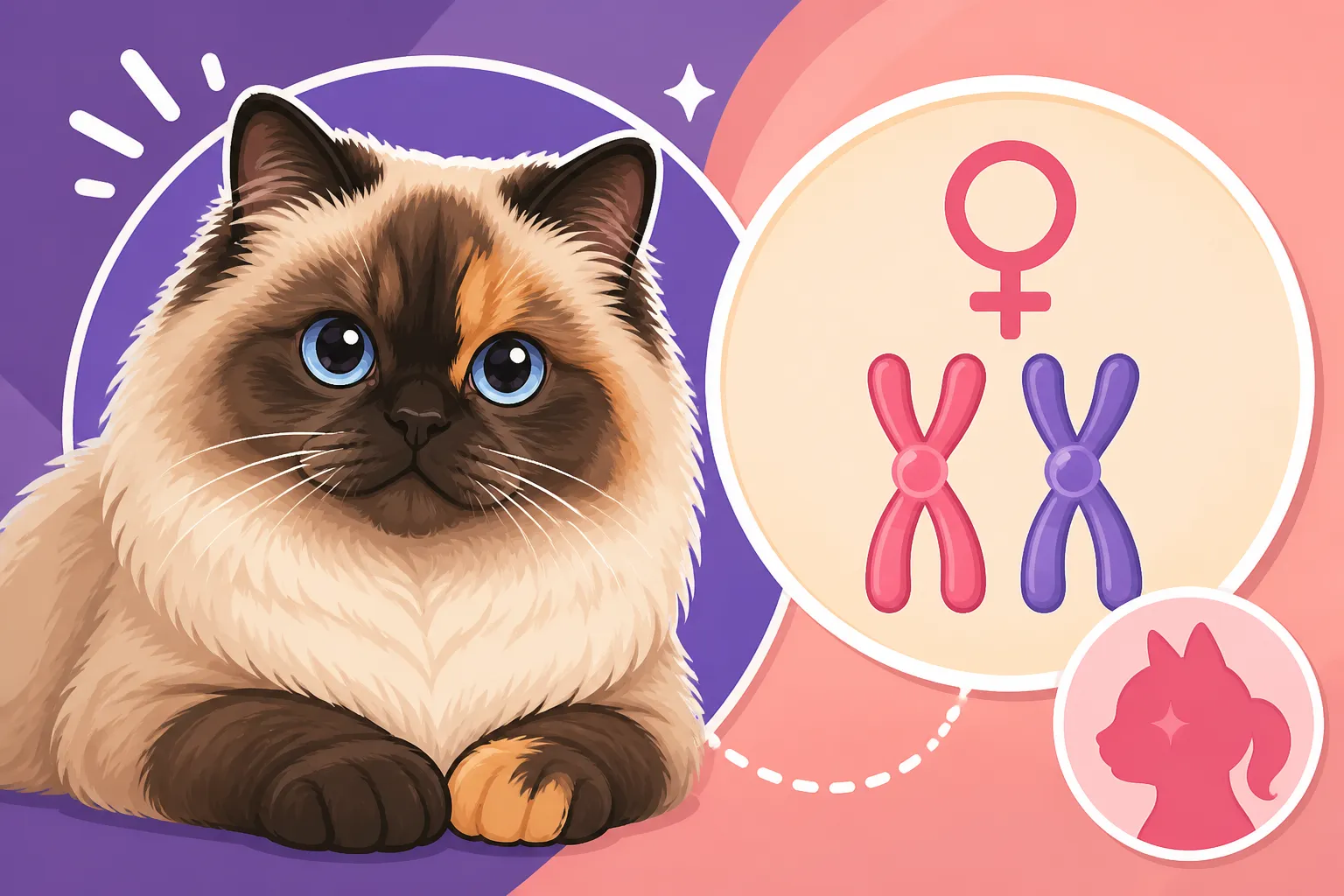
Why a Tortie Point Himalayan Is Always Female
It's a common observation among cat lovers, isn't it? You rarely, if ever, see a male tortoiseshell cat. And when it comes to our gorgeous Himalayan friends, with their striking point coloration, finding a tortie point male seems like a complete impossibility. This isn't just a quirk of nature; it's a fascinating tale written in the very DNA of our feline companions. This guide will unravel the genetic mystery behind why every tortie point Himalayan you encounter is, overwhelmingly, female.
The Chromosomal Code of Cat Colors and Sex
To truly understand why tortie point Himalayans are always female, we need to take a little trip into the fascinating world of feline genetics. It all boils down to chromosomes and how they carry the instructions for both sex and coat color. It sounds complicated, but I promise, it's quite elegant once you see how it works.
X and Y Chromosomes: The Genetic Determinants
Just like humans, cats have sex chromosomes that determine whether they will be male or female. Females carry two X chromosomes (XX), while males carry one X and one Y chromosome (XY). The X chromosome is a powerhouse, carrying a lot of genetic information, while the Y chromosome is significantly smaller and primarily dictates maleness. This difference in genetic payload between the X and Y is absolutely crucial to understanding why tortie cats are almost always girls.
Think of it this way: the X chromosome is like a large recipe book with many different dishes, including those for coat color. The Y chromosome is more like a small index, primarily saying "this is a male." Because females have two X chromosomes, they have two copies of all the genetic recipes on the X chromosome, while males only have one. This redundancy in females, and the singularity in males, sets the stage for the unique tortoiseshell pattern. It's a fundamental biological distinction that influences so many traits, and especially beautiful coat patterns like the tortie.
The Orange Gene and Its Location
Now, let's talk about the specific gene responsible for those vibrant orange (or red) and black colors that make a tortie so distinctive. This gene, often referred to simply as the "orange gene," is located exclusively on the X chromosome. This is the lynchpin of our entire mystery! The gene has two primary alleles, or versions: one that codes for orange/red pigment (let's call it O) and one that codes for non-orange pigment, which allows for black or black-based colors like brown or blue (let's call it o).
Here’s where it gets interesting:
- A female cat (XX) can inherit two O alleles (OO), two o alleles (oo), or one of each (Oo).
- If she's OO, she'll be entirely orange/red.
- If she's oo, she'll be black, brown, or blue (depending on other genes).
- If she's Oo, she's the magic combination – she can be a tortoiseshell!
- A male cat (XY) can only inherit one X chromosome, so he can only have one version of the orange gene.
- If he gets the O allele on his X (OY), he'll be orange/red.
- If he gets the o allele on his X (oY), he'll be black, brown, or blue.
There's no way for a typical male cat to carry both the O and o alleles simultaneously, because he only has one X chromosome. This is why a regular male cat cannot be a tortoiseshell. They're either red, or black-based, but never both in a patchwork. This basic genetic reality is consistent across all cat breeds, including our beloved Himalayans.
Understanding the Tortoiseshell Pattern: A Patchwork Masterpiece
The tortoiseshell pattern, often affectionately called "tortie," is a beautiful mosaic of at least two distinct colors, typically orange/red and black, often with patches of cream or blue. It's not a breed in itself, but rather a coat pattern that can appear in many breeds, including the Himalayan. The magic behind this stunning patchwork lies in a process unique to female mammals.
Random X-Inactivation
The key to the tortoiseshell pattern in females is a biological phenomenon called "random X-inactivation," also known as lyonization. Because female cats have two X chromosomes, one from their mother and one from their father, they essentially have a "backup" copy of every gene on the X chromosome. To prevent an overdose of X-linked genetic material, early in embryonic development, one of the two X chromosomes in each cell is randomly and permanently shut off, or "inactivated." This happens completely by chance – some cells will inactivate the maternal X, while others will inactivate the paternal X.
Imagine a paint palette where some cells decide to use the "orange" paint recipe from one X chromosome, and other cells decide to use the "black" paint recipe from the other X. As the kitten develops, these different cell lines multiply, leading to distinct patches of orange and black fur across her body. This random inactivation creates the unique, unrepeatable pattern on every single tortie cat. No two torties, even from the same litter, will ever have the exact same pattern, making each one a true original. This process is absolutely vital for the formation of the tortoiseshell pattern, and it can only occur in an individual with two X chromosomes.
The Patchwork Effect
The result of this X-inactivation is the stunning, irregular patches of color we adore in tortoiseshell cats. One patch of fur might originate from a cell where the X chromosome carrying the orange gene was active, while an adjacent patch comes from a cell where the X chromosome carrying the black gene was active. The boundaries between these patches are usually quite distinct, creating a beautiful, almost stained-glass effect. If you also consider a gene for dilution, which turns black into blue and red into cream, you get the lovely "dilute tortie" colors.
Sometimes, tortie cats also have patches of white fur. When a tortie has white patches, she's often referred to as a "calico" or "tri-color." The white spotting gene is actually on a different, non-sex chromosome, so it simply adds a third, unpigmented color to the existing tortie pattern. So, a calico is essentially a tortie with white. Regardless of whether white is present, the fundamental reason for the orange and black (or dilute versions) patches remains rooted in X-inactivation, a process exclusively available to XX individuals. This intricate genetic dance ensures that each tortie, whether a domestic shorthair or a regal Himalayan, is a unique work of art.
The Himalayan Twist: Combining Tortie with Point Coloring
Now, let's bring our beautiful Himalayan cats into the picture. Himalayans are essentially long-haired Persians with the colorpoint gene, inherited from their Siamese ancestors. This means they have darker "points" on their cooler extremities (face, ears, paws, tail) and a lighter body coat. When you combine the genetics for a tortoiseshell pattern with the genetics for point coloration, you get something truly special: a Tortie Point Himalayan.
Temperature-Sensitive Pigment and Point Colors
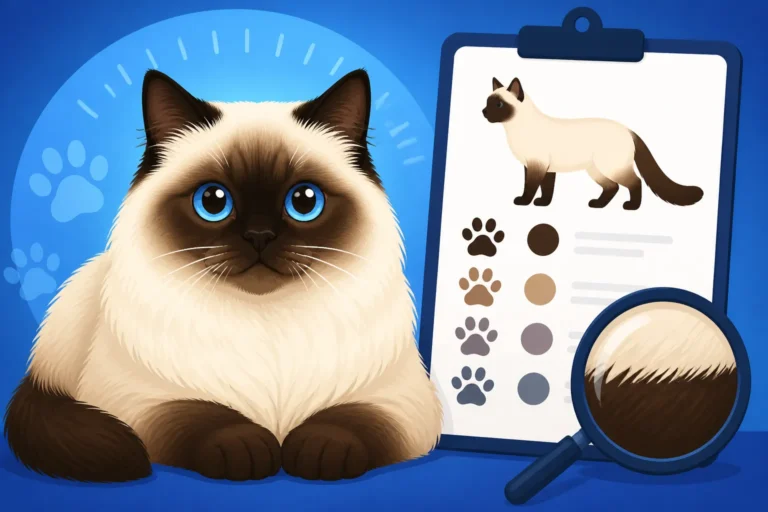
The defining characteristic of a Himalayan is its "point" coloration, which comes from a temperature-sensitive enzyme. This enzyme only produces pigment (color) in cooler areas of the cat's body. That's why Himalayan kittens are born almost entirely white; their mother's womb is warm, suppressing pigment production. As they grow and are exposed to cooler temperatures, their points begin to darken. Why Every Himalayan Kitten Is Born Almost White delves into this fascinating process in more detail. The color that appears on their points (seal, blue, flame, chocolate, lilac, etc.) depends on the specific pigment genes they carry, but the expression of that color is temperature-dependent. How Temperature Decides a Himalayan's Point Color really highlights how vital ambient temperature is to their appearance.
This unique genetic trait means that a Himalayan's body is typically a pale cream or white, with the actual color genes only showing strongly on the cooler extremities. It's a stunning contrast that makes the breed so visually captivating. This is also why a shaved patch on a Himalayan's body might grow back darker – the exposed skin is cooler, allowing more pigment to develop.
How the Tortie Pattern Interacts with Points
So, what happens when a female Himalayan carries both the orange and black alleles (Oo) on her X chromosomes, and the temperature-sensitive point gene? You get a tortie point Himalayan! The tortoiseshell pattern will still be expressed due to X-inactivation, but it will primarily be visible on her points, where the pigment can actually develop.
You'll see patches of orange/red point color alongside patches of black-based point color (like seal, blue, chocolate, or lilac) on her face, ears, paws, and tail. Her body coat, due to the temperature-sensitive gene, will remain a much paler version of these colors, or even a creamy white, making the point variations all the more striking. A "seal tortie point" Himalayan, for instance, would have patches of seal (dark brown/black) and flame (red/orange) on her points. A "blue cream point" would have patches of blue and cream. The possibilities are gorgeous, and How Many Point Colors the Himalayan Division Recognizes gives you a broader idea of the palette available. The genetic interplay is complex, but the outcome is always breathtaking.
The fascinating part is that even though the body is lighter, the underlying tortie genetic pattern is still present throughout her entire skin. It's just that the temperature-sensitive gene acts as a filter, only allowing the full intensity of the color to show where it's cool enough to do so. This creates a truly unique and beautiful effect, distinguishing the tortie point Himalayan from other tortie breeds.
The Exceptional Case: Why Male Torties are So Rare
Given everything we've discussed about X chromosomes and the orange gene, it should be clear why male tortie point Himalayans are practically unheard of. A male only has one X chromosome, meaning he can only carry either the 'O' (orange) gene or the 'o' (non-orange/black) gene, but not both. So, how do the exceedingly rare male tortie or tortie point cats even exist? They are genetic anomalies, occurring due to specific chromosomal variations or developmental quirks.
Klinefelter Syndrome: XXY Males
The most common reason for a male cat to display a tortoiseshell or calico pattern is a genetic condition called Klinefelter Syndrome. Instead of the typical XY chromosome combination, these rare male cats have an XXY chromosomal makeup. This means they possess two X chromosomes and one Y chromosome. With two X chromosomes, they now have the potential to carry both the 'O' (orange) and 'o' (non-orange/black) alleles, just like a female. Then, the process of random X-inactivation can occur in their cells, leading to the development of the distinctive patchwork coat pattern.
Cats with Klinefelter Syndrome are almost always sterile and often have various health issues, including behavioral differences or reduced bone density. They might be larger than average, and sometimes have smaller testicles. Finding one is incredibly rare, and breeders would typically perform genetic testing to confirm the XXY karyotype. While visually striking, these cats represent a genetic deviation from the norm, and their unique coloring comes at a biological cost. If you ever come across a suspected male tortie, getting a vet to confirm the chromosomal status is key. Pet insurance options, such as those offered by Healthy Paws, can be invaluable for owners of any cat with potential genetic predispositions or health complexities.
Chimerism and Mosaicism
Beyond Klinefelter Syndrome, there are even rarer genetic occurrences that can result in a male tortie: chimerism and mosaicism. These are distinct from XXY males but also involve unique cellular compositions.
- Chimerism occurs when an individual cat is formed from the fusion of two different fertilized eggs early in development. Imagine two embryos, each with different genetic makeup for coat color, merging into one. If one embryo was destined to be an orange male and the other a black male, and they fuse, the resulting cat could have patches of both colors. These chimeras have cells with different genetic origins throughout their body, leading to a patchwork.
- Mosaicism is slightly different. It happens when a single fertilized egg undergoes a mutation or an error in cell division very early on, resulting in different genetic makeups in different cell lines within the same individual. For a male cat, this might mean some cells develop with the orange gene active, while others have the black gene. Both chimerism and mosaicism are incredibly rare and usually require sophisticated genetic analysis to confirm.
These conditions are truly one-in-a-million occurrences, making any male tortie cat a genetic marvel. They highlight the intricate and sometimes unpredictable nature of genetics, even within well-understood patterns like the tortoiseshell.
Implications for Breeding and Health
For breeders of Himalayan cats, understanding these genetic principles is crucial. Reputable breeders will always ensure their breeding lines are genetically sound, especially when dealing with specific color patterns. A male cat showing a tortie pattern, whether a Himalayan or another breed, would not be bred, primarily because such males are almost always sterile due to the XXY chromosomal makeup. Furthermore, the genetic anomalies causing these patterns can sometimes be associated with other health issues, making their breeding unethical.
The beauty of a tortie point Himalayan lies in the female's natural genetic expression. Breeders focus on selecting healthy, well-typed cats with clear genetic histories to produce these stunning females. Which Two Tests Belong on Every Himalayan Pedigree and Which Two Certificates a Himalayan Breeder Owes You highlight the importance of genetic health testing for our beloved Himalayans, ensuring that beauty goes hand-in-hand with vitality. Whatever food you choose, responsible ownership extends to understanding their unique genetic heritage and ensuring their overall well-being.
Disclaimer
This article is for general informational purposes only and does not constitute professional advice. Laws, prices and regulations vary by location and change over time. Consult a qualified professional for guidance on your specific situation.