Why Omega Oils Keep a Himalayan’s Coat From Matting
Omega fatty acids strengthen Himalayan cat fur from the root, supporting skin health and preventing painful mats.

Omega fatty acids strengthen Himalayan cat fur from the root, supporting skin health and preventing painful mats.
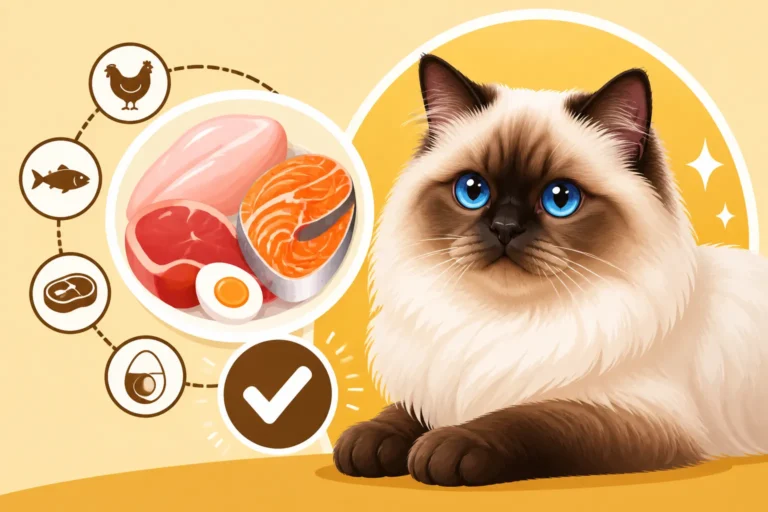
Himalayan cat coat health relies on dietary protein to produce keratin, which builds strong, shiny, and manageable fur.
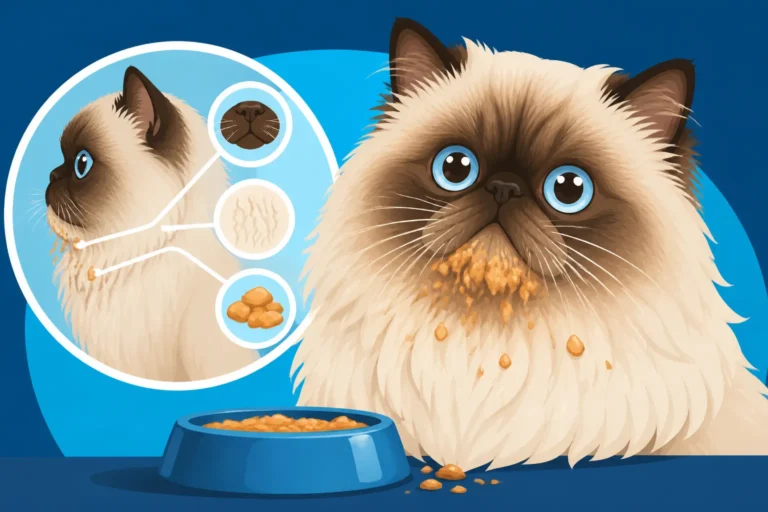
Himalayan cat food messes happen because their flat faces and thick ruff fur trap kibble and wet food during every meal.
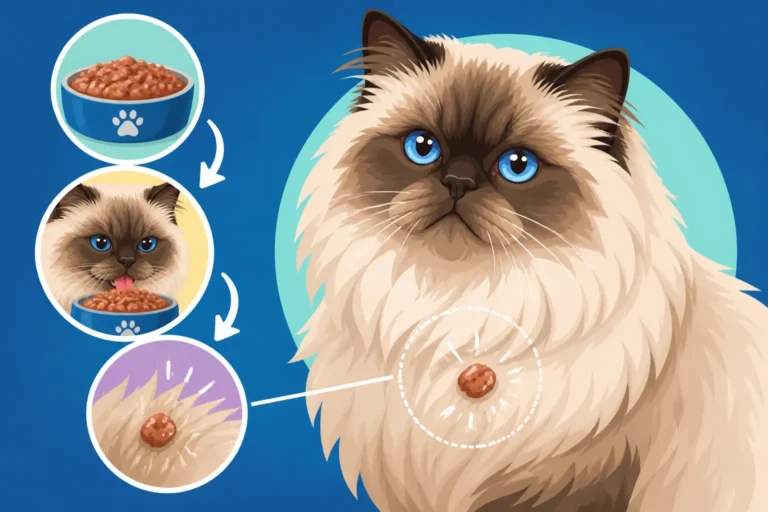
Himalayan cat flat face anatomy and thick fur ruff cause wet paté food to cling during daily meals, creating hygiene issues.
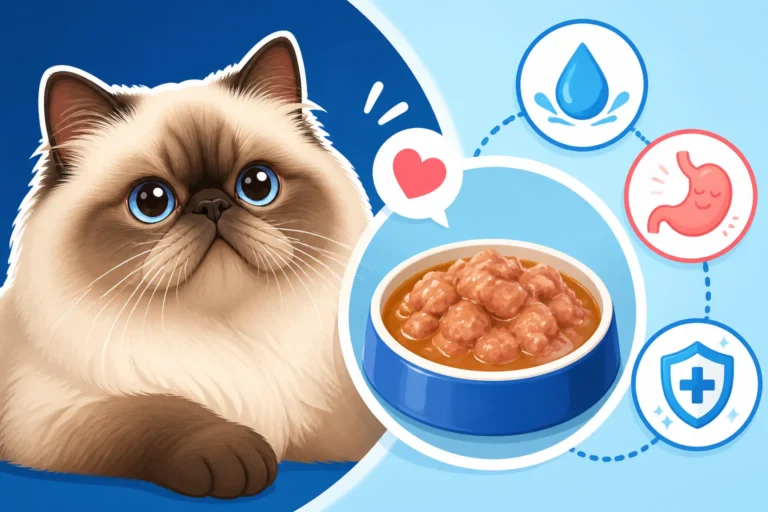
Wet food for flat-faced Himalayan cats offers an easier eating experience because of their jaw shape and crowded teeth.
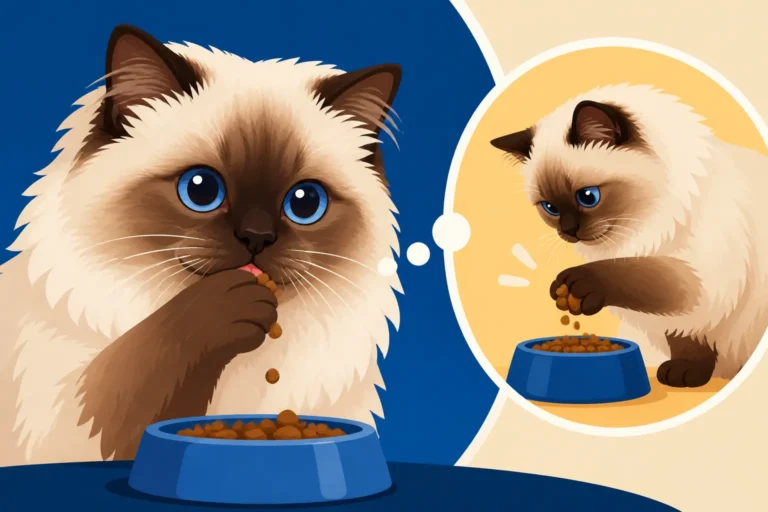
Himalayan cat paw eating habits stem from brachycephalic facial structures and crowded jaws that make standard eating difficult.
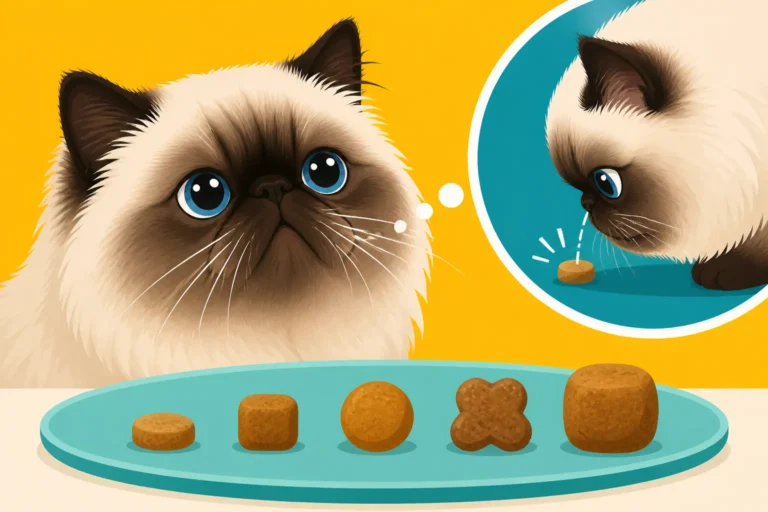
Himalayan cat jaw structure and brachycephalic facial traits explain why flat faces struggle to lift dry kibble.
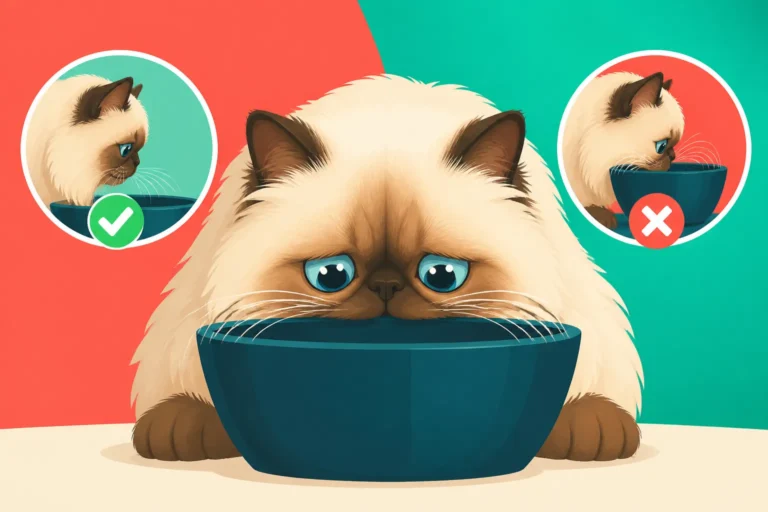
Deep bowls bend flat-faced Himalayan whiskers backward, causing sensory overload and physical discomfort known as whisker fatigue.
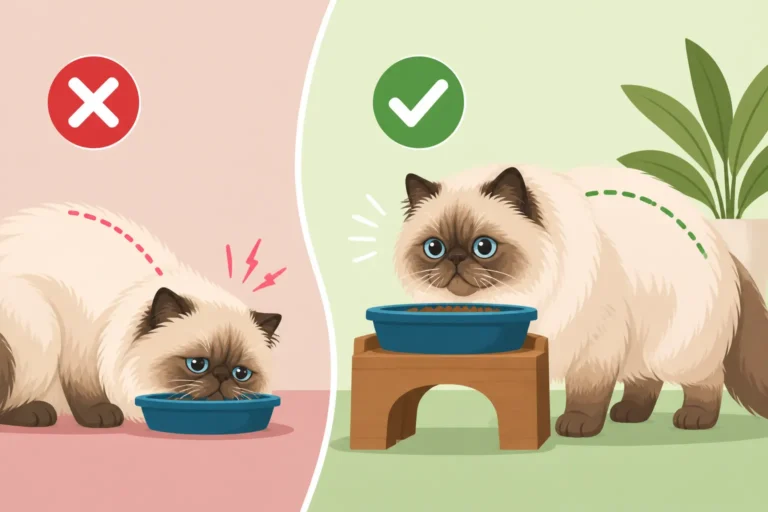
Elevated food dish height for flat-faced Himalayans helps reduce neck strain and keeps delicate airways open during mealtime.
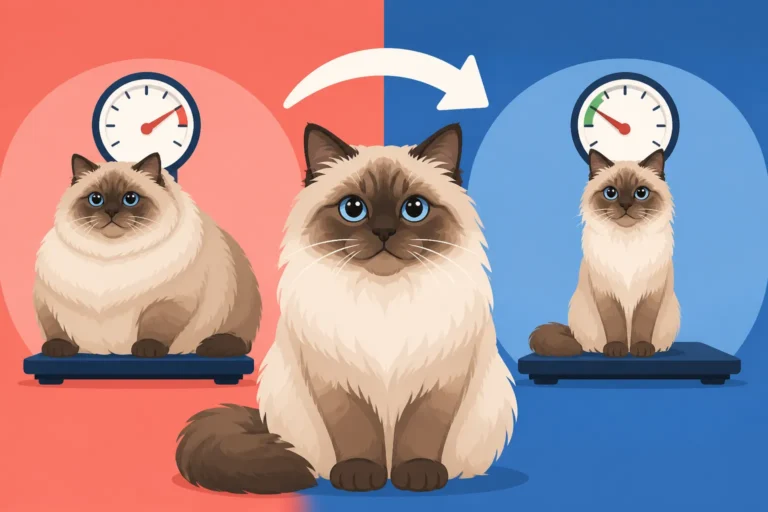
Himalayan cat weight loss timelines and safe methods help owners manage a slow metabolism, cobby body type, and thick coat.