Caring for a Himalayan Whose Points Have Gone Dark
Himalayan point darkening occurs due to temperature and genetics. Learn why coat colors change and how to care for older cats.
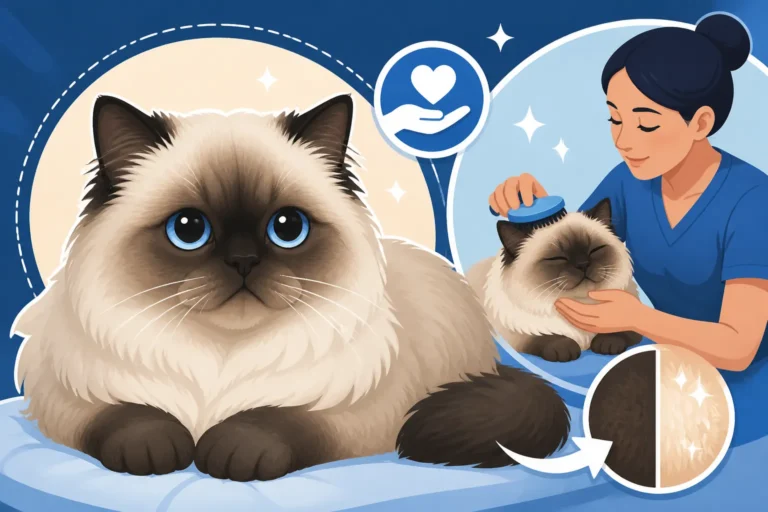
Himalayan point darkening occurs due to temperature and genetics. Learn why coat colors change and how to care for older cats.

Brachycephalic facial structures and blue eyes cause reddish-brown tear stains to appear much more prominently on cream colored Himalayan cats.
Himalayan cat lifespan typically spans nine to fifteen years, shaped by Persian and Siamese heritage alongside attentive home care.

Himalayan blue eyes stem from the temperature-sensitive albinism gene, linking coat points and eye color without causing deafness.
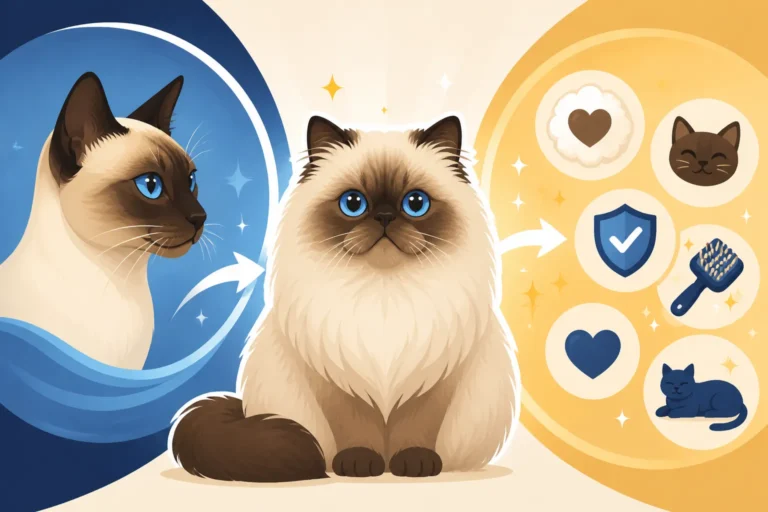
Siamese ancestry gives Himalayan cats lively personalities, intelligence, and soft vocal chirps beyond their point coloration.
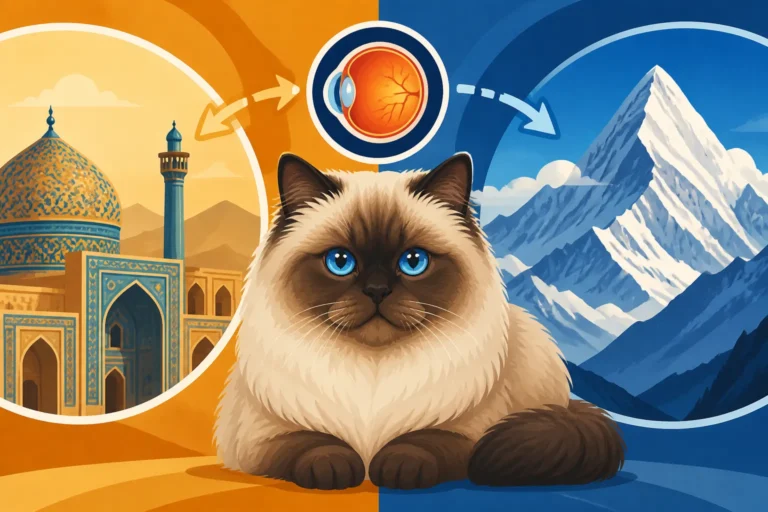
Retinal Atrophy causes progressive blindness in Himalayan cats, with gene mutations inherited directly from their Persian ancestry.
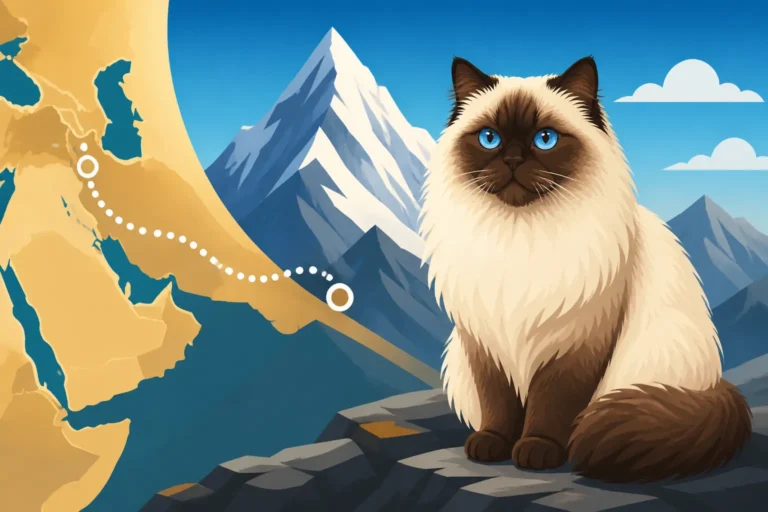
Polycystic Kidney Disease in Himalayan cats explains the genetic mutation causing kidney cysts inherited from Persian ancestors.

Himalayan cats inherit two distinct disease lists from Persian and Siamese ancestors, including Polycystic Kidney Disease.
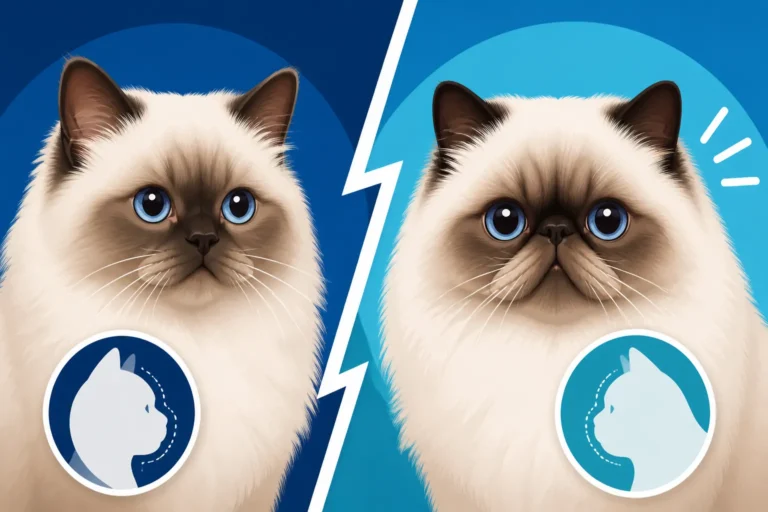
Himalayan cat facial structure and pale coat color create distinct health challenges, including compressed nasal passages and tear stain issues.

Doll Face and Peke Face Himalayan cat facial types differ in health, breathing implications, and daily care requirements.