What a Himalayan Does When It Is Unsettled
Himalayan cat behavior changes reveal when the animal feels unsettled, showing subtle signs of stress through routine disruption.
Change the room, not the cat.
Litter box avoidance, scratching and furniture, multi-cat tension and night activity — and the vertical space, play routines and feeding puzzles that solve more than correction does.

Himalayan cat behavior changes reveal when the animal feels unsettled, showing subtle signs of stress through routine disruption.

Himalayan cats need time and stable routines to accept a new house because changes cause anxiety and alter their daily eating habits.

Himalayan cat leash training explains why these placid, home-loving felines with cobby bodies and shorter legs prefer indoor routines.

Himalayan cats require cautious veterinary handling due to their flattened facial structure, dense coats, and unique physical vulnerabilities.

Himalayan cat face wiping prevents tear stains and dampness by managing flat facial structures, blocked tear ducts, and nose folds.
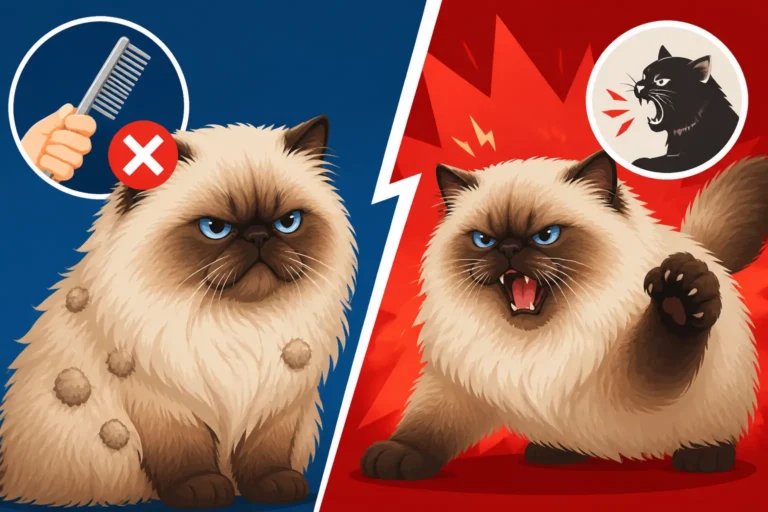
Himalayan cat grooming resistance stems from missing early kitten training and dense double coats that create painful mats and negative responses.

Himalayan cat grooming techniques teach owners how to manage dense double coats and help pets lie still during daily combing sessions.
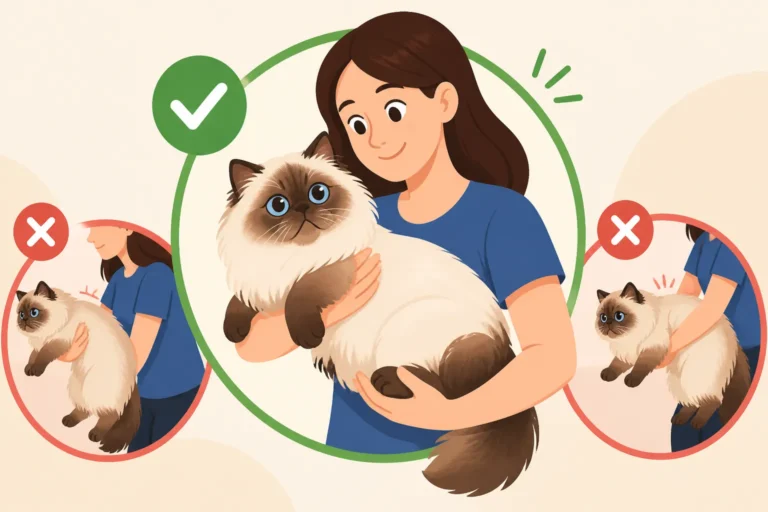
Himalayan cat anatomy and safe lifting techniques explain how to protect their dense cobby spine from strain and weight.

Himalayan cat cuddling behavior stems from Persian coat insulation needs and brachycephalic facial structure limitations.

Himalayan cat owners learning how calm Persian ancestry and brief play sessions help identify compatible feline companions for a peaceful home.