Which Games Suit a Himalayan Past Twelve
Senior Himalayan cats past twelve years old need gentle games that prevent boredom, protect arthritic joints, and stimulate the mind.
Change the room, not the cat.
Litter box avoidance, scratching and furniture, multi-cat tension and night activity — and the vertical space, play routines and feeding puzzles that solve more than correction does.
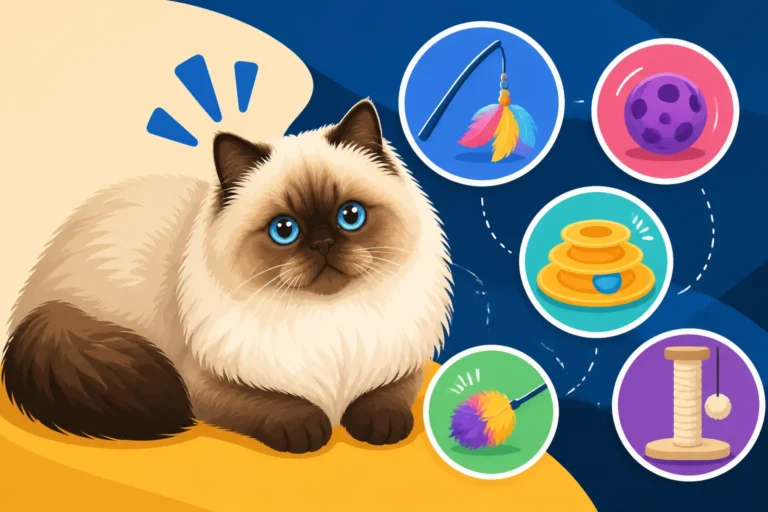
Senior Himalayan cats past twelve years old need gentle games that prevent boredom, protect arthritic joints, and stimulate the mind.
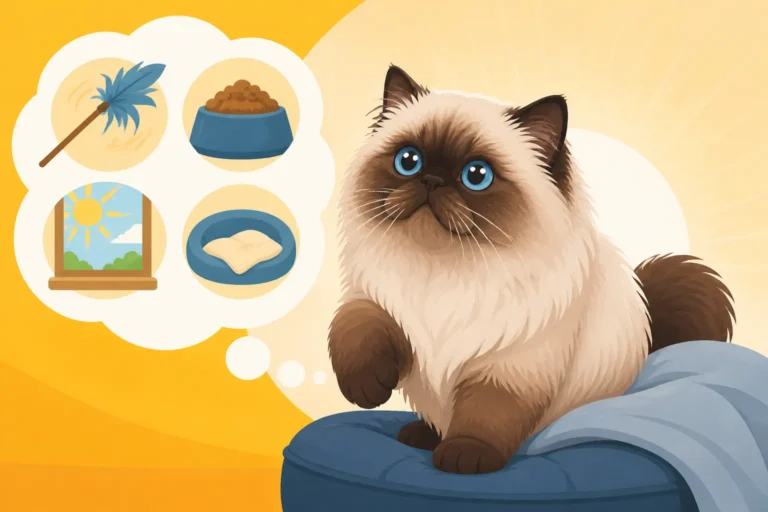
Senior Himalayan cat routines, mealtime rituals, favorite sunbeams, and gentle affection show what brings them joy in age.
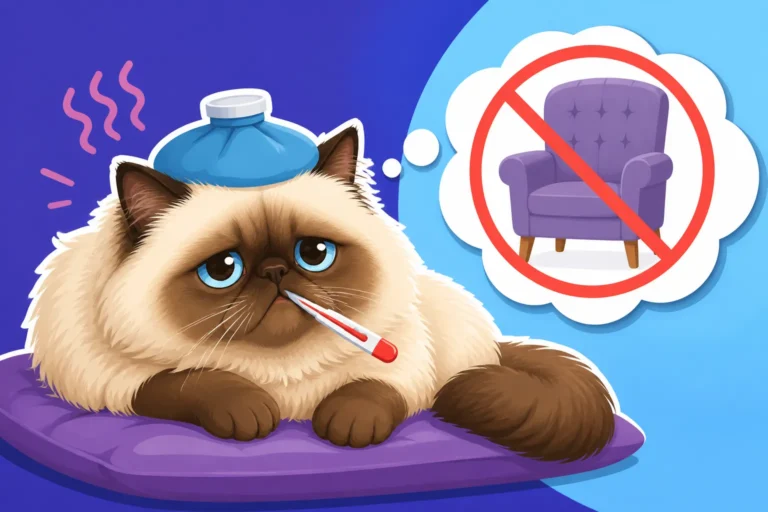
A Himalayan cat abandoning a favorite armchair or warm cushion signals underlying discomfort, anxiety, pain, or illness.
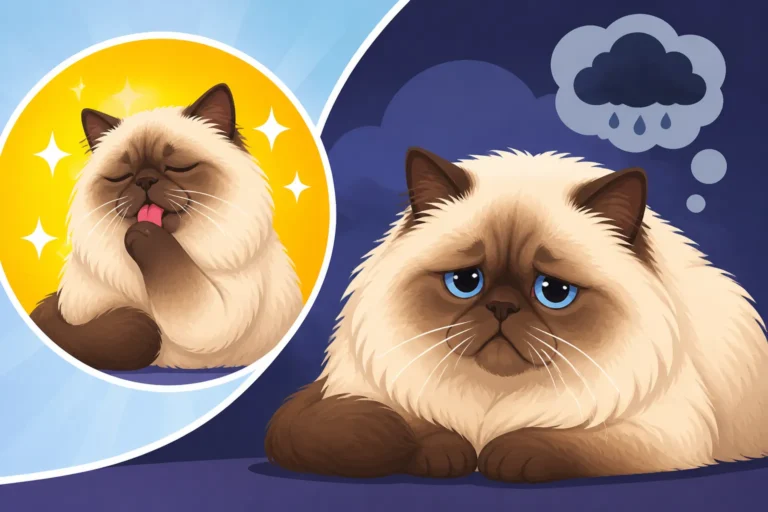
Himalayan cat grooming cessation reveals unhappiness, physical pain, anxiety, or depression through matted coats and tear stains.
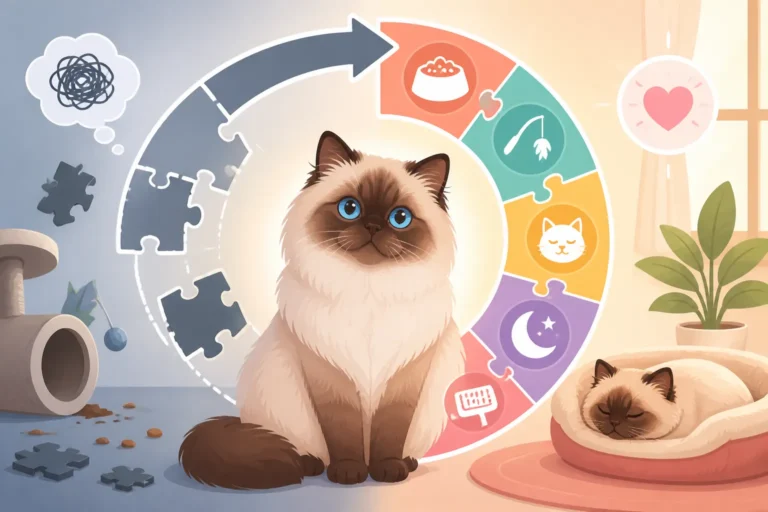
Himalayan cats require stable daily routines and experience stress when environmental changes disrupt their predictable schedules.
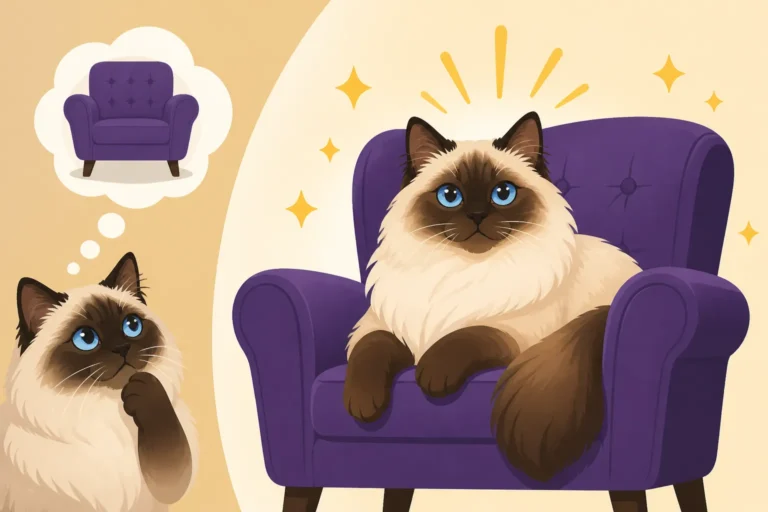
Himalayan cats use scent transfer methods like paw glands and facial pheromones to claim a new chair and accept unfamiliar furniture.
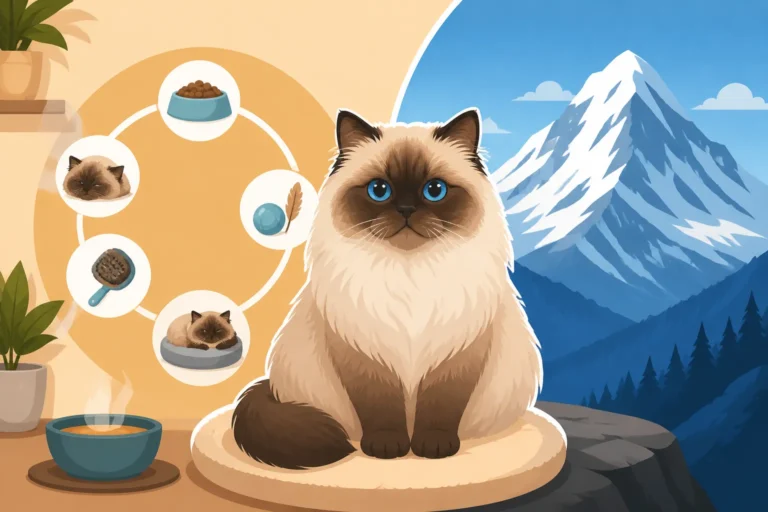
Himalayan cat behavior regarding daily routines explains why predictability matters more than physical addresses for emotional well-being.
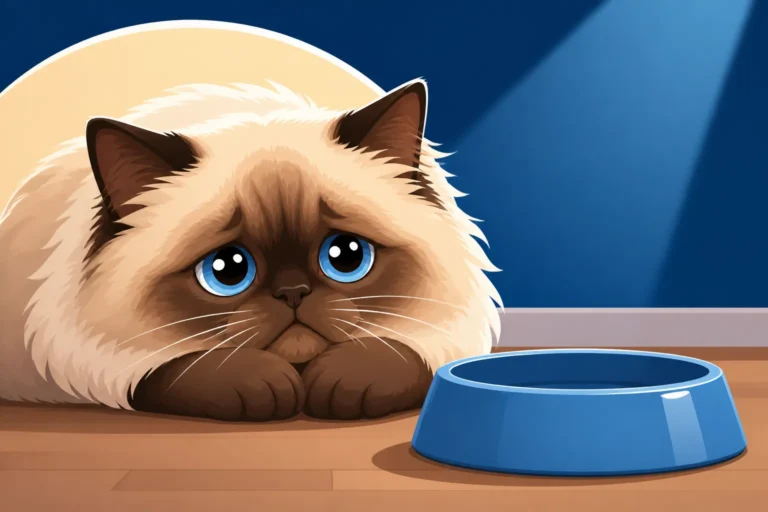
Himalayan cats communicate hunger without loud meows, using silent stares and soft chirps beside empty food bowls to demand meals.
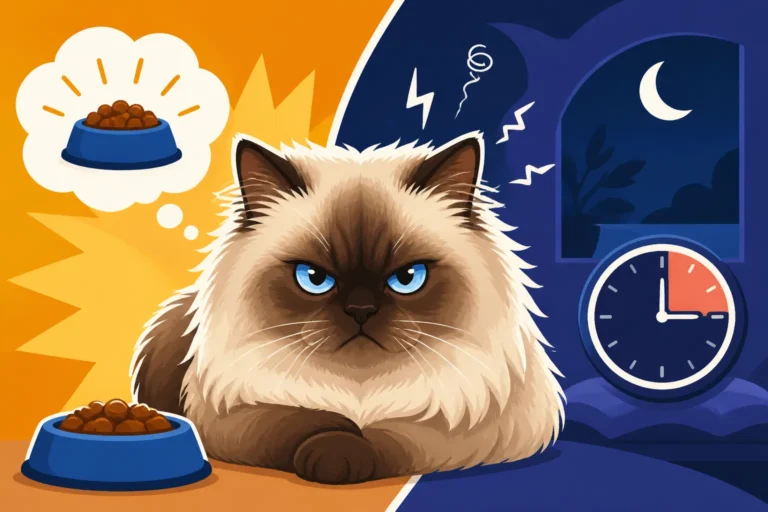
Himalayan cat dietary routines and their genetic mix of Persian predictability and Siamese anxiety explain late meal distress.
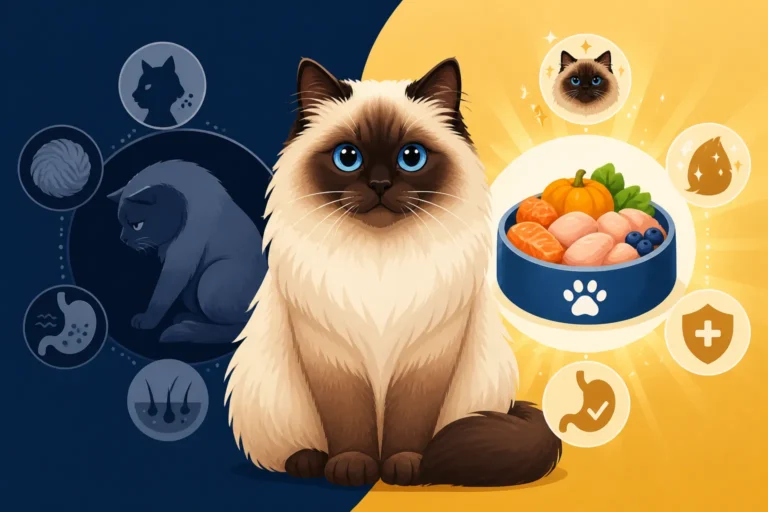
Food motivation explains why treats work better than vigorous physical play for grooming and daily cooperation with calm Himalayan cats.