The Household a Himalayan Was Effectively Bred For
Himalayan cats require calm homes with gentle owners who appreciate their unique Persian and Siamese temperament.
Is this the right one for you?
Origins and temperament, size and coat, what living with one is actually like, and how it compares to the breeds people weigh against it.
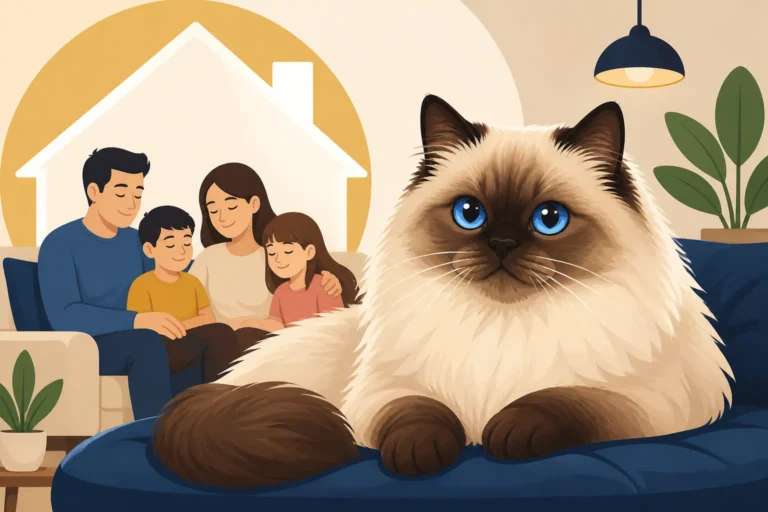
Himalayan cats require calm homes with gentle owners who appreciate their unique Persian and Siamese temperament.

The Himalayan cat maintains lasting popularity through its striking blue eyes, pointed coat, and luxurious Persian body shape.
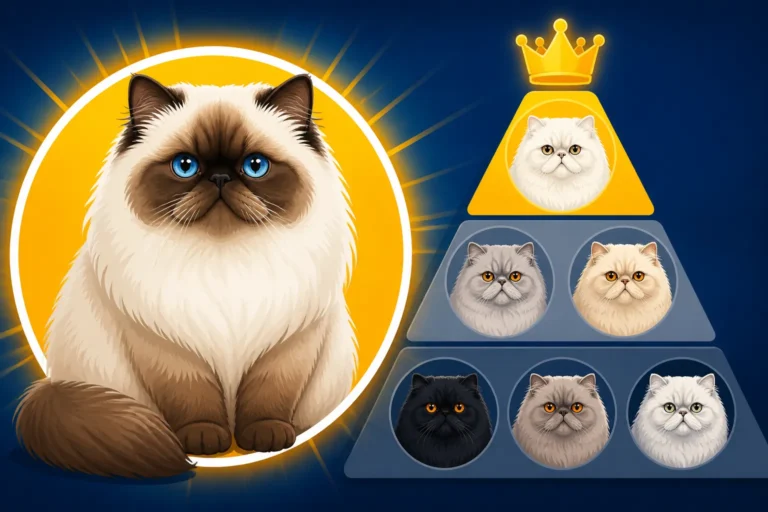
The Himalayan cat classification explains its official status as a colorpoint division of the Persian breed since 1984.

Harvard researchers in the 1930s bred Siamese and Persian cats to create Himalayans using the colorpoint gene.

Exotic Shorthair cats share the Himalayan facial structure because breeders used the Himalayan genetic blueprint to create them.

Cat genetics explain why Birmans have white paws and Himalayans lack them through a separate gene affecting all four paws.
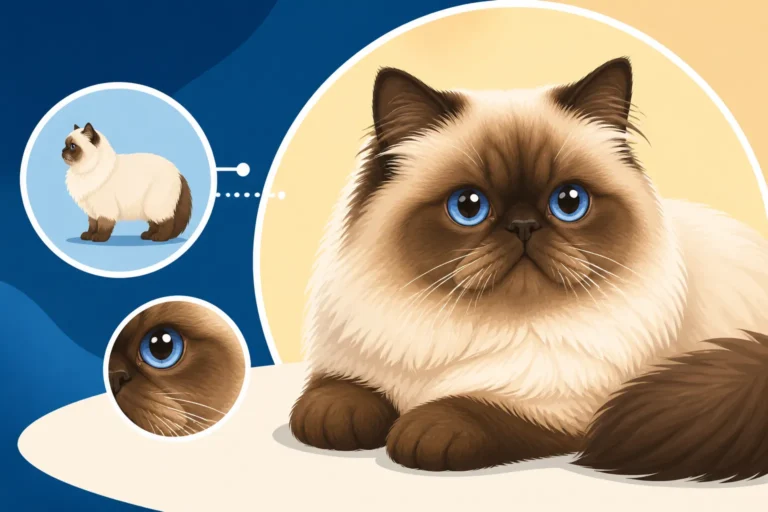
A Himalayan carrier Persian is a cat possessing one recessive colorpoint gene while appearing as a standard Persian.
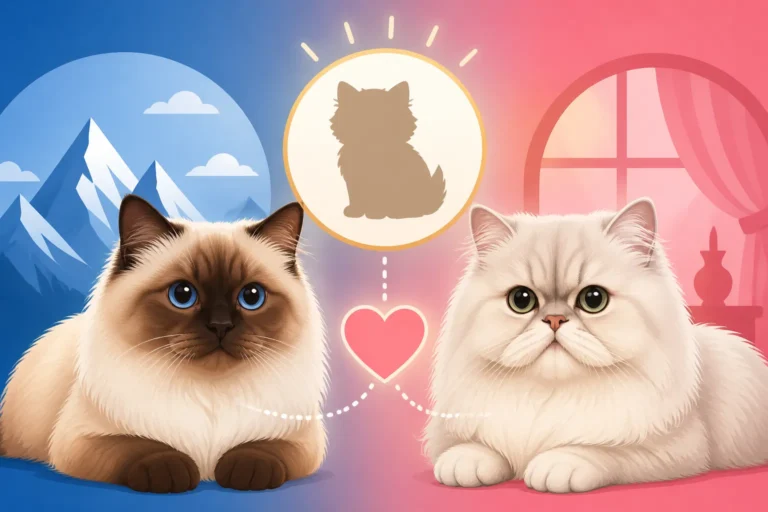
Himalayan and Persian cat breeding histories, shared genetic standards, and recessive colorpoint genes explained clearly.
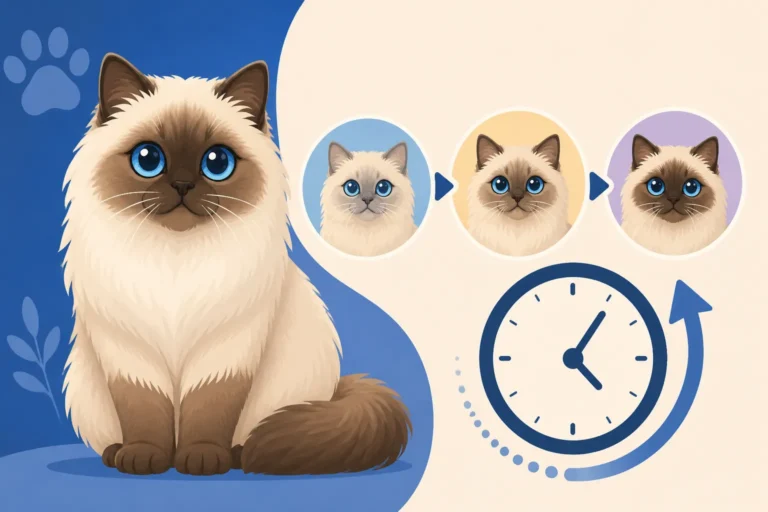
Himalayan kitten coat and point development timelines explain how white newborns transform into colored adults over months.

Adult Himalayan cat weight ranges from seven to fifteen pounds, varying between males and females over two to three years.