Whether Two Persians Can Produce a Himalayan
Two purebred Persian cats can produce a Himalayan kitten if both parents carry the recessive point gene originating from Siamese breeding.
Is this the right one for you?
Origins and temperament, size and coat, what living with one is actually like, and how it compares to the breeds people weigh against it.
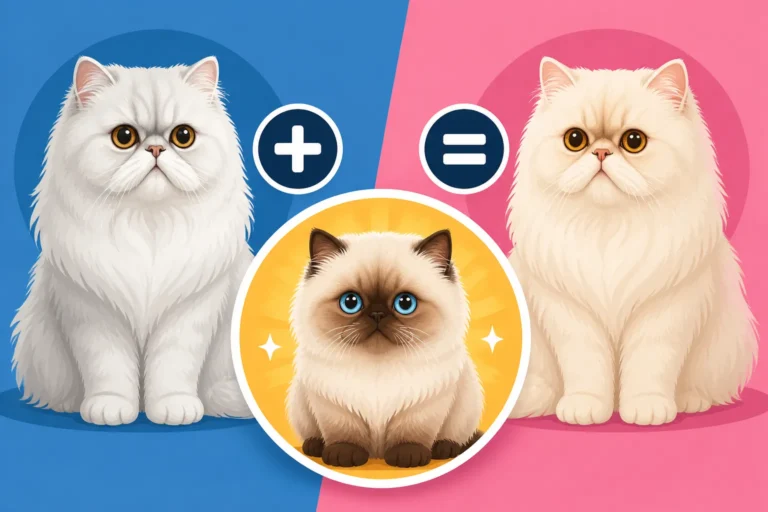
Two purebred Persian cats can produce a Himalayan kitten if both parents carry the recessive point gene originating from Siamese breeding.
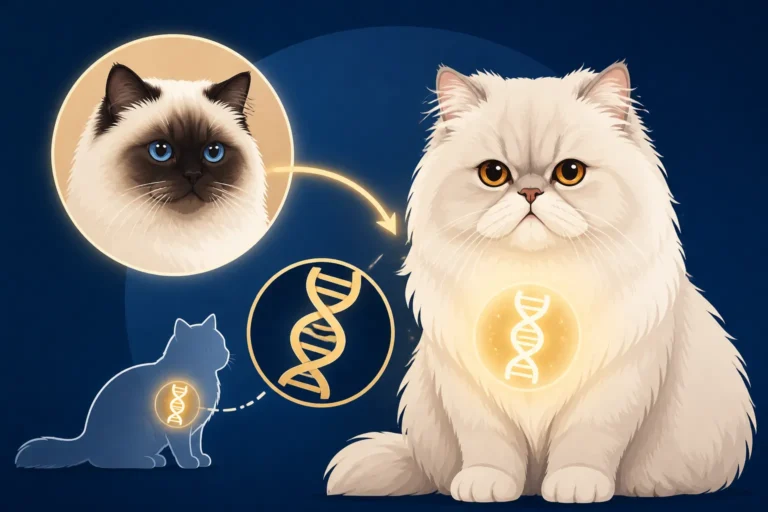
A Persian cat carrying the recessive Himalayan colorpoint gene produces pointed kittens when inheriting two copies.

The Himalayan colorpoint coat pattern requires two copies of the recessive cs gene for temperature-sensitive albinism.
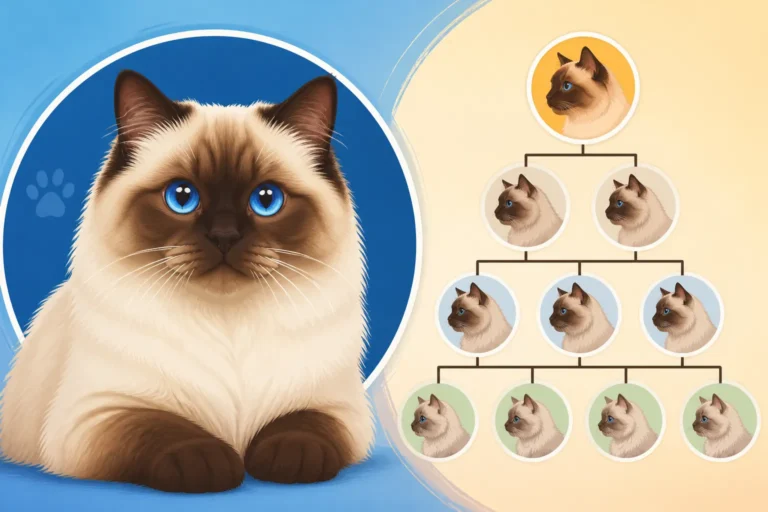
The historical creation of Himalayan cats through Harvard research explains how multiple generations of selective breeding combined Persian and Siamese traits.
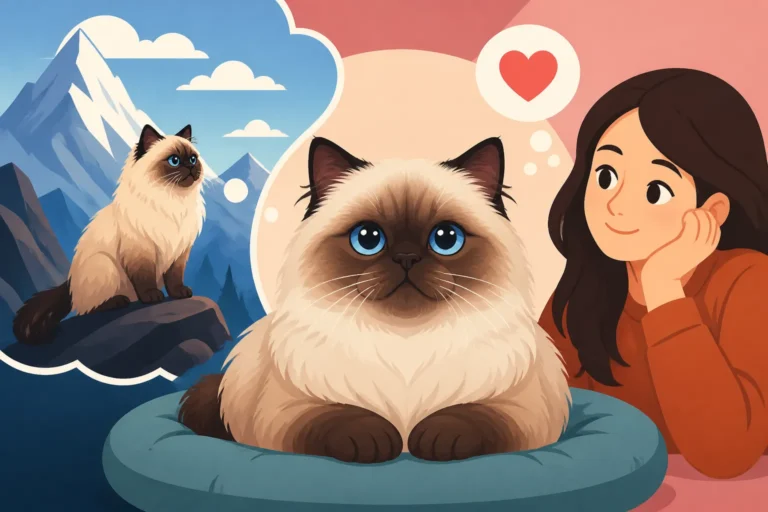
Harvard researchers Clyde Keeler and Virginia Cobb bred the first Himalayan cats in the 1930s for genetic research rather than pets.
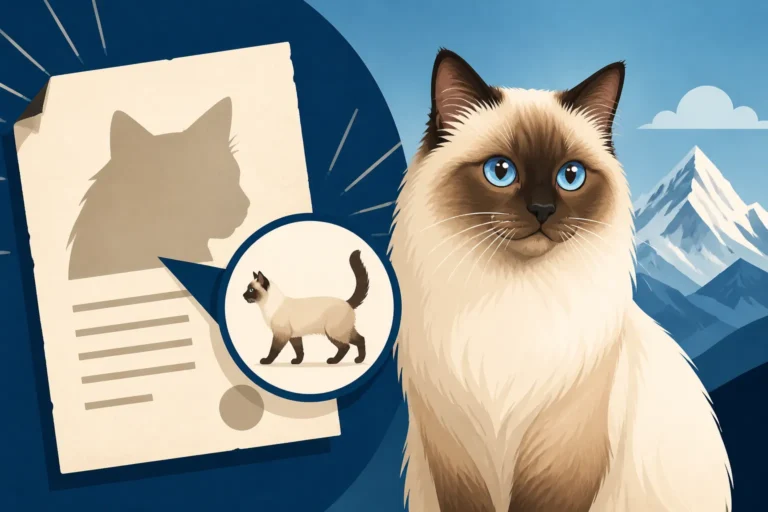
Harvard geneticist Clyde Keeler and breeder Virginia Cobb crossed cats to study colorpoint inheritance in 1936.

Harvard University researchers Clyde Keeler and Virginia Cobb conducted the 1930s genetic experiments that created the Himalayan cat.
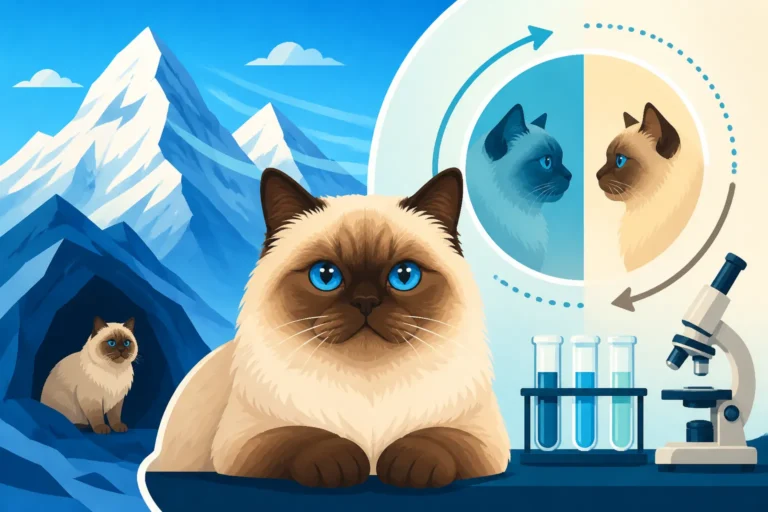
The Himalayan cat experiment aimed to prove that temperature-sensitive coat patterns followed Mendelian inheritance principles across mammals.
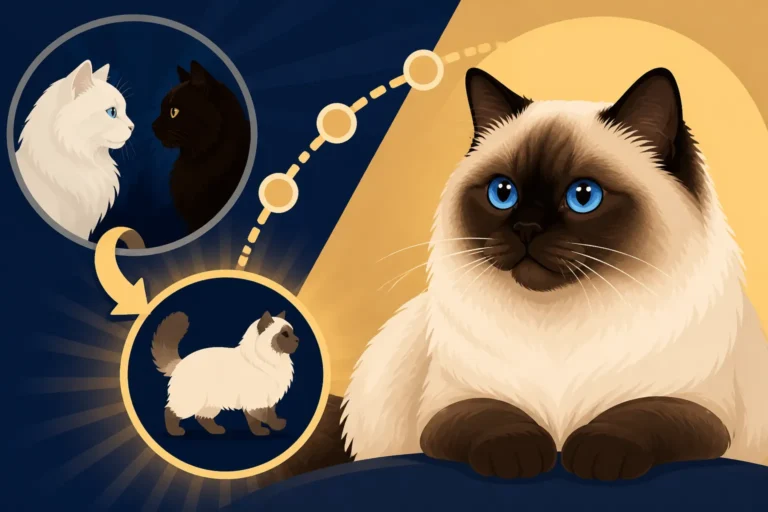
The first Himalayan cat crosses occurred in the 1930s through research led by Dr. Clyde Keeler and Virginia Cobb.

The Himalayan cat origin explains genetic inheritance through 1930s crossbreeding of Persian and Siamese breeds.