Who the Himalayan Actually Suits
Himalayan cat ownership requires specific lifestyles, helping readers honestly assess if this mellow lap cat fits their home.
Is this the right one for you?
Origins and temperament, size and coat, what living with one is actually like, and how it compares to the breeds people weigh against it.

Himalayan cat ownership requires specific lifestyles, helping readers honestly assess if this mellow lap cat fits their home.
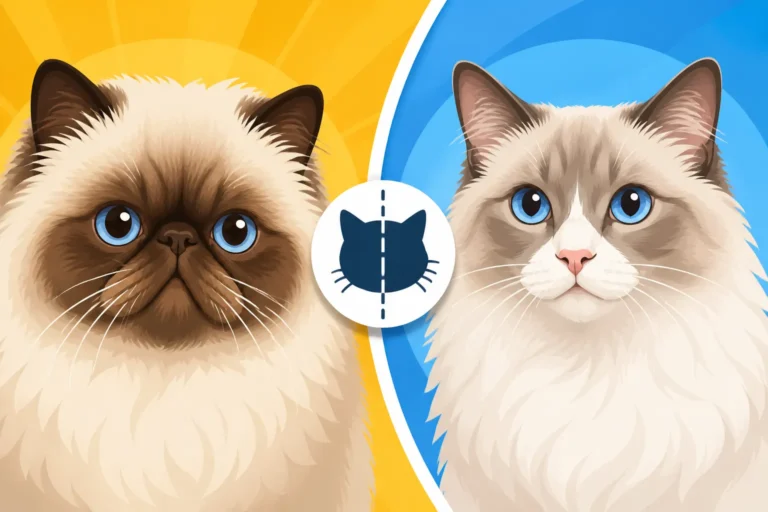
Cat facial structures, including Himalayan flat faces and Ragdoll moderate profiles, stem from distinct genetics and breeding goals.
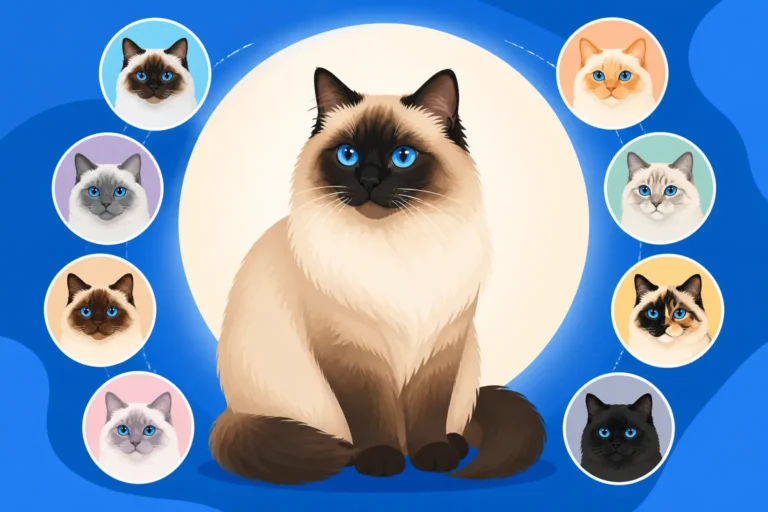
The Himalayan division coat colors, temperature sensitive genetics, and Siamese lineage explain distinct point patterns.
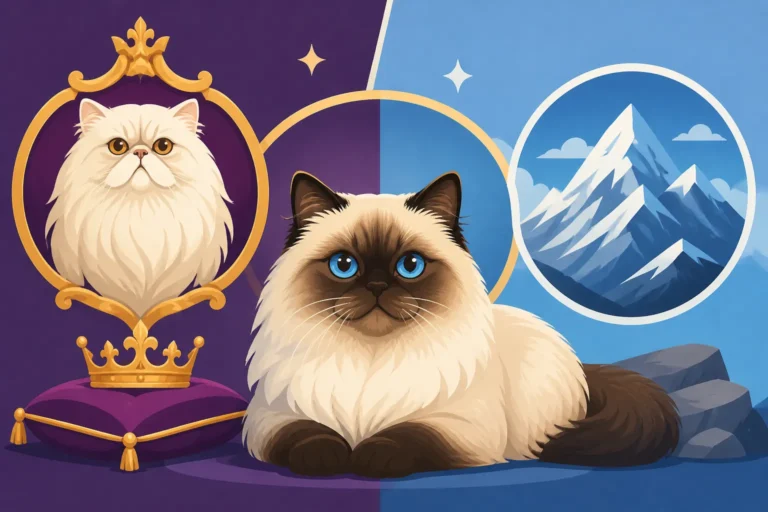
The Persian standard for Himalayan cats details the required body type, head shape, coat length, and eye coloration.

The Himalayan cat origin story and genetics explain why this breed shares a moniker with a rabbit and a mountain.
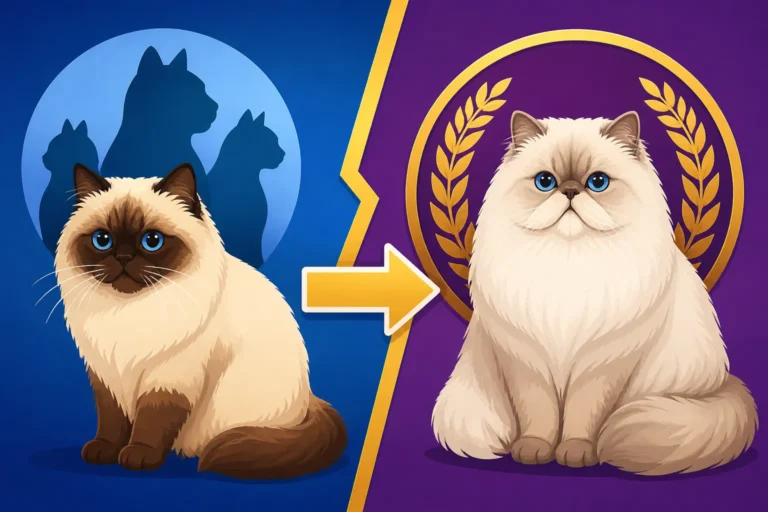
The Cat Fanciers Association decision in 1984 reclassified the Himalayan cat breed into a Persian division after decades as a separate group.
Marguerita Goforth and 1957 milestones explain the official breed recognition of Himalayan cats derived from Harvard University crosses.
Himalayan cat origins trace back to a 1936 Harvard University genetic study by Clyde Keeler and Virginia Cobb.
Clyde Keeler and Virginia Cobb used deliberate genetic research to create the first Himalayan cats through scientific experiments.
The Himalayan cat breed origins at Harvard University in the 1930s through genetic research using Siamese and Persian cats.