Combing a Himalayan’s Britches Without Turning It Over
If you're a Himalayan cat owner, you know the absolute joy these fluffy, affectionate creatures bring to your home. But let's be real, you also know the unique grooming challenges they present, especially when it comes to those voluminous britches. Trying to keep the long fur around their rear end free of mats and debris without wrestling them onto their back is a common struggle many of us face, leading to frustration for both you and your beloved feline. This comprehensive guide will walk you through gentle, effective strategies for combing your Himalayan's britches, helping you maintain their glorious coat while keeping them calm and comfortable.
Understanding the Unique Challenge of Himalayan Britches
The Himalayan cat, with its stunning long coat inherited from its Persian lineage, possesses a glorious set of "britches" – that long, silky fur around their hindquarters. While beautiful, this area is a notorious magnet for mats, dingleberries, and general mess. Grooming it can feel like a wrestling match, especially when your cat resists being flipped over onto their back. There's a reason this particular spot is often the source of so much grooming grief, and it's rooted in their unique anatomy and temperament.
Why the Britches Area Is So Prone to Trouble
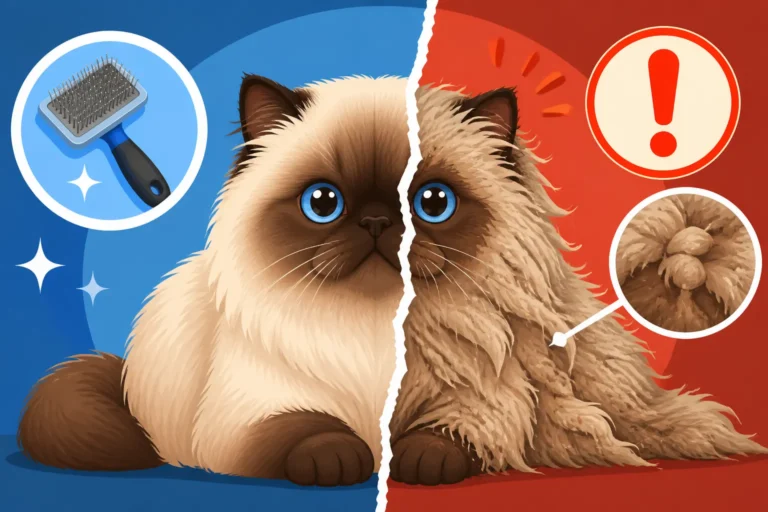
First off, the sheer length and density of the Himalayan coat mean that any friction, moisture, or even just daily movement can cause tangles to form rapidly. The fur in the britches area is particularly vulnerable because it's constantly interacting with your cat's hind legs, the litter box, and anything they sit on. Moisture from urination or even just humidity can bind the fur together, creating a perfect breeding ground for mats that can quickly become painful. Add to that the occasional "dingleberry" – feces clinging to the fur – and you have a recipe for a truly challenging grooming task. These aren't just cosmetic issues; matted fur can pull at the skin, causing discomfort, irritation, and even skin infections if left unchecked. A Himalayan's cobby build and short legs also mean they might struggle to adequately clean this area themselves, especially as they get older or if they're a bit on the heavier side. Why a Heavy Himalayan Stops Grooming Its Points speaks to how weight can impact self-grooming.
The Problem with Flipping Your Himalayan Over
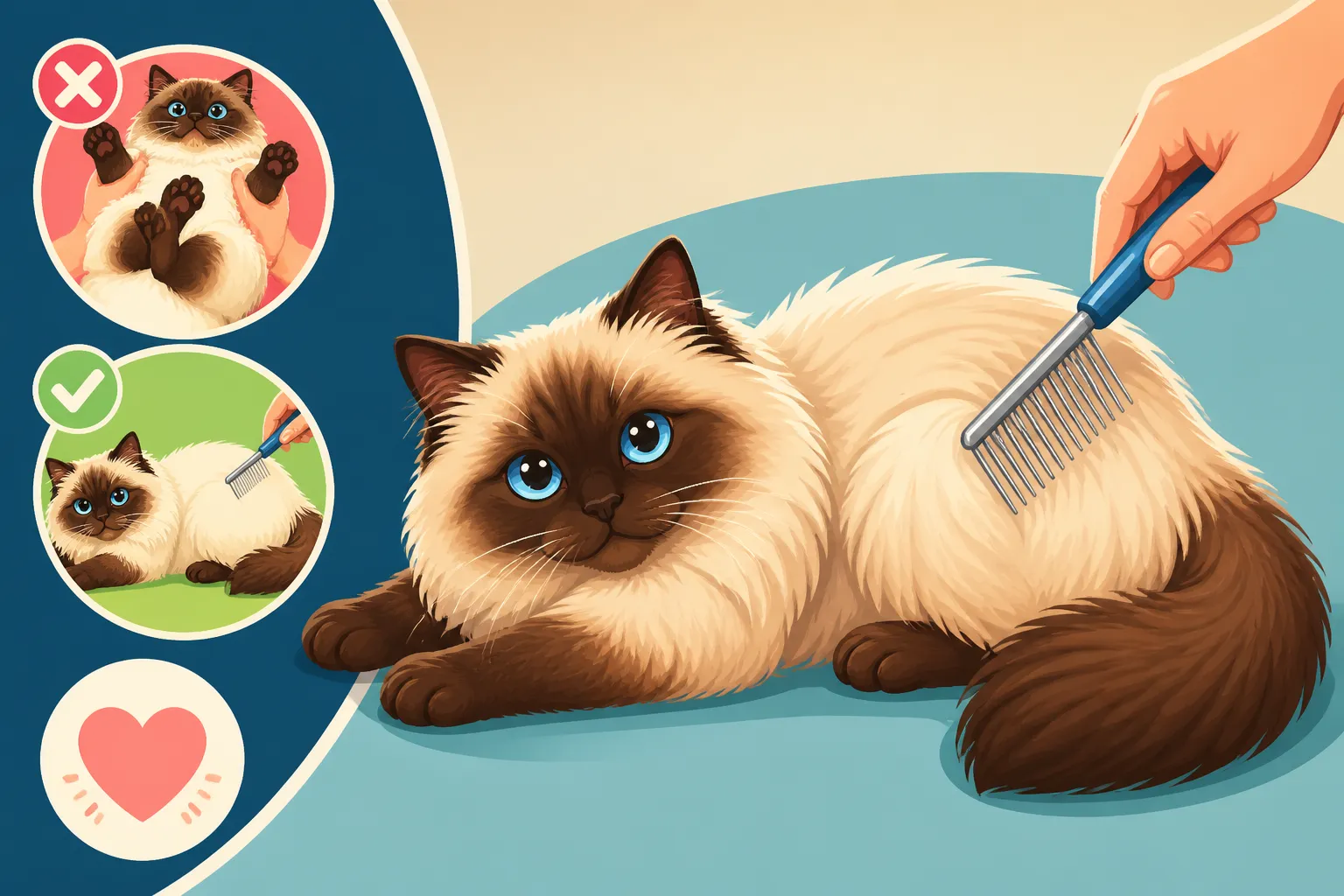
While it might seem like the easiest way to access the britches, flipping a Himalayan onto their back can be incredibly stressful for them. Cats, by nature, prefer to feel in control and vulnerable positions can trigger their fight or flight response. A cat on its back often feels exposed and threatened, leading to struggling, scratching, biting, and a general aversion to future grooming sessions. Their cobby, compact body also makes it less natural and comfortable for them to be in this position for extended periods, especially if they have any underlying discomforts. This isn't just about making your life harder; it's about building trust and making grooming a positive, or at least neutral, experience. We want to avoid creating a negative association that makes every subsequent attempt even more challenging.
Essential Tools and Preparation for Stress-Free Britches Grooming
Before you even think about approaching those britches, having the right tools and setting the stage for a calm session is paramount. Trying to detangle a stubborn mat with the wrong comb or in a noisy environment is a recipe for disaster and will only reinforce your Himalayan's resistance. Think of this as laying the groundwork for a successful, less-stressful grooming routine.
Selecting the Right Combs and Brushes
For the delicate and dense fur of the britches, a slicker brush just won't cut it. You need something that can penetrate the thick undercoat without scratching the skin or pulling excessively. A high-quality steel comb is your absolute best friend here. Look for one with both wide and fine teeth. The wider-toothed end is excellent for initial detangling and separating the fur, while the finer-toothed end can smooth and ensure no small tangles are left behind. Which Steel Comb a Himalayan's Coat Needs provides more detail on selecting the right comb. Many owners find a greyhound comb style works wonderfully for Himalayans. You might find great options on sites like Chewy or Amazon, where reviews can often guide you to combs that other long-haired cat owners swear by.
Beyond the comb, consider a detangling spray specifically formulated for cats. These can make working through minor tangles much easier and reduce static, preventing further matting. Keep a pair of blunt-tipped scissors or a small, cat-safe electric trimmer on hand as a last resort for mats that simply cannot be combed out. Remember, never cut mats close to the skin with sharp scissors, as it's incredibly easy to accidentally snip your cat's delicate skin.
Creating a Calm Grooming Environment
The environment you choose for grooming plays a huge role in your cat's cooperativeness. A quiet, familiar space free from distractions is ideal. Turn off the TV, silence your phone, and make sure other pets or boisterous children aren't going to interrupt. Many Himalayans, being creatures of habit and comfort, will do best if groomed in their favorite spot – perhaps a particular armchair, a soft rug, or even a grooming table if they're accustomed to it. Making One Room Comfortable for a Himalayan Left Alone touches on creating a peaceful space for your cat.
It's also crucial to choose a time when your cat is relaxed. This might be after a meal when they're sleepy, or during one of their usual lounging periods. Avoid trying to groom them when they're feeling playful, agitated, or generally "zoomy." A warm, soft towel or blanket for them to sit on can add to their comfort, and a non-slip surface is a must if you're using a table. The goal is to make this feel like a quiet, gentle interaction, not an intrusion.
Gathering Distractions and Rewards
Positive reinforcement is key to making grooming tolerable, and even enjoyable, for your Himalayan. Have their favorite high-value treats ready to go. Think about things they rarely get, like a lickable puree treat or a small piece of cooked chicken. Freeze-dried chicken treats are often a big hit and are widely available. A favorite toy, especially a wand toy that can keep them engaged without requiring them to move too much, can also be helpful. Some cats respond well to gentle verbal praise, so keep your voice calm and reassuring throughout the process. The idea is to associate the grooming session with good things, so they learn to tolerate it in exchange for something they truly value.
Gentle Techniques for Grooming Without Flipping
Now for the main event: actually tackling those britches without resorting to acrobatics. The trick is to work with your Himalayan's natural comfort zones and movements, rather than forcing them into uncomfortable positions. This requires patience, a light touch, and a willingness to take breaks.
The "Standing Groom" Method
This is often the most cat-friendly approach. Instead of flipping your Himalayan, encourage them to stand on a non-slip surface – ideally a grooming table, counter, or even a sturdy ottoman where you can comfortably access them without bending too much. With your cat standing, gently lift their tail to expose the britches area. Support the tail at its base, not by the tip, to prevent discomfort. This position allows you to work from behind, brushing the fur downwards and outwards. You're working with gravity, rather than against it, which is often less startling for your cat.
Start with the wide-toothed comb, gently working from the very ends of the fur, just the tips, and gradually moving closer to the skin. This "line brushing" or "layering" technique ensures you're not pulling on tangles near the skin. Imagine dividing the britches fur into invisible layers, and work on one small section at a time. If you hit a snag, don't yank! Gently wiggle the comb, or use your fingers to carefully tease apart the knot. This method respects their natural posture and minimizes stress. Remember, even a minute of calm grooming is a win, especially in the beginning.
Using the "Side-Lie" Position
If your Himalayan isn't keen on standing for long, or if you need slightly better access to the sides of their britches, the "side-lie" can be a good alternative. Encourage your cat to lie down on their side, much like they would for a nap. You can gently encourage this by petting them and guiding them down. Once they're relaxed on their side, you can access the upper britches and the back of their thighs more easily.
Again, lift the tail gently and work in small sections. You'll likely need to switch which side they're lying on to get full coverage. This position still keeps them relatively grounded and feeling secure, unlike being on their back. Offer plenty of praise and treats throughout. If they try to get up, let them. Take a short break, offer a treat, and try again when they're settled. Consistency is more important than speed here. You might find that some cats are more tolerant of lifting a cobby Himalayan without straining its back if they are already relaxed and on a soft surface.
Addressing Mats Safely and Gently
Finding a mat is inevitable with a Himalayan. The key is to address it as soon as possible, before it becomes a painful, tight clump. For small tangles, use your fingers to gently separate the hairs. Then, apply a detangling spray and use the wide-toothed comb to work through the very outer edges of the tangle. Hold the fur at the base of the mat with one hand, so you're not pulling on the skin, and comb with the other. This prevents discomfort and keeps the cat from associating grooming with pain.
If you encounter a mat that simply won't budge with combing, it's time for the blunt-tipped scissors or trimmer. Again, never, ever pull at the mat to cut it. This can cause the skin to tent up into the mat, making it extremely easy to cut your cat. Instead, carefully slide the blunt tip of the scissors under the mat, between the mat and the skin, keeping the skin taut and flat. Snip parallel to the skin, breaking the mat into smaller sections. Once the mat is quartered or halved, it becomes much easier to comb out the individual pieces. For very tight, flat mats, a small electric trimmer is safer, as it's less likely to cut the skin. You might need professional help from a groomer or vet for severe matting. Why a Matted Himalayan Becomes a Medical Case underscores the seriousness of severe matting.
| Grooming Challenge | Solution for Britches | Key Tool(s) |
|---|---|---|
| Cat resists being flipped | Use "Standing Groom" or "Side-Lie" methods | Hands, treats |
| Small tangles forming | Regular, gentle combing from tips to roots | Steel comb (wide teeth), detangling spray |
| Matting close to the skin | Hold fur at base, use blunt-tipped scissors or cat-safe trimmer to break up mat | Blunt-tipped scissors, small electric trimmer |
| Feces clinging to fur | Immediately clean with a warm, damp cloth, then dry thoroughly and comb | Warm cloth, cornstarch (to dry), fine-toothed comb |
| Cat becomes agitated | Stop, offer a treat, take a break, try again later or shorten the session | High-value treats, calm voice |
Maintaining Britches Health Between Sessions
Grooming isn't just about reacting to problems; it's about proactive care. By establishing a consistent routine and being mindful of other aspects of your Himalayan's life, you can significantly reduce the frequency and severity of britches issues. Prevention is always easier than intervention, especially when it comes to keeping that magnificent coat in pristine condition.
The Importance of Daily Spot Checks
While a full combing session might not happen daily, a quick spot check of your Himalayan's britches absolutely should. This takes mere seconds and can prevent a minor tangle from becoming a major mat. Every day, gently lift their tail and visually inspect the area. Run your fingers through the fur, feeling for any nascent knots or sticky spots. If you find anything, address it immediately. A few quick passes with a comb can often resolve a fresh tangle before it sets in. This daily vigilance is crucial, as why a Himalayan cannot be left a week without grooming becomes clear when you see how quickly mats can develop. The sooner you catch a problem, the easier and less stressful it is to fix.
Keeping the Area Clean and Dry
Moisture is a mat's best friend and a clean britches area is a dry britches area. After your cat uses the litter box, especially if you notice any clinging debris, take a moment to gently wipe the area with a warm, damp cloth or an unscented pet wipe. Make sure to follow up with a dry cloth or even a sprinkle of cornstarch (which helps absorb moisture and acts as a dry shampoo) to ensure the fur is completely dry. Leaving the area damp creates an ideal environment for mats and skin irritation.
Consider the type of litter you're using. Some clay litters can be particularly dusty or clingy, exacerbating the problem. A low-dust, fine-grained litter might be less likely to stick to the fur. Also, ensuring your cat's litter box is clean and scooped frequently will help prevent a buildup of waste that can inevitably transfer to their britches. A why litter ends up in a Himalayan's britches is often due to the litter type or how often the box is cleaned.
Regular Trims for Hygiene and Comfort
Even with diligent combing, the fur around the britches can become so long and dense that it simply gets in the way. A sanitary trim, performed regularly, can make a world of difference. This involves carefully trimming the fur around the anus and inner thighs short, creating a "landing strip" that significantly reduces the chance of feces getting stuck and allows for better air circulation.
You can do this yourself with blunt-tipped grooming scissors or a small electric trimmer, taking extreme care to pull the skin taut and always cut away from the body. If you're unsure or nervous, a professional groomer or your vet's office can perform a sanitary trim quickly and safely. This isn't about vanity; it's about hygiene and preventing painful, dirty mats that could lead to serious skin issues. Many owners find that trimming a Himalayan's britches without turning it over is easier with a small, quiet, cordless trimmer, making the process less startling for their cat.
By adopting these proactive measures and using gentle techniques, you can keep your Himalayan's britches looking beautiful and feeling comfortable, making grooming a more peaceful experience for both of you.
Disclaimer
This article is for general informational purposes only and does not constitute professional advice. Laws, prices and regulations vary by location and change over time. Consult a qualified professional for guidance on your specific situation.