Why a Himalayan Is a Persian With the Point Gene
It’s a question that has puzzled so many wonderful cat lovers for decades: Is my beloved Himalayan a breed all her own, or is she simply a fancy Persian in a beautiful coat? You’ve probably heard conflicting answers, or perhaps you've just been left scratching your head by official-looking paperwork that calls your "Himalayan" a "Persian." It can be utterly confusing, and honestly, a little frustrating when you just want to understand your feline companion's heritage. This guide is here to untangle that genetic knot and explain precisely why a Himalayan is, at its heart, a Persian with the captivating colorpoint gene.
The Himalayan's Origin Story: A Deliberate Design
The Himalayan isn't just a happy accident; it was a deliberate, scientific endeavor to combine the best traits of two very distinct and beloved cat breeds. Imagine someone setting out to create a living work of art, and you’re pretty close to understanding the vision behind these magnificent felines.
The Harvard Experiment and the Siamese Connection
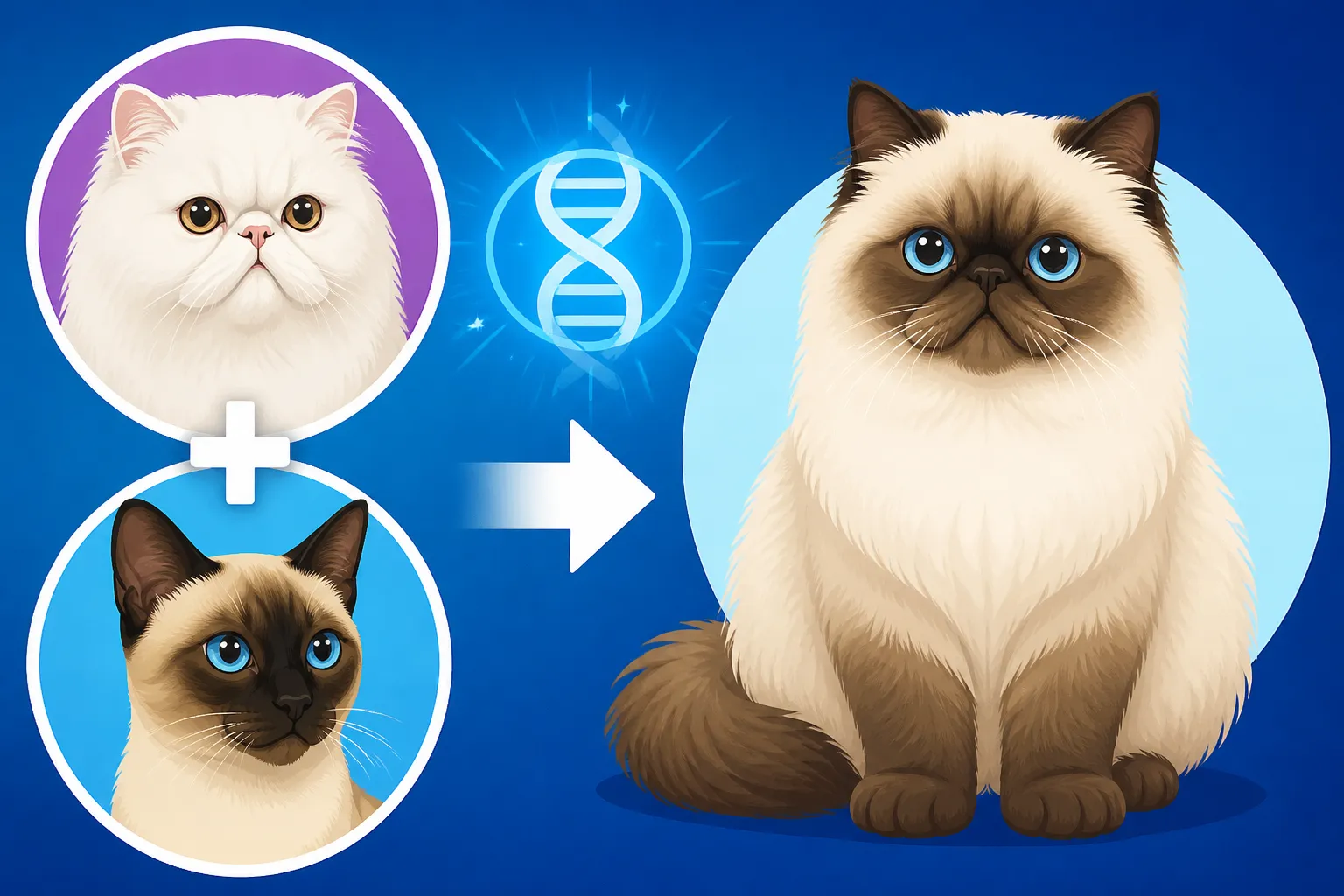
Believe it or not, the story of the Himalayan begins in a laboratory, not a cattery. In the 1930s, at Harvard University, researchers named Clyde Keeler and Virginia Cobb embarked on a fascinating genetic experiment. Their goal wasn't initially to create a new show cat, but rather to study how certain traits, like coat color and eye color, were inherited. They had a specific interest in the colorpoint gene, the very gene that gives the Siamese its distinctive dark points and striking blue eyes. To understand how this gene worked, they needed to introduce it into a breed with a vastly different genetic makeup.
This is where the Persian came in. Persians were already known for their long, luxurious coats and placid temperaments. By crossing a Siamese with a Persian, Keeler and Cobb hoped to observe the inheritance patterns over several generations. It was a methodical, painstaking process, far removed from the casual backyard breeding we sometimes hear about. They were essentially laying the scientific groundwork for what would become one of the most adored cat breeds in the world. This early work was groundbreaking and truly set the stage for what was to come. You can read more about this scientific beginning in The Himalayan Was Made at Harvard in the 1930s.
Bridging Two Worlds: The Birth of the "Siamese-Persian"
The initial crosses between Siamese and Persian cats didn't immediately produce the Himalayans we recognize today. The first offspring were often short-haired, and the long coat of the Persian, combined with the point coloration of the Siamese, took several generations of careful back-crossing and selective breeding to solidify. It was a true labor of love and dedication. Breeders, inspired by the Harvard research, picked up the torch and continued the work, refining the look and ensuring the desired traits were consistently passed down.
They faced challenges, of course. Achieving that perfect balance – the Persian's opulent coat, sturdy "cobby" body, and gentle nature, fused with the Siamese's brilliant blue eyes and characteristic points – was no easy feat. Early on, these cats were often referred to simply as "Siamese-Persians," a practical name that perfectly described their dual heritage. This name highlighted the fact that they were a blend, a bridge between two distinct feline worlds. It really underscores the deep thought that went into bringing these two beautiful lineages together.
Unpacking the "Point Gene": What It Actually Means
The "point gene" is the heart of what makes a Himalayan a Himalayan. It's not just about aesthetics; it's a fascinating genetic mechanism that dictates where and how color manifests on your cat's body. Understanding this gene helps explain why your Himalayan's beautiful points can change with temperature and age.
How Temperature Influences Point Color
The point gene, scientifically known as the tyrosinase gene, is a temperature-sensitive enzyme. What this means in plain English is that the color pigment can only fully develop in cooler parts of the cat's body. Think of it like a natural, internal thermometer that dictates fur color! When a Himalayan kitten is born, for instance, they are almost entirely white or cream. This isn't because they lack the pigment, but because the warmth of the mother's womb has kept their entire body warm enough to inhibit the gene from expressing the darker colors.
As the kitten grows and is exposed to the cooler ambient air, the extremities – the ears, face mask, paws, and tail – become cooler than the core body temperature. It's in these cooler areas that the tyrosinase enzyme becomes active, allowing the pigment to fully develop. That’s why you see those beautiful, dark points emerge over the first few weeks and months of their life. This temperature sensitivity also explains why a Himalayan kept in a cooler home might have slightly darker body shading, or why a shaved patch of fur, when it regrows, might come back darker initially. It's all about where the body temperature dips. You can delve deeper into this phenomenon in How Temperature Decides a Himalayan's Point Color.
The Recessive Nature of the Point Gene in Himalayans
The colorpoint gene is recessive, which means a cat needs to inherit two copies of the gene – one from each parent – to express the point coloration. If a cat only inherits one copy, they are a "carrier" of the gene but will display a solid color coat themselves. This is crucial for breeders, especially those working with Persians who want to introduce the point pattern without compromising other Persian characteristics.
When a purebred Persian is bred to a Himalayan, their offspring might not all be pointed Himalayans. Some could be solid-colored Persians who carry the hidden point gene, ready to pass it on to future generations if bred to another carrier or a pointed cat. This is why careful genetic testing and pedigree tracking are so vital in responsible breeding. It allows breeders to predict coat colors and ensure genetic diversity while maintaining the unique look of the Himalayan. It's a complex dance of genetics, but it's what guarantees those stunning sapphire eyes and contrasting points we all adore.
The Registry Debates: Himalayan as a Separate Breed vs. Persian Division
This is often where the biggest confusion lies for new Himalayan owners, and it's completely understandable why! The cat fancy world has its own set of rules and classifications, and they don't always align with how we perceive our pets.
CFA's Decision: The Persian Colorpoint Division
One of the most significant moments in the Himalayan's history, and a major source of the breed identity debate, was the decision by the Cat Fanciers' Association (CFA) in 1984. CFA, one of the largest cat registries in the world, opted to merge the Himalayan into the Persian breed, designating them as a "Colorpoint Persian" division. This meant that while they still recognized the unique point coloration, Himalayans were no longer considered a separate breed but rather a specific color pattern within the Persian breed.
For many Himalayan enthusiasts and breeders, this decision was met with mixed feelings. On one hand, it acknowledged the strong genetic links and shared physical characteristics with the Persian. On the other, it felt like a loss of independent identity for a breed that had been meticulously developed over decades. What this really meant on a practical level was that Himalayans would now compete in show rings alongside solid Persians, judged by the same Persian standard, with the only distinguishing factor being their point coloration. Your cat's papers, if registered with CFA, would likely list them as a "Persian" with "Colorpoint" as a division. This change had a profound impact on breeding programs and how the breed was perceived by the wider cat community. Why CFA Made the Himalayan a Persian Division in 1984 explains more about this historical shift.
TICA's Stance: Maintaining the Himalayan's Independent Status
In contrast to CFA, The International Cat Association (TICA), another prominent cat registry, chose a different path. TICA continues to register the Himalayan as its own distinct breed. This approach resonates more with breeders and owners who view the Himalayan as a unique entity, deserving of its own classification due to its specific genetic history and the blend of traits from both Persian and Siamese ancestors.
For those whose Himalayans are registered with TICA, their paperwork proudly states "Himalayan" as the breed. This difference in classification between major registries often leads to understandable confusion for potential owners. It highlights the subjective nature of breed definitions within the cat fancy world and how different organizations interpret genetic lineage and physical characteristics. If you're passionate about the Himalayan as a standalone breed, seeking out TICA-registered cats might align more with your personal preference. You can find more details on TICA's approach in TICA Still Registers the Himalayan as a Breed of Its Own.
The Breeder's Perspective on Registration
For Himalayan breeders, navigating these different registry standards is a daily reality. A reputable breeder will be transparent about which registry their cats are listed with and what that means for your kitten's official status. They understand that while the paperwork might say "Persian" in one registry and "Himalayan" in another, the cat itself remains the same beautiful, sweet-natured companion.
Many breeders will actually cross Himalayans with solid Persians to maintain genetic diversity and reinforce the desired Persian type – that cobby body, round head, and luxurious coat – while still ensuring the point gene is carried forward. When you get a kitten from a responsible breeder, they should provide you with clear documentation that outlines the cat's lineage and registration details. This helps you understand the historical and genetic background of your cat, regardless of how a particular organization chooses to categorize them. It's all about ensuring the health and integrity of the lines, and breeders work hard to maintain the specific look and temperament that makes a Himalayan so special.
Beyond the Gene: Shared Traits and Unique Characteristics
It's not just the point gene that defines a Himalayan. This breed embodies a beautiful fusion of its two parent breeds, resulting in a cat that is both distinctly Persian in many ways and carries subtle, yet undeniable, echoes of its Siamese ancestry.
The Persian Foundation: Coat, Body, and Temperament
At its core, a Himalayan is built on a strong Persian foundation. Look at their physical attributes, and you'll see the classic Persian hallmarks. They possess that wonderfully "cobby" body type – compact, heavily boned, and low to the ground, giving them a substantial feel. Their heads are round and broad, with full cheeks and small, low-set ears. And, of course, there's that magnificent, flowing coat. Himalayans inherited the Persian's long, dense, double coat, complete with a luxurious ruff around their neck and britches on their hindquarters. This spectacular fur demands daily grooming, making a good quality steel comb and a regular routine absolutely essential. Many owners find themselves needing products from places like Chewy to keep that coat pristine.
Temperament-wise, the Persian influence is equally dominant. Himalayans are known for their sweet, gentle, and docile nature. They are quintessential lap cats, preferring a warm, comfortable spot on the sofa or your lap to scaling curtains or tearing around the house. They tend to be calm and quiet, often reserving their bursts of playful energy for short, dignified sessions. While they enjoy interaction, they are rarely demanding, content to simply be near their favorite people. This makes them wonderful companions for individuals or families seeking a serene and affectionate feline friend. What the Persian Standard Asks of a Himalayan delves into the specific expectations for their appearance.
The Siamese Influence: Eyes and Voice
While the Persian foundation is undeniable, the Siamese side of the Himalayan lineage brings its own distinct and cherished traits. The most obvious is, of course, those stunning, brilliant blue eyes. All Himalayans, regardless of their point color, have vivid blue eyes – a direct inheritance from their Siamese ancestors. These eyes are not just beautiful; they are an integral part of the point gene expression itself.
Beyond the captivating gaze, many Himalayan owners will tell you about their cat's "voice." While not as loud or insistent as the traditional Siamese yowl, Himalayans are definitely more vocal than their Persian counterparts. They have a softer, more melodic meow or chirp, often used to communicate their needs or simply to engage with their human companions. It’s a subtle nod to their Siamese heritage, adding another layer of charm to their already delightful personalities. They might not carry on a full conversation, but they certainly aren't afraid to let you know when it's dinner time or they'd like a head scratch. For those who find the typical Siamese vocalizations a bit much, the Himalayan offers a lovely, toned-down version. You might even notice your Himalayan snores a little louder than a typical Siamese, a trait explored in Why a Himalayan Snores Louder Than Its Siamese Ancestors.
The Distinctive Himalayan Face and Its Care Needs
One feature that defines many Himalayans, and often sparks strong opinions, is their distinctive facial structure. Similar to their Persian relatives, Himalayans can exhibit a range of facial types, from the "doll face" (with a more traditional, visible nose) to the "peke face" (with an extremely flattened nose and prominent eyes). This brachycephalic (short-nosed) structure, while undeniably cute to many, does come with specific care requirements that any prospective owner needs to understand.
The flattened face can lead to tear staining, as the tear ducts may not drain efficiently, causing tears to spill onto the fur around the eyes. Daily cleaning with a soft, damp cloth or specialized wipes (easily found on Chewy) is crucial to prevent irritation and unsightly stains, especially on pale coats. Furthermore, the shortened muzzle can sometimes affect breathing, leading to more audible breathing or snoring. It's also important to consider specialized food bowls – wide, shallow dishes are often easier for Himalayans to eat from without discomfort or making a mess. These are not trivial concerns; they are fundamental aspects of caring for a flat-faced breed. Understanding these needs is key to ensuring your Himalayan lives a comfortable and healthy life. For a deeper dive, check out Why a Himalayan's Face Is Flat and a Ragdoll's Is Not.
Living with a Himalayan: Understanding Their Unique Blend
Bringing a Himalayan into your home means embracing a cat that is truly a blend of two magnificent breeds. It's not just about their striking looks; it's about understanding their specific care requirements, their temperament, and how to best integrate them into your lifestyle.
Grooming the Persian Coat with Points
The Himalayan’s luxurious Persian coat is undoubtedly one of its most defining features, but it's also the most demanding in terms of care. This isn't a wash-and-wear kind of cat! Their long, dense fur, particularly the undercoat, is highly prone to matting if not groomed daily. A quick brush a few times a week simply won't cut it. You'll need to dedicate time every single day to thoroughly comb through their coat, paying special attention to areas like the armpits, behind the ears, the ruff, and their britches, where mats tend to form first.
This daily routine isn't just about aesthetics; it's vital for their health and comfort. Mats can pull at the skin, causing pain and even skin infections. If left untreated, severe matting often requires professional grooming under sedation. Investing in high-quality grooming tools, like a good metal comb and a detangling spray (many excellent options are available from Chewy), is a must. Many Himalayan owners find it beneficial to introduce grooming early in kittenhood to get their cat accustomed to the routine. Think of it as a bonding experience rather than a chore, and your Himalayan will be much more cooperative. The cost and time involved in this daily ritual are significant, as discussed in What Daily Combing Costs a Himalayan Owner in Time.
Addressing Flat-Faced Challenges
As we touched upon earlier, the charming flat face of many Himalayans brings with it specific considerations that need proactive management. Beyond the daily eye wiping to manage tear stains, their brachycephalic structure means they are more susceptible to overheating than other breeds. Their shortened nasal passages make it harder for them to cool themselves efficiently through panting. This means they are strictly indoor cats and need to be protected from hot weather and excessive exercise. Air conditioning during summer months is not a luxury, but a necessity for many flat-faced Himalayans.
Additionally, their dental health needs extra attention. The shortened jaw can lead to crowded teeth, increasing the risk of dental disease. Regular veterinary check-ups that include dental assessments are important, and many Himalayans will require professional dental cleanings under anesthesia throughout their lives. It's about being prepared for these unique needs and working closely with your veterinarian to ensure optimal health. This proactive approach can make a huge difference in their overall quality of life.
The Gentle Giant with a Voice
Despite their regal appearance and slightly increased vocal tendencies compared to a Persian, Himalayans are truly gentle giants. They thrive on companionship and are incredibly affectionate, often forming deep bonds with their chosen human. They might not be the most athletic or adventurous cats, preferring to observe the world from the comfort of a favored armchair, but their quiet presence is deeply comforting.
Their playful side does exist, but it's usually expressed in short bursts rather than prolonged antics. They enjoy interactive toys that don't require too much strenuous activity, like feather wands or soft balls they can bat around from a prone position. They adapt well to quiet households and can be good companions for older children or individuals seeking a calm, loving pet. However, due to their delicate features and long coat, they are not ideal for homes with very young, boisterous children or dogs that might be too energetic. A Himalayan asks for little beyond a warm lap, regular meals, and consistent grooming, offering a lifetime of serene companionship in return. Knowing Why a Himalayan Must Never Be an Outdoor Cat is also crucial for their well-being.
Disclaimer
This article is for general informational purposes only and does not constitute professional advice. Laws, prices and regulations vary by location and change over time. Consult a qualified professional for guidance on your specific situation.