Whether the Himalayan Has Any Link to the Himalayas
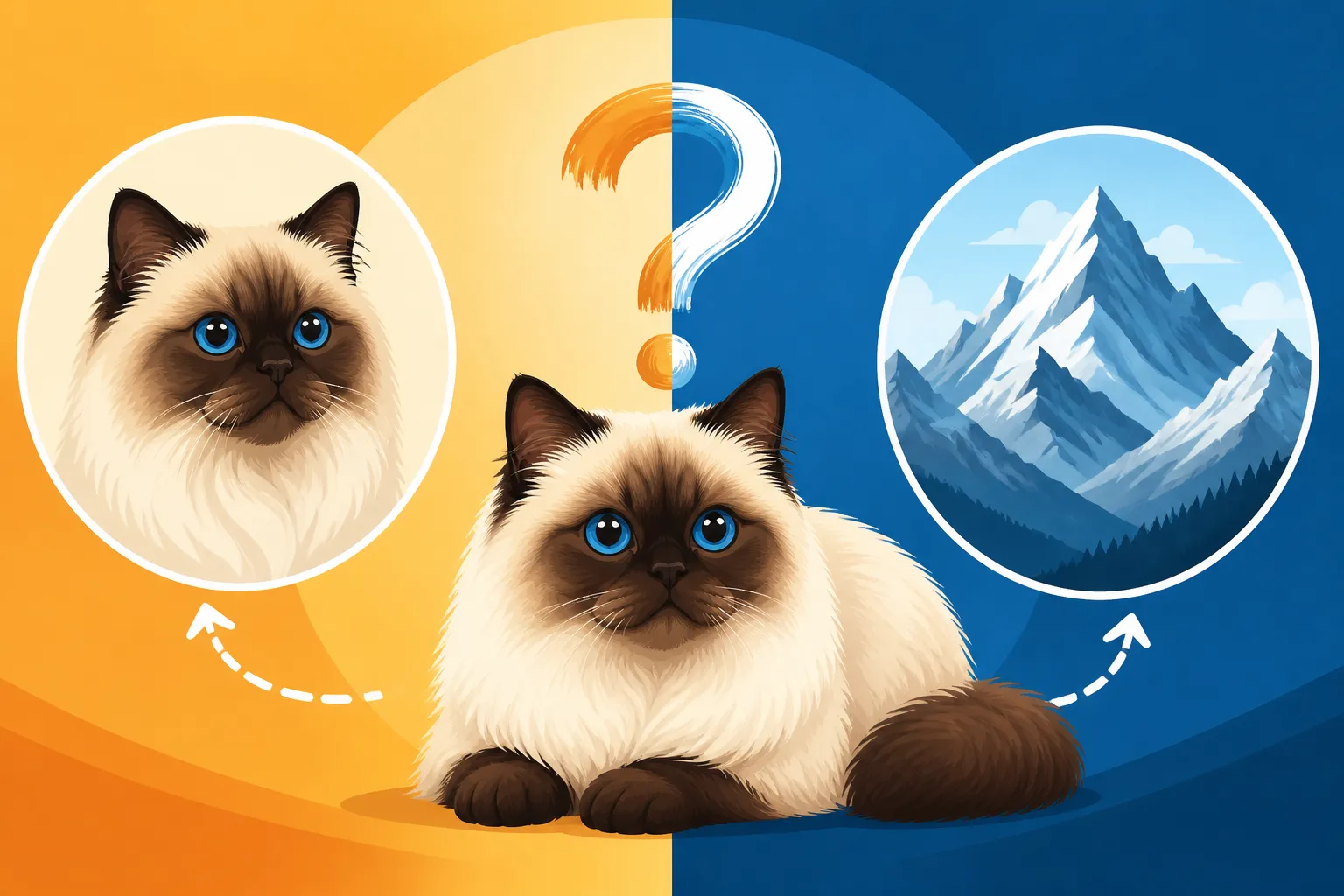
The Himalayan cat’s name suggests a connection to the Himalayan mountains, but the breed did not originate there. The confusion comes from its pointed coat pattern and the name’s history: “Himalayan” was borrowed from a rabbit variety, not a mountain range. This guide explains what the name means, how the cat breed developed, and why the distinction still causes confusion.
The Himalayan cat is not named for its place of origin
What the name actually refers to
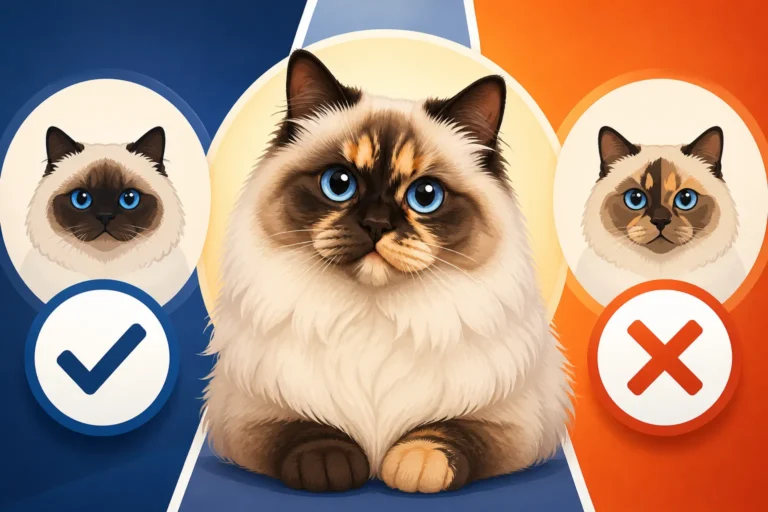
The Himalayan is a domestic cat breed developed through deliberate breeding, not a wild or regional cat from the Himalayas. Its name refers to its color pattern: a pale body with darker color on the face, ears, legs, and tail. That pattern is often called pointed or colorpoint.
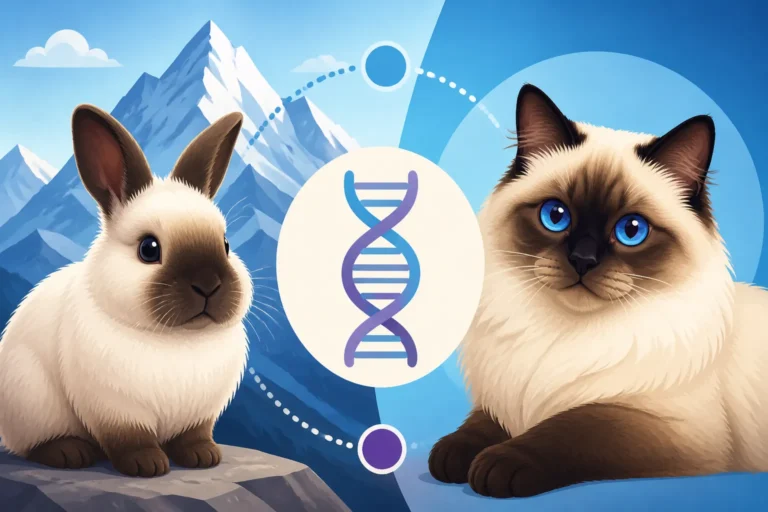
The name was borrowed from the Himalayan rabbit, which also has a light body and darker extremities. The resemblance is visual. A Himalayan cat does not need ancestry from the Himalayan mountains, and its name does not indicate that the breed evolved there. For more on that naming history, see Why the Himalayan Borrowed a Rabbit’s Name and Which Rabbit Shares the Himalayan Pattern.
This kind of name can be misleading because animal breeds are often named after places, even when their histories are more complicated. In this case, “Himalayan” describes a look associated with another domesticated animal rather than a geographic origin. That is also why questions about the cat’s name can lead to understandable—but mistaken—assumptions about where it came from.
Why the cat’s coloring may look familiar
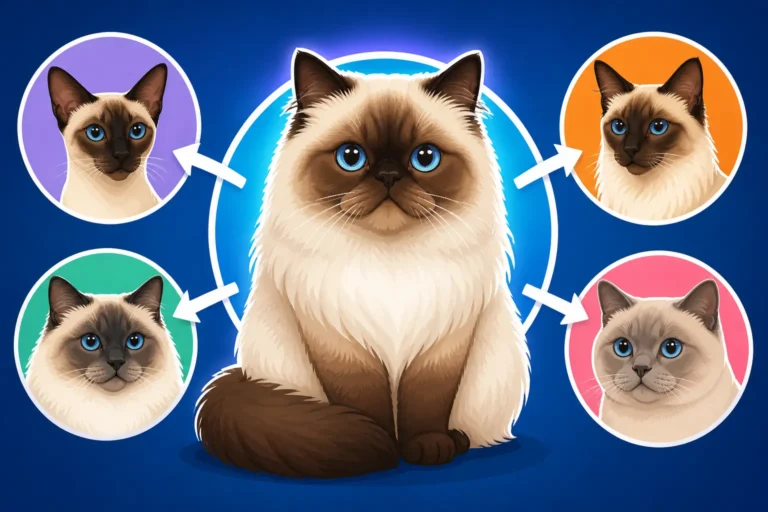
Himalayan cats have color on the cooler parts of their bodies, especially the face, ears, feet, and tail. Their bodies are usually much paler by comparison. The contrast develops because the pigment-producing process is temperature-sensitive: cooler areas can develop darker pigment than warmer areas. Kittens are often born very pale, and their points become more visible as they grow.
The Himalayan rabbit has a comparable color arrangement, which helps explain why the name was an appealing shorthand for breeders. But a similar coat pattern does not mean the cat and rabbit share a recent ancestor, belong to related species, or acquired their coloring through the same breeding history. The resemblance is useful for understanding the name, not for tracing a family tree. The distinction is explored further in Whether Himalayan Rabbits and Cats Share the Gene.
You may also see the word “Himalayan” used differently by different breed organizations. Some treat the Himalayan as a distinct breed, while others place it within the Persian breed as a colorpoint variety or division. Those registry differences can make the name seem even more mysterious, but they do not change the basic point: the cat is not named for a homeland in the mountains.
| Question | What the answer means |
|---|---|
| Did Himalayan cats originate in the Himalayas? | No. The breed was developed through human-directed breeding. |
| What does “Himalayan” describe? | A pointed color pattern, named after a rabbit with similar coloring. |
| Are Himalayan cats related to Himalayan rabbits? | No. They are different species; the name reflects appearance, not close ancestry. |
| Why do some registries use “Colorpoint Persian”? | Some organizations classify the Himalayan within the Persian breed. |
How the Himalayan breed developed
The Persian and Siamese connection
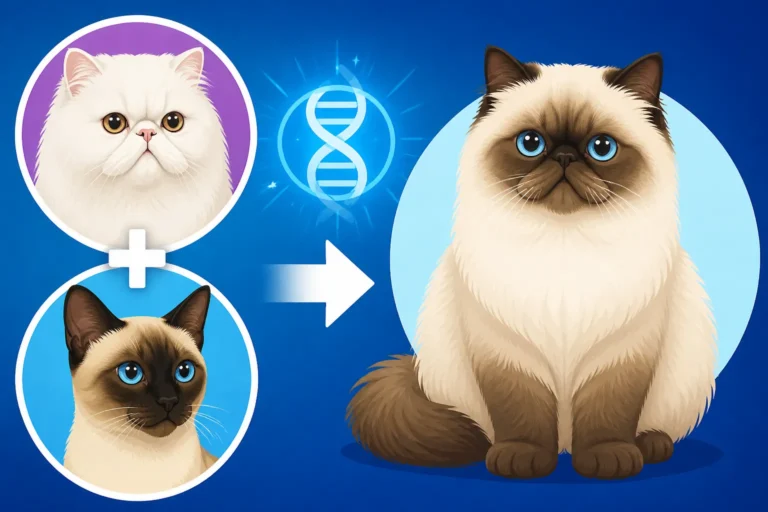
The Himalayan cat was developed by combining traits associated with Persian and Siamese cats. Breeders wanted a cat with the Persian’s long coat and rounded, substantial appearance alongside the Siamese-style pointed pattern and blue eyes. The result was not a cat from a particular mountain region, but a purposefully developed domestic breed.
Early work to study the inheritance of coat traits took place at Harvard in the 1930s. Researchers Clyde Keeler and Virginia Cobb were among those involved in the experimental breeding work, and a paper published in 1936 helped document the project. That history is one reason the Himalayan is sometimes described through its parent-breed influences rather than as a naturally occurring regional type. For more background, read Why Harvard Crossed a Persian With a Siamese to Make the Himalayan.
Over time, breeders continued developing cats that combined the pointed pattern with Persian features. The precise appearance of an individual Himalayan can vary, but the familiar combination is a long, full coat, blue eyes, and darker points set against a lighter body. The breed’s physical traits and breeding history explain far more about the cat than the name’s apparent geographic suggestion.
Why different registries use different names
Breed organizations do not always classify cats in the same way. Some recognize the Himalayan as a breed in its own right; others group it under the Persian umbrella, often using terms such as Colorpoint Persian. The name on a pedigree can therefore depend on the registry that issued it, rather than indicating that the cat has a different origin or is a different kind of animal.
The Cat Fanciers’ Association moved the Himalayan into the Persian breed structure as a division in 1984. Other organizations, including The International Cat Association, have treated the Himalayan as a separate breed. For a buyer, owner, or simply someone trying to understand cat terminology, that split can make a straightforward question feel needlessly confusing. Why CFA Made the Himalayan a Persian Division in 1984 and Why TICA Kept the Himalayan Separate explain the registry distinction in more detail.
In Britain, the name can differ again. “Colorpoint Persian” is commonly used for this type of cat, rather than “Himalayan.” These naming differences are about classification and tradition—not evidence that one group of cats came from the mountains and another did not. You can learn more in Why Britain Will Not Use the Name Himalayan.
What the Himalayan name does and does not tell you
It describes a pattern, not a geographic ancestry
When you hear “Himalayan,” it is helpful to separate three ideas that are often bundled together: the cat’s coat pattern, its breed history, and its name. The pointed coat pattern is a physical trait. The breed’s history involves selective breeding of Persian and Siamese cats. The name is a reference to the Himalayan rabbit’s similar coloring. None of those facts makes the Himalayan cat a native of the Himalayan region.
The same word can also appear in descriptions of other animals with pale bodies and darker extremities. That shared label does not necessarily mean the pattern came from one common ancestral animal or was produced by identical genetic changes in each species. The word is a convenient visual description, and its use across animals can create the impression of a deeper relationship than the name alone supports. Which Other Species Show the Himalayan Pattern looks at that broader use.
This distinction is useful when reading breed histories, pedigrees, and online listings. A seller might use “Himalayan” to describe the breed or colorpoint appearance, while a registry might list a cat as a Persian division. Neither wording establishes that the cat has geographic roots in the Himalayas. If you are comparing records, focus on the organization’s classification and the cat’s documented ancestry rather than reading the name literally.
The practical meaning for prospective owners
For someone choosing a cat, the name matters less than the individual animal’s health, temperament, and care needs. Himalayans are longhaired cats that generally need regular coat care, and their facial structure can vary. A prospective owner should ask about grooming habits, veterinary history, and any health screening relevant to the cat’s family line. A breed label alone cannot answer those questions.
It also helps to understand the routine before bringing a cat home. Daily combing may be necessary to prevent tangles from becoming mats, and face cleaning can be part of care for some individuals. If you are assembling basic supplies, a retailer such as Chewy may be one place to look for a suitable comb, shallow feeding dishes, or grooming items; choose tools that match the cat’s coat and ask a veterinary professional about products used near the eyes.
The name’s rabbit connection can be a fun detail, but it should not distract from practical questions. Ask what the kitten eats, how it is being socialized, whether its parents have appropriate health records, and how the breeder describes the cat’s registration. If you want to check what the paperwork means, consult What a Himalayan Buyer Should Ask About Registration—the precise wording on the document and the issuing registry will clarify how the cat is classified. For day-to-day care, Chewy may also carry general cat grooming supplies, but a product listing is not a substitute for advice about a particular cat’s needs.
How to explain the name without the confusion
A simple, accurate explanation
If someone asks whether Himalayan cats come from the Himalayas, the short answer is no. The cat breed was developed through selective breeding, and the name refers to a pointed color pattern associated with Himalayan rabbits. The cat’s Persian and Siamese influences, rather than a mountain habitat, explain its familiar appearance.
A fuller answer can mention that “Himalayan” is not used identically by every cat registry. Some organizations recognize a separate Himalayan breed, while others place the pointed longhair within the Persian group. That difference can affect the wording on a pedigree, but it does not alter the cat’s actual breeding history. This is why two people may use different names while talking about cats with the same general type and coloring.
If you are explaining the breed to a child, a visitor, or a new cat owner, it may help to say: “The cat is named after a rabbit’s similar coat pattern, not after the Himalayan mountains.” That keeps the answer clear without suggesting an unsupported geographic origin or a close relationship between cats and rabbits.
What to remember when you see the name
The most dependable way to read the name is as a historical label tied to appearance. It does not tell you where the breed originated, and it does not prove a genetic link to the rabbit that helped inspire the name. The cat’s recognized traits and classification come from its breeding history and the standards used by the registry involved.
For owners, that distinction is mostly useful background. It can help make sense of breed descriptions, registration papers, and discussions that use “Himalayan” and “Colorpoint Persian” in different ways. If you are shopping for supplies, Chewy may offer a convenient place to browse general cat-care essentials, but the important choices—especially those involving grooming, feeding, or health—should be based on your cat’s individual needs.
The name may point your imagination toward snowy peaks, but the history points elsewhere: to a coat pattern borrowed in name from a rabbit and a cat breed shaped by Persian and Siamese influences. That is the real connection behind “Himalayan.”
Disclaimer
This article is for general informational purposes only and does not constitute professional advice. Laws, prices and regulations vary by location and change over time. Consult a qualified professional for guidance on your specific situation.