Why a Lilac Point Himalayan Is the Palest of All
The world of Himalayan cats is full of breathtaking beauty, but for many enthusiasts and new owners, the subtle distinctions between their gorgeous point colors can be a real head-scratcher. You might have heard whispers of "lilac points" being the palest, and wondered what exactly makes this shade so unique compared to the more common seal or blue points. This guide is here to unravel the genetic secrets behind the stunningly delicate lilac point, explaining precisely why it stands out as the gentlest hue in the Himalayan spectrum.
Understanding Himalayan Point Colors: The Basics
Before we dive into the delicate nuances of lilac, it's really helpful to grasp the fundamental genetics that give Himalayans their signature "pointed" look. It’s not just about what color the cat is, but how that color shows up on different parts of their body.
The Tyrosinase Gene and Temperature Sensitivity
Every Himalayan cat, regardless of its specific point color, carries a special gene called the temperature-sensitive tyrosinase gene. This gene is responsible for producing an enzyme that creates pigment, but it only works efficiently in cooler temperatures. That's why Himalayan kittens are born nearly white, with their points – ears, face mask, paws, and tail – gradually darkening as they are exposed to the cooler air outside the warmth of the womb. The coolest parts of their bodies develop the most pigment, creating that striking contrast we all adore.
Think about it like this: your Himalayan's body is like a canvas, and the tyrosinase gene is the painter. But this painter needs a cool studio to mix its colors properly. So, the warmest spots (the main body, close to the core) stay pale, while the cooler extremities get those deep, rich shades. This temperature dependency is a marvel of genetics and gives each Himalayan its unique, evolving beauty. Why a Himalayan's Point Color Is a Record of Where It Sleeps can tell you more about this fascinating phenomenon.
Primary Point Colors: Seal, Blue, Chocolate, Flame
The foundational point colors in Himalayans are typically recognized as Seal, Blue, Chocolate, and Flame (or Red). These are the basic building blocks from which all other point colors, including lilac, are derived.
- Seal Points: These are the darkest and most common, essentially a rich, deep black-brown. Their body color is a warm cream that contrasts sharply with the dark points.
- Blue Points: These are a diluted version of seal. Instead of black-brown, the points are a soft, slate grey-blue. The body usually appears a cool, glacial white or very pale blue-cream.
- Chocolate Points: These are a rich, warm brown, often compared to milk chocolate. They come from a different genetic pathway than seal, being a dilution of black pigment that results in brown. Their bodies are typically an ivory or warm cream.
- Flame (Red) Points: These display vibrant orange-red points. Unlike the other colors, red is not a dilution of black; it's a separate pigment entirely. Their body color is a creamy white, often with a slight apricot blush.
Each of these colors has its own distinct charm, creating a spectrum of beauty. But what happens when we introduce another layer of genetic modification? That's where lilac comes in, turning things even more delicate.
The Magic of Dilution: How Lilac is Created
Lilac isn't just a randomly lighter shade; it's the result of a specific genetic combination that works to soften and lighten the existing pigment. It’s a double whammy of genetic influence that leads to its exquisite paleness.
Chocolate's Subtle Secret: The Brown Gene
To understand lilac, we first need to truly grasp chocolate. Many people assume chocolate is just a lighter version of black, but it's more nuanced than that. Chocolate coloration in cats is caused by a recessive "brown" gene (often designated 'b' or 'bl') that modifies black pigment. Instead of forming dense, black granules, the pigment granules in a chocolate cat are slightly smaller and more oval-shaped, and they are spread out differently, which results in the appearance of brown. So, a chocolate point Himalayan has inherited this "brown" gene from both parents, effectively turning their potential black points into a lovely, warm chocolate hue. This is why Why a Chocolate Point Himalayan Is Hard to Breed might be an interesting read, as it involves recessive genes.
The Dilution Gene's Role: Turning Chocolate into Lilac
Now, imagine you have a cat that is genetically predisposed to have chocolate points. What happens if you then introduce another recessive gene – the "dilution" gene? This is the magic formula for lilac.
The dilution gene, often denoted as 'd', acts on all pigments. It doesn't change the color itself, but rather causes the pigment granules to be more sparsely distributed in the hair shaft and clumped irregularly. When the dilution gene acts upon a black cat, you get a blue cat. When it acts upon a red cat, you get a cream cat. And crucially, when it acts upon a chocolate cat, it dilutes that rich chocolate brown into the ethereal, pale lilac.
So, a lilac point Himalayan is genetically a "dilute chocolate." It carries both copies of the brown gene (making it chocolate) AND both copies of the dilution gene (making that chocolate extremely light and dusty). This double recessive genetic combination is what makes the lilac point so exceptionally pale, giving it a delicate, almost pastel quality that's truly unique. It's a testament to the intricate dance of feline genetics.
Visualizing Pale: What Makes Lilac Stand Out
Once you understand the genetic basis, you can truly appreciate the visual characteristics that set the lilac point apart. It’s not just a "light color"; it's a specific, understated elegance.
Comparison with Other Point Colors
When you see a lilac point Himalayan next to other point colors, its paleness becomes immediately apparent.
- Compared to a Blue Point: A blue point is a diluted black, resulting in a distinct slate-grey or blue-grey. A lilac point, being a diluted chocolate, has a softer, warmer undertone. Instead of blue-grey, you'll often see a pinkish-grey or frosty lavender hue. The difference is subtle but noticeable, especially in good lighting. Think of blue as a cool, misty morning, and lilac as a soft, twilight glow.
- Compared to a Cream Point: Cream is the diluted form of red (flame). While cream points are also very pale, they retain a warm, peachy or apricot undertone. Lilac, on the other hand, lacks this warmth, presenting a cooler, almost greyish-pink impression.
- Compared to a Chocolate Point: This is where the dilution is most evident. The rich, warm brown of a chocolate point is transformed into the delicate, dusky pinkish-grey of the lilac point. It's like taking a robust cup of cocoa and adding a generous amount of milk, then a hint of lavender.
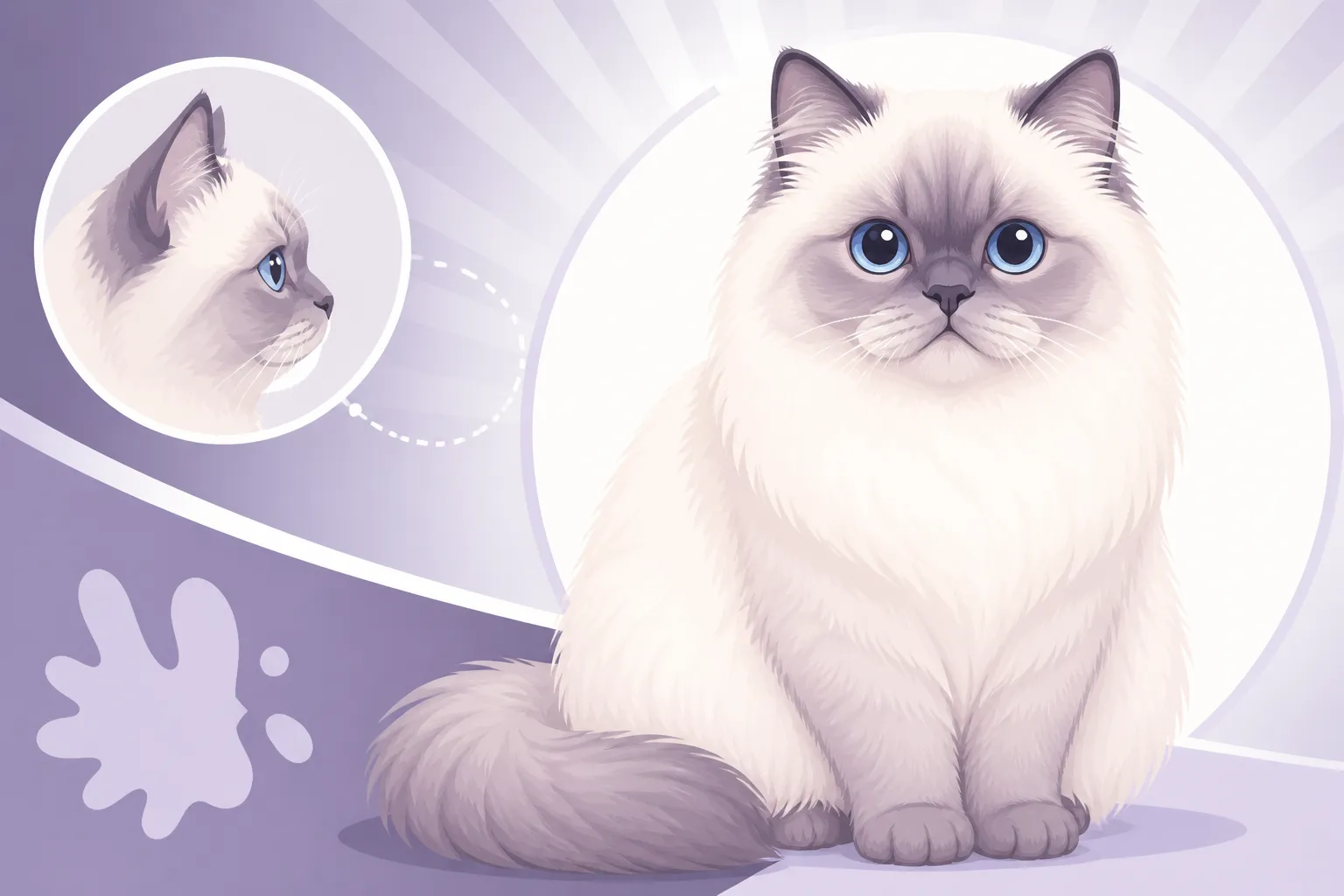
The overall impression of a lilac point is one of exquisite delicacy and refinement. Their points often appear a pale, frosty pinkish-grey, sometimes described as lavender or even dove-grey, with a subtle rosy cast. This makes them truly the palest of the traditional point colors. How Judges Score a Himalayan's Point Contrast often emphasizes the clarity of these distinctions.
The Impact on Body Coat and Eye Color
The genetic factors that create the lilac points also influence the rest of the cat's appearance, contributing to an overall sense of paleness.
- Body Coat: Just as the points are diluted, the body coat of a lilac point Himalayan is usually a very light, almost pure white or creamy white, with no strong yellowing or blue cast. This stark paleness further enhances the delicate nature of their points, creating a stunning, soft contrast. A well-maintained lilac point Himalayan will have a pristine, bright body coat, as discussed in Why a Himalayan's Body Coat Should Stay Light.
- Eye Color: All Himalayans are genetically blue-eyed due to the same tyrosinase gene that causes point coloration. However, the intensity of that blue can sometimes be subtly influenced by the overall pigment density. While all Himalayan blues are captivating, the pale genetic background of a lilac point can sometimes give them a slightly lighter, brighter shade of sapphire blue, though this is less consistent than the point color itself.
Care Considerations for a Lilac Point Himalayan
Owning any Himalayan involves a commitment to their unique care needs, and while the lilac point is primarily a color description, there are some general considerations that apply to their long, luxurious coats and delicate appearance.
Keeping the Coat Pristine
That beautiful pale body coat and those delicate points require consistent grooming to stay immaculate. Lilac points, like all pale Himalayans, can show dirt, oils, and tear stains more readily than their darker counterparts. Daily combing is not optional; it’s essential to prevent mats and keep their fur soft and flowing. A high-quality steel comb from a supplier like Chewy is indispensable for getting through their dense undercoat. You’ll want to pay special attention to areas prone to matting, such as the armpits, britches, and behind the ears, which are often the first places where the long, fine Persian coat starts to tangle.
Beyond combing, regular face wiping is crucial to manage tear stains, which can be particularly noticeable on a pale face. A damp cloth or a gentle, cat-safe tear stain remover applied daily will help keep their delicate facial points looking clean and bright. How Long a Himalayan's Coat Actually Grows and The Daily Comb a Himalayan Cannot Skip really highlight the commitment needed for these magnificent coats.
Diet and Environment
While diet doesn't change a cat's genetic point color, a high-quality, balanced diet can certainly contribute to overall coat health and luster. Some owners believe that certain ingredients or supplements can help maintain coat vibrancy and reduce staining, though the primary factor is always genetics. Many owners opt for premium cat foods, sometimes even human-grade options, to ensure their cat is getting the best nutrition possible, which reflects in a healthy, shiny coat less prone to breakage and dullness.
Environmental factors, especially temperature, can have a subtle impact on the expression of a Himalayan's point color over its lifetime. Living in a consistently cooler environment might lead to slightly deeper point coloration over many years, while a warmer environment could theoretically keep them a touch lighter. However, the genetic predisposition for being a lilac point (a diluted chocolate) will always be the dominant factor. How Temperature Decides a Himalayan's Point Color delves deeper into this fascinating interaction.
It's also wise to consider veterinary care with a proactive mindset. Given their long coats and unique facial structures, Himalayans can be prone to certain issues. Having a good pet insurance plan, perhaps from providers like Healthy Paws, can offer peace of mind when it comes to covering potential vet visits for grooming-related issues or other breed-specific health concerns.
| Point Color | Genetic Basis | Appearance of Points | Body Color | Relative Paleness |
|---|---|---|---|---|
| Seal Point | Full Black Pigment | Darkest black-brown | Warm Cream | Least Pale |
| Blue Point | Diluted Black (Grey) | Soft slate-grey/blue-grey | Cool White/Blue-Cream | Moderately Pale |
| Chocolate Point | Modified Black (Brown) | Rich, warm brown (milk chocolate) | Ivory/Warm Cream | Moderately Pale |
| Flame (Red) Point | Red Pigment (Separate) | Vibrant orange-red | Creamy White | Moderately Pale |
| Lilac Point | Diluted Chocolate | Pale, frosty pinkish-grey/lavender | Pristine White/Cream | Most Pale |
| Cream Point | Diluted Red (Peach) | Pale peach/apricot | Very light cream/white | Very Pale |
Understanding the intricate dance of genetics behind the Himalayan's coat colors truly enhances the appreciation for these magnificent felines. The lilac point, with its delicate, frosty hue, is a perfect example of how specific genetic combinations can create something truly unique and exquisitely beautiful in the cat world.
Disclaimer
This article is for general informational purposes only and does not constitute professional advice. Laws, prices and regulations vary by location and change over time. Consult a qualified professional for guidance on your specific situation.