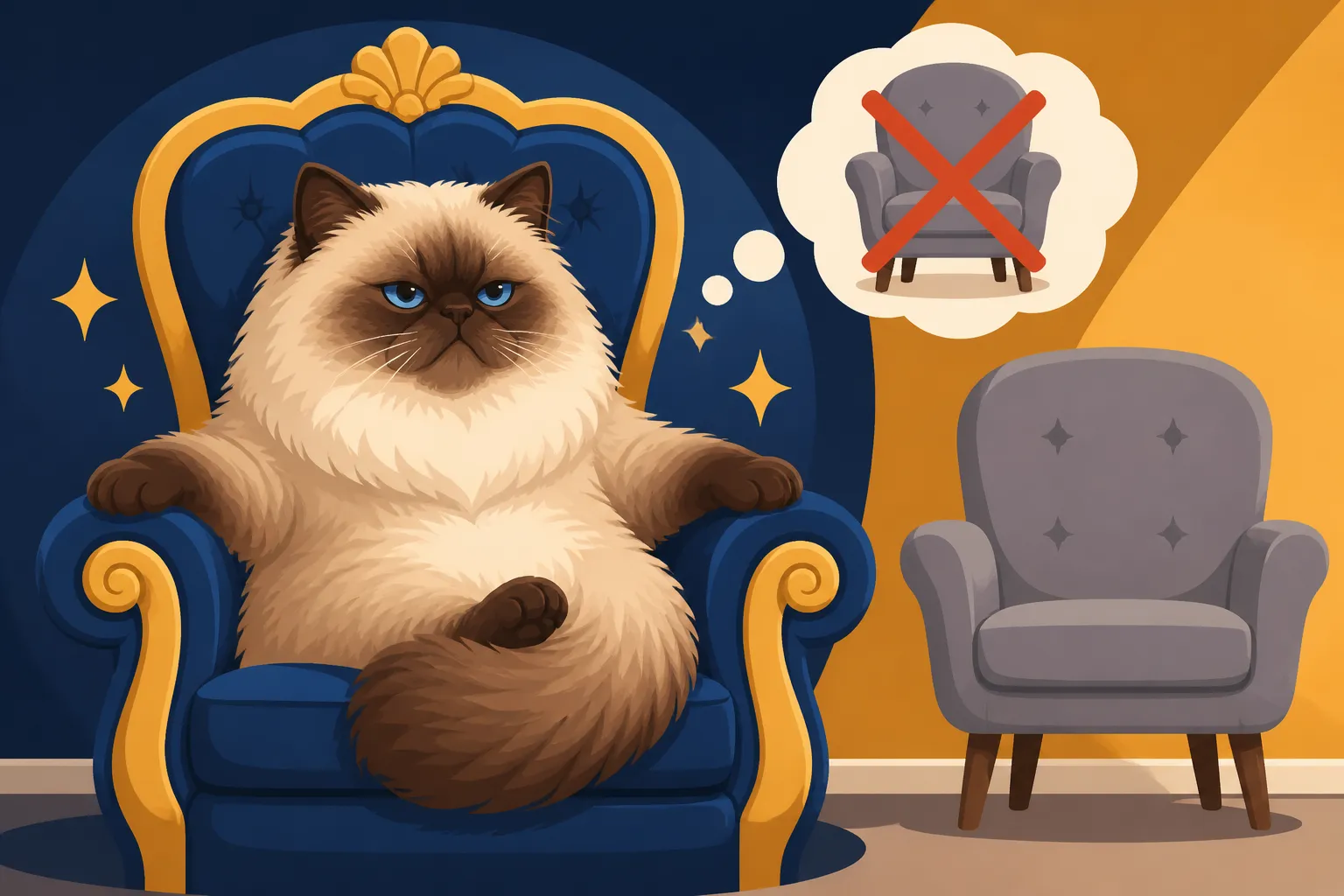
Why a Himalayan Claims One Chair and Keeps It
If you've ever lived with a Himalayan cat, you've undoubtedly noticed their remarkable talent for claiming a particular spot—be it a favorite armchair, a sun-drenched rug, or a specific cushion on the sofa—and then defending it as their personal sanctuary. It's not just a cute habit; this deep attachment to a "chosen chair" is a cornerstone of their comfort and security. This guide will delve into the various layers of why your Himalayan becomes so devoted to a singular spot, helping you understand their unique needs and how to best accommodate this charming, yet often unshakeable, behavior.
The Deep Roots of the "Chosen Spot" Behavior
Himalayans, with their serene dispositions and luxurious coats, are creatures of comfort and routine. Their preference for a specific spot isn't arbitrary; it's a complex interplay of their genetics, physical characteristics, and inherent need for security. Understanding these foundational elements can help you appreciate why that particular armchair holds such profound significance for your feline friend.
A Quest for Predictable Security
Cats, by nature, are creatures that thrive on predictability. For a Himalayan, this instinct is often amplified. Their "chosen spot" offers an unparalleled sense of security, a safe haven where they know exactly what to expect. This isn't just about physical comfort, but psychological well-being. They learn the subtle shifts in light, the nuances of household sounds, and the scent profile of that particular area. It becomes their personal command center, their quiet observation deck from which they can survey their world without feeling exposed or vulnerable.
Consider a busy household: children playing, doors opening, the constant hum of daily life. For a Himalayan, who appreciates tranquility, a designated safe space is invaluable. This spot is where they retreat when things get too overwhelming, a personal refuge where they can decompress. It's their anchor in an ever-changing environment, offering a sense of control and stability that is crucial for their overall happiness. When you see your Himalayan settled, seemingly unmoving, in their chosen chair, know that they are not just resting; they are actively maintaining their sense of peace and security.
Scent Marking and Ownership
Cats communicate extensively through scent, and your Himalayan's chosen chair is likely heavily scent-marked, solidifying their claim. Every time they rub their cheek against the armrest, knead the cushion with their paws, or simply sleep there, they deposit their unique pheromones. These invisible markers create a familiar and reassuring olfactory map for them, essentially broadcasting, "This is mine, and I am safe here."
This scent marking is a powerful psychological tool for cats. It reduces anxiety because the area smells distinctly theirs, free from perceived threats or intrusions. For a Himalayan, whose temperament leans towards the calm and somewhat aloof, having such a clearly defined territory brings immense comfort. It's a primal declaration of ownership that satisfies their innate territorial instincts without requiring confrontation. When another pet or even a human tries to usurp this space, the Himalayan isn't just annoyed; their sense of security is genuinely challenged because their scent signature has been overridden.
Physical Comfort and Sedentary Lifestyles
Himalayans are renowned for their luxuriant coats and distinctive "cobby" body type—a compact, heavily boned build with short legs. These physical traits, combined with a naturally lower energy level compared to some of their more active ancestors, heavily influence their choice of resting places and reinforce their love for a single, perfect spot.
The Ultimate Comfort Zone for a Cobby Body
Let's be honest, Himalayans aren't built for scaling bookshelves or darting around at breakneck speeds. Their dense, long fur and stocky build mean they gravitate towards horizontal comfort. A chair, particularly one with soft cushions and supportive armrests, offers the ideal contours for their body. They don't typically enjoy high perches or precarious ledges; instead, they seek out stable, plush surfaces that cradle their frame.
Imagine trying to get comfortable with a thick, heavy winter coat on a hot day, or trying to climb a ladder with short, sturdy legs. This gives you a tiny glimpse into the Himalayan's world. Their preference for a low, easily accessible, and supremely comfortable spot is a practical choice. It minimizes exertion while maximizing relaxation. This is why you'll often find them preferring the sofa or a large, soft bed on the floor over a multi-tiered cat tree. Why a Himalayan Stays on the Floor and the Sofa explains this preference in more detail.
Managing the Long, Dense Coat
That magnificent Himalayan coat is undeniably beautiful, but it's also a serious commitment in terms of grooming and temperature regulation. A Himalayan’s chosen spot often reflects their need to manage their body temperature and keep their elaborate fur as undisturbed as possible. Moving frequently or lying on rough surfaces can lead to mats and discomfort.
Their preferred chair often has a fabric that feels pleasant against their fur, perhaps a smooth upholstery that minimizes static or snagging. They might even strategically position themselves to catch a gentle breeze in summer or a warm ray of sunshine in winter, without having to move too much. The consistency of their chosen spot helps reduce the stress on their coat. Furthermore, choosing a spot that isn't prone to heavy traffic from other pets or people means less chance of their elaborate ruff or britches getting tangled or messed up. Maintaining that pristine look is a big job, and a dedicated, low-traffic rest area helps them keep things tidy.
Environmental Factors Shaping Their Domain
Beyond their inherent needs and physical makeup, the environment itself plays a critical role in how a Himalayan chooses and maintains their specific territory. From temperature to light, every aspect of their immediate surroundings is carefully evaluated before they declare a spot their own.
The Goldilocks Zone: Temperature and Light
Himalayans are notoriously sensitive to temperature due to their dense double coat. They run hotter than many other breeds and can overheat quite easily. Their chosen chair is often located in what they perceive as the "Goldilocks zone"—a spot that is just right, not too hot, not too cold. This might mean a sunny patch in the winter that provides warmth without being stifling, or a cooler, shaded area in the summer months. Why a Himalayan Overheats Twice as Fast as a Siamese delves into their unique thermal challenges.
They are masters of finding microclimates within your home. They'll observe how the sunlight shifts throughout the day, how drafts move through a room, or where the ambient temperature is most stable. The chair they choose is often the spot that best helps them regulate their body temperature, minimizing the need to constantly move and expend energy. You might even notice them adjusting their body position slightly in their chosen spot to maximize comfort, turning to catch a ray of sun or stretching out on a cooler patch of fabric. For instance, a comfortable cooling mat, easily found on Amazon, placed strategically can transform their favorite warm spot into a year-round haven.
Vantage Points and Low-Traffic Zones
While Himalayans aren't typically avid climbers, they still appreciate a good vantage point, albeit usually a lower one. Their chosen chair offers them a strategic observation deck. From here, they can watch the goings-on of the household without feeling overwhelmed or directly in the path of activity. They are observers, preferring to take in their surroundings from a safe, predictable distance.
They'll often pick a spot that allows them a good view of entryways or high-traffic areas, giving them a sense of control and awareness, but isn't in those high-traffic areas themselves. This preference for a low-traffic zone means they are less likely to be disturbed, jostled, or forced to relocate. A chair tucked into a corner, or facing a wall with a clear view of the room, is often ideal. It strikes a balance between being part of the family and maintaining their personal space and peace. This desire for quiet and observation is why Why a Himalayan Watches a Toy Rather Than Chase It is such a common behavior for the breed.
Social Dynamics and The Himalayan's Habits
The social fabric of your home significantly influences how your Himalayan interacts with their environment and, specifically, how they choose and defend their prized sitting spot. Their generally calm and independent nature means they require a certain deference to their routine and personal boundaries.
One Person, One Chair: A Bond of Trust
It's a common observation among Himalayan owners: their cat often forms a particularly strong bond with one specific human, and that person's preferred chair becomes an extension of that bond. While Himalayans are not typically "lap cats" in the active sense, they appreciate proximity and a sense of belonging. They'll often sit next to you, or on the armrest of your chair, rather than directly on your lap for extended periods. This is explored further in Why a Himalayan Sits Against You Rather Than On You.
When your Himalayan claims a chair, it can sometimes be an indirect way of claiming a closeness to you. If it's your chair, they're not just enjoying the comfort; they're enjoying the residual scent, the warmth, and the psychological connection to their favorite human. This often translates to them tolerating, or even appreciating, sharing a part of your space, provided it doesn't interrupt their preferred position or disturb their peace. It's a subtle way they express their affection and trust, integrating themselves into your daily rhythm.
Respecting Boundaries in a Multi-Pet Household
In homes with multiple pets, a Himalayan's chosen chair becomes an even more critical symbol of their personal territory and status. While Himalayans are generally docile and not overtly aggressive, they are firm about their boundaries. Their low-key approach means they're not likely to start a brawl over a chair, but they will communicate their displeasure through body language—a slow blink, a tail swish, or a pointed stare—if their space is invaded.
Other pets in the household often learn to respect this unspoken rule. The Himalayan's consistent presence in "their" chair establishes a clear pecking order and territorial understanding. If a more energetic cat or a curious dog attempts to take over, the Himalayan might simply get up and leave, only to return later, subtly reasserting their claim through scent and persistent presence. It's a quiet but unwavering assertion of their need for a predictable, undisturbed haven. Providing multiple comfortable, low-lying alternatives in various parts of the house can help alleviate potential conflicts, and there are many stylish pet beds available on Amazon that can blend seamlessly into your decor while offering inviting alternatives.
How to Respect and Manage the Sacred Space
Living with a Himalayan who has firmly claimed a chair requires a blend of understanding, respect, and sometimes, gentle redirection. It’s about acknowledging their needs while also ensuring harmony in your home.
Accommodating Their Needs Without Becoming a Slave to the Chair
It's easy to fall into the trap of letting your Himalayan dictate furniture use entirely. While their need for a stable environment is real, you don't have to surrender all your seating. The key is to provide equally, if not more, appealing alternatives near their chosen spot or in similar tranquil locations. This ensures they have options without feeling their core need for security is threatened.
Think about soft, orthopedic pet beds that mimic the comfort of your armchair cushions. Place these strategically in corners, under windows, or next to your own favorite sitting spots. Consistency is vital: once an alternative spot is introduced, try to keep it there for a while so your Himalayan can become accustomed to it. Some Himalayans, especially those who struggle with overheating, might appreciate a cooling mat within their designated space during warmer months, which you can easily find on Amazon. Remember, it’s not about forcing them off their chair, but about offering them choices that satisfy their deep-seated desire for comfort and security.
| Feature / Cat Type | Himalayan (Prone to claiming one chair) | More Active Cat (Less prone to one chair) |
|---|---|---|
| Energy Level | Low to Moderate, prefers long rest periods | High, enjoys climbing and exploring |
| Coat Density | Very dense, double coat (prone to overheating) | Variable, often single or shorter coat |
| Body Type | Cobby (stocky, short legs), prefers stable surfaces | Lean, agile, prefers vertical spaces |
| Temperature Needs | Seeks specific microclimates for regulation | Less sensitive, adapts more readily |
| Routine & Security | Highly values predictability and designated safe zones | Enjoys novelty, explores new spaces regularly |
| Social Preference | Observational, seeks proximity to preferred human/pet | Participates actively, more hands-on interaction |
| Vantage Point | Lower, stable, quiet observation points | Higher, precarious climbing spots |
| Scent Marking | Strong territorial marking of chosen spot | Diffused marking across wider territory |
Gentle Redirection and Positive Reinforcement
If you absolutely need your Himalayan to use a different spot, perhaps for cleaning or during renovations, gentle redirection is far more effective than force. Start by making the alternative spot irresistibly appealing. Use a favorite blanket, a comfort item, or even a small, high-value treat to entice them. Lure them to the new spot with a gentle voice and positive associations.
When they are in the desired alternative spot, reward them immediately with praise, a stroke, or a tiny treat. The goal is to create a positive link between the new location and good feelings. Avoid scolding or picking them up abruptly from their cherished chair, as this can create negative associations and erode trust. Remember, How Long a Himalayan Takes to Accept a Change can be quite a while, so patience is key. It might take several days or even weeks for them to fully embrace a new favorite spot, but with consistent positive reinforcement, it's certainly achievable.
Cultivating Contentment Beyond a Single Spot
While your Himalayan's devotion to a single chair is endearing, it's also important to ensure their overall well-being isn't too dependent on one object. Expanding their comfort zones and providing subtle enrichment can enhance their quality of life.
Strategic Placement of Additional Comfort Zones
Think of their chosen chair as their primary headquarters, but consider creating satellite offices throughout the home. Identify other quiet, low-traffic areas that mimic the conditions of their favorite spot: good temperature control, a sense of security, and comfortable bedding. These don't have to be exact replicas but should offer similar appeals.
For instance, a cozy cat cave near a window, a soft blanket draped over a seldom-used ottoman, or a dedicated pet bed in a sunlit corner can all become secondary comfort zones. Regularly rotate these items or refresh their bedding to keep them inviting. The idea isn't to replace the original chair but to broaden their sense of security and comfort across multiple areas. This can be especially helpful as your Himalayan ages, making sure they always have an accessible, warm, and safe spot to rest, no matter where they are in the house.
Enriching a Mostly Stationary Lifestyle
It's true that Himalayans are not known for their boundless energy. They tend to have a more sedentary lifestyle, enjoying long naps and quiet observation. However, this doesn't mean they don't benefit from enrichment. Engaging their minds and bodies, even subtly, can prevent boredom and foster a greater sense of well-being. How a Himalayan Divides Its Day Between Sleep and Lap is often skewed towards a lot of sleep!
Consider puzzle feeders that are easy for their flattened faces to use, or wand toys that you can dangle gently near their chosen spot, encouraging a few slow, deliberate pounces. Short, infrequent play sessions are often more effective than extended, intense ones. Rotate toys to keep things fresh, and occasionally introduce new scents or textures through different bedding materials. Even a simple cardboard box can offer a novel, temporary 'hideout'. The goal is to stimulate their senses and provide mental engagement without demanding high levels of physical exertion or forcing them to abandon their beloved chair for too long. A simple, low-profile puzzle feeder, readily available from Amazon, can provide minutes of engaging fun without requiring much movement.
Disclaimer
This article is for general informational purposes only and does not constitute professional advice. Laws, prices and regulations vary by location and change over time. Consult a qualified professional for guidance on your specific situation.