Why a Cobby Himalayan Needs Wide Platforms, Not Tall Ones
It's a common dilemma, isn't it? You want to provide your beloved Himalayan with all the creature comforts and enriching spaces a cat could dream of, and a cat tree often seems like the ultimate gift. But then you look at your wonderfully cobby, long-haired companion, then at the towering, wobbly structures marketed for cats, and a tiny alarm bell starts ringing. You're right to question if these typical vertical playgrounds are truly suitable for a Himalayan, whose unique physique demands a different approach. This guide is here to unravel why those tall, narrow cat trees just don't cut it for our charming Himalayans and how you can create safe, enriching vertical spaces that truly cater to their distinct needs.
The Unique Physical Realities of Your Himalayan
Before we dive into what works, it’s crucial to understand why Himalayans have specific needs when it comes to elevated spaces. They aren't your average agile, high-flying felines. Their endearing characteristics, which we adore so much, also dictate their physical capabilities and limitations, especially when it comes to climbing and jumping.
Understanding Their Cobby Build and Short Legs
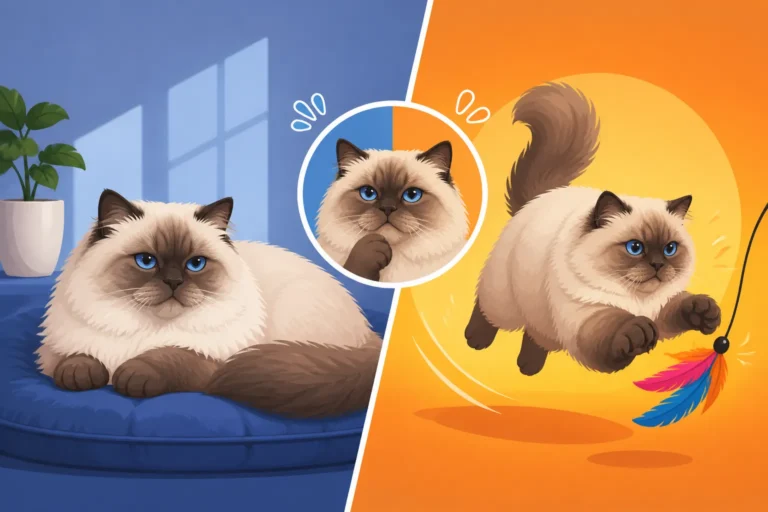
Think about your Himalayan for a moment. They have a distinct "cobby" body type – that means they're quite stocky, with a sturdy, broad frame. Couple that with their famously short, thick legs, and you immediately start to see why scaling heights isn't their primary forte. Unlike their more athletic Siamese ancestors, who were built for sleek, acrobatic maneuvers, Himalayans inherited much of their physical structure from their Persian side. This compact build means they aren't equipped for explosive vertical leaps or graceful descents from significant heights.
They aren't designed to be parkour experts! A typical jump for a Himalayan is more of a sturdy push-off than a spring. Landing safely from a great height can put undue stress on their joints and spine, which aren't as flexible or cushioned for impact as those of leaner, more athletic breeds. This is also why you'll often see your Himalayan using furniture as a step-stool rather than launching directly onto a high surface; they inherently understand their own limits. Why a Himalayan's Short Persian Legs Skip a Step is a great article that dives deeper into this.
Breathing Concerns and Exertion Limits
Another critical factor that heavily influences a Himalayan's interaction with vertical spaces is their brachycephalic, or "flat-faced," characteristic. While the degree of flatness varies, even a doll-faced Himalayan will have a shorter snout than many other breeds. This can lead to Brachycephalic Airway Syndrome, which makes breathing less efficient, especially during physical exertion or in warmer environments.
Imagine trying to climb a tall ladder while also trying to breathe through a slightly pinched straw. That’s a bit like what a Himalayan experiences when overexerting themselves. A tall cat tree, requiring multiple strenuous jumps and climbs, can quickly lead to panting, overheating, and discomfort. Our Himalayans are not known for sustained bursts of energy; they're more about short, comfortable play sessions followed by long, luxurious naps. Forcing them into activities that challenge their respiratory system is not only uncomfortable but potentially unhealthy. This is particularly important to remember when considering how much activity they can comfortably handle, especially in warmer weather. How Soon a Himalayan Kitten Runs Out of Breath touches on the early signs of this, but it's a lifelong consideration.
Their Natural Inclination for Lower Heights
If you've spent any time with a Himalayan, you'll know they're often found in serene, comfortable spots on the floor, on the sofa, or perhaps on a low, sturdy chair. They're not typically seekers of the highest vantage point in the room, unlike some other breeds who live for surveying their kingdom from atop a bookshelf. This isn't laziness; it's a combination of their physical makeup and their calm, laid-back temperament. They appreciate a good view, certainly, but they prefer that view to come from a place of comfort and stability, not a precarious perch. You might notice your Himalayan is perfectly content to observe the world from a sunbeam on the rug, or from the arm of your favorite armchair. Why a Himalayan Stays on the Floor and the Sofa delves into this natural preference.
Why Standard Cat Trees Fall Short for the Himalayan
Now that we understand the Himalayan's unique physiology, let's explore why many commercially available cat trees, designed with the average domestic cat in mind, simply aren't suitable for our charming companions. It’s not about finding a cat tree; it’s about finding the right kind of elevated structure.
Instability and Safety Risks of Tall, Narrow Designs
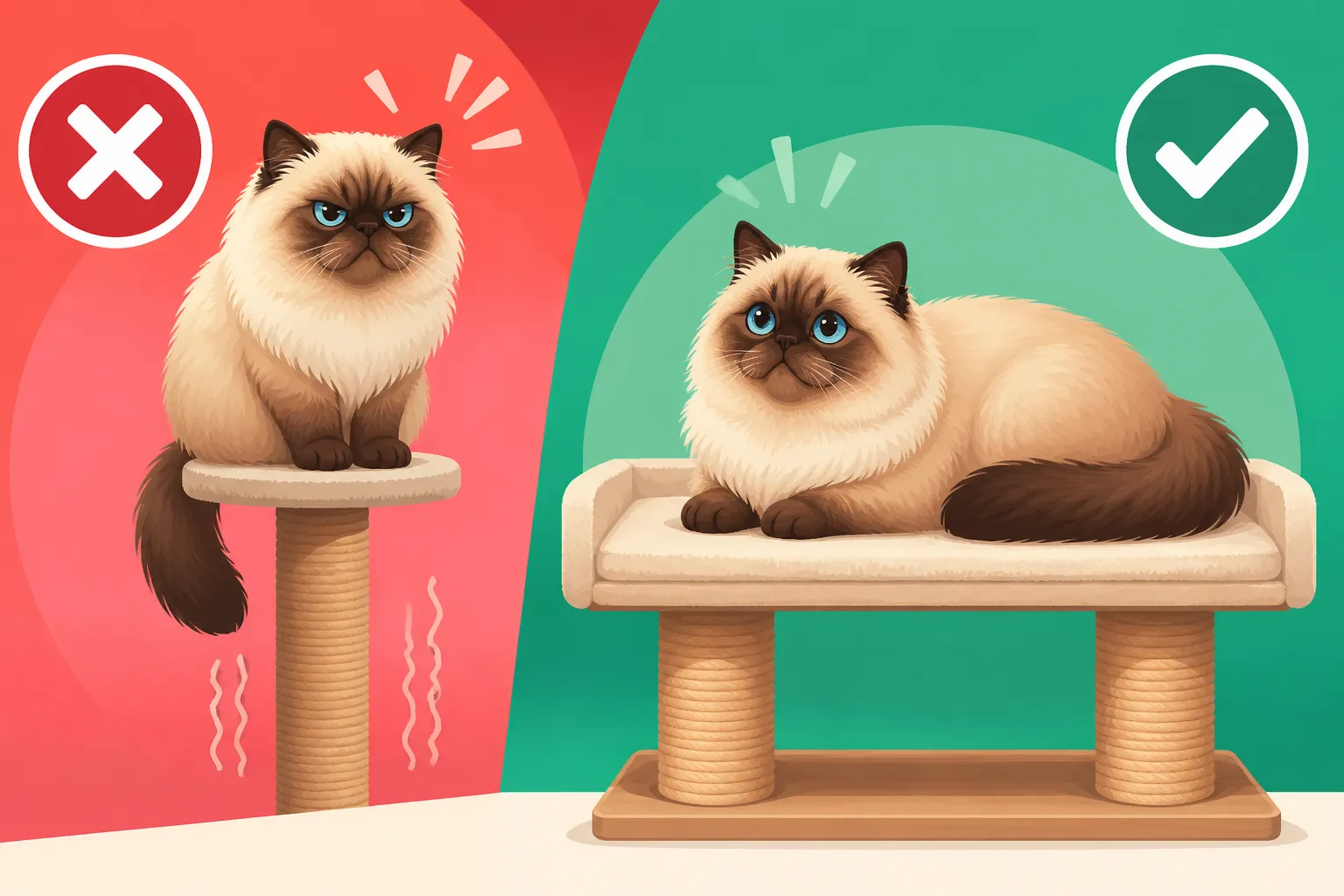
Most multi-level cat trees you see in pet stores or online (even on Amazon) are designed with a relatively small base footprint compared to their towering height. This works for lighter, more agile cats who can leap up and down with minimal sway. For a cobby Himalayan, however, a narrow base spells trouble. Their sturdy build and often heavier weight can easily cause such a structure to wobble, especially if they make a clumsy jump or shift their weight suddenly. A wobbly tree is not only uninviting, but it's also a significant safety hazard. A fall from a considerable height could result in sprains, fractures, or worse, especially given their dense bones and compact frame. Imagine your sweet, calm cat trying to steady itself on a swaying tower—it's just asking for an accident.
Furthermore, many cat trees feature platforms that are too small. A Himalayan needs ample space to comfortably lie down, turn around, and feel secure. A tiny, circular perch might be fine for a nimble kitten, but for a full-grown Himalayan with a luxurious coat, it’s like trying to fit a king-sized mattress into a phone booth. This lack of space often leads to them feeling insecure and opting to avoid the tree altogether, which defeats the purpose entirely.
Difficulty Reaching High Levels
Let's face it: our Himalayans aren't built for scaling Everest. Their short legs and cobby bodies make navigating multiple small, steep steps or wide gaps between platforms a real challenge. Many cat trees have platforms spaced too far apart for a comfortable, sequential climb for a Himalayan. They might be able to make the first leap, but the subsequent ones become increasingly difficult, demanding more effort and putting strain on their joints. You’ll often see them hesitate, try to find an alternative route, or simply give up if the climb looks too daunting.
The ramps often included in cat trees are usually narrow and steep, again catering to breeds with a different body type and agility. A Himalayan trying to navigate a narrow, carpeted ramp might struggle with traction, especially with their heavy coat. The combination of short legs and a deep chest means their center of gravity is different, making steep inclines awkward and potentially uncomfortable. The Height a Himalayan Decides Is Not Worth It highlights their natural reluctance for excessive climbing.
Discomfort and Lack of Use
Ultimately, if a cat tree isn't designed with a Himalayan's specific needs in mind, they simply won't use it. Cats are intelligent creatures; they will avoid anything that makes them feel unsafe, uncomfortable, or requires too much effort. A cat tree that is too tall, too wobbly, too difficult to navigate, or has platforms that are too small will quickly become an expensive piece of furniture that gathers dust. You invested in it with good intentions, but if it doesn't align with their physical realities, it will be ignored. Your Himalayan wants to be comfortable and secure. If a structure doesn't offer that, they’ll choose the floor, the sofa, or your lap every time.
Crafting the Perfect Vertical Play Space: Focus on Width and Stability
So, what does work for a Himalayan? The key is to rethink vertical space. Instead of aspiring for height, we should focus on providing secure, spacious, and easily accessible elevated areas. Think less skyscraper, more luxurious bungalow.
Prioritizing Wide, Sturdy Bases
When selecting any elevated structure for your Himalayan, the absolute top priority should be a wide, heavy, and stable base. This foundation is non-negotiable. Look for cat trees or condos that have a base significantly larger than their upper platforms. The heavier the base, the better, as it counteracts their weight and prevents any wobbling or tipping. Materials like solid wood or dense particleboard are preferable over hollow, lightweight plastic.
Imagine a pyramid: wide at the bottom, tapering upwards. That’s the stability principle you’re aiming for. This design ensures that even if your Himalayan makes a slightly less-than-graceful jump, the structure remains firmly in place. You might find excellent options online at retailers like Amazon, but always pay close attention to the product dimensions and user reviews concerning stability for larger or heavier cats.
Spacious, Accessible Platforms
Once stability is ensured, the next crucial element is the platforms themselves. These need to be generously sized. Your Himalayan should be able to stretch out comfortably, roll around, and nap without feeling like they might tumble off. For a typical adult Himalayan, platforms should ideally be at least 18-24 inches square, or a similar spacious oval. The larger, the better!
The spacing between platforms is equally important. They should be close enough for your short-legged friend to make easy, gentle hops rather than strenuous leaps. Think of them as broad, shallow steps. Ramps, if present, should be wide, gently sloped, and covered in a material that offers good grip, like a thick, plush carpet. Avoid anything too narrow or steep. Consider structures that offer multiple points of access to higher levels, allowing your cat to choose the easiest path.
Material and Comfort Considerations
The surface of the platforms should be soft, comfortable, and easy to grip. Plush carpeting, faux fur, or even sturdy fabric are ideal. Avoid slick, hard surfaces that offer no traction. If a platform is bare, consider adding a soft, non-slip bed or mat.
Here’s a quick comparison of ideal versus unsuitable features for Himalayan cat furniture:
| Feature | Ideal for Himalayans | Unsuitable for Himalayans |
|---|---|---|
| Base | Wide, heavy, solid wood or dense particleboard | Narrow, lightweight, hollow plastic |
| Platform Size | Generously sized (18-24" square minimum), allows stretching | Small, circular, precarious perches |
| Platform Spacing | Close, shallow steps, easy gentle hops | Wide gaps, requires strenuous, high jumps |
| Ramps | Wide, gently sloped, carpeted for grip | Narrow, steep, slick surfaces |
| Height | Moderate (up to 3-4 feet), prioritizing width | Very tall, wobbly, top-heavy structures |
| Materials | Plush carpet, faux fur, sturdy fabric | Bare wood, plastic, slippery surfaces |
| Overall Stability | Rock-solid, doesn't budge under weight | Wobbly, prone to tipping |
Placement for Maximum Enjoyment
Even the best cat tree is useless if it's placed in an undesirable location. Himalayans love comfort and warmth (but not overheating!). Position their new vertical haven in a quiet corner where they can feel secure, perhaps near a window where they can enjoy observing the outside world without being exposed to drafts or direct, harsh sunlight. Why a Himalayan Moves Rooms as the Sun Does explains their sensitivity to temperature. They appreciate a calm environment, so avoid high-traffic areas where they might feel startled. Ensuring it's easily accessible and near their favorite lounging spots will encourage them to explore and use it.
Enrichment Beyond the Traditional Cat Tree
While a well-designed cat tree or platform system is fantastic, there are other creative ways to provide vertical enrichment for your Himalayan that align perfectly with their unique needs.
Low, Wide Shelves and Window Perches
Instead of one towering structure, think about creating a series of low, wide shelves that your Himalayan can easily step or make a small hop onto. These can be secured directly to a wall, offering immense stability. The key here is to keep them relatively close to the ground (think chair height, then sofa height) and ensure each shelf is deep enough for them to comfortably lie down. Installing soft pads or beds on these shelves will make them even more inviting.
Window perches are another excellent option. There are many sturdy, suction-cup or bracket-supported window beds available, often found on Amazon. These offer a fantastic view of the outside world, satisfying their natural curiosity, without requiring any significant climbing effort. Just ensure the perch is strong enough to support their cobby weight and securely attached. A cat loves a good window, and a comfortable, low perch allows them to indulge this without any physical strain.
Cat Condos and Cubbies
For Himalayans, a "cat condo" often means a multi-level structure that prioritizes enclosed spaces and solid, box-like design over open platforms. These typically feature cozy cubbies and tunnels, with internal levels that are short and easy to navigate. The solid construction of a condo provides superior stability and a sense of security that many Himalayans adore. They love having a safe, enclosed space to retreat to, and these designs often incorporate multiple entry and exit points, which they appreciate.
Look for condos with wide openings and soft interiors. Some even come with attached scratching surfaces, adding another layer of enrichment. A robust cat condo can provide plenty of vertical interest and hiding spots without challenging their physical limitations.
Gradual Ramps and Pet Stairs
If you have a sofa or bed that your Himalayan loves but struggles to get onto, consider providing gradual ramps or pet stairs. These are specifically designed to assist cats (and dogs) with mobility challenges or those with a heavier build. Choose ramps with a gentle incline and a non-slip surface, or stairs with broad, shallow steps. This allows them to access their favorite human-height lounging spots independently, reducing the strain on their joints and making their daily life more comfortable. This is especially helpful as they age, helping to maintain their independence and preventing falls.
Ultimately, enriching your Himalayan's environment with vertical spaces is about understanding and respecting their unique physical gifts and limitations. By focusing on width, stability, and accessibility over sheer height, you can create a safe, comfortable, and endlessly enjoyable "cat-i-tecture" that your cobby companion will genuinely love and use for years to come.
Disclaimer
This article is for general informational purposes only and does not constitute professional advice. Laws, prices and regulations vary by location and change over time. Consult a qualified professional for guidance on your specific situation.