What an Old Himalayan Needs Once Its Coat Starts Matting
Senior Himalayan cats develop painful fur mats on the lower back and belly due to arthritis, dental pain, and age-related muscle stiffness.
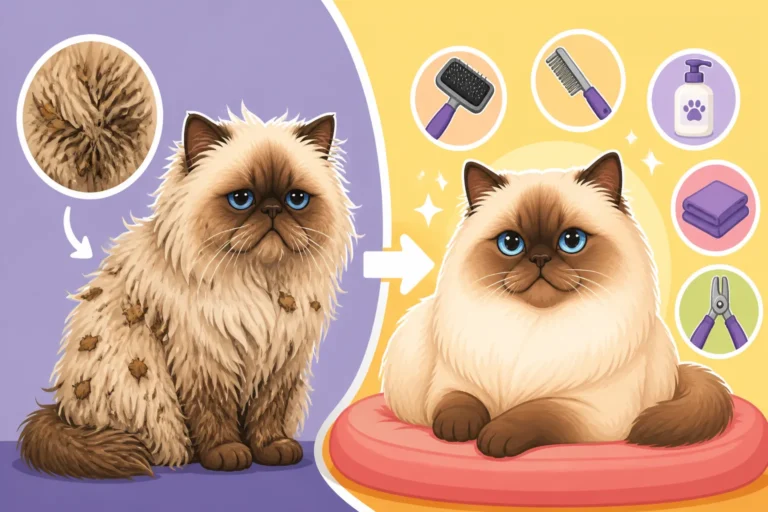
Senior Himalayan cats develop painful fur mats on the lower back and belly due to arthritis, dental pain, and age-related muscle stiffness.
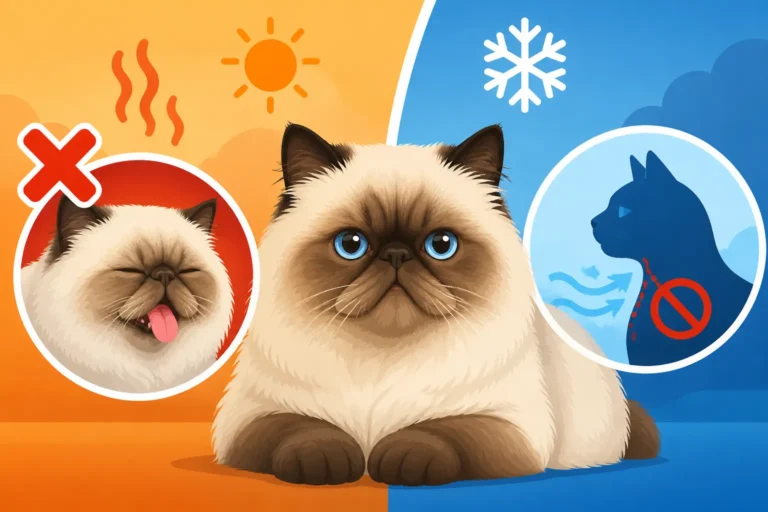
Himalayan cat physiology and dense double coats prevent effective panting, making warm temperatures dangerous for these pets.
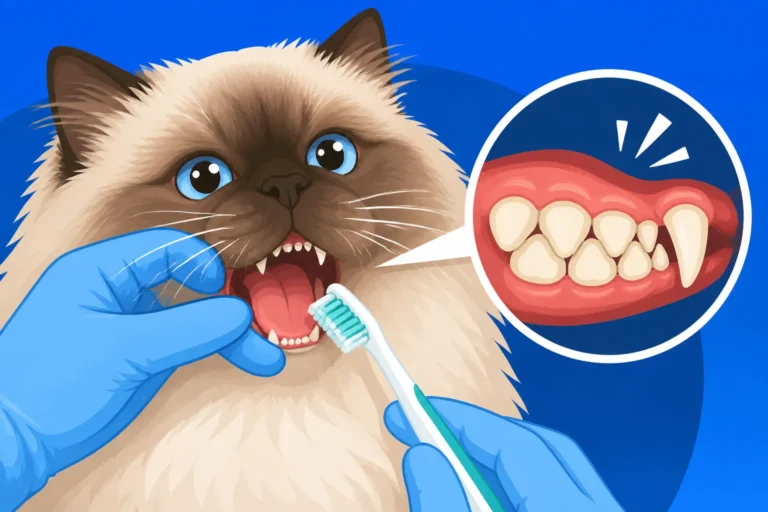
Himalayan cat jaw structure and crowded back teeth create plaque and tartar risks that require specialized dental tools and daily care.
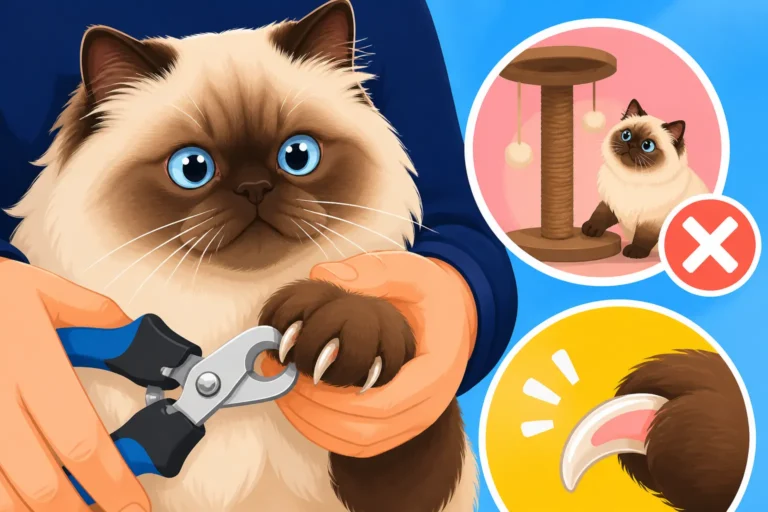
Sedentary Himalayan cats often ignore scratching posts, requiring owners to safely trim overgrown claws to prevent pain.
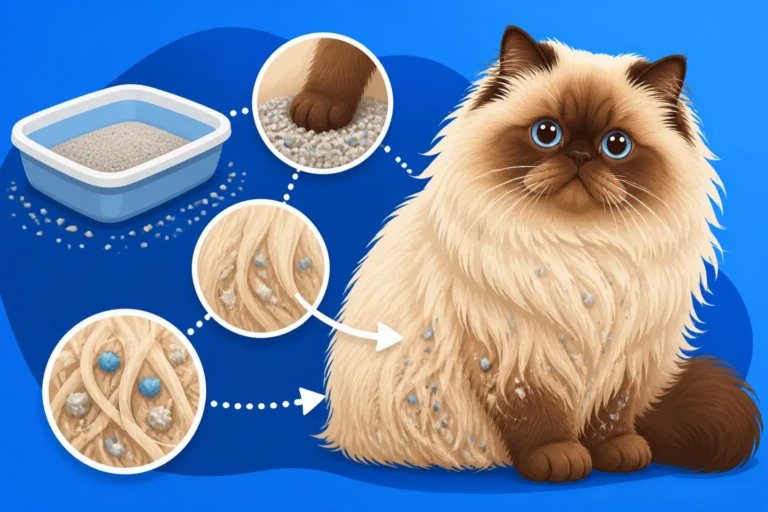
Himalayan cat coats trap litter using double coat density, long fur length, and static friction during box use.
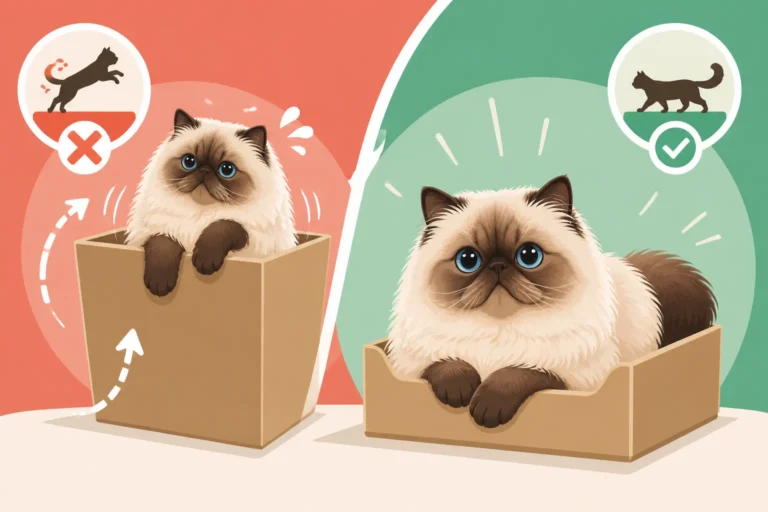
Short-legged Himalayan cats need low-sided litter boxes to prevent joint strain and protect their heavy cobby bodies from injury.
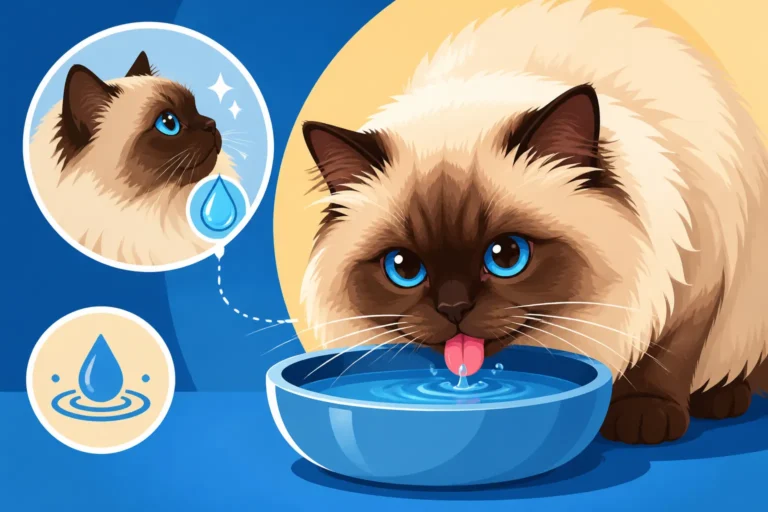
Himalayan cat flat faces, short muzzles, and thick neck ruffs cause drenched chests and wet bibs during standard drinking.

Cobby Himalayan weight gain happens because their sedentary physiology and low activity levels burn fewer calories than other cats.
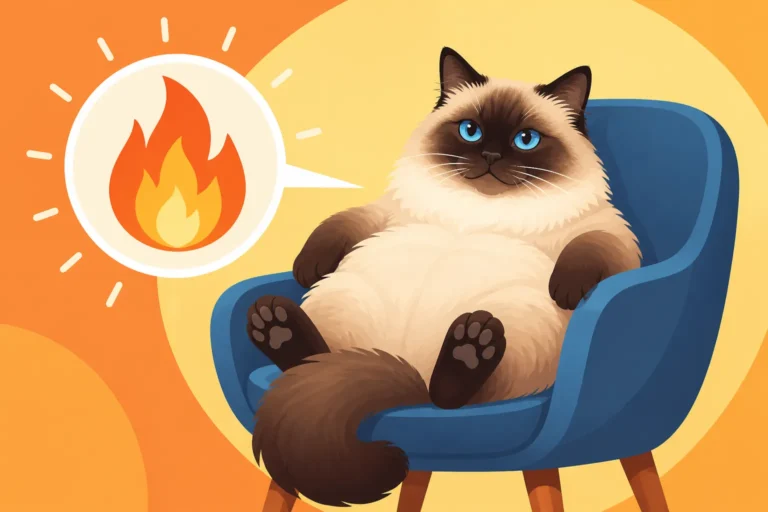
Himalayan cats burn fewer calories because their stocky cobby build and calm Persian temperament naturally limit their daily physical activity.
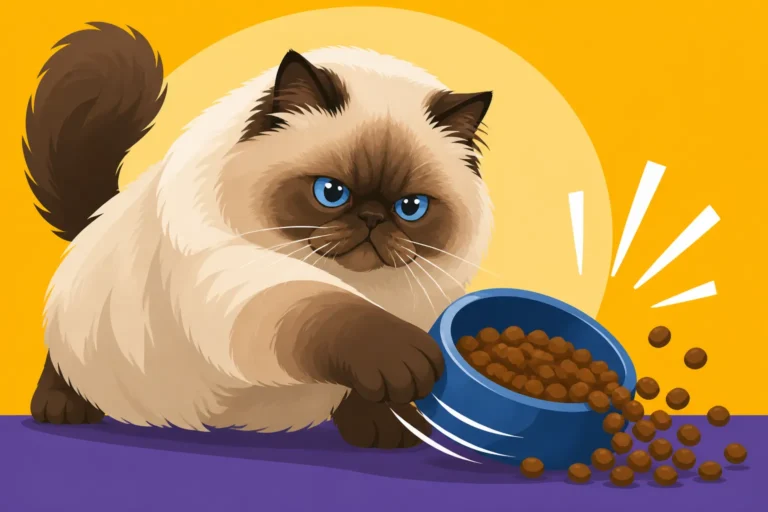
Himalayan cats push food out of round bowls because their flat faces, short jaws, and sensitive whiskers cause discomfort.