Why a Poorly Contrasted Himalayan Loses in the Ring
Himalayan cat point contrast standards explain why judges deduct points when body coats darken or point colors fade unevenly.

Himalayan cat point contrast standards explain why judges deduct points when body coats darken or point colors fade unevenly.

Himalayan body coat color preservation relies on temperature sensitive genetics controlling pigment production for breed contrast.

Himalayan point contrast is the visual difference between darker extremities and a pale body coat, scored by cat show judges.
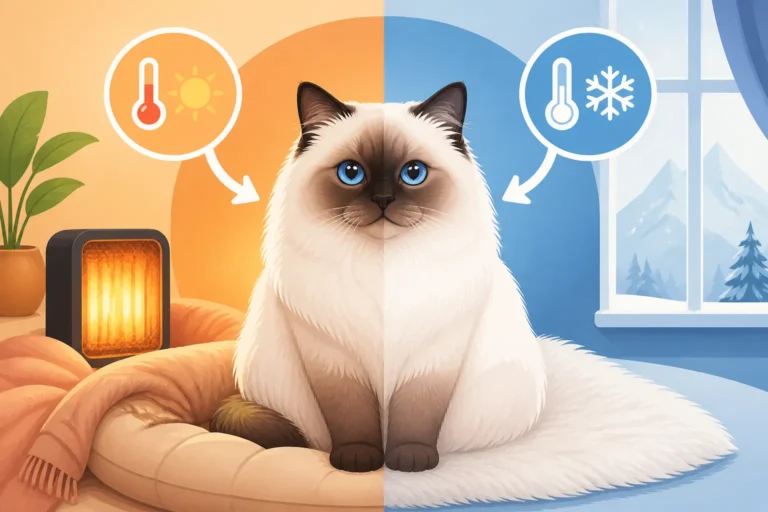
Himalayan cat coat color links directly to a temperature sensitive enzyme that produces melanin in cooler body regions.
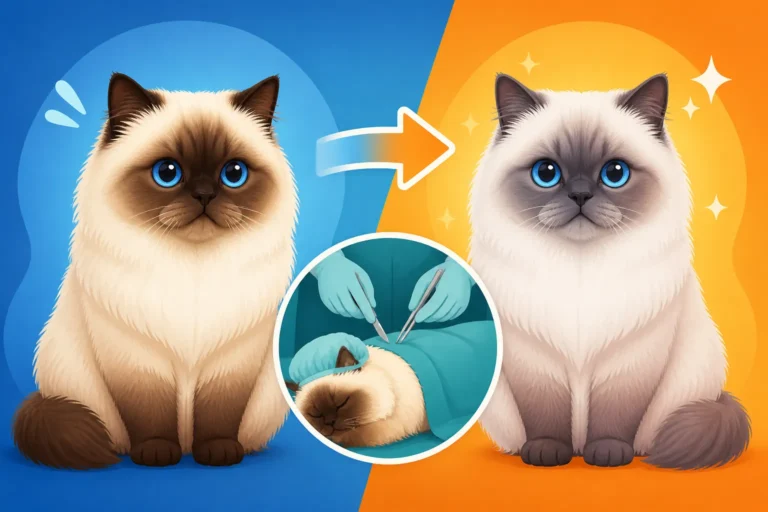
Himalayan cat coat color changes after surgery happen because a temperature-sensitive enzyme produces darker fur in cooler shaved areas.

Himalayan cat fur regrows darker on shaved patches because temperature-sensitive tyrosinase enzymes produce pigment in cooler skin areas.
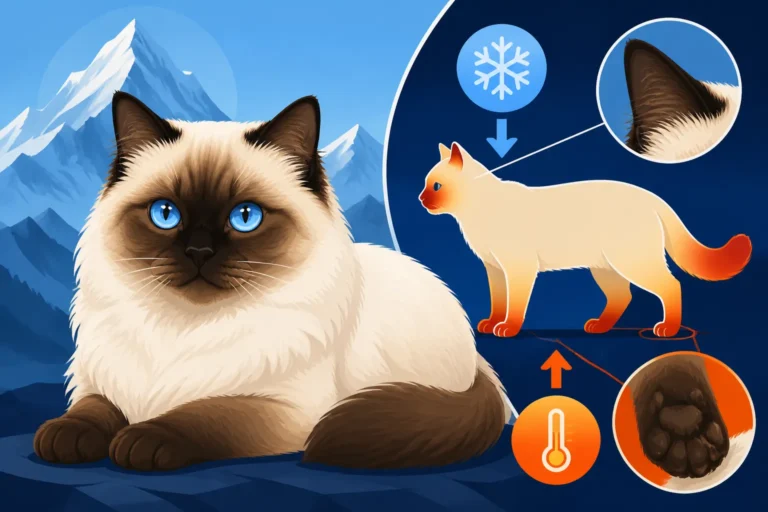
Himalayan cat coat coloration relies on a temperature sensitive enzyme that produces dark points on cooler extremities.
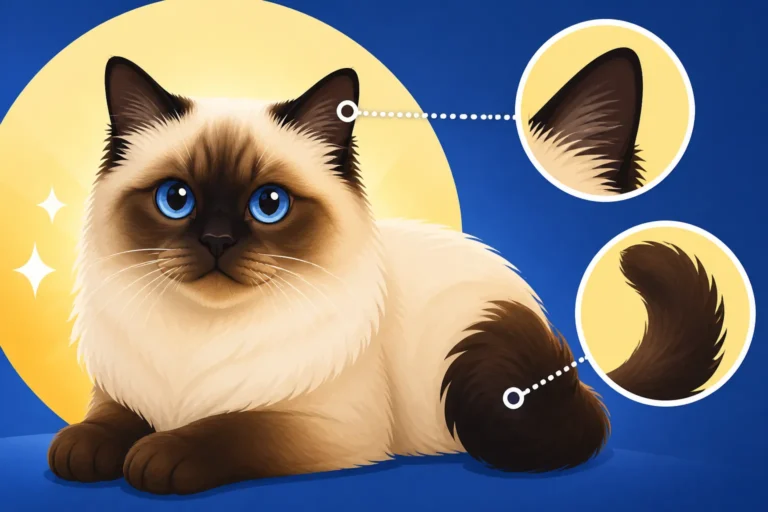
Himalayan cat coloration results from a temperature-sensitive gene mutation that controls pigment production in cooler body areas.
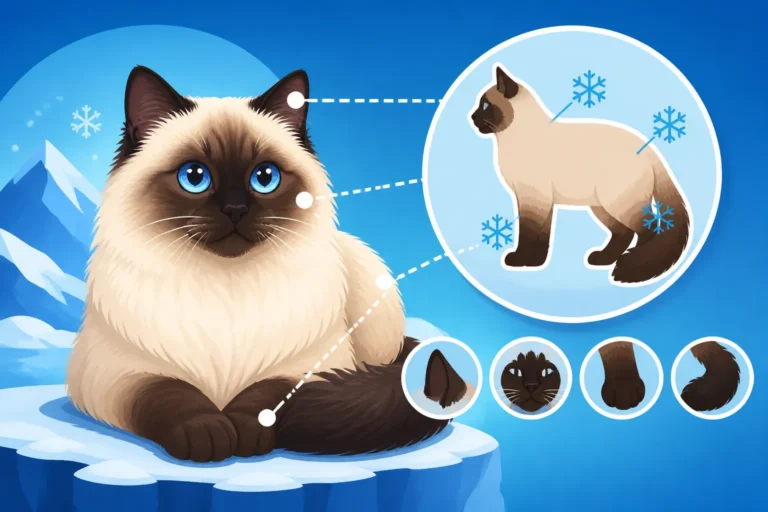
Temperature-sensitive tyrosinase enzymes and genetics explain why Himalayan cats develop dark fur on cooler body extremities.

The temperature-sensitive tyrosinase gene mutation causes Himalayan cats to develop dark points and pale coats because enzymes fail in warmth.