Getting a Himalayan Kitten Used to the Comb
Early Himalayan kitten grooming prevents painful mats in dense double coats and builds lifelong tolerance for daily combing.
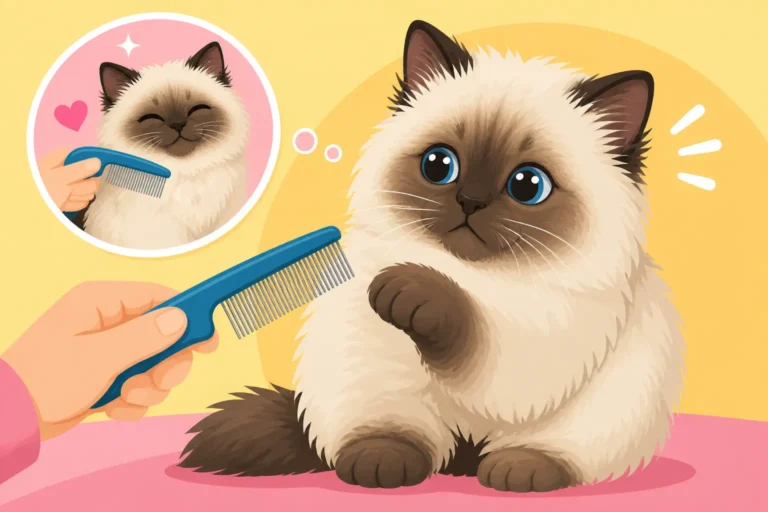
Early Himalayan kitten grooming prevents painful mats in dense double coats and builds lifelong tolerance for daily combing.
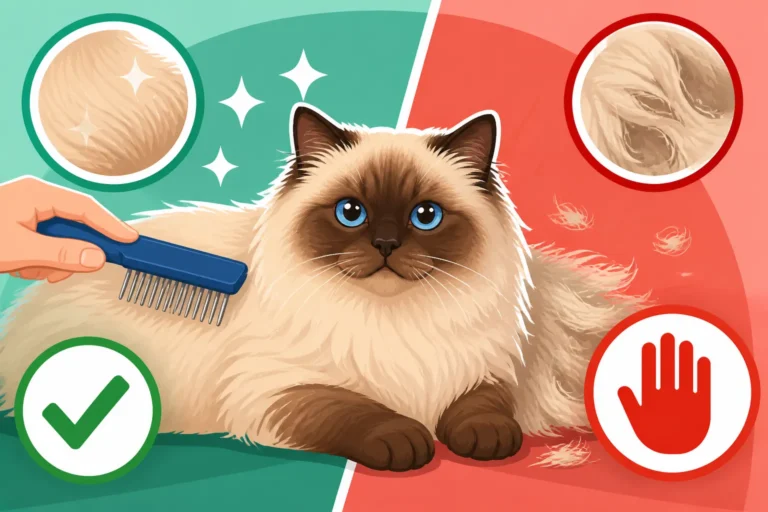
Himalayan cat grooming signals, including tail flicks and body tension, show owners when to stop combing sessions.
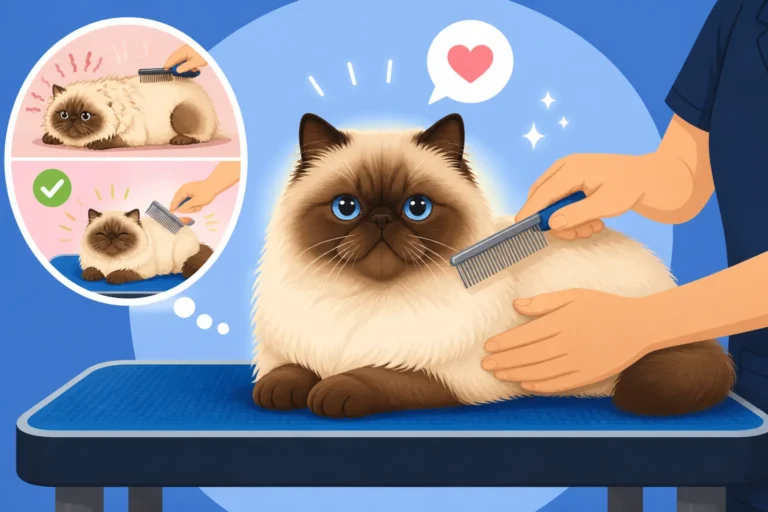
Elevating a Himalayan cat to a table during grooming improves posture, visibility, and coat access, making the process calmer.
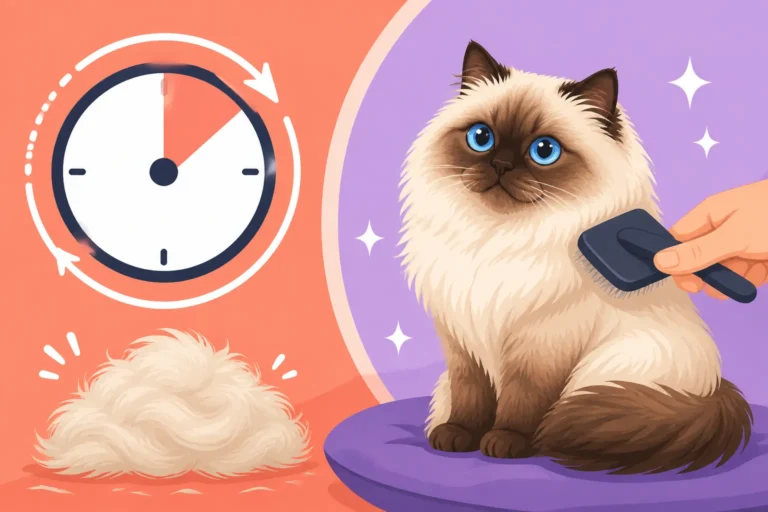
Daily grooming of a Himalayan cat requires understanding double coat structures, friction hot spots, and prevention of mats.
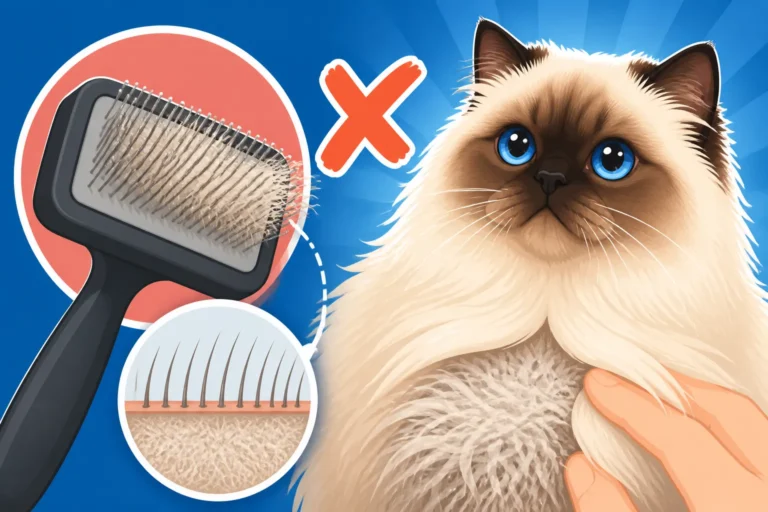
Himalayan cat double coats and dense undercoats trap dead hair and cause mats that standard slicker brushes cannot reach.
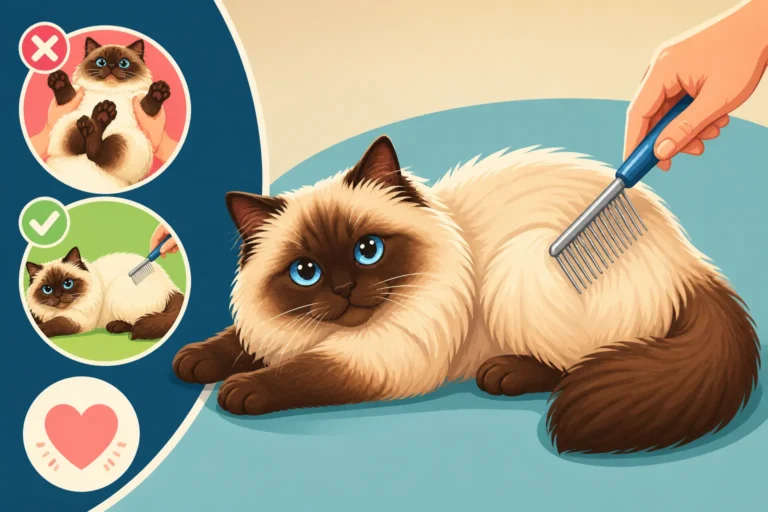
Gentle grooming techniques let Himalayan cat owners comb dense britches using steel combs without flipping cats onto their backs.
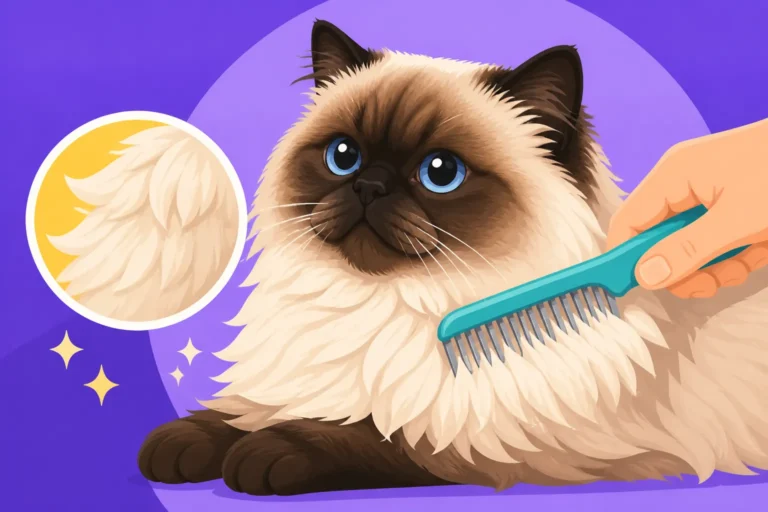
Working a comb through a Himalayan ruff requires steel tools to manage dense double coats and prevent painful mats.
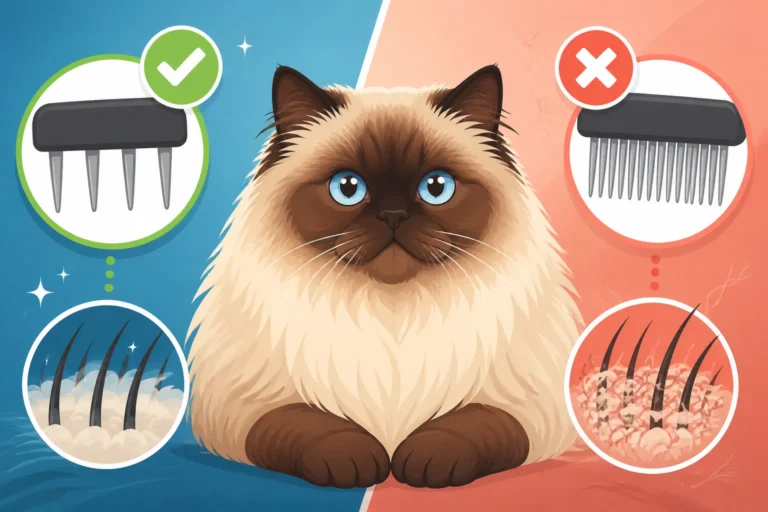
Himalayan cat tooth spacing helps owners choose combs to manage fine undercoat hairs and prevent painful mats.

Daily Himalayan cat combing prevents painful mats in dense double coats, stopping tangles from forming under armpits and behind ears.
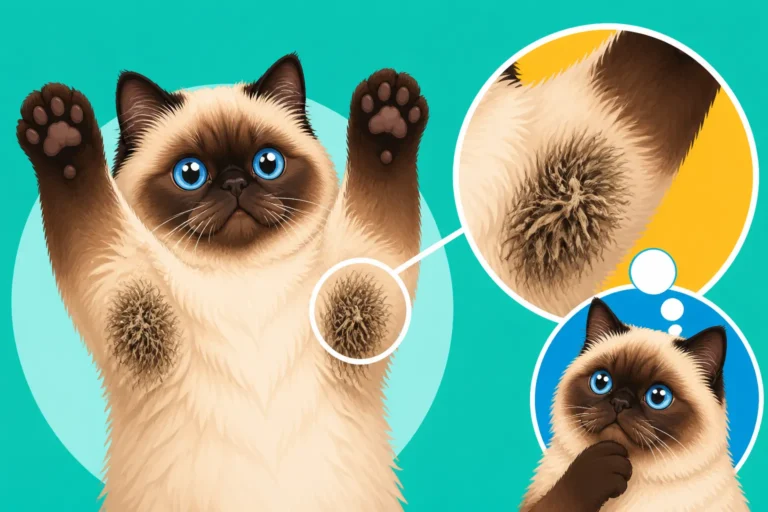
Himalayan cat armpit mats form first because constant leg movement and friction tangle their dense double coat.