Combing the Points an Old Himalayan No Longer Reaches
Senior Himalayan cats aged eight to ten struggle with coat mats due to arthritis and dental pain, needing owner grooming assistance.
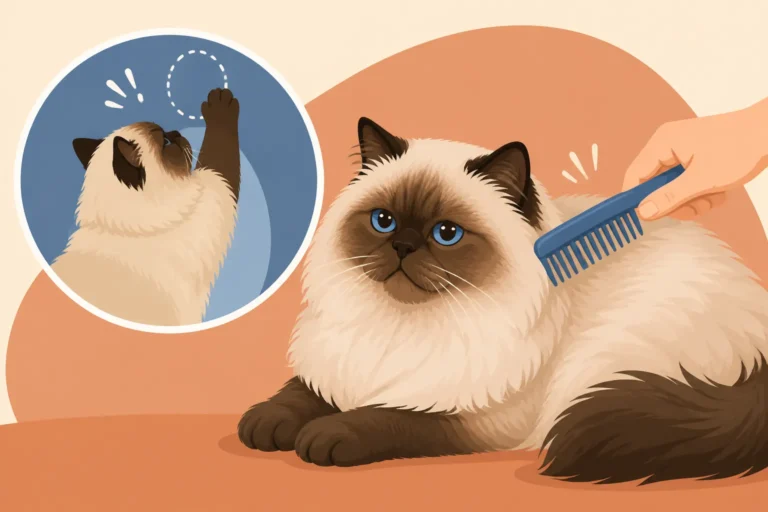
Senior Himalayan cats aged eight to ten struggle with coat mats due to arthritis and dental pain, needing owner grooming assistance.
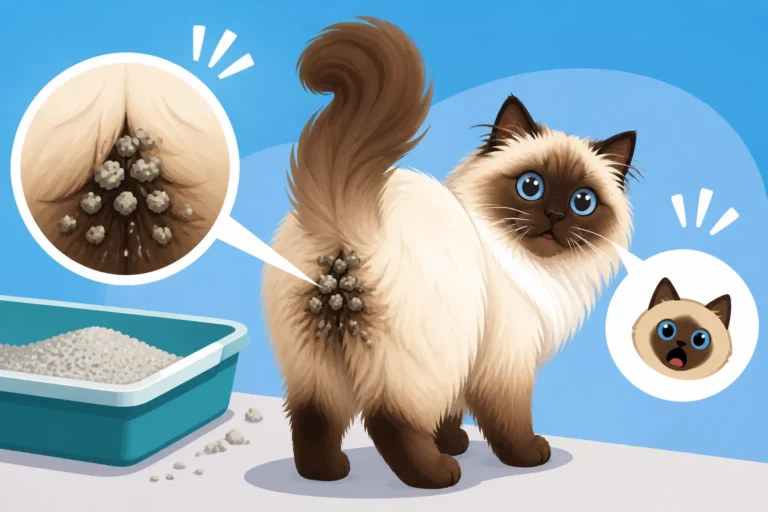
Himalayan cat double coats and Persian heritage trap litter particles in dense undercoats, guard hairs, and feathered hindquarters.
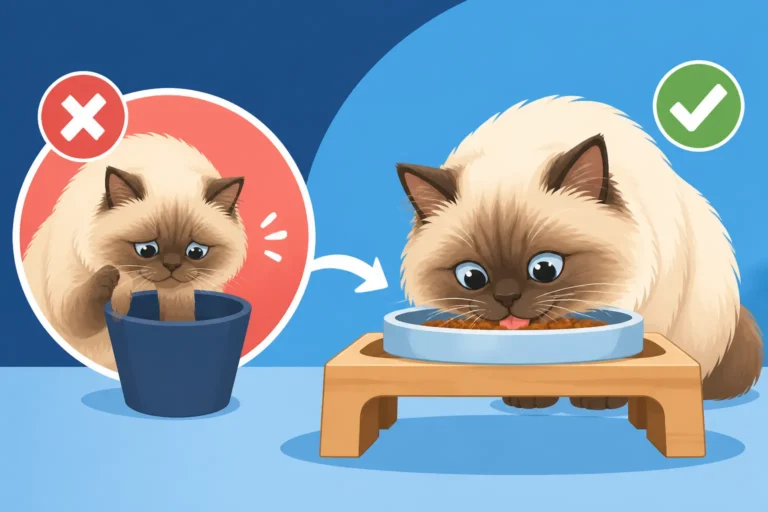
Himalayan cat eating difficulties stem from brachycephalic anatomy and sensitive whiskers, causing mealtime frustration.
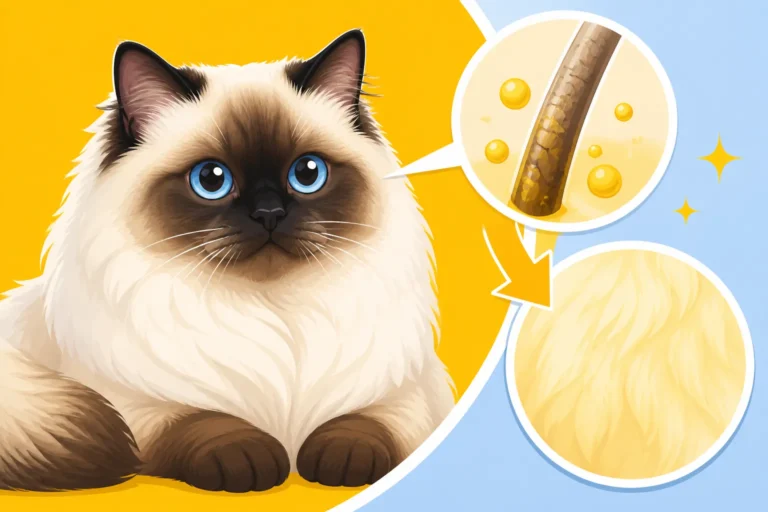
Himalayan cat pale body coat yellowing causes and genetics explained, plus prevention tips to restore bright fur.
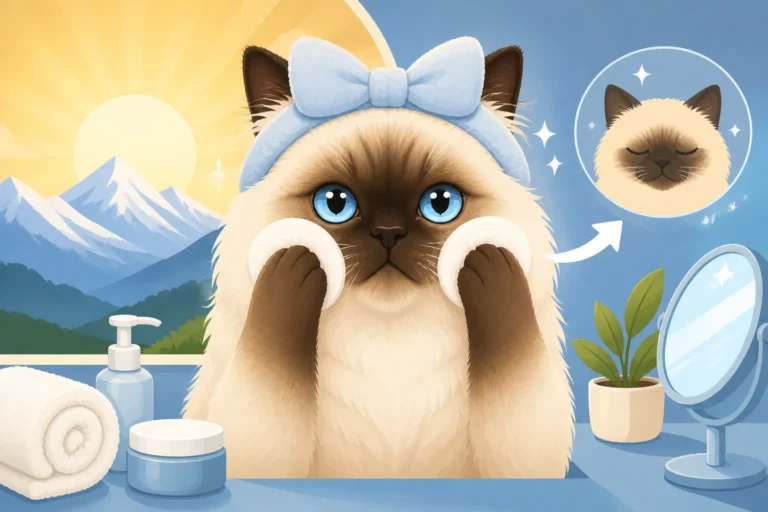
Himalayan cat facial care uses a gentle morning routine to clean tear ducts, prevent yeast growth, and stop painful skin irritation.
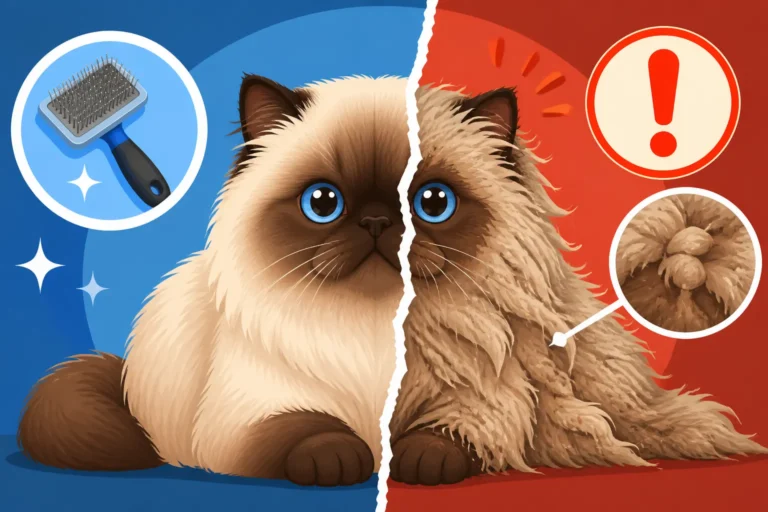
Himalayan cat fur matting happens quickly due to fine double coat textures, explaining why skipped daily brushing creates painful knots.
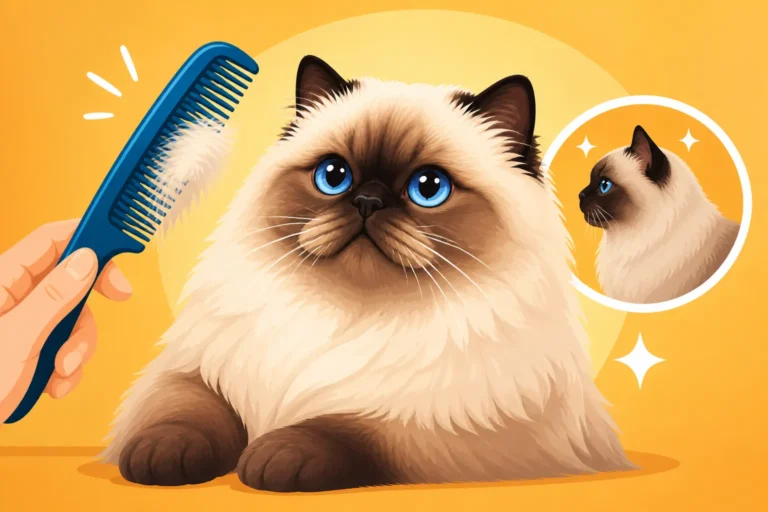
Daily Himalayan cat combing prevents painful fur mats, skin infections, and costly veterinary visits for your companion.
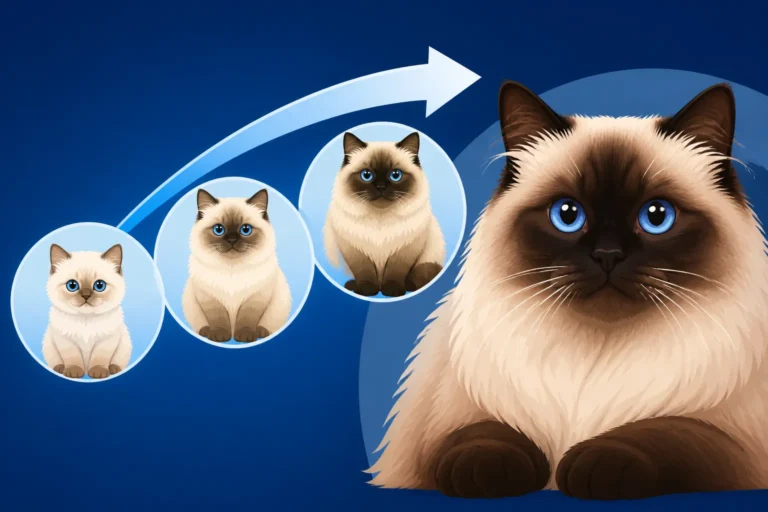
Himalayan cat coat points darken every year because a temperature sensitive enzyme reacts to shifting body heat and aging.
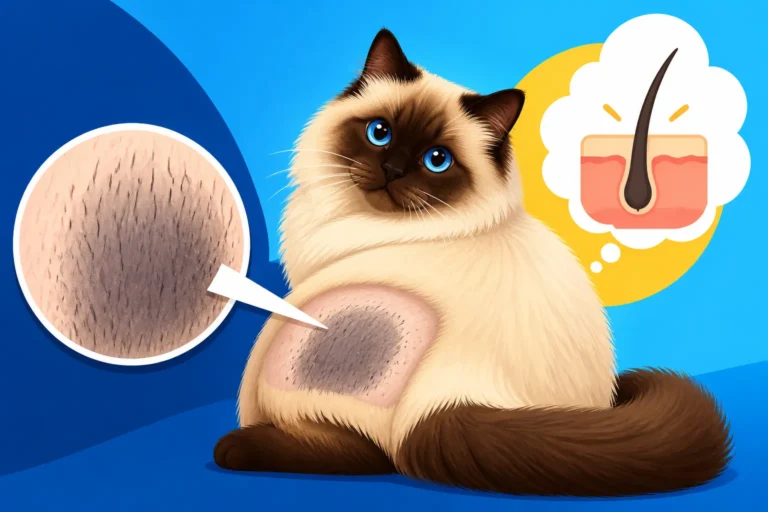
Himalayan cat fur regrowth after shaving turns darker because a temperature sensitive enzyme produces melanin in cooler areas.
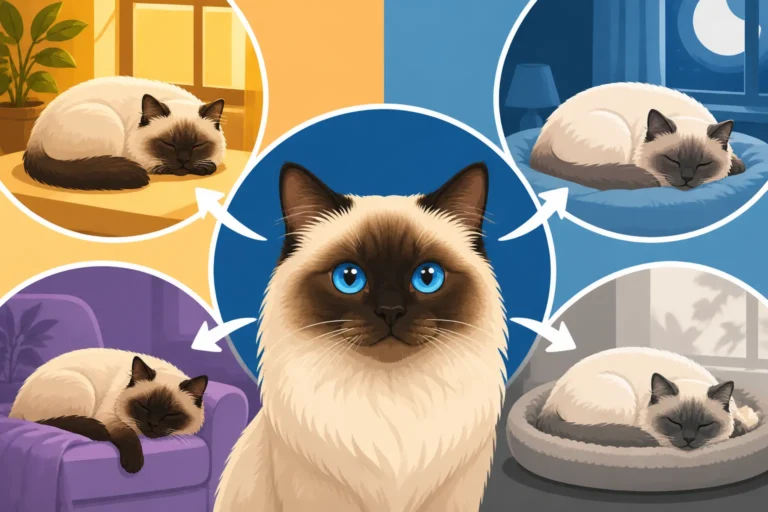
Himalayan point color is a temperature-sensitive biological response that produces darker fur on cooler body extremities.