Whether a PKD Positive Himalayan Should Ever Be Bred
Breeding a Polycystic Kidney Disease positive Himalayan creates a fifty percent chance of transmitting this fatal genetic disorder to kittens.
Know what to watch for.
Breed-specific conditions, screening and DNA tests, what surgery actually costs, and the daily habits that stretch a healthy lifespan.

Breeding a Polycystic Kidney Disease positive Himalayan creates a fifty percent chance of transmitting this fatal genetic disorder to kittens.

Himalayan kitten Polycystic Kidney Disease certificates detail genetic testing results from reputable labs like UC Davis.

Polycystic kidney disease DNA testing explains how a mouth cheek swab identifies the PKD1 gene mutation in Himalayan cats.
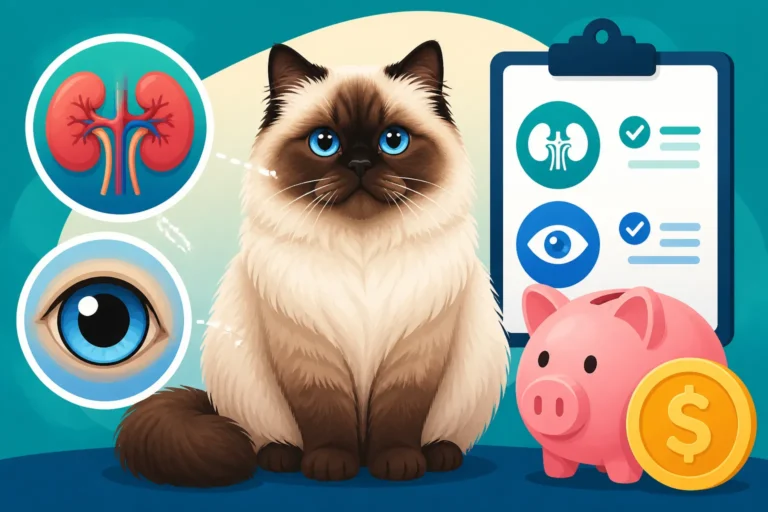
Himalayan cat health screening costs for Polycystic Kidney Disease and eye issues range from forty to five hundred dollars.

Himalayan pedigrees require two genetic tests for hereditary conditions, specifically identifying polycystic kidney disease risks before purchase.

Two health certificates for Himalayan kittens, including Polycystic Kidney Disease clearance, ensure proper genetic screening.

Himalayan cat lifespan factors, including polycystic kidney disease and brachycephalic airway syndrome, explain indoor longevity limits.
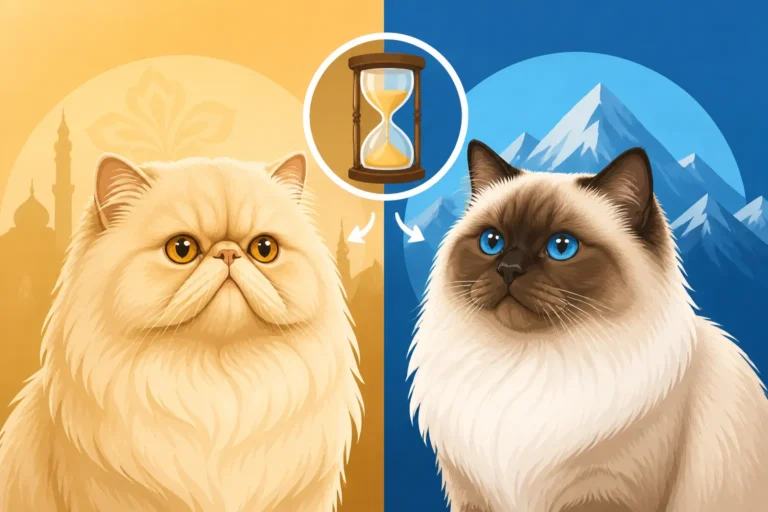
Himalayan and Persian cat lifespans typically range from nine to fifteen years, shared genetics and indoor living driving their long lives.

Doll Face and Peke Face Himalayan cat facial structures affect health and lifespan differently due to respiratory differences.

Well-bred Himalayan cats from tested lines usually live twelve to fifteen years, sometimes reaching eighteen years or more.