What a Well Built Himalayan’s Breathing Sounds Like
A flat-faced Himalayan has a compressed airway because soft tissue is crammed into a short skull, causing noisy breathing that is normal only within limits.
Know what to watch for.
Breed-specific conditions, screening and DNA tests, what surgery actually costs, and the daily habits that stretch a healthy lifespan.

A flat-faced Himalayan has a compressed airway because soft tissue is crammed into a short skull, causing noisy breathing that is normal only within limits.

Evaluating Himalayan kitten nostrils at twelve weeks reveals narrowed passages linked to brachycephalic obstructive airway syndrome.

Himalayan cat breeders must screen for polycystic kidney disease using DNA cheek swabs to prevent inherited failure in kittens.

Progressive retinal atrophy in Himalayan cats causes vision loss from inherited genetic mutations, but early signs reveal the condition.

Himalayan cats experiencing vision loss from conditions like glaucoma or cataracts require specific home adjustments and veterinary care.

Blind Himalayan cats cope with vision loss better than active breeds due to their innate calmness and love of predictable routines.
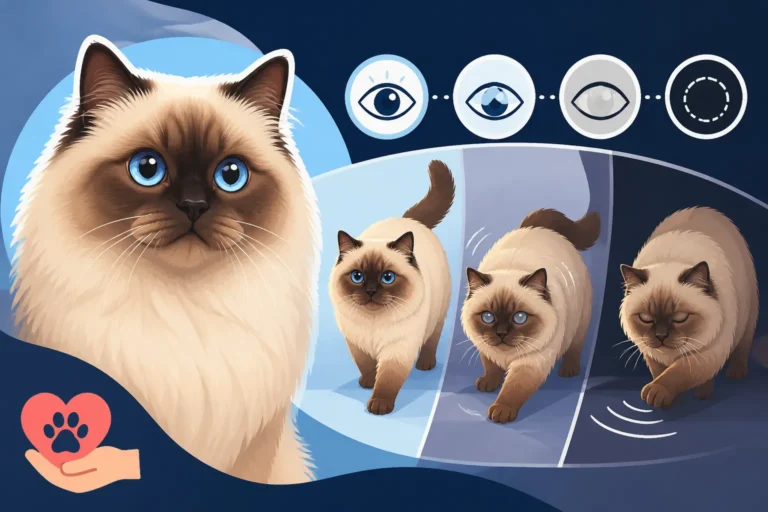
Himalayan vision loss causes hesitation, dilated pupils, and deep reliance on smell, revealing how aging cats adapt to darkness.
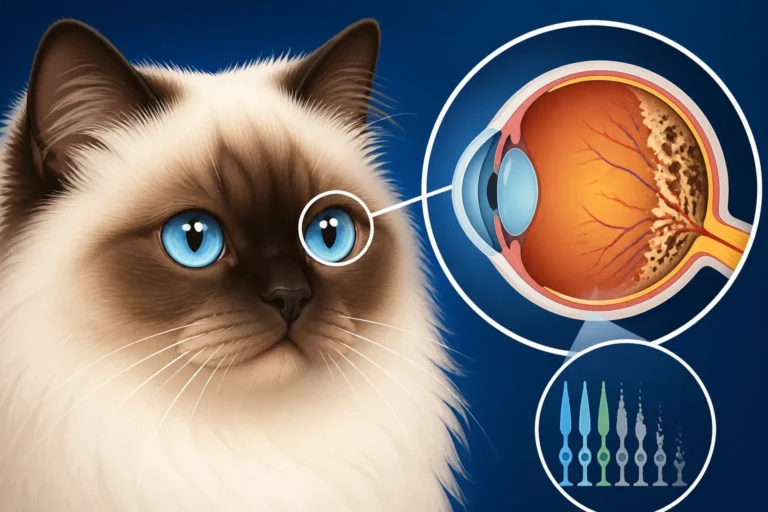
Retinal atrophy in Himalayan cats is an inherited genetic disease causing photoreceptor cell degeneration and complete blindness.

Himalayan kidney tracking starting at age five helps detect genetic polycystic kidney disease and monitor organ function.

Increased thirst in a Himalayan cat often reveals Polycystic Kidney Disease, a genetic disorder inherited from Persian ancestry.