What Turns a Himalayan’s Tear Stains Rust Colored
Iron-containing porphyrins in Himalayan cat tears oxidize in sunlight and air, creating rust-colored stains alongside yeast and bacteria.
Know what to watch for.
Breed-specific conditions, screening and DNA tests, what surgery actually costs, and the daily habits that stretch a healthy lifespan.
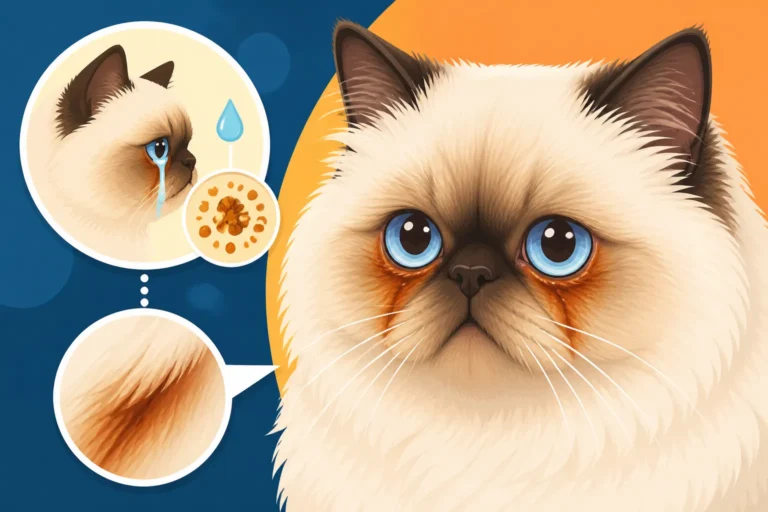
Iron-containing porphyrins in Himalayan cat tears oxidize in sunlight and air, creating rust-colored stains alongside yeast and bacteria.

Himalayan cat flat facial anatomy blocks nasolacrimal tear drainage ducts, causing overflow, reddish-brown stains, and skin irritation.
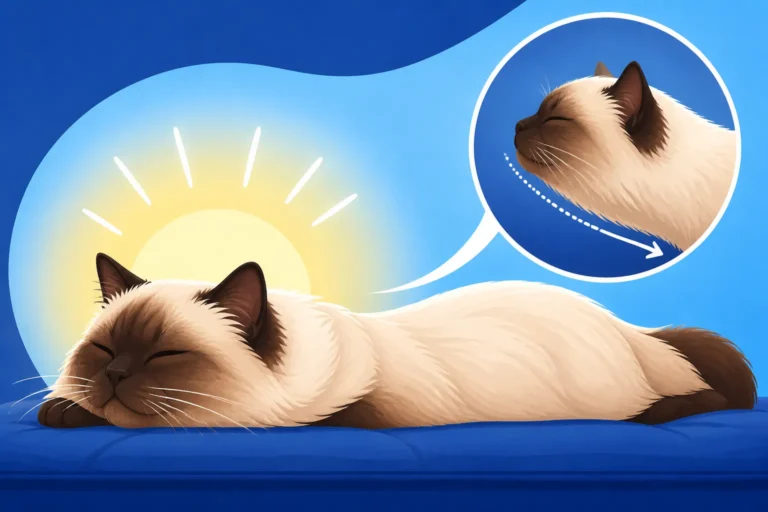
Himalayan cat anatomy and brachycephalic breathing challenges explain neck extension sleeping postures used to open restricted airways.
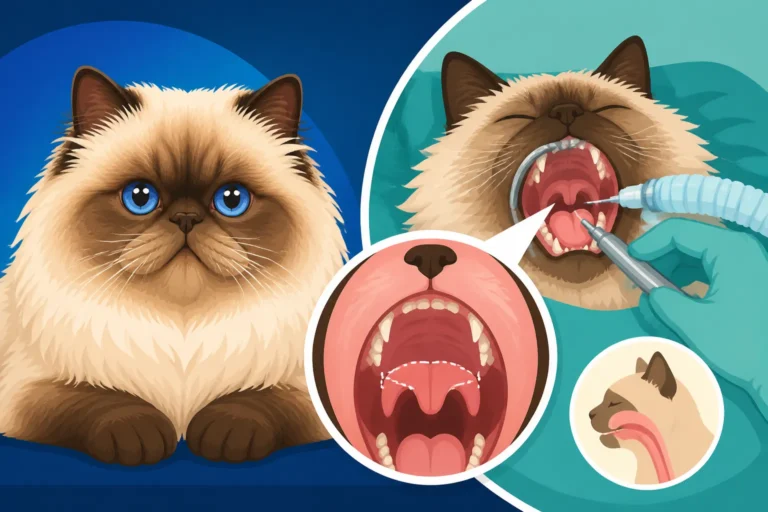
Soft palate surgery for Himalayan cats relieves brachycephalic airway obstruction by removing excess tissue blocking the windpipe.
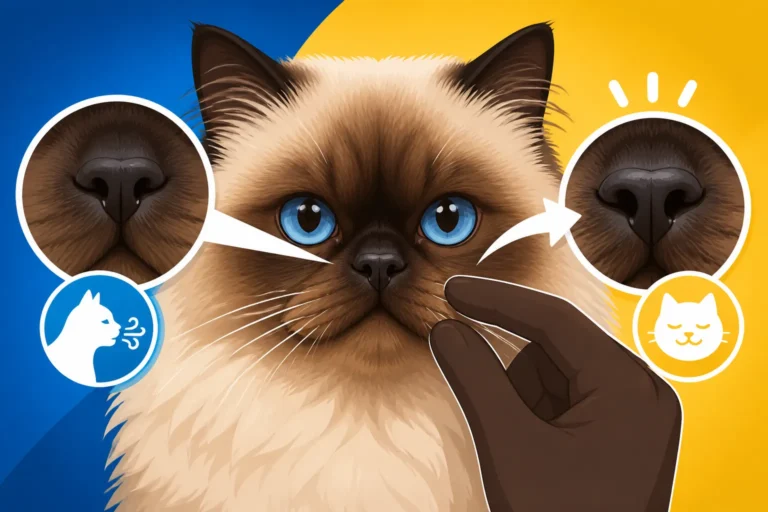
Surgical correction of stenotic nares removes a wedge of tissue to widen nostrils and help cats with Brachycephalic Airway Syndrome breathe better.
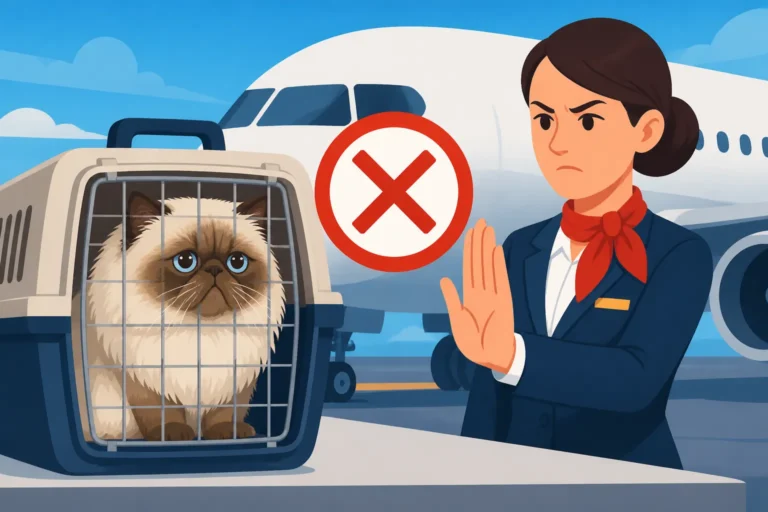
Airline restrictions on flat-faced Himalayan cats prevent Brachycephalic Airway Syndrome, respiratory distress, and overheating.
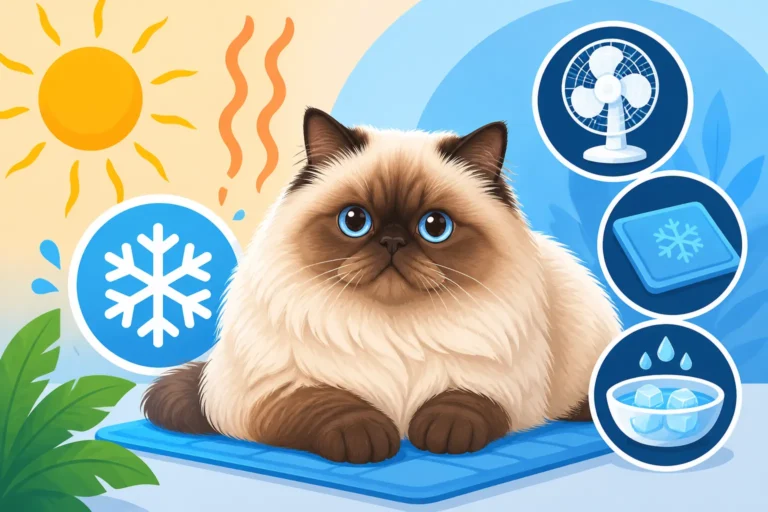
Himalayan cat cooling methods help dense coated and flat faced pets safely beat summer heat and avoid dangerous overheating.
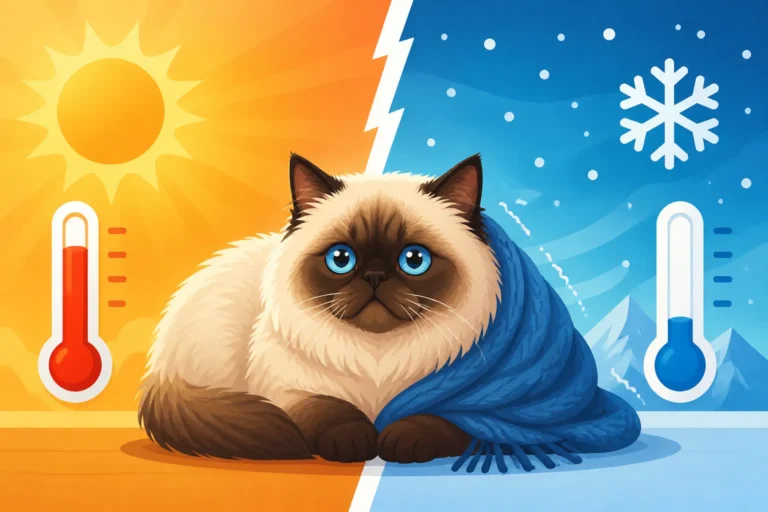
Himalayan cat heat sensitivity, dense double coats, and brachycephalic airways cause dangerous overheating at specific temperatures.

Himalayan cats start panting quickly during play due to their brachycephalic facial structure, narrowed nostrils, and thick coats.
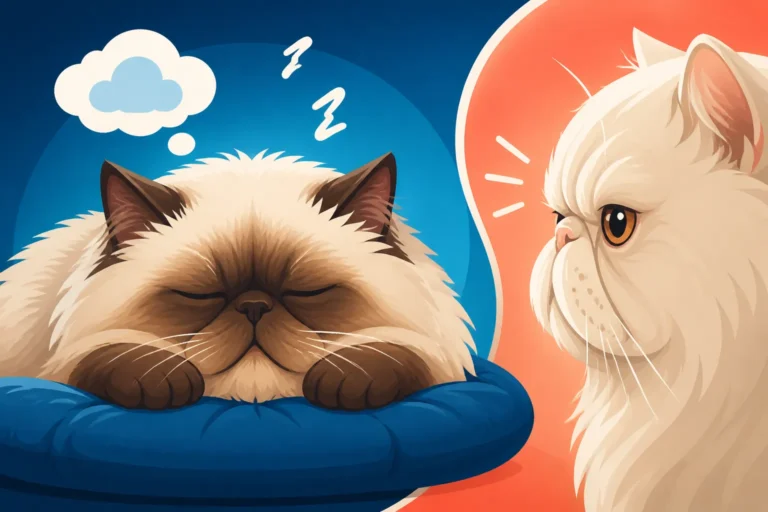
Himalayan cat snoring stems from brachycephalic anatomy, Persian ancestry, narrowed nasal passages, and an elongated soft palate.