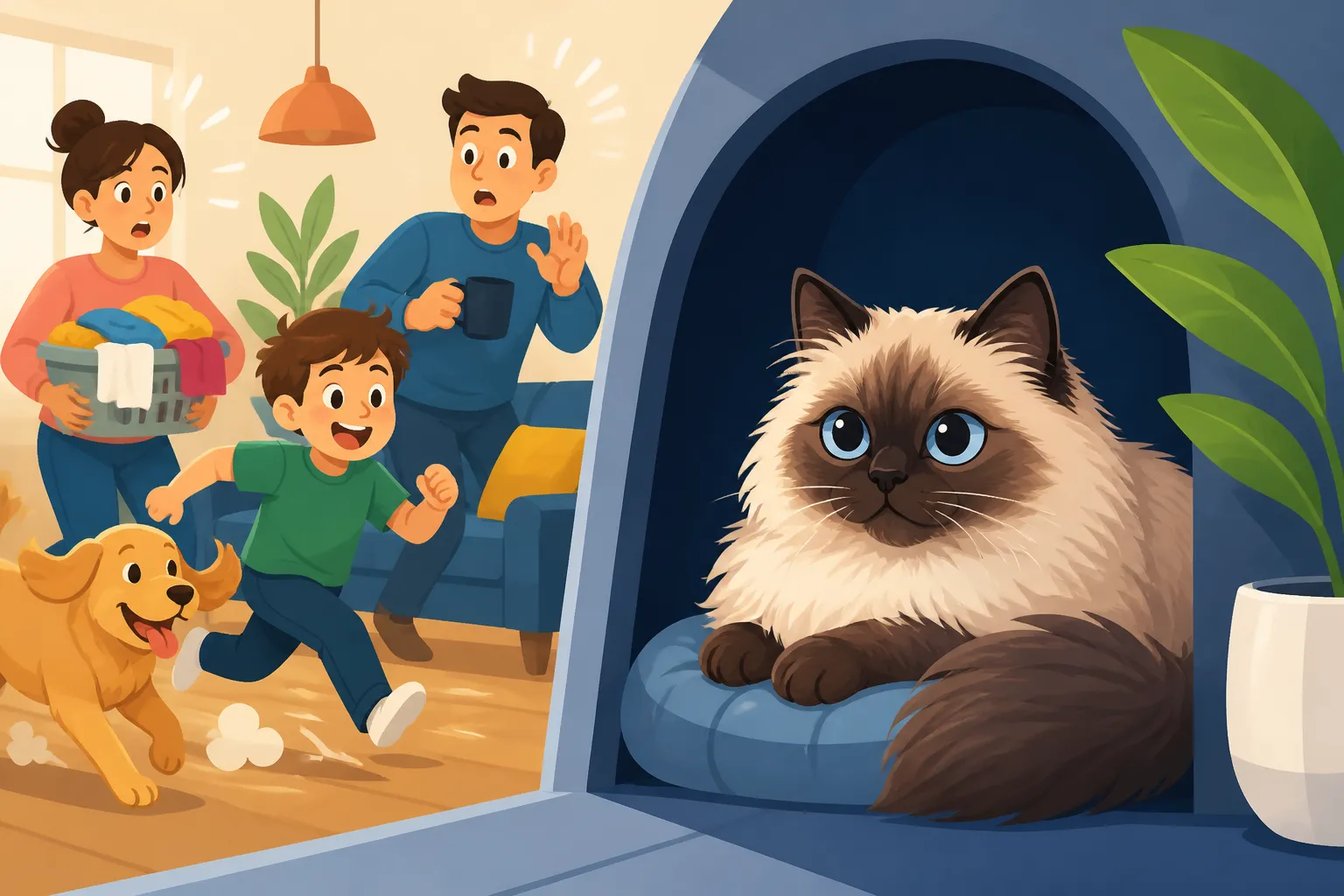
Where a Himalayan Goes When the House Gets Busy
It's a common scenario: the doorbell rings, voices rise, music starts, and suddenly your peaceful home transforms into a bustling hub of activity. For us humans, it might be exciting, but if you share your life with a Himalayan cat, you've probably noticed a distinct shift in their demeanor. They don't usually join the party; instead, they often disappear, leaving you wondering where your fluffy companion has gone and if they're truly okay. This guide is all about understanding why your Himalayan retreats when things get busy, what signals they're sending, and how you can create a safe, comforting haven for them, even when the house is full of life.
Understanding the Himalayan's Need for Peace and Quiet
Himalayan cats, with their luxurious coats and striking blue eyes, are often seen as the epitome of calm elegance. But beneath that serene exterior lies a deep-seated preference for tranquility that significantly influences their behavior, especially when their environment becomes chaotic.
The Himalayan Temperament: A Quiet Observer
Unlike some of their more boisterous feline cousins, Himalayans are generally not the life of the party. They're more akin to a discerning guest, preferring to observe the world from a comfortable, quiet vantage point rather than being at the center of attention. This gentle, laid-back nature is heavily influenced by their Persian ancestry, which imbues them with a remarkable mellowness. While they do retain a touch of the Siamese talkativeness – you'll often find them "answering back" or offering quiet chirps – their overall energy level is far lower. They aren't prone to the mad dashes and wild antics you might see from a more active breed. Instead, they cherish routine and predictability above almost all else. A sudden influx of new people, unfamiliar sounds, or even just a change in the usual rhythm of the household can be profoundly unsettling for them. Their physical build also plays a role here; they're not built for sustained exertion, so avoiding chaotic situations is often their natural coping mechanism. How Soon a Himalayan Kitten Runs Out of Breath
Sensory Overload and the Flat Face
The distinctive, often flattened facial structure of many Himalayans, particularly the Peke-face variety, isn't just a unique aesthetic feature; it can profoundly impact their sensory experience. Their respiratory system, being shorter and sometimes constricted, means that increased stress or excitement can exacerbate breathing difficulties, making a quiet environment a physiological necessity, not just a preference. Imagine trying to breathe deeply in a noisy, crowded room when your airways are already a bit compromised – it's naturally uncomfortable. Why a Himalayan Snores Louder Than Its Siamese Ancestors Furthermore, their large, round, expressive blue eyes can be more sensitive to sudden bright lights or rapid, unpredictable movements. Loud noises, which might just be an annoyance to us, can be jarring and overwhelming to their acute hearing. When a house gets busy, it often means more light, more sound, and more movement, all of which can lead to sensory overload for a sensitive Himalayan, prompting them to seek refuge in a calm, dark corner.
The Importance of Routine and Predictability
For a Himalayan, routine isn't just a suggestion; it's a way of life. They thrive on a predictable schedule that dictates everything from meal times to grooming sessions to their quiet periods of napping in their favorite sunbeam. Any significant deviation from this established rhythm can be a major source of stress. Think about it: cats are creatures of habit, and Himalayans take that to an extreme. A sudden party, the arrival of unfamiliar guests, a house full of boisterous children, or even the subtle rearrangement of furniture can throw their internal clock into disarray. Why a Himalayan Notices When One Chair Moves This disruption isn't just a minor inconvenience for them; it can be deeply unsettling, leading them to retreat from the perceived chaos. They feel safest when they know what to expect, and when that expectation is shattered by unexpected busyness, their instinct is to find a place where they can restore their sense of order and safety.
Identifying the "Busy" Triggers for Your Himalayan
It's easy to assume that "busy" simply means "loud," but for a Himalayan, the concept is far more nuanced. What might seem like a manageable level of activity to us can be a full-blown crisis for your sensitive feline. Learning to identify these triggers and recognize the subtle signs of stress is crucial for their well-being.
What Constitutes "Busy" from a Cat's Perspective
From your Himalayan's point of view, "busy" isn't solely about decibels. It's a complex interplay of unpredictable movements, unfamiliar scents, and a breakdown of their established routine. While a blaring TV or loud music can certainly be overwhelming, even seemingly benign activities can be triggers. Consider a holiday gathering: it introduces many new people, each bringing their own unique scent and energy, moving around the house in unpredictable patterns. Children's playdates, with their bursts of high-pitched laughter, sudden movements, and dropped toys, are another prime example. Even something like home renovations, with their unusual tools, constant banging, and strange smells, can send a Himalayan into hiding. It's the disruption to their familiar, quiet world that truly defines "busy" for them, creating an environment where they feel less in control and less secure.
Signs Your Himalayan is Feeling Overwhelmed
Himalayans aren't typically dramatic about their discomfort; they tend to be masters of subtle communication. When they're feeling overwhelmed, you won't usually see them swatting or hissing (though extreme stress can certainly lead to such reactions). More often, their cues are much quieter. Look for flattened ears, which signal anxiety or fear, or pupils that are dilated, even in normal lighting. Their body posture might become rigid, their tail tucked tightly against their body, or they might make themselves as small as possible. A tell-tale sign is wide, unblinking eyes, indicating hyper-vigilance. The most obvious signal, of course, is their disappearance. They might retreat to a favorite high perch that offers a good view, or more commonly, a low, hidden spot where they feel completely concealed. They might also refuse food, even their favorite treats, or become unusually quiet. Understanding these quiet signs is essential because they are your Himalayan's way of asking for peace and quiet. What a Himalayan Does When It Is Unsettled
The Difference Between Curious Observation and Stress-Induced Retreat
It's important to differentiate between a Himalayan who is calmly observing new activity and one who is actively distressed. A curious Himalayan might watch from a distance, perhaps from their favorite armchair, with ears forward and their tail moving in slow, relaxed swishes. They might even slowly blink at you, a sign of contentment. They are engaged but not threatened. However, a Himalayan in stress-induced retreat will actively seek to disappear from the scene entirely. They won't just move to another room; they'll seek out a spot where they cannot be seen, often in silence. There's a palpable difference in their body language and the intent behind their movement. Never mistake your Himalayan's naturally calm, somewhat aloof demeanor for a sign that they are perfectly fine with a bustling house. Their quietness can often mask a deep need for solitude and peace, especially when their world is suddenly turned upside down by human activity.
Common Retreats and Hiding Spots for Himalayans
When your home transforms into a hub of activity, your Himalayan will instinctively seek out a sanctuary. These aren't just random spots; they are carefully chosen havens that provide a sense of security, quiet, and often, warmth. Knowing these preferred hiding places can help you locate your cat and understand their need for personal space.
Preferred Hiding Places: High, Low, and Hidden
Himalayans, being the masters of understated self-preservation, have a predictable repertoire of hiding spots. You'll often find them gravitating towards places that offer a sense of enclosure and protection. Under beds is a perennial favorite; the darkness and confined space provide an immediate feeling of safety. Closets, especially those with soft clothing or blankets, are another prime choice. The quiet hush of a closet door closing can be an instant stress reliever. Behind curtains, nestled against a wall, or even inside empty boxes or specially designed cat caves also offer the seclusion they crave. Due to their cobby build and somewhat stocky legs, Himalayans generally prefer lower, more stable hiding spots over high, precarious perches. They appreciate being out of the main thoroughfare of activity, feeling unseen and unbothered by the commotion. Why a Himalayan Rarely Reaches a Counter The key is finding a place where they feel both physically secure and emotionally safe from the overwhelming sights and sounds of a busy household.
The Appeal of Warm, Dark, and Enclosed Spaces
Beyond just being out of sight, Himalayans are particularly drawn to spaces that are warm, dark, and enclosed. While their thick Persian coat means they might seek cooler spots in general to avoid overheating, when stressed, the comforting embrace of a dark, enclosed space often overrides other considerations. Think of a cozy fort: that's the feeling they're seeking. A thick comforter draped over a bed, creating a shadowy cave underneath, can be incredibly inviting. A quiet corner of a closet, tucked away from any drafts and bathed in darkness, feels like a private sanctuary. These spaces tap into a primal instinct for safety and security, mimicking the kind of protected dens wild cats might seek. In a busy house, where bright lights, loud conversations, and constant movement dominate, these havens offer a profound sense of relief, allowing your Himalayan to decompress and escape the sensory overload.
Temporary Relocation to a "Safe Room"
Sometimes, a Himalayan's response to a busy house isn't just about finding a quick hiding spot; it's about a strategic, temporary relocation. This often means moving to an entirely different room that typically remains quiet and undisturbed. A spare bedroom, a home office that's usually unoccupied, or even a seldom-used bathroom can become their chosen "safe room." They don't just disappear into a corner; they actively choose to inhabit a space where the disruption is minimal or non-existent. If you notice your Himalayan consistently retreating to the same remote room when guests arrive, it’s a clear indication that this space has become their designated sanctuary. During such times, it’s considerate to ensure they have easy access to essentials within this chosen space – a litter box, fresh water, and a small portion of their favorite food. This proactive move shows a higher level of distress than simple hiding, and acknowledging it by providing them with a complete, if temporary, refuge can greatly reduce their stress.
Creating a Sanctuary for Your Sensitive Himalayan
Understanding your Himalayan's natural inclination for peace is the first step. The next, and perhaps most crucial, is actively creating spaces and routines that cater to this need, ensuring they always have a calm haven to retreat to, even when life gets hectic around them.
Designating a Quiet Zone or "Safe Room"
The single most impactful thing you can do for your Himalayan during busy times is to designate a permanent quiet zone or "safe room." This isn't just a hiding spot; it's their room, a space that is consistently calm and off-limits to boisterous activity. This room should be equipped with all their essentials: their favorite plush bed, perhaps a cozy covered cat bed (many excellent options are available on platforms like Amazon), their food and water bowls, a familiar scratching post, and their litter box. Consistency is key here; this space should always be available to them. To further enhance its tranquility, consider using calming pheromone diffusers, which release synthetic feline facial pheromones that can help reduce stress and promote a sense of security. Soft, classical music played at a low volume can also help mask jarring sounds from other parts of the house. By providing this dedicated sanctuary, you're not just giving them a place to hide; you're giving them a reliable escape route and a personal space where they can truly relax. You might even find they appreciate a cat tree with enclosed compartments, giving them a private hideaway off the floor. [Which Cat Trees a Himalayan Can Actually Use]
Environmental Enrichment and Calming Aids
Beyond a dedicated safe room, integrating environmental enrichment and calming aids into your Himalayan's daily life can further support their peaceful nature, especially when the house gets busy. Puzzle feeders, for example, can provide gentle mental stimulation without requiring high-energy exertion, making them perfect for quiet moments in their sanctuary. Which Puzzle Feeder a Himalayan Can Get Its Face Into Just ensure they are designed for a flat-faced cat to easily access the food. For more persistent anxiety, you might explore calming treats or supplements, but always, always consult your veterinarian before introducing anything new into their diet. White noise machines or specialized cat-calming music can be incredibly effective at masking unpredictable external sounds, providing a consistent, soothing auditory environment. Think about their comfort during feeding too; a wide, shallow bowl prevents whisker fatigue and makes eating easier for their unique facial structure, and you can find many such pet products on Amazon. Similarly, a high-sided litter box with a cutaway entrance can offer privacy and reduce litter tracking, keeping their safe space cleaner and more appealing.
Managing Guest Interactions and Children
One of the biggest triggers for a Himalayan's retreat is often the presence of guests, particularly active children. It's vital to educate everyone in your home and visitors on appropriate interactions. Teach children that the Himalayan is not a toy to be chased or squeezed. Instead, encourage quiet, gentle interactions. Show them how to offer a flat hand for the cat to sniff, and explain that the cat should be allowed to approach them on its own terms. Stress the importance of respecting the Himalayan's quiet zone, making it a no-go area for loud play. For major events like parties or large family gatherings, consider proactively placing your Himalayan in their designated safe room before guests arrive. Provide them with fresh food, water, a clean litter box, and a few favorite toys. This preemptive move minimizes their exposure to the initial shock and chaos of arrival, allowing them to settle into their quiet space before the commotion truly begins. Why a Himalayan Suits a Family With Older Children
Maintaining Routine During Disruptions
Even in the midst of a household whirlwind, sticking to your Himalayan's established routine as much as humanly possible can provide an invaluable sense of stability and comfort. If their feeding time is usually 6 PM, try your best to feed them then, even if you have guests. This predictability is incredibly reassuring to them. Similarly, if daily combing is part of their routine, don't skip it, even if you feel pressed for time. Instead, take your Himalayan into their quiet zone for their grooming session. Make it a calm, unhurried ritual, reinforcing the idea that even when the house is busy, some things remain consistent and safe. Teaching a Himalayan to Lie Still for Its Daily Comb These small acts of adherence to routine signal to your Himalayan that despite the external chaos, their core world remains stable and trustworthy. It reminds them that you are still their steady, reliable human, committed to their well-being, no matter how little else seems to make sense to them in the moment. After all, a Himalayan doesn't ask for much, just a consistent routine and a quiet spot to call their own. How Little a Himalayan Asks For in a Day
Disclaimer
This article is for general informational purposes only and does not constitute professional advice. Laws, prices and regulations vary by location and change over time. Consult a qualified professional for guidance on your specific situation.