Whether Grain Free Does Anything for a Himalayan’s Coat
Navigating the cat food aisle can feel like a jungle, especially when you're trying to do what's best for your beloved Himalayan. One of the biggest debates we hear about constantly is whether grain-free food is truly superior, particularly for maintaining that glorious, flowing coat that Himalayans are so famous for. It's a question many of us ponder, trying to cut through the marketing hype to get to the real science for our furry friends.
The Glorious Himalayan Coat: More Than Just Fluff
Your Himalayan's coat is undeniably one of its most striking features – a dense, long, luxurious Persian-type double coat, accented by those beautiful color points. This magnificent mane isn't just for show; it's a living, breathing part of your cat that requires a significant investment of care, both internally and externally. When we talk about diet, we're really discussing the building blocks that keep that coat healthy, shiny, and less prone to problems like matting or dullness.
A healthy coat reflects overall health. Think of it like our own hair and skin; when we're eating well, getting enough nutrients, and staying hydrated, it often shows in our appearance. For a Himalayan, whose coat is so profuse, any nutritional deficiency or imbalance can manifest quickly. A dull, brittle, or excessively shedding coat might be a sign that something isn't quite right with their diet, regardless of whether it contains grains or not. It's a delicate balance, and we're always striving to support that natural beauty and vitality. Remember how much goes into How Much Undercoat a Himalayan Carries Under Its Points, and you'll understand why proper nutrition is so critical for managing that density.
Beyond just looking good, a healthy coat acts as a protective barrier for your Himalayan's skin. A well-nourished skin and coat system is more resilient to environmental factors and less susceptible to issues like dry flakes or irritation. Given how easy it is for things to hide in such a thick coat, as highlighted in Why a Himalayan's Coat Hides a Wound for Days, having a strong, healthy coat and skin foundation is your first line of defense. So, when considering grain-free, we're really asking if it specifically contributes to this overall coat and skin wellness, or if other factors are more impactful.
Unpacking the "Grain-Free" Hype: What Does It Really Mean?
The term "grain-free" has become a powerful marketing tool in the pet food industry, leading many well-meaning cat parents to believe that grains are inherently bad for their feline companions. But what exactly are grains in cat food, and why did this trend emerge in the first place?
Grains in pet food typically refer to ingredients like corn, wheat, rice, barley, and oats. For a long time, the perception grew that these ingredients were merely "fillers" offering little nutritional value, or worse, that they were common allergens for cats. This belief was fueled by anecdotes and a desire to feed pets a diet closer to what their wild ancestors might have eaten – a diet often imagined as solely meat-based. The truth is, domestic cats, while obligate carnivores, have evolved over thousands of years living alongside humans and consuming some carbohydrates, including those from grains, in their diet. Their digestive systems, while optimized for protein and fat, can generally process properly cooked grains quite effectively. The idea that grains are simply unnecessary or harmful often oversimplifies the complex nutritional needs of a domestic cat.
The grain-free movement often drew parallels to human diets, where grain-free or gluten-free trends gained popularity. However, what's beneficial for humans isn't always directly transferable to our pets. For many years, the focus was on removing grains and often replacing them with other carbohydrate sources like potatoes, sweet potatoes, peas, or lentils. While these alternative ingredients are not inherently bad, it's important to understand that a "grain-free" food isn't necessarily "low-carb." In many cases, the carbohydrate content remains similar, just sourced from different plant materials. The real question then becomes, which carbohydrate sources are best utilized by a cat, and do they provide any unique benefits for a Himalayan's coat?
Grain-Free Diets and Your Himalayan's Skin and Coat Health
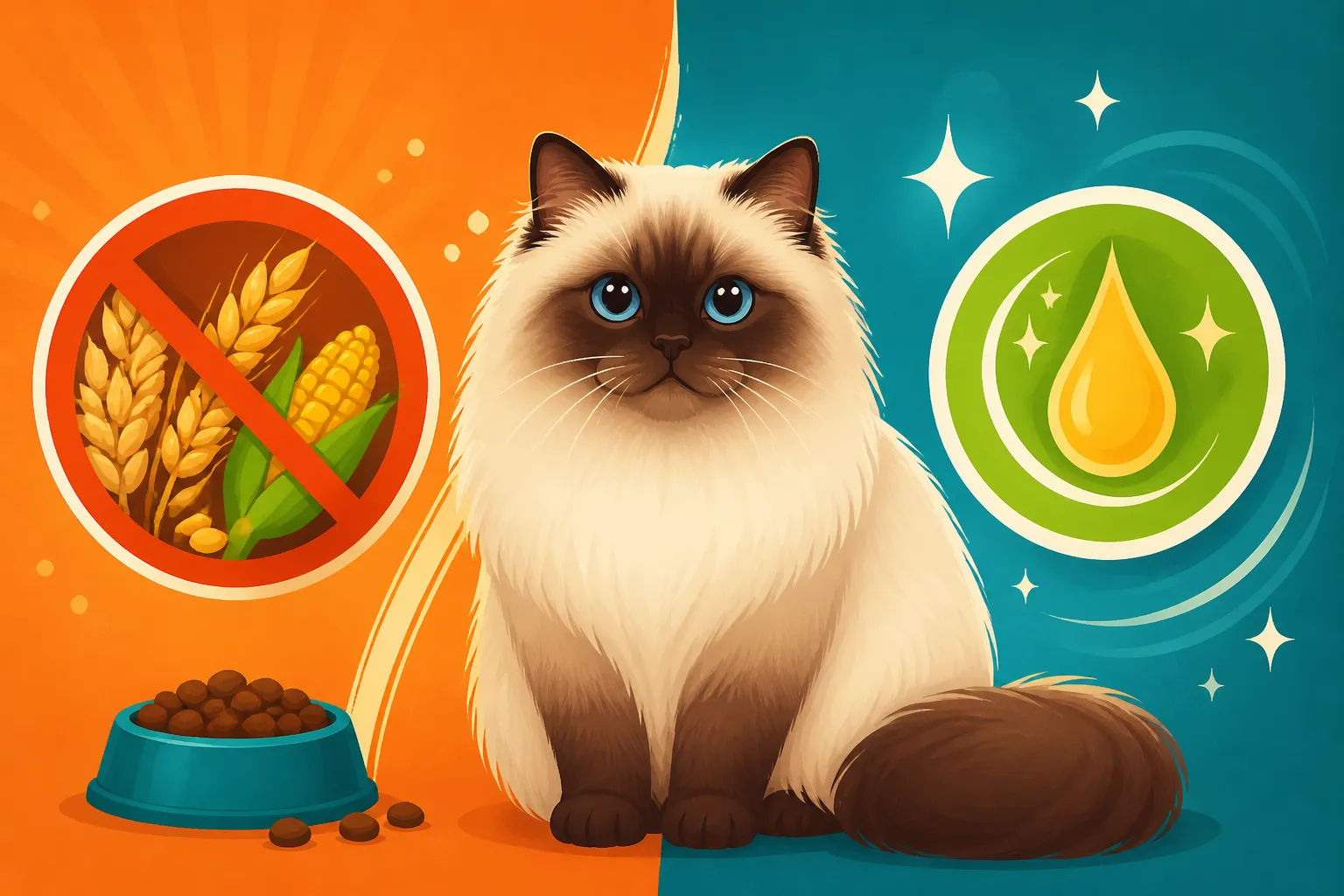
Now, let's get down to brass tacks: does a grain-free diet actually do anything special for your Himalayan's coat? For most Himalayans, the answer is likely no, at least not directly because of the absence of grains. The overwhelming majority of cats do not have a diagnosed allergy to grains. When skin or coat issues arise, a true food allergy is far more likely to be triggered by common protein sources like chicken, beef, or fish, rather than by corn or wheat.
If your Himalayan does have a genuine food allergy or sensitivity, the symptoms could certainly include poor coat quality, excessive scratching, or skin irritation. However, simply switching to a "grain-free" food might not solve the problem if the allergen is a protein source that remains in the new diet, or if the alternative carbohydrate (like peas) also causes a reaction. A proper diagnosis of a food allergy requires an elimination diet trial under veterinary supervision, not just guessing. Without a diagnosed allergy, removing grains from your cat's diet may not offer any specific benefit for their coat. Instead, focus should be on the overall quality and balance of nutrients, like ensuring adequate levels of What Protein Level a Himalayan's Coat Needs.
What does significantly impact a Himalayan's coat health are essential fatty acids, particularly Omega-3 and Omega-6. These fats play a crucial role in maintaining skin hydration, reducing inflammation, and promoting a shiny, resilient coat. Many high-quality cat foods, whether grain-inclusive or grain-free, will include sources of these fatty acids, such as fish oil or flaxseed. So, rather than fixating solely on the presence or absence of grains, it's often more beneficial to look at the overall nutrient profile. Ensuring your Himalayan receives enough Why Omega Oils Keep a Himalayan's Coat From Matting is far more likely to yield visible results in their coat's luster and manageability than simply choosing a grain-free label.
Here's a quick look at key nutrients that do matter for that spectacular coat:
| Nutrient Category | Why It Matters for a Himalayan's Coat | Common Sources in Cat Food |
|---|---|---|
| Protein | Building blocks for hair growth, strength | Meat (chicken, fish, beef, lamb) |
| Omega-3 Fatty Acids | Anti-inflammatory, skin hydration, shine | Fish oil, flaxseed, chia seeds |
| Omega-6 Fatty Acids | Skin barrier function, cell growth | Chicken fat, sunflower oil |
| Zinc | Supports skin health, wound healing | Meat, fish, liver |
| B Vitamins | Energy metabolism, healthy hair follicles | Liver, yeast, whole grains (if included) |
| Vitamin A | Skin cell turnover, epithelial health | Liver, fish, egg yolk |
| Vitamin E | Antioxidant, protects skin cells | Vegetable oils, leafy greens |
Making the Best Food Choices for Your Long-Haired Companion
So, if "grain-free" isn't the magic bullet, how do you make the right food choices to support your Himalayan's magnificent coat and overall health? It comes down to prioritizing high-quality, balanced nutrition tailored to their specific needs.
First and foremost, always look for cat foods that list a high-quality animal protein source as the first ingredient – think chicken, turkey, salmon, or beef. Cats are obligate carnivores, meaning they must get their essential nutrients from animal sources. The presence of grains or alternative carbohydrates is less important than the quality and quantity of the animal protein. Read the ingredient list carefully. Terms like "chicken meal" can be excellent protein sources, as the water has been removed, concentrating the protein. If you're looking at various options, sites like Chewy or Amazon can be great resources to read ingredient lists and reviews from other cat owners, helping you compare different brands side-by-side.
Consider your Himalayan's specific characteristics. Their brachycephalic (flat) face means they often struggle with deep bowls, so finding food that's easy to eat is important. This might mean smaller kibble sizes or pâté-style wet foods. Remember, Feeding a Himalayan That Cannot Reach Into a Deep Bowl is a real concern that impacts how much they actually consume, which in turn affects their nutrition. For those considering fresh, minimally processed options, look for transparent ingredient lists that prioritize whole ingredients.
Ultimately, the best diet for your Himalayan is one that they thrive on, reflected in their energy levels, healthy weight, clear eyes, and of course, that stunning, luxurious coat. If you suspect your cat has a food sensitivity or allergy causing skin or coat issues, don't just guess and switch. Work closely with your veterinarian. They can help you conduct a proper elimination diet, identify potential allergens (which are often not grains), and recommend a therapeutic diet if necessary. They can also help you understand if a specific condition like Whether a Himalayan's Skin Reacts to Its Food is at play. Sometimes, a vet might even suggest specific supplements, like extra omega fatty acids, to directly address coat health, rather than focusing on the presence or absence of grains.
When you're shopping for food, don't be swayed solely by buzzwords. Focus on the nutritional analysis, ingredient quality, and suitability for your cat's life stage and any health considerations. A well-balanced diet, regular grooming, and routine veterinary care are the true secrets to keeping your Himalayan's coat gleaming and them feeling their best.
Disclaimer
This article is for general informational purposes only and does not constitute professional advice. Laws, prices and regulations vary by location and change over time. Consult a qualified professional for guidance on your specific situation.