Working a Comb Through a Himalayan’s Ruff
That magnificent, flowing ruff of a Himalayan cat is truly a sight to behold, isn't it? It’s one of their most distinguishing and beautiful features, but let's be honest, it's also a magnet for tangles and mats that can quickly turn from a minor nuisance into a painful, health-threatening problem for your beloved companion. This guide is here to walk you through the often daunting task of working a comb through that glorious mane, ensuring it stays luscious, mat-free, and comfortable for your Himalayan, all while preserving your sanity!
Understanding the Himalayan's Unique Ruff
Before we even pick up a comb, it's really helpful to understand why that ruff gets into such a tangle in the first place. It’s not just a superficial layer of fur; it's a complex, multi-layered marvel that requires a specific approach.
The Double Coat Dilemma
The Himalayan cat, inheriting its opulent coat primarily from its Persian ancestry, possesses what's known as a double coat. This isn't just one type of hair; it's a carefully orchestrated blend of two distinct layers, each with its own purpose and texture. The outer coat consists of longer, coarser guard hairs that are designed to protect the cat's skin from the elements. These are the hairs that give the ruff its impressive length and sheen, often flowing down over their shoulders like a regal cape.
Beneath these longer guard hairs lies the real troublemaker: a dense, soft, and woolly undercoat. This undercoat is primarily for insulation, keeping your Himalayan warm in cooler temperatures. While wonderful for warmth, its fine, downy texture makes it incredibly prone to shedding, tangling, and matting if not meticulously managed. Imagine trying to comb through a cloud of cotton wool – that’s essentially what you're dealing with in the undercoat when it becomes neglected. This duality is why How Long a Himalayan's Coat Actually Grows delves into the coat's specifics.
Why the Ruff is a Prime Matting Zone
The ruff, which is the long, dense hair around your Himalayan's neck and chest, is particularly susceptible to matting for several reasons. Firstly, its sheer length and volume mean there's more surface area for friction and entanglement. As your cat moves, plays, or even just grooms itself, these hairs rub against each other, creating tiny knots that, if ignored, quickly escalate into solid, felt-like mats.
Secondly, the ruff is in a high-contact area. It brushes against everything: the floor as they stroll, their food and water bowls when they eat and drink, your clothes when they snuggle, and even their own paws during self-grooming. Each interaction can introduce debris, moisture, and more friction. Think about how often your cat dips their chin into their water bowl or rubs their neck against a favorite scratching post – all these daily actions contribute to the ruff becoming a tangled mess. It’s a constant battle, and it's why Why a Himalayan's Coat Hides a Wound for Days underscores the importance of thorough inspection.
Essential Tools for Ruff Maintenance
You wouldn't try to build a house with just a hammer, and you certainly can't maintain a Himalayan's ruff with just any old brush. Having the right tools is absolutely paramount. Investing in quality equipment now will save you countless headaches and potential vet visits later.
The Mighty Steel Comb
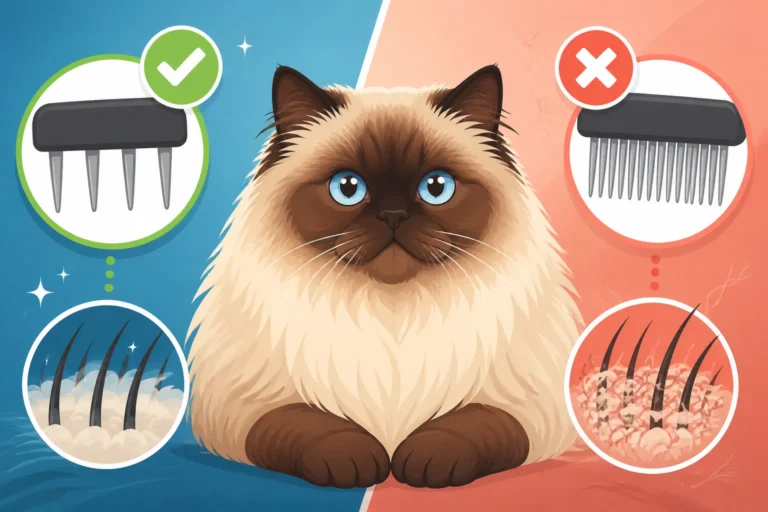
This is your absolute best friend when it comes to a Himalayan's ruff. Forget those flimsy plastic combs or soft slicker brushes for serious mat prevention in this area. You need a sturdy, well-made stainless steel comb with two distinct sections of teeth: one side with wide-set teeth and the other with fine-set teeth.
The wide-toothed section is your initial pass. It helps to gently separate the longer guard hairs and tackle any larger, looser tangles without pulling too much. It's like clearing the main path before you start weeding. Once you've worked through with the wide teeth, you then switch to the fine-toothed side. This is where you get down to business, effectively sifting through the dense undercoat and catching the smaller knots and loose shedding hair that the wider teeth missed. The key here is getting right down to the skin to ensure you're removing all the dead undercoat before it has a chance to bind with healthy hair and form mats. Choosing Which Steel Comb a Himalayan's Coat Needs is crucial for effective grooming. Many owners find excellent options on Amazon or at specialty pet stores.
| Comb Type | Purpose | Ideal For | Notes |
|---|---|---|---|
| Stainless Steel Comb (Two-sided) | Detangling and undercoat removal | Himalayan ruff, body, britches | Essential for reaching the skin, varied tooth spacing for different stages. |
| Pin Brush | Gentle surface brushing, fluffing | Outer guard hairs, finishing touches | Good for daily light maintenance, but won't get deep into the undercoat. |
| Slicker Brush | Removing loose hair from surface | Less effective for dense double coats | Can pull on tangles and irritate skin, often misses the undercoat. |
| Mat Splitter | Safely cutting through difficult mats | Emergency mat removal (use with caution) | Only for severe, unreachable mats; consult a groomer if unsure. |
Beyond the Comb: Detangling Sprays and Other Helpful Aids
While the steel comb is your star player, a few supporting cast members can make the process much smoother. A good quality detangling spray, formulated specifically for cats, can work wonders. A light misting over a particularly stubborn tangle can lubricate the fur, making it easier for the comb to glide through. Just be sure to choose one that is cat-safe and ideally scent-free, as cats are sensitive to strong odors. Brands like Furminator or Burt's Bees often have cat-friendly detangling sprays that can be purchased from retailers like Chewy.
Additionally, a good pair of blunt-tipped scissors might be necessary for very small, tight mats that simply won't budge with a comb. However, let me stress this: use extreme caution. Cutting mats too close to the skin can easily nick your cat, leading to pain and infection. If you're ever unsure, or the mat is large and tight, it’s always best to call a professional groomer or your vet. They have the experience and specialized tools to remove mats safely. For more general coat maintenance, remember that Why a Slicker Brush Misses a Himalayan's Undercoat explains why some common tools aren't enough for a Himalayan.
The Step-by-Step Ruff Combing Technique
Combing your Himalayan's ruff isn't something you can rush. It requires patience, a gentle touch, and a consistent routine. Think of it as a bonding experience, not a chore.
Setting the Scene
First things first: choose the right time and place. Pick a quiet moment when your Himalayan is relaxed, perhaps after a nap or a meal. Avoid trying to comb them when they're playful, agitated, or just generally not in the mood. A raised, stable surface, like a grooming table or even a sturdy kitchen counter (with a non-slip mat, of course), can be incredibly helpful. This elevates your cat to a comfortable working height for you, reducing strain on your back, and often makes the cat feel more secure and less likely to bolt.
Have all your tools ready and within easy reach: your steel comb, detangling spray, a few cat treats (because bribery is absolutely a valid strategy!), and maybe even a small towel to collect shed fur. The goal is to make this a positive experience, so a calm demeanor from you is key. Remember that Teaching a Himalayan to Lie Still for Its Daily Comb is a skill you'll cultivate over time, and it starts with a peaceful environment.
Section by Section: How to Systematically Comb the Ruff
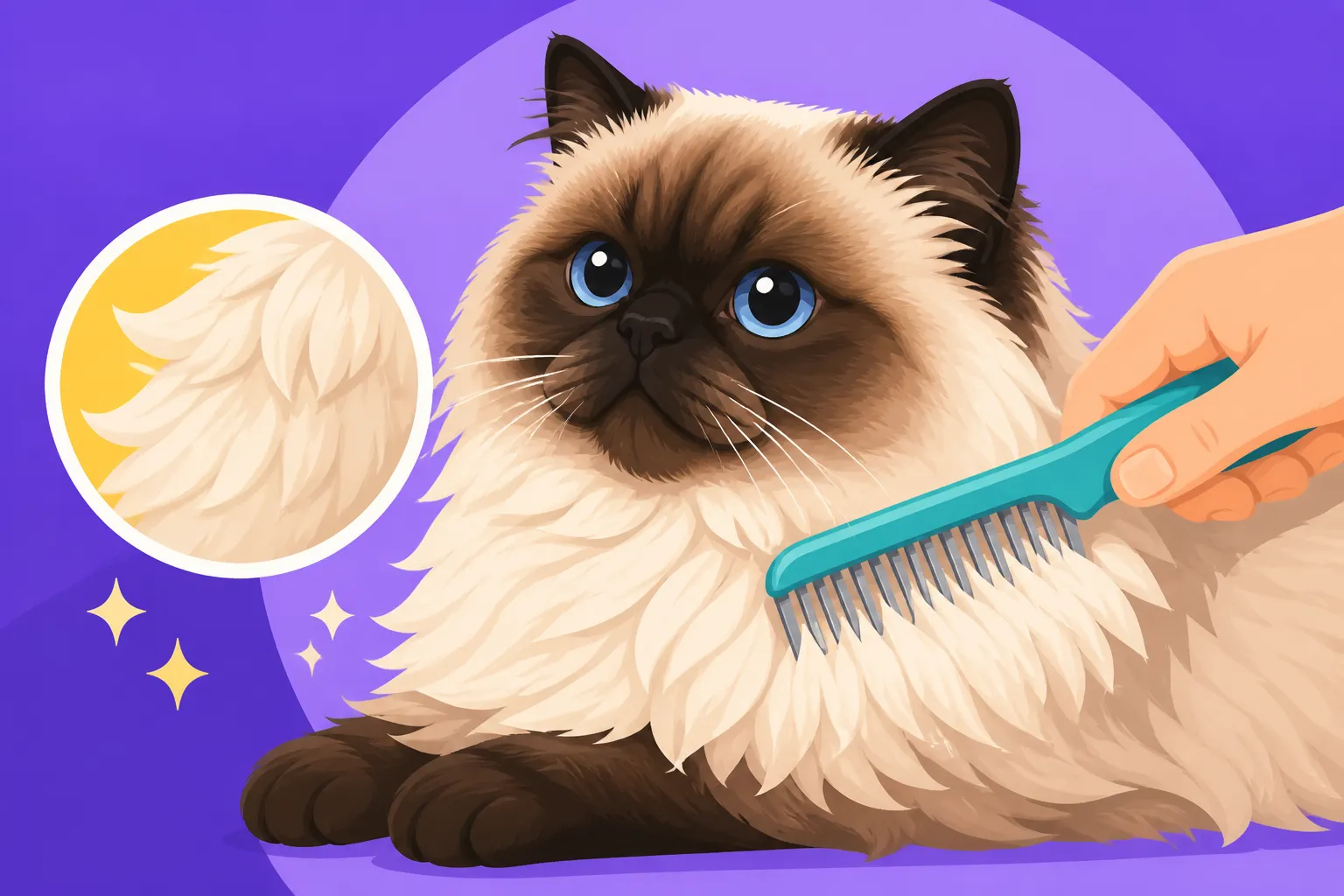
Now for the actual combing! The trick here is to work in small, manageable sections, starting from the outside and slowly working your way inward.
- Start with the outer layer: Begin by gently separating the long guard hairs of the ruff with your fingers. Use the wide-toothed side of your steel comb. Start at the tips of the hair and work your way down, moving just an inch or two at a time. Hold the hair closer to the skin with one hand while you comb with the other; this technique, called "line combing," minimizes pulling on the skin if you hit a snag.
- Work in small sections: Imagine the ruff in horizontal or vertical sections. Tackle one small section at a time, ensuring you've completely combed through it before moving on. This might mean starting near the ears and working down to the chest, or vice-versa. Don't try to comb the entire ruff in one swoop; that's a recipe for frustration for both of you. This meticulous approach is vital because The Daily Comb a Himalayan Cannot Skip means thoroughness, not just speed.
- Get to the skin: The most critical part of combing the ruff is making sure you reach all the way down to the skin. If you only skim the surface, the undercoat will continue to mat underneath, creating a solid "pelt" that is incredibly difficult, and painful, to remove. You'll know you're successful when the fine-toothed side of your comb can glide smoothly from root to tip in each section without meeting resistance.
Gentle Detangling: Addressing Knots Without Pain
When you encounter a knot or a mat, resist the urge to pull or yank. That will only cause pain and make your cat associate grooming with discomfort, leading to a much harder time next session.
- Isolate the mat: Gently hold the hair at the base of the mat, against the skin, to prevent any pulling on the skin as you work.
- Apply detangling spray: Lightly mist the mat with your cat-safe detangling spray. Let it sit for a moment to penetrate and soften the tangle.
- Work from the outside in: Use the very tip of your wide-toothed comb or even your fingers to gently tease apart the outer edges of the mat. Work slowly, picking at the tangle strand by single strand if necessary. Don't try to comb through the mat; try to comb out the mat from its edges.
- Small sections, small movements: Once you've loosened the outer edges, you can use the fine-toothed comb, again working just a few strands at a time. Many professional groomers use a technique where they gently insert the comb into the mat and "saw" it lightly back and forth, moving perpendicular to the hair growth, to break up the mat. Be incredibly careful not to cut or scrape the skin.
- Patience and breaks: If your cat gets antsy, give them a break. Offer a treat, a cuddle, or simply let them walk away for a few minutes. Come back to it when they're calm again. It's much better to have several short, positive grooming sessions than one long, stressful one. This goes hand-in-hand with Working a Mat Out From Under a Himalayan's Points.
Troubleshooting and Prevention
Even with the best intentions, mats can happen. But by understanding common pitfalls and maintaining a consistent routine, you can keep your Himalayan's ruff looking its best.
When Mats Become Serious
Sometimes, despite your best efforts, a mat can become so tight and close to the skin that it forms a hard, impenetrable clump. These aren't just cosmetic issues; severe matting can be incredibly painful and dangerous for your cat. Mats pull on the skin, causing irritation, bruising, and even open sores where bacteria can thrive. They can restrict blood flow and movement, leading to behavioral changes or even more serious skin infections hidden beneath the felted fur.
If you encounter a mat that feels like a solid block, is causing your cat discomfort when you touch it, or is simply too large for you to safely detangle, it's time to call in the professionals. Your veterinarian or a certified professional groomer has specialized tools, like clippers designed to safely shave mats off without cutting the skin. They can also assess if there's any underlying skin irritation or infection. Never try to cut a mat close to the skin with scissors if you can't see the skin clearly; the risks are simply too high. This is where Why a Matted Himalayan Becomes a Medical Case truly resonates.
The Daily Discipline
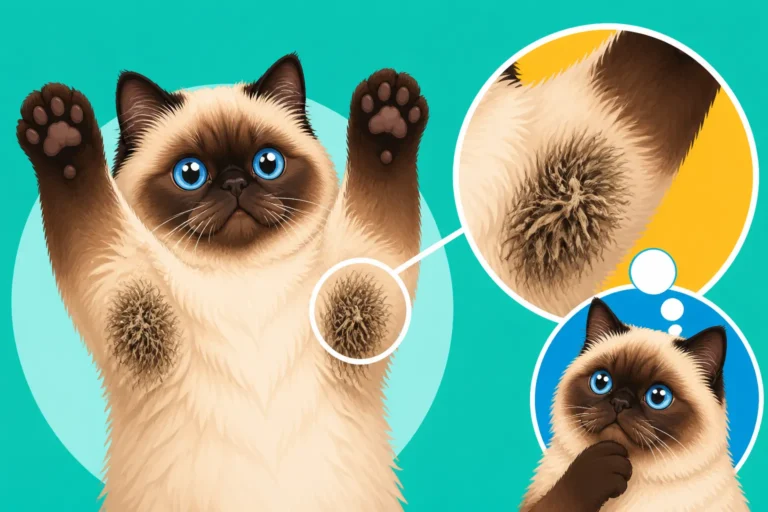
The absolute best way to keep your Himalayan's ruff magnificent is through consistent daily grooming. Yes, daily. A quick, five-minute comb-through of the ruff and other high-friction areas (like behind the ears, armpits, and britches) can prevent a multitude of problems. This routine allows you to catch tiny tangles before they escalate into full-blown mats, and it removes loose undercoat that would otherwise contribute to matting. How Many Minutes a Day a Persian Coat Takes on a Himalayan isn't a suggestion, it's a necessity.
Make it a part of your daily routine, perhaps every evening while you're relaxing on the sofa. Consistency is key not just for the coat, but for your cat's acceptance of the process. If grooming is a regular, gentle event, they're far more likely to tolerate and even enjoy it. Consider it quality time! Many owners find that a regular grooming routine for a Himalayan is much like the attention they might give a long-haired dog, and they often stock up on supplies from places like Chewy or use an Amazon subscription for detangling sprays and combs to ensure they never run out.
Diet and Hydration: How Nutrition Impacts Coat Health
While combing is the hands-on solution, a healthy coat truly starts from within. Your Himalayan's diet plays a significant role in the condition of their fur. A high-quality diet rich in essential fatty acids, particularly Omega-3 and Omega-6, can promote a healthy, shiny coat that is less prone to dryness and breakage, and therefore less likely to mat. Look for cat foods that list these beneficial oils as ingredients. Some owners even choose to supplement their cat's diet with a small amount of fish oil, but always discuss any supplements with your vet first to ensure proper dosage and suitability for your cat.
Adequate hydration is also crucial. A well-hydrated cat generally has healthier skin and a more supple coat. Ensure your Himalayan always has access to fresh, clean water. Some cats prefer running water, so a cat fountain might be a worthwhile investment if your cat isn't a big drinker. A healthy body creates a healthy coat, making your grooming efforts much more effective and enjoyable for both of you.
Disclaimer
This article is for general informational purposes only and does not constitute professional advice. Laws, prices and regulations vary by location and change over time. Consult a qualified professional for guidance on your specific situation.