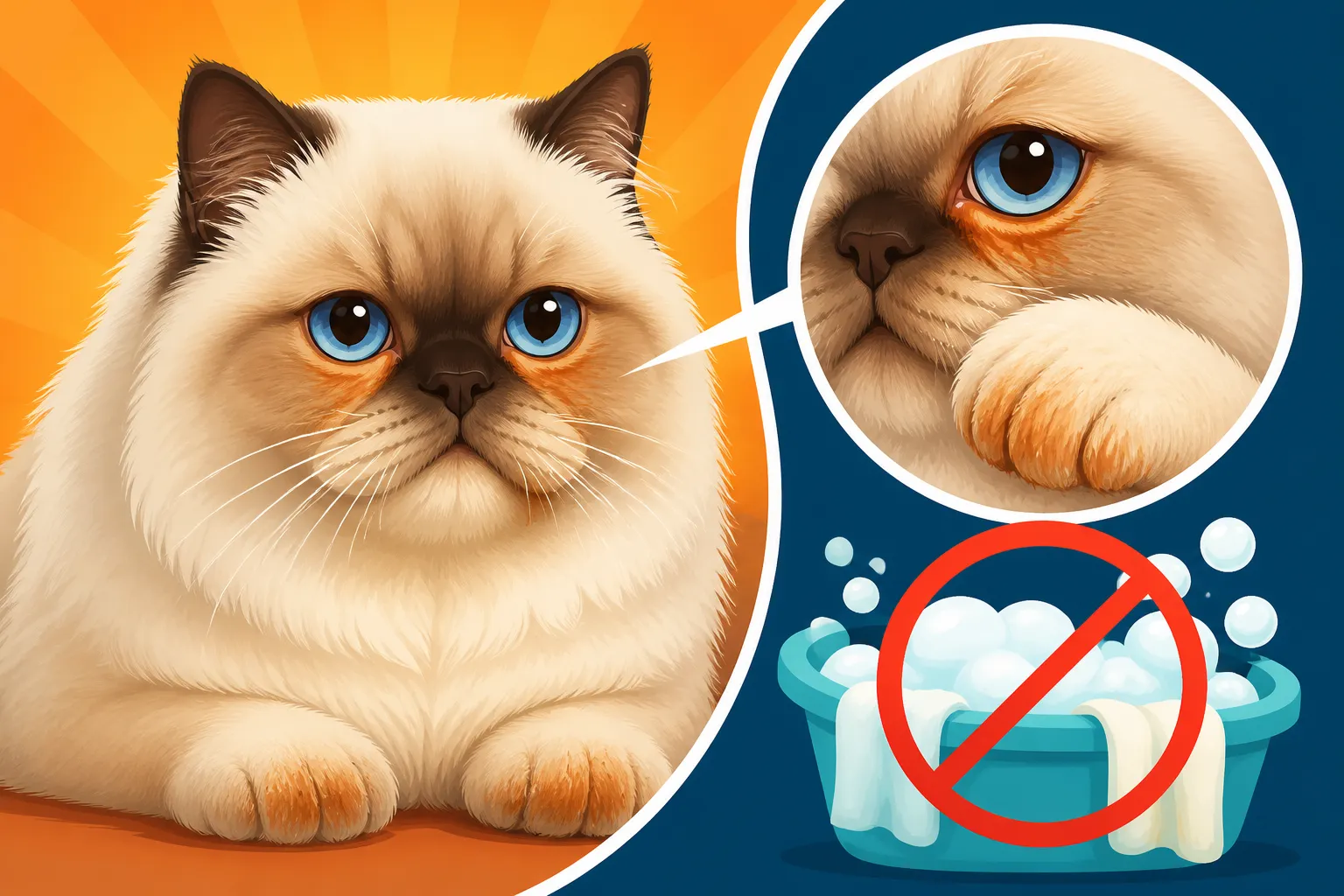
Why a Himalayan’s Rust Colored Stains Do Not Wash Out
You painstakingly wipe your beautiful Himalayan's face every day, only to see those stubborn reddish-brown streaks clinging stubbornly to their pristine white ruff. It's a battle many Himalayan parents know all too well, and it often feels like nothing truly makes them disappear. This guide will dive deep into why those particular stains seem to embed themselves so deeply and what you can realistically do to manage them, rather than just endlessly scrubbing.
The Science Behind the Stain: Porphyrins and Persistent Moisture
The frustration is real. You clean, you wipe, you try different products, and still, those rust-colored stains remain, almost as if they're dyed into the fur. The key to understanding this stubbornness lies in a combination of what's in the tears and the environment those tears create. It's not just dirt; it's a chemical reaction and a perfect breeding ground for secondary issues.
The Role of Porphyrins in Tear Stains
The primary culprit behind that distinctive reddish-brown hue in Himalayan tear stains is a compound called porphyrin. Porphyrins are iron-containing waste products, naturally produced when your cat's body breaks down red blood cells. Think of it like a very mild, internal rust. These porphyrins are typically excreted through normal waste elimination, but a portion of them can also be excreted through tears, saliva, and urine.
When these porphyrin-rich tears spill onto your Himalayan's fur, they are initially colorless or nearly so. However, once exposed to sunlight and air, the iron in the porphyrins oxidizes. This oxidation process is precisely what causes the characteristic reddish-brown, or "rust" color, to develop. It's a chemical reaction happening right on the fur, much like how an apple turns brown after being cut and left out. Once this color change occurs, it's not simply a surface dirt that can be rinsed away with water. The pigment has chemically bonded with the hair shaft, making it incredibly resistant to ordinary washing, and that's why your diligent wiping never quite eradicates the tint completely.
Why Constant Dampness Makes It Worse
While porphyrins are the initial cause of the color, constant dampness around your Himalayan's eyes and nose folds significantly exacerbates the problem and makes the stains even more persistent. The perpetually moist environment created by tear overflow becomes a perfect breeding ground for yeast and bacteria. One common type of yeast, Malassezia, thrives in such damp conditions and can contribute an even deeper reddish-brown or sometimes a dark, almost black, discoloration to the fur. This is often accompanied by a distinct, sometimes slightly sweet or "yeasty" odor, which is another tell-tale sign that moisture is playing a critical role.
This microbial growth further stains the fur, adding another layer of discoloration that doesn't simply wash out. It can also lead to skin irritation, inflammation, and even secondary skin infections in the delicate areas around the eyes and nose. The combination of oxidized porphyrins and microbial staining creates a double whammy for your Himalayan's pristine coat, cementing those unsightly streaks. If the area is constantly wet, the fur remains saturated with these staining agents, allowing them to penetrate deeper into the hair shaft and become even more entrenched, making your cleaning efforts feel like a Sisyphean task. This is why addressing the dampness is just as crucial as understanding the porphyrins.
Himalayan-Specific Factors Making Stains Stubborn
Our beautiful Himalayans, with their distinctive features, are unfortunately predisposed to these persistent rust-colored tear stains. It's not a flaw in their character, but rather a direct consequence of the unique breed traits we adore. Understanding these inherent challenges is the first step toward effective management.
The Flat Face and Shallow Eye Sockets
The most significant anatomical factor contributing to tear staining in Himalayans is their characteristic flat face, also known as brachycephalic facial structure. Unlike cats with longer muzzles, a Himalayan's shortened nose and broad skull often mean their tear ducts are not as efficiently designed or positioned to drain tears properly. Many Himalayans have very shallow eye sockets, which means their eyeballs protrude slightly. This slight protrusion prevents the eyelids from making full, flush contact with the surface of the eye, creating tiny gaps through which tears can easily spill over rather than draining into the nasolacrimal ducts (tear ducts).
Compounding this, the tear ducts themselves can be kinked, narrowed, or even blocked due to the compacted facial bone structure. Imagine a garden hose with a slight crimp; water just doesn't flow through as easily, and eventually, it overflows at the source. This constant overflow means tears are perpetually streaming onto the fur around their eyes, rather than being discreetly channeled away. It's a persistent trickle, creating that constant damp environment that we discussed earlier, priming the fur for porphyrin oxidation and microbial growth. This anatomical predisposition is why even the cleanest Himalayan will often have some degree of dampness around their eyes. If you're wondering about the exact measurements of your cat's facial profile, you might find What a Doll Face Himalayan's Profile Measures or What a Peke Face Himalayan's Profile Measures insightful.
The Luxurious, Light-Colored Coat
Adding to the anatomical predisposition, the Himalayan's luxurious, dense, and often very light-colored coat acts as a perfect canvas for these stubborn stains. A Siamese, with its short, dark fur, might produce the same amount of porphyrin-rich tears, but you'd hardly notice it. On a Himalayan, especially those with cream, white, or very pale body coats, even a tiny reddish streak stands out dramatically.
Furthermore, the texture of a Himalayan's long, fine fur is incredibly adept at trapping moisture and debris. The individual hair shafts can absorb and hold onto the tears and the dissolved porphyrins, allowing them more time to oxidize and embed themselves deeply within the strands. This thick double coat, so beautiful to behold, also makes it harder for air to circulate and dry the damp areas naturally. The fine hairs around the eyes act almost like a wick, drawing the tears away from the eye itself and onto the surrounding fur, creating a larger area for the stain to develop. This is precisely Why Tear Stains Are Worse on a Cream Bodied Himalayan, and why a daily commitment to cleaning is non-negotiable for keeping their coat pristine.
Underlying Health Considerations to Rule Out
While porphyrins and facial structure are common factors, sometimes stubborn rust-colored stains are a symptom of an underlying health issue that needs veterinary attention. Ignoring these could lead to discomfort or more serious problems for your cat. It's crucial not to simply treat the symptom (the stain) if there's an active medical cause at play.
One common issue is allergies, which can cause excessive tearing. Just like humans, cats can suffer from environmental allergies (pollen, dust mites) or food allergies. If your Himalayan is itchy, has runny eyes, or shows other allergy symptoms, this increased tear production will naturally lead to more staining. Similarly, bacterial or yeast infections around the eyes can cause increased discharge and inflammation, contributing heavily to the discoloration. Sometimes, these infections are secondary to the constant dampness, creating a vicious cycle.
Other anatomical problems, beyond the typical brachycephalic structure, can also cause excessive tearing. Entropion, where the eyelid rolls inward, causing eyelashes to rub against the cornea, is a painful condition that stimulates constant tearing. Similarly, a blocked or malformed nasolacrimal duct (tear duct) can prevent tears from draining properly, leading to overflow. In such cases, a vet may perform a dye test to check the patency of the tear ducts. It’s also worth noting that corneal ulcers, foreign bodies in the eye, or even certain dental issues can manifest as excessive tearing. Therefore, if you're battling persistent, severe staining, especially if accompanied by redness, swelling, squinting, or a change in eye discharge consistency, a trip to the vet is absolutely essential to rule out these medical causes. Your vet can provide an accurate diagnosis and appropriate treatment.
Realistic Strategies for Managing Rust-Colored Stains
Since those rust-colored stains aren't just going to magically disappear, especially given your Himalayan's unique facial structure and luxurious coat, a consistent and realistic management routine is your best friend. It’s about commitment and understanding that while you might not achieve a completely stain-free face all the time, you can certainly minimize their appearance and keep your cat comfortable.
Daily Cleaning: More Than Just Wiping
Simply wiping isn't enough; you need a consistent, thorough daily routine to tackle those porphyrins and the dampness they thrive in. The goal is to remove the tears before the porphyrins have a chance to fully oxidize and to prevent microbial growth.
Start by gently cleaning the area around your Himalayan's eyes at least once, ideally twice, a day. Use soft, lint-free cotton pads or specialized cat eye wipes. Plain warm water is often sufficient for basic cleansing, but there are also gentle, pet-safe tear stain removers available that contain mild cleansing agents. Always wipe away from the eye, being careful not to get any solution into the eye itself. After cleaning, and this is crucial, gently dry the area thoroughly. A clean, soft cloth or a fresh cotton pad works wonders. Remember, moisture is the enemy, so leaving the area damp after cleaning defeats a major part of your effort. You might find a good selection of specialized wipes and gentle cleaning solutions on platforms like Chewy or Amazon, making it easy to keep stocked up. Consistency is key here; a missed day can quickly lead to a buildup that's much harder to address.
| Stain Cause | Primary Color | Texture/Appearance | Key Management Approach |
|---|---|---|---|
| Porphyrin | Reddish-brown | Dry, embedded in fur | Daily cleaning, sun protection (indoors) |
| Yeast (Malassezia) | Dark reddish-brown, black | Greasy, thick, sometimes odor | Antifungal wipes/solutions (vet-prescribed), drying |
| Bacterial | Yellow, green, brown | Pus-like, crusty, odor | Antibiotic drops/wipes (vet-prescribed) |
| Allergies | Varies (often clear initially, then porphyrin) | Excess tearing, watery eyes, possibly itchy | Identify/remove allergen, antihistamines (vet-prescribed) |
| Blocked Tear Ducts | Clear initially, then porphyrin | Constant overflow, wetness | Veterinary assessment, possible flushing or surgery |
Environmental and Dietary Influences
Beyond direct facial cleaning, there are environmental and dietary factors that can play a role in managing your Himalayan's tear stains. While these won't eliminate the problem entirely, they can certainly help reduce the severity.
First, water quality can impact tear staining. Tap water in some areas contains high levels of minerals, particularly iron, which can contribute to the staining. Switching to filtered or distilled water for your cat's drinking bowl might make a subtle difference for some Himalayans. You can find simple water filters on Amazon to purify their drinking supply. Second, diet can sometimes influence the amount or composition of tears. Some owners find that certain ingredients, particularly those with artificial colors, fillers, or common allergens like chicken or grain, can exacerbate tear staining in their sensitive cats. While there's no universally proven “anti-tear stain” diet, experimenting with high-quality, limited-ingredient cat foods can be beneficial. Consider discussing novel protein diets or even fresh food options with your veterinarian. The theory is that reducing inflammatory responses or providing a cleaner nutritional profile might reduce tear production or alter porphyrin excretion. It's not a magic bullet, but it's another tool in your management toolkit.
Lastly, consider the environment. Dust, airborne allergens, and even strong household chemicals can irritate your cat's eyes, leading to increased tearing. Regular vacuuming, using an air purifier, and avoiding scented candles or sprays near your cat can help minimize irritants. Keep your Himalayan indoors, as outdoor environments expose them to many more allergens and irritants. You can learn more about why your Himalayan should exclusively be an indoor cat in Why a Himalayan Must Never Be an Outdoor Cat.
When to Seek Veterinary Advice
While daily cleaning and environmental adjustments are crucial for managing common tear stains, there are times when those rust-colored streaks warrant a professional opinion from your veterinarian. As mentioned earlier, persistent or worsening stains can be a red flag for underlying health issues that need medical intervention.
If you notice any significant changes in your Himalayan's eye discharge—such as it becoming thick, yellow, green, or cloudy—or if there's any visible redness, swelling, squinting, pain, or rubbing of the eyes, don't hesitate. These symptoms could indicate an infection, an injury, or a more serious ocular condition like conjunctivitis, corneal ulcers, or even glaucoma. Furthermore, if you suspect entropion (inward-rolling eyelids) or a chronically blocked tear duct, your vet can perform specific diagnostic tests. They might use a fluorescein stain to check for corneal abrasions or flush the tear ducts to assess patency. A veterinarian can also provide prescription-strength anti-fungal or antibiotic eye drops or ointments if a yeast or bacterial infection is confirmed, or suggest surgical options if structural issues like severe entropion or intractable tear duct blockages are the root cause. While the appearance of the stains is bothersome, your primary concern should always be your Himalayan's comfort and health. Early veterinary intervention can prevent a minor issue from becoming a major problem, ensuring your beloved cat lives a comfortable, happy life.
Disclaimer
This article is for general informational purposes only and does not constitute professional advice. Laws, prices and regulations vary by location and change over time. Consult a qualified professional for guidance on your specific situation.