Finding a Himalayan’s Waist Under a Persian Ruff
One of the trickiest things about owning a magnificent Himalayan cat is trying to figure out what's really going on under all that glorious fluff. Their dense, flowing Persian coat, combined with their naturally cobby, rounded body shape, can make it incredibly difficult to tell if your beloved furball is at a healthy weight or slowly creeping into overweight territory. This guide will walk you through the practical, hands-on steps to assess your Himalayan's true body condition, giving you the tools to keep them healthy and comfortable for years to come.
The Deceptive Fluff: Why a Himalayan's Coat Hides Its True Shape
Let's be honest, those stunning, long coats are one of the biggest draws of a Himalayan. Their luxurious fur creates an almost spherical, plush appearance that's utterly endearing. However, this very beauty presents a significant challenge when it comes to assessing their physique. Unlike a short-haired cat where you can easily see the subtle curve of their ribs or the tuck of their waist, a Himalayan's coat acts like a wonderful, fluffy disguise, expertly masking any changes in body shape beneath.
The Illusion of Uniformity
Because of their dense double coat – a soft, thick undercoat and a longer, coarser guard hair outer layer – a Himalayan often looks like a solid, fluffy cylinder. There's no obvious indentation or contour that screams "waistline" as there might be on a leaner breed. This isn't a fault of the cat; it's simply the nature of their heritage, a beautiful side effect of their Persian ancestry. You might look at your perfectly round cat and think, "Well, that's just how Himalayans are built," and while they are cobby and substantial, there's still a healthy ideal within that shape.
Think of it like trying to feel the frame of a large, overstuffed armchair. The plush cushions and thick upholstery hide the solid structure underneath. Your Himalayan's coat works similarly, making it hard to visually distinguish between a healthy layer of fat and an unhealthy excess. This is why a visual check alone is almost never enough for these cats. You really need to get your hands on them, even if it means diving past that impressive ruff and those magnificent britches.
The Impact of the Persian Coat on Weight Perception
The sheer volume of a Himalayan's fur can also lead to misjudging their actual size. A cat might appear robust and well-fed, when in reality, a significant portion of that "bulk" is just fluff. Conversely, an overweight Himalayan can carry a substantial amount of extra fat without looking obviously "fat" because the coat distributes the added volume evenly, creating an even larger, albeit still rounded, silhouette. It's only when you physically interact with them, through grooming or petting, that you might start to notice a difference in the underlying density or the way their body feels.
This challenge is further compounded by their relatively short, cobby legs. A healthy Himalayan carries its weight close to the ground, giving it a solid, grounded appearance. An overweight one will simply look more solid and grounded, making the subtle cues of weight gain even harder to discern without a tactile examination. This is also why Why a Himalayan's Coat Hides a Wound for Days is so important to remember – their dense fur can hide many things. It really emphasizes the need for regular, thorough hands-on checks.
The Hands-On Approach: How to Actually Feel for Your Himalayan's Waist
Since visual cues are so misleading with a Himalayan, the most effective way to assess their body condition is by touch. You need to become familiar with what a healthy Himalayan feels like underneath all that fur. This isn't just about looking at them; it's about feeling their skeletal structure.
Mastering the Rib and Spine Test
The first step is to gently run your hands along your Himalayan's sides, just behind their front legs. You should be able to feel their ribs without pressing too hard, much like feeling the knuckles on your hand when your palm is flat. If you have to press firmly to feel the ribs, your cat might be carrying too much weight. If the ribs are visible or feel very prominent with no discernible padding, they might be underweight. The ideal is a light layer of muscle and fat over the ribs.
Next, move your hands along their spine, from the base of the neck down to the tail. You should be able to feel the individual bumps of the vertebrae without them feeling sharp or overly prominent. Again, a slight padding is healthy. If you can't feel the spine at all, or it feels like a soft, uniform ridge, it’s a strong indicator of excess weight. A great related read on this is How to Find a Himalayan's Ribs Through a Persian Coat, which offers more detailed guidance on navigating the coat.
Locating the Elusive Waist and Tummy Tuck
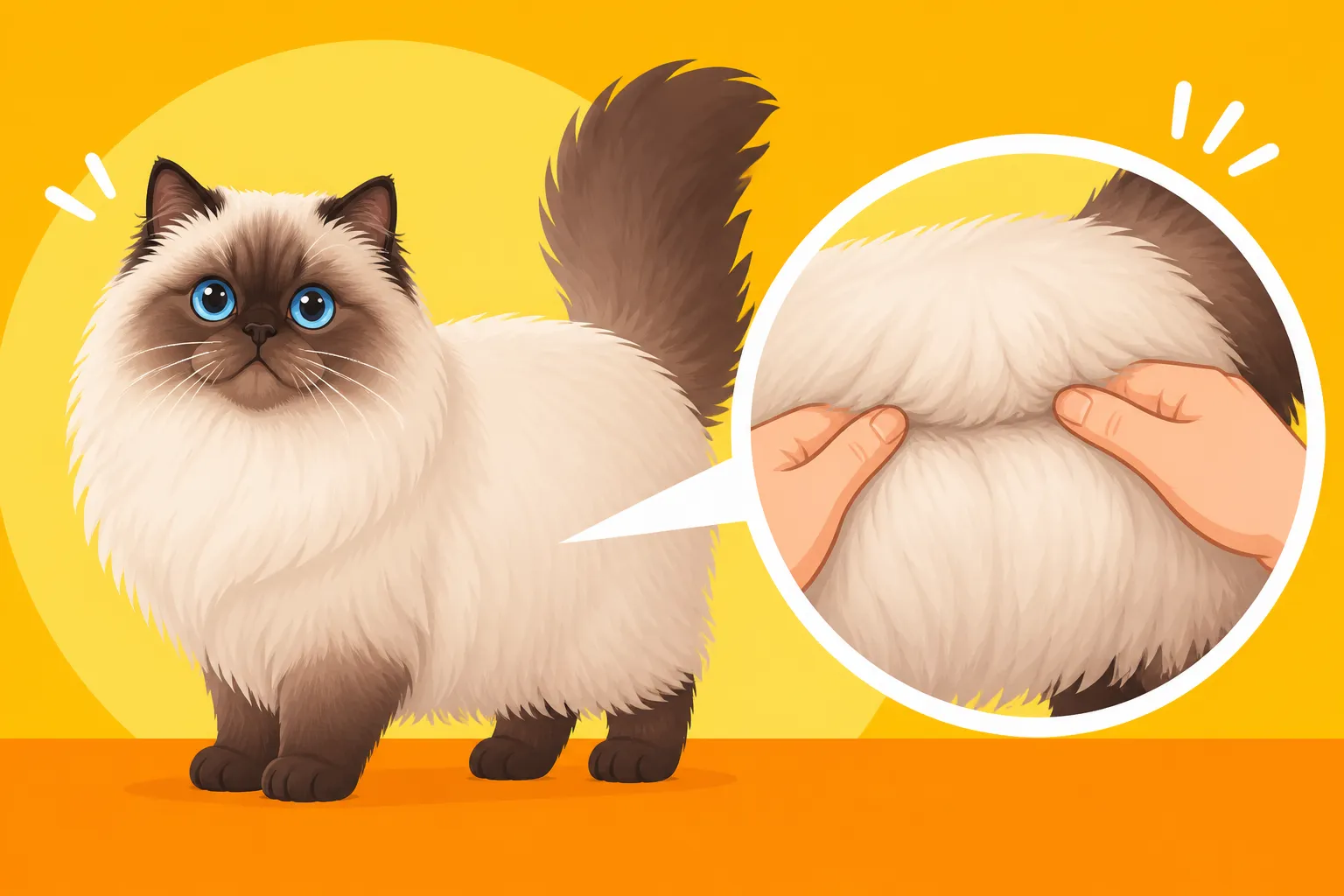
Now for the waist! After checking the ribs and spine, gently place both hands on your Himalayan's sides, just behind their rib cage, where their "waist" would typically be. If your cat is at a healthy weight, you should feel a subtle indentation, a slight narrowing of the body before it flares out again towards the hips. This is your Himalayan's waist, and yes, it exists, even under all that fur! If your hands simply slide straight down their sides without any inward curve, or if the body feels uniformly cylindrical all the way back, then they are likely overweight.
Simultaneously, while feeling for the waist, gently cup your hands under their abdomen. A healthy Himalayan should have a slight "tuck" in their belly when viewed from the side (if you could part the fur to see it). When feeling, their abdomen should feel soft but not distended or pendulous. If their belly hangs low, or feels very soft and squishy, particularly as they walk or stand, this can be another sign of excess abdominal fat. This is especially important for a cobby breed like the Himalayan, where a heavy frame can mask a growing gut.
Here's a quick guide to body condition scoring by touch for your Himalayan:
| Body Condition | Ribs | Waist (Behind Ribs) | Abdomen (Tummy Tuck) | Overall Feel (Under Fur) |
|---|---|---|---|---|
| Too Thin | Easily visible and felt, no fat padding | Severe hourglass shape, obvious tuck | Very tucked up, hollow | Bony, little muscle |
| Ideal | Easily felt with light fat cover | Distinct narrowing, slight tuck | Slight tuck, firm but pliable | Firm, well-muscled |
| Overweight | Hard to feel, moderate fat cover | Little to no narrowing, straight sides | Minimal or no tuck, hangs slightly | Rounded, soft padding |
| Obese | Cannot be felt, heavy fat cover | No narrowing, uniformly rounded | Drooping, prominent fat pad | Very soft, rolls of fat |
Remember, consistency is key. Do this check regularly, perhaps during your daily grooming session, to get a baseline and notice any changes. Amazon or Chewy sell handy pet scales if you want to track their actual weight in pounds or kilograms, which can be an excellent adjunct to physical assessment.
Beyond the Ruff: What an Invisible Waist Means for Your Himalayan's Health
If you find that your Himalayan's waist is an elusive myth rather than a tangible reality, it's a strong signal that they might be carrying more weight than is healthy. This isn't just about aesthetics; excess weight can have a significant and detrimental impact on a Himalayan's overall health and quality of life.
Strain on Joints and Mobility
The Himalayan, with its distinctive cobby body and short, sturdy legs inherited from its Persian side, isn't built for extreme athleticism. While they love a good, short burst of play, they are generally less active than, say, a Siamese. Carrying extra weight places undue stress on their joints, especially in their hips and knees. Over time, this can lead to or exacerbate conditions like arthritis, making movement painful and difficult. You might notice them being even less inclined to jump, or struggling to navigate stairs. This can also worsen issues like Why a Himalayan's Short Persian Legs Skip a Step.
An overweight Himalayan might also become even more sedentary, creating a vicious cycle where reduced activity leads to more weight gain, which further reduces activity. This can severely limit their enjoyment of life, turning playful interaction into a chore and making even simple movements a struggle. It can impact their ability to use a litter box comfortably or reach their favorite sleeping spots.
Grooming Challenges and Skin Issues
One of the most immediate and visible consequences of an overweight Himalayan is their inability to properly groom themselves. That dense, long coat requires diligent daily maintenance, and a cat that can't reach its own back, britches, or tail will quickly develop mats and tangles. These mats aren't just unsightly; they can pull at the skin, cause pain, and even lead to skin infections if moisture and debris get trapped underneath. Why a Heavy Himalayan Stops Grooming Its Points delves deeper into this common problem.
When a Himalayan can't groom its lower back or hindquarters, you'll often see fecal matter or urine staining in their britches, which is not only unhygienic but can also lead to painful skin irritation and infection. This often necessitates professional grooming, sometimes even under sedation, which is an added stress and expense that can be largely avoided with proper weight management and daily combing.
Increased Risk of Serious Health Conditions
The health risks associated with obesity in cats are well-documented, and Himalayans are no exception. Carrying extra weight significantly increases their susceptibility to a range of serious conditions, including:
- Diabetes Mellitus: Overweight cats are at a much higher risk of developing insulin resistance, leading to diabetes, which requires lifelong management with diet and insulin injections.
- Cardiovascular Disease: Excess fat can strain the heart and circulatory system, potentially worsening existing heart conditions or contributing to their development.
- Urinary Tract Issues: Reduced mobility and changes in grooming can sometimes lead to issues like urinary tract infections or even crystal formation.
- Respiratory Problems: Given that many Himalayans already have a somewhat flattened face (brachycephalic), excess weight can exacerbate breathing difficulties, making them more prone to overheating and respiratory distress, especially in warmer weather. Why a Himalayan Snores Louder Than Its Siamese Ancestors highlights some of these respiratory considerations.
In short, an invisible waist isn't just a sign of a pudgy cat; it's a flashing red light for potential health complications that can shorten their lifespan and diminish their quality of life.
Keeping That Cobby Frame Trim: Prevention and Management Strategies
The good news is that weight management for your Himalayan is entirely within your control. With a consistent approach to diet, exercise, and regular monitoring, you can help your beautiful cat maintain a healthy weight and avoid the pitfalls of obesity.
Portion Control is Paramount
Because Himalayans are generally less active than many other breeds, they require fewer calories to maintain a healthy weight. Free-feeding, where food is left out all day, is a recipe for disaster with these cats. Instead, portion control is absolutely crucial. Consult with your veterinarian to determine the appropriate daily caloric intake for your individual cat based on their age, activity level, and ideal weight.
Once you have that figure, use a measuring cup or, even better, a kitchen scale to accurately weigh out their food. Dividing their daily allowance into two fixed meals, morning and evening, can also help manage hunger and metabolism. How Much a Cobby Himalayan Gets in a Weighed Meal provides more insights into specific portioning. Consider high-quality, protein-rich wet food, as the higher moisture content can help them feel fuller on fewer calories and also contributes to hydration, which is vital for kidney health. Fresh, portion-controlled meals can also be great for weight management.
Encouraging Gentle Exercise and Play
While your Himalayan might prefer lounging on a soft sofa to chasing mice, it's still important to encourage regular, gentle play. Even short bursts of activity can make a big difference. Use wand toys, laser pointers (with a physical reward at the end!), or soft, light toys that they can bat around from their favorite perch. Focus on activities that don't require intense exertion or prolonged running, as their flat faces can make them prone to overheating. When to End a Himalayan's Play Session is a helpful resource for knowing their limits.
Consider rotating toys to keep things interesting. You might also explore puzzle feeders that require them to work for their kibble, but be mindful of their flattened face when selecting one – many standard puzzle feeders aren't accessible for a Himalayan. Look for shallow, wide designs that accommodate their unique facial structure.
Regular Grooming as a Health Check
Your daily combing routine isn't just about preventing mats; it's also a fantastic opportunity for a tactile health check. As you comb through their thick fur, you're naturally feeling their body underneath. Pay attention to how their ribs feel, if you can detect that subtle waistline, and if there are any new lumps, bumps, or tender spots. The Daily Comb a Himalayan Cannot Skip emphasizes the importance of this routine.
By combining the grooming session with a quick body condition check, you integrate preventative health care into a comforting daily ritual. This also keeps their coat in top condition, which in turn makes it easier to feel their underlying body shape. A good quality steel comb from a place like Chewy or Amazon is an essential tool for this.
Consistent Vet Visits and Professional Guidance
Regular veterinary check-ups are essential for monitoring your Himalayan's weight and overall health. Your vet can provide an objective assessment of their body condition, track their weight over time, and offer personalized advice on diet and exercise. They can also rule out any underlying medical conditions that might be contributing to weight gain or loss. Don't hesitate to discuss any concerns you have about your cat's weight with them; they are your best partner in keeping your Himalayan healthy and happy. A long-term healthy weight can prevent issues like How Many Teeth a Himalayan Has Lost by Ten by reducing the strain on their crowded jaws from excess chewing and promoting overall vitality.
Remember, finding a Himalayan's waist might take a bit of practice and a good deal of gentle exploration under their beautiful coat, but it's a vital skill for any owner. It's a key step in ensuring they lead a long, comfortable, and joyful life.
Disclaimer
This article is for general informational purposes only and does not constitute professional advice. Laws, prices and regulations vary by location and change over time. Consult a qualified professional for guidance on your specific situation.