How High a Himalayan’s Dish Should Sit for a Flat Face
Oh, the joy of feeding a Himalayan! If you've ever watched your beautiful, fluffy companion try to eat from a regular cat bowl, you know the struggle is real. Their distinctive flat faces, inherited from their Persian lineage, make mealtime a surprisingly messy and often frustrating affair, leading to food smeared on their ruffs, noses, and the floor around their dish. This guide is all about finding the perfect dining setup for your flat-faced Himalayan, focusing on exactly how high their food dish should sit to make eating a more comfortable and dignified experience for everyone involved.
The Unique Challenges of a Himalayan's Flat Face at Mealtime
Let's be honest, those adorable flat faces are part of what makes Himalayans so uniquely charming. But what's cute for cuddles can be a real hurdle when it comes to basic needs like eating and drinking. It's not just about aesthetics; the brachycephalic (flat-faced) structure impacts how your cat interacts with their food in a significant way.
The Physical Mechanics of Eating with a Shortened Jaw
Imagine trying to scoop up food with a very short spoon, or eating off a plate that's too deep while your nose is almost touching the surface. That's a bit like what a Himalayan experiences. Their shortened muzzles mean their upper and lower jaws often don't align perfectly, and their teeth can be crowded. This makes it challenging for them to grasp and chew kibble effectively. They can't just dive in headfirst like a cat with a more pronounced snout. Instead, they often end up pushing food around with their tongue or using a paw to scoop it out, which is not only inefficient but also creates a huge mess. How Crowded a Himalayan's Lower Jaw Gets is a major factor here, impacting how they physically approach their food.
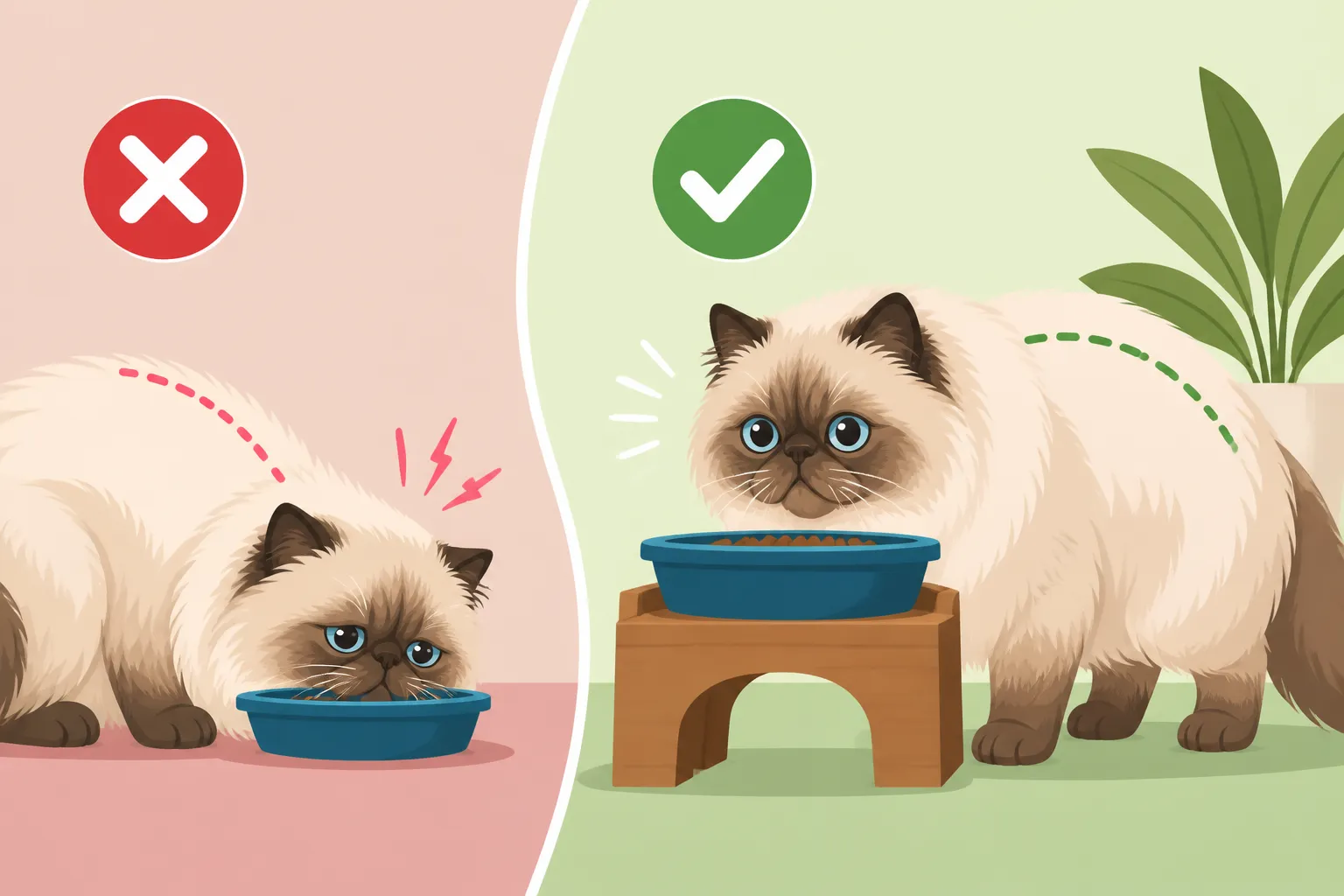
The position of their nose and mouth relative to the bowl is key. If the bowl is too deep or too low, they have to bend their neck at an awkward angle, which can strain their neck and make breathing more difficult. Flat-faced cats already have compromised airways, so any additional strain during a basic activity like eating is something we want to avoid. This constant struggle can turn mealtime into a stressful event, rather than a peaceful one.
Battling Tear Stains and Face Mess
Another common complaint from Himalayan owners is the perpetual battle with tear stains. Their large, round eyes often tear more than other breeds, and with a flat face, those tears have nowhere to go but down their fur. When they eat from a low or deep bowl, their face is pressed into the food, and any moisture (from tears, saliva, or even just wet food) picks up food particles. This quickly exacerbates existing tear stains, turning them into a sticky, discolored, and often smelly mess. Why a Himalayan's Eyes Water All Day explains this in more detail, and you'll find it directly affects their mealtime hygiene.
It's not just tear stains; wet food, in particular, can cling to their ruffs and chins. If not cleaned immediately, this can lead to skin irritation, bacterial growth, and even matting in their dense, long coats. Regular face wiping is already a non-negotiable part of daily The Morning Face Routine Every Himalayan Needs, but the right bowl can significantly reduce the amount of extra cleaning required after each meal.
Understanding Optimal Dish Height and Design
So, if regular bowls are a no-go, what does work? The answer lies in bowls designed specifically to accommodate their unique facial structure and eating style. It’s a combination of height, shape, and material that makes all the difference.
The Ideal Height for Comfort and Digestion
The sweet spot for a Himalayan's food dish is typically an elevated one. The goal is to bring the food up to a level where your cat can eat with a relatively straight neck, minimizing the need to bend down excessively. This reduces strain on their neck and back, and, crucially, helps keep their delicate airways open. Think about your own posture when you eat – you wouldn't want to stoop over the table for every meal!
For most adult Himalayans, this usually means the rim of the bowl should be roughly level with their chest when they are standing comfortably. This might translate to a few inches off the ground, perhaps 2-4 inches for an average adult, but observing your individual cat is paramount. Every cat is unique, and what works for one may need slight adjustment for another. An elevated feeder also helps promote better digestion by allowing gravity to assist the food's journey down the esophagus. It's a small change that can lead to a world of difference in comfort and health.
The Importance of Bowl Shape and Material
Beyond height, the shape of the bowl is incredibly important. Deep, round bowls are the arch-nemesis of a flat-faced cat. They force your Himalayan to push their face too far into the bowl, mashing their nose and whiskers. This often results in frustration, less efficient eating, and more mess. Why a Himalayan Pushes Food Out of a Round Bowl highlights this common problem.
Instead, look for wide, shallow bowls or even slightly angled dishes. These designs allow your Himalayan to access the food easily without their whiskers constantly touching the sides or their nose getting buried. The wide opening means they can get their tongue and mouth around the food more effectively. Some bowls are designed with a slight incline, which funnels the food towards the front, making it even easier for them to eat without chasing pieces around. Which Bowl Shape a Flat Faced Himalayan Can Use offers more specific guidance on this.
When it comes to materials, hygiene is a top priority. Stainless steel, ceramic, or glass bowls are excellent choices because they are non-porous and easy to clean thoroughly. Plastic bowls can harbor bacteria, absorb odors, and might even contribute to feline acne on their chins. Given the predisposition of Himalayans to facial skin issues due to moisture and folds, opting for easily sanitized materials is a must. You can find a wide range of suitable bowls on platforms like Amazon or specialized pet retailers like Chewy.
Here's a quick comparison of bowl types for Himalayans:
| Feature | Ideal for Himalayans (Flat Face) | Avoid for Himalayans (Flat Face) |
|---|---|---|
| Height | Elevated (2-4 inches off ground) | Floor level or very low |
| Shape | Wide, shallow, or slightly angled | Deep, narrow, or traditional round |
| Material | Stainless steel, ceramic, glass | Plastic (can harbor bacteria) |
| Benefits | Better digestion, less neck strain, less mess, cleaner face | Poor digestion, neck strain, excessive mess, tear stains, chin acne |
Practical Tips for Setting Up the Perfect Feeding Station
Setting up your Himalayan's dining area isn't just about picking the right bowl; it's about creating a holistic, comfortable, and hygienic space for them to enjoy their meals. A little extra thought here can save you a lot of clean-up and stress in the long run.
Choosing and Adjusting Elevated Feeders
There are many types of elevated feeders available, from simple stands that hold one or two bowls to more elaborate feeding stations with multiple compartments. When choosing one, look for stability. You don't want a feeder that wobbles or tips over easily, especially if your cat is a bit enthusiastic with their meal. Adjustable height feeders are fantastic because they allow you to fine-tune the height to your cat's exact needs, and they can be altered as your cat ages or if you get another flat-faced friend.
Consider the material of the feeder itself. Wood or metal stands are generally more durable and stable than plastic ones. If you have an older Himalayan, or one with mobility issues, ensure the feeder doesn't require them to stretch too far or step over high edges to reach the bowls. Some brands, available through Chewy, offer a variety of elevated bowl options that cater specifically to brachycephalic breeds, making the selection process a bit easier.
Keeping It Clean: Mats and Regular Wipes
No matter how perfect the bowl setup, some mess is inevitable with a long-haired, flat-faced cat. That's where a good feeding mat comes in. Silicone mats with raised edges are excellent for catching stray kibble or water drips, protecting your floor and making cleanup a breeze. They're easy to wipe down or rinse off, preventing food residue from attracting pests or developing odors.
Beyond the mat, regular cleaning of the bowls and the surrounding area is crucial. Wash bowls daily, especially if you're feeding wet food. For those days when your Himalayan manages to get food on their ruff (and they will!), have a soft, damp cloth or a pet-safe wipe handy for a quick post-meal cleanup. This immediate action prevents dried-on food from becoming a matted mess or causing skin irritation. Cleaning the Fold Beside a Himalayan's Flattened Nose is just as important as cleaning their coat.
Integrating Hydration with Flat-Face Considerations
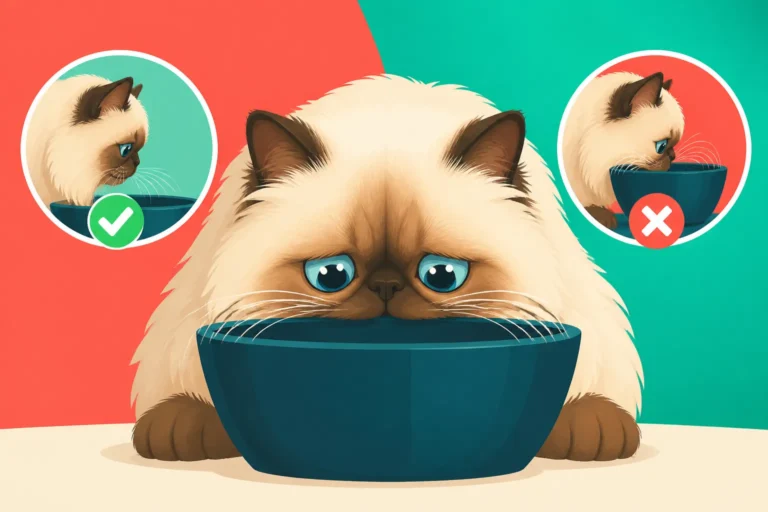
Food isn't the only thing that needs an elevated, wide, and shallow approach; water is just as important. Many Himalayans, because of their flat faces, tend to soak their ruffs when drinking from traditional water bowls, leading to damp, stained fur and less efficient hydration. Why a Himalayan Soaks Its Ruff Drinking describes this challenge.
Consider a wide, shallow ceramic or stainless steel water bowl, possibly elevated to the same height as their food dish. This allows them to lap comfortably without burying their face too deeply. Some owners find pet water fountains with a wide, open basin can also work well, as the flowing water might encourage them to drink more. Again, look for easy-to-clean materials to prevent bacterial buildup. Adequate hydration is critical for overall health, especially for cats, and making it easy for your Himalayan to drink is a simple yet impactful step.
Common Feeding Mistakes to Avoid
Even with the best intentions, it's easy to fall into certain habits that might not be ideal for your flat-faced Himalayan. Being aware of these common pitfalls can help you refine your care routine and ensure your feline friend stays happy and healthy.
Using Deep Bowls and Free-Feeding Dry Kibble
One of the biggest mistakes is simply using a deep, standard pet bowl. As we've discussed, these bowls make it difficult for Himalayans to reach their food, often leading to frustration and mess. But beyond the immediate issues, repeatedly struggling to eat can lead to a cat eating less, which can impact their nutrition.
Another common practice to reconsider is free-feeding large quantities of dry kibble in a deep bowl. While some cats do well with free-feeding, for a Himalayan, it can amplify the problems. Dry kibble can be harder for them to pick up and chew effectively with their crowded jaws. Why a Himalayan Drops Food Onto Its Ruff is a testament to this struggle. If they are constantly pushing food around and making a mess, the area becomes unhygienic, and they might even lose interest in eating if it's too much effort. Consider portion control and feeding smaller, more frequent meals, especially wet food, which is often much easier for their flattened faces to manage.
Neglecting Post-Meal Face Hygiene
It’s tempting to let your Himalayan wander off after they've finished eating, especially if they look content. However, neglecting post-meal face hygiene can quickly lead to bigger problems. Food particles, saliva, and tears can dry and harden on their ruff and around their nose, leading to mats, skin irritation, and even infections in their facial folds.
Think of it as a quick clean-up after a baby eats – it's just part of the routine. A gentle wipe with a damp, warm cloth or a pet-specific facial wipe after each meal can prevent these issues. Pay close attention to the area around their nose and under their eyes. This proactive step might seem like a small thing, but it's a huge component of maintaining a healthy, comfortable life for your Himalayan. If you ever notice persistent redness, soreness, or a foul odor, it's time for a vet visit, as these can be signs of more serious skin issues or infections.
Not Observing Your Cat's Eating Behavior
Perhaps the most crucial mistake any pet owner can make is failing to observe their cat's individual eating habits. Every Himalayan is unique. While general guidelines for dish height and shape are helpful, your cat will tell you what works best for them.
Watch them closely during mealtime. Do they seem comfortable? Are they struggling to pick up food? Is their breathing labored? Do they leave a lot of food behind, or do they eat neatly? Are they using their paws to scoop food out of the bowl frequently? These observations are invaluable. If you notice signs of discomfort, even with an elevated, shallow dish, try adjusting the height slightly or experimenting with a different bowl shape. Some Himalayans might prefer eating off a flat plate entirely, forgoing a bowl altogether. The goal is to make mealtime as stress-free and enjoyable as possible, contributing to their overall well-being. Ultimately, your Himalayan's comfort and health are the best indicators of a successful feeding setup.
Disclaimer
This article is for general informational purposes only and does not constitute professional advice. Laws, prices and regulations vary by location and change over time. Consult a qualified professional for guidance on your specific situation.