Why a Deep Bowl Bends a Himalayan’s Whiskers Back
It’s a common, heartbreaking sight for many Himalayan cat owners: your beloved fluffball approaches their food or water bowl, sniffs hesitantly, maybe paws at the contents, and then retreats, or eats only a few bites from the very edge. You might think they're being finicky, but often, the problem isn’t with the food itself, or even your cat’s appetite. It’s the bowl. For a Himalayan, a deep bowl can cause immense discomfort, literally bending their sensitive whiskers back, leading to a condition known as whisker fatigue. This guide will walk you through why this happens and how to make meal and drink times a joy again for your flat-faced feline friend.
The Unique Anatomy of a Himalayan's Face and Whiskers
Himalayans, with their distinctive flat faces, round heads, and luxurious coats, are undeniably beautiful. But this unique facial structure, often described as brachycephalic, comes with specific considerations, especially concerning their whiskers and how they interact with their environment. Understanding this anatomy is the first step in ensuring their comfort.
The Brachycephalic Profile and Whisker Placement
Unlike many other cat breeds that possess a more elongated muzzle, Himalayans have a noticeably shortened, broad skull. This "peke-face" or "doll-face" profile, while adorable, means that their facial features are more compressed. Their nose sits lower, their eyes are large and prominent, and crucially, their whiskers, or vibrissae, sprout from a more forward and less protruding muzzle area. These whiskers are not just cute facial adornments; they are highly specialized sensory organs, packed with nerves and blood vessels, acting as a cat's personal navigation system.
Imagine trying to navigate a dark room with sensitive antennae that constantly bump into things. That's a bit like what a Himalayan experiences when its whiskers are pressed or bent. The positioning of these whiskers on a flatter face means they are inherently closer to the bowl's edge when the cat tries to eat or drink. The space that a long-nosed cat has to comfortably dip its head into a deep bowl is simply not there for a Himalayan. We often talk about What a Doll Face Himalayan's Profile Measures or What a Peke Face Himalayan's Profile Measures, and these measurements directly impact how their whiskers function.
The Sensitivity of a Cat's Whiskers
A cat's whiskers are incredibly sensitive, far more so than human hair. Each whisker is deeply embedded in a follicle that is rich in nerve endings, sending detailed information to the cat's brain about its surroundings. They use their whiskers to gauge distances, determine if they can fit through narrow spaces, detect changes in air currents, and even assess the size and texture of objects. This sensitivity is why they are so vital for hunting, exploring, and general spatial awareness.
When these delicate instruments are repeatedly bumped, bent, or otherwise interfered with, it's not just a minor irritation; it can be genuinely uncomfortable or even painful. Think of it like constantly having your fingernails bent backward, or your most sensitive nerve endings being perpetually squeezed. Over time, this constant pressure and unnatural bending can lead to a condition known as "whisker fatigue" or "whisker stress." This isn't just a quirky cat behavior; it's a real source of discomfort that can impact their willingness to eat, drink, and ultimately, their overall well-being.
The Problem with Deep Bowls: Whisker Fatigue and Stress
Now that we understand the delicate nature of a Himalayan's whiskers, it becomes clearer why a traditional deep bowl can be a real pain point. It's not about being picky; it's about physical discomfort and sensory overload that can turn a basic need into an anxious experience.
How Deep Bowls Cause Discomfort
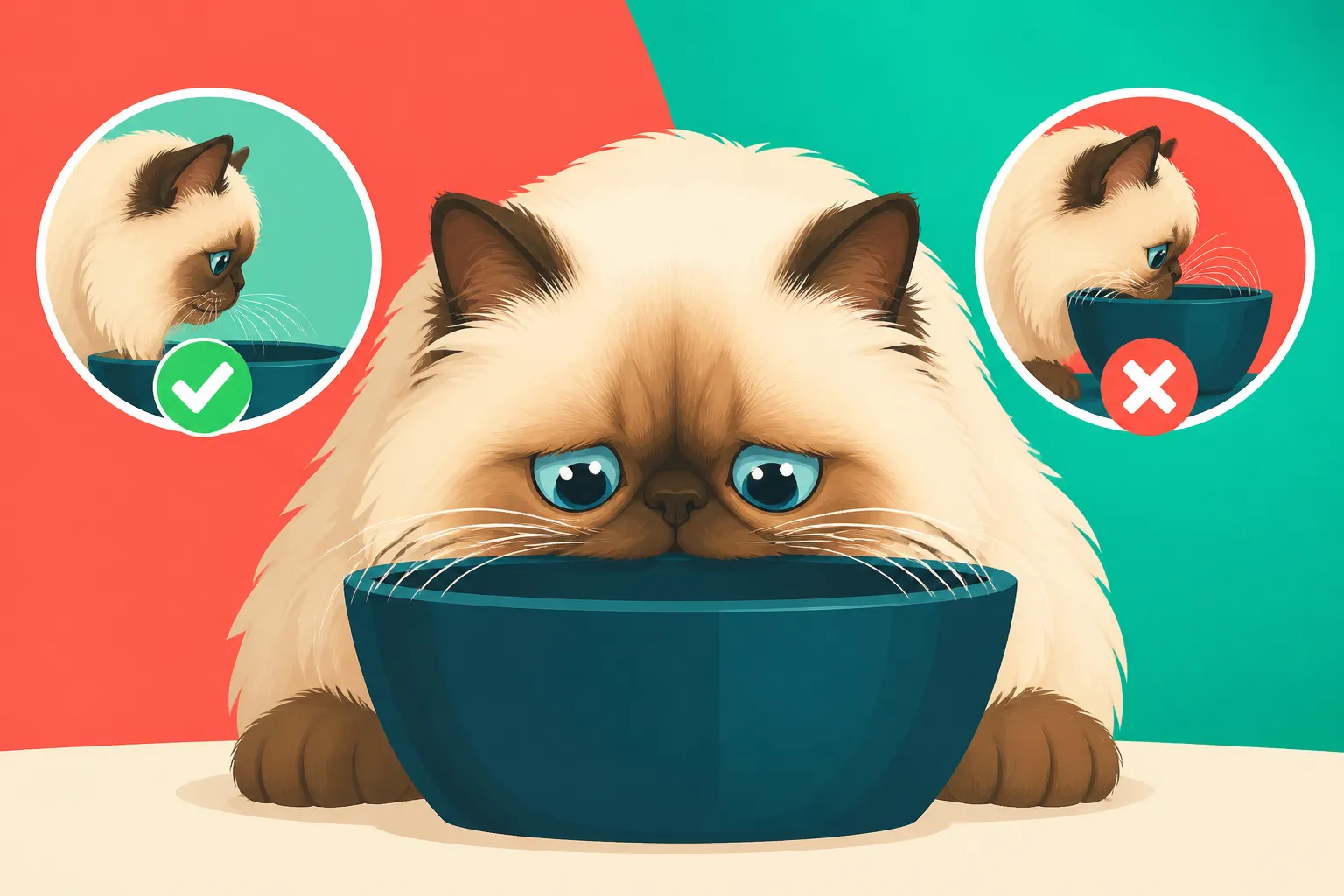
When a Himalayan lowers its head into a deep bowl, especially one that is narrow, the sides of the bowl inevitably press against and bend their whiskers backward. For a cat whose whiskers are crucial for sensing their environment, this sensation is disorienting and uncomfortable. They can't properly gauge the food level, the distance to the water, or the boundaries of the bowl without their primary sensory tools being compromised.
This constant bending and pressure can lead to a state of perpetual irritation. Imagine if your primary way of interacting with the world was through highly sensitive fingertips, and every time you needed to eat, you had to jam them into a confined space where they were bent and jostled. You'd quickly develop an aversion to eating that way, wouldn't you? This is precisely what happens with a Himalayan and a deep bowl. They may approach the bowl cautiously, eat only from the very center, or even try to paw food out onto the floor where they can eat it without whisker interference. This is a common indicator that your cat is experiencing whisker fatigue.
Behavioral Signs of Whisker Stress
Recognizing the signs of whisker stress is crucial for alleviating your Himalayan's discomfort. It's easy to misinterpret these behaviors as fussiness or a lack of appetite, but they're often a direct cry for help.
One of the most obvious signs is your cat eating or drinking hesitantly. They might stand over the bowl, look at it, then look away, or take a few bites and then walk off. You might notice them only eating the food that is easily accessible in the middle of the bowl, leaving a ring of untouched kibble around the edges. This isn't because they're full; it's because reaching the food on the periphery would mean pressing their whiskers against the bowl. Another common behavior is pawing food out of the bowl and eating it from the floor. This allows them to eat without their whiskers making contact with the bowl's sides. Sometimes, they might even become more aggressive around food or water bowls, growling or acting defensive, because they associate the act of eating with discomfort.
With water, you might observe your Himalayan taking fewer, shallower sips, or even dunking its paw in the water and licking the water off its paw. This is another workaround to avoid pushing their whiskers into a deep bowl. If you notice any of these behaviors, it's a strong indicator that your current bowls are causing them distress. Understanding Why a Himalayan Pushes Food Out of a Round Bowl can shed more light on these specific eating habits related to bowl shape.
Choosing the Right Food and Water Bowls for Your Himalayan
Once you recognize the issue, the good news is that solving whisker fatigue is relatively simple: invest in bowls designed with your Himalayan's unique facial structure and whisker sensitivity in mind. The right bowl can make a world of difference to their comfort and willingness to eat and drink properly.
Wide, Shallow, and Whisker-Friendly Designs
The golden rule for Himalayan cat bowls is wide and shallow. These types of bowls allow your cat to access their food or water without their sensitive whiskers making contact with the sides. Look for dishes with a low profile and a broad eating surface. The goal is to let their whiskers extend naturally outward, unimpeded, as they eat.
Many pet supply retailers, both brick-and-mortar and online, now specifically market "whisker-friendly" or "stress-free" bowls. You'll often find a great selection on sites like Chewy or Amazon. When browsing, pay attention to the dimensions. A bowl that is wide enough for their entire face, including their whiskers, to fit without touching the edges is ideal. For example, a bowl with a diameter of at least 6-8 inches and a depth of no more than 1-2 inches is a good starting point for most adult Himalayans. The material also matters; ceramic, stainless steel, and glass are excellent choices as they are non-porous, easy to clean, and less likely to harbor bacteria than plastic. This directly relates to Which Bowl Shape a Flat Faced Himalayan Can Use.
Elevated Bowls and Food Puzzles
Beyond width and depth, consider the height of your cat's bowls. For flat-faced breeds like Himalayans, bending down excessively can sometimes lead to neck strain or make breathing a little more challenging, especially if they have some degree of brachycephalic airway syndrome. Elevated bowls can alleviate this by bringing the food or water closer to their natural eating position. Look for stands or bowls with integrated risers that lift the dish a few inches off the floor. The ideal height usually means your cat can eat with their head level, rather than having to stoop significantly. This is especially helpful as they get older, tying into How High a Himalayan's Dish Should Sit for a Flat Face.
While food puzzles can be great for enrichment, you need to be very selective for a Himalayan. Many puzzles require the cat to reach deep into crevices or use their paws in ways that might still press against their whiskers or make their flat face an obstacle. If you choose a puzzle feeder, ensure it's specifically designed for flat-faced cats or has very wide, shallow openings. Some Himalayans find LickiMats, which allow them to lick soft food off a textured surface, to be a much more comfortable form of slow feeding or enrichment.
Beyond Bowls: Other Considerations for a Himalayan's Comfort
While selecting the right bowls is paramount, a holistic approach to your Himalayan's feeding and drinking environment will further enhance their comfort and well-being. Their unique physical traits extend beyond just their whiskers, influencing everything from their eating posture to their hydration habits.
Food Texture and Hydration Strategies
Given their brachycephalic structure, Himalayans often find certain food textures easier to manage. Wet food is frequently preferred because it's softer, easier to lap up, and requires less chewing than dry kibble, which can be challenging with a crowded jaw. This is a topic explored in Why Wet Food Is Easier for a Himalayan to Take. When they eat dry kibble, you might notice pieces falling out of their mouth or onto their ruff, as mentioned in Why a Himalayan Drops Food Onto Its Ruff. Opting for smaller kibble sizes or even transitioning to a predominantly wet food diet can make meal times much more comfortable.
Hydration is another critical aspect. Cats, by nature, don't always drink enough water, and for Himalayans, the discomfort of deep water bowls can exacerbate this. Ensure you have multiple water sources throughout your home, all equipped with whisker-friendly bowls. Some Himalayans are drawn to running water, so a cat fountain might encourage them to drink more. However, be mindful of the fountain's design – ensure it has a wide, open basin where they can drink without their whiskers being pushed against plastic edges. Many cats prefer ceramic or stainless steel fountains for freshness and hygiene.
Maintaining Cleanliness Around the Face and Bowls
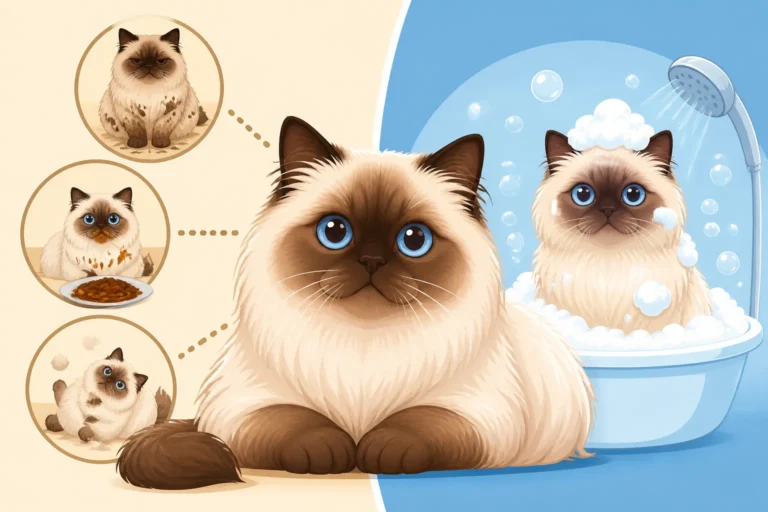
With their long, dense fur and flattened faces, Himalayans are prone to accumulating food debris and moisture around their muzzle, especially after eating or drinking. This isn't just a cosmetic issue; it can lead to skin irritation, tear staining, and even bacterial or yeast infections in their facial folds. Regularly cleaning their face, particularly the area around their nose and mouth, is a vital part of their daily care. This includes carefully wiping any excess moisture from around their eyes and within their nasal folds, as detailed in Cleaning the Fold Beside a Himalayan's Flattened Nose.
A clean eating environment is also key. Food residue can build up on the edges of even whisker-friendly bowls. Wash their food and water bowls daily to prevent bacterial growth and keep the area appealing. Consider placing a mat under their bowls to catch any stray food or water, making cleanup easier and ensuring their dining area remains pristine.
Here's a quick comparison of common bowl types and their suitability for Himalayans:
| Bowl Type | Shape | Material | Himalayan Suitability | Pros | Cons |
|---|---|---|---|---|---|
| Traditional | Deep, narrow | Ceramic, plastic | Poor | Widely available, often inexpensive | Causes whisker fatigue, difficult to clean |
| Whisker-Friendly | Wide, shallow | Ceramic, S/Steel, Glass | Excellent | Eliminates whisker contact, promotes eating | May be more expensive, less common in stores |
| Elevated | Various | Ceramic, S/Steel, Glass | Good (with wide shape) | Reduces neck strain, aids breathing | Can be pricey, still needs wide top |
| Slanted | Angled, wide | Plastic, ceramic | Good | Helps gravity guide food, wide access | Angle might not suit all flat faces |
| Automatic Feeder | Various | Plastic | Varies | Convenient for owners, portion control | Often deep/narrow, difficult to clean |
Ultimately, providing the right bowls is a small change that can have a profound impact on your Himalayan's daily comfort and overall health. They deserve to eat and drink without discomfort, making every meal a happy, stress-free occasion.
Disclaimer
This article is for general informational purposes only and does not constitute professional advice. Laws, prices and regulations vary by location and change over time. Consult a qualified professional for guidance on your specific situation.