Which University the Himalayan Research Was Done At
It's easy to look at a beautiful Himalayan cat, with those striking blue eyes and luxurious coat, and just assume they've been around forever, a natural wonder. But the truth is, the Himalayan has a fascinating, very deliberate origin story rooted in scientific inquiry, not just generations of selective breeding by enthusiasts. Many people don't realize their beloved lap cat actually started its journey in a rather unexpected place: a university laboratory. This guide will take you back in time to uncover the academic institution responsible for the initial research that ultimately gave us the wonderful Himalayan.
The Dawn of the Himalayan: A Scientific Endeavor
Before the Himalayan cat was winning ribbons in cat shows or gracing laps in homes around the world, it was part of a groundbreaking genetic experiment. This wasn't some passionate hobby breeder simply trying to create a new look; this was serious science, driven by a desire to understand the very building blocks of inheritance. It’s a pretty unique start for a beloved pet, isn't it?
Unraveling the Genetic Mystery at Harvard
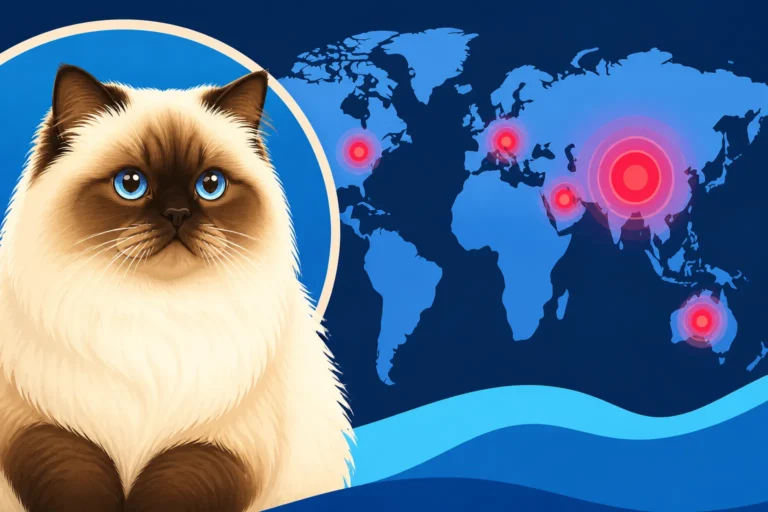
The prestigious institution where this pivotal research took place was Harvard University. Yes, that Harvard! It was in the hallowed halls of academia, specifically in the 1930s, that researchers embarked on the controlled breeding experiments that would eventually lead to the Himalayan as we know it. Dr. Clyde Keeler and Virginia Cobb were the pioneering minds behind this endeavor. They weren't setting out to "invent" a new cat breed in the way a traditional breeder might; their primary goal was far more fundamental. They wanted to understand the genetic mechanisms behind the colorpoint pattern, that distinct coloring where the face, ears, paws, and tail are darker than the body, a trait famously seen in Siamese cats.
Their work wasn't just about cat colors; it was about broader genetic principles. They aimed to dissect how specific traits were passed down through generations, making the cats a living, breathing model for genetic inheritance. This detailed study required meticulous record-keeping and a systematic approach, something perfectly suited to a research environment like Harvard. It’s amazing to think that the unique coloration we adore today on our Himalayans was once a scientific puzzle for brilliant minds. The extensive work by Clyde Keeler, Virginia Cobb and the First Himalayan truly laid the foundation.
Beyond Just a Pretty Face: The Academic Context
The 1930s were a fascinating time for genetics, a period of immense discovery and rapid advancement in understanding heredity. Scientists were still piecing together how genes worked, how traits were expressed, and the role of environmental factors. The research conducted at Harvard wasn't merely an isolated project; it contributed to a much larger body of scientific knowledge. It was part of a wave of biological research that sought to demystify the complex dance of chromosomes and genes.
By carefully crossing specific breeds and observing the outcomes, Keeler and Cobb were providing empirical data that bolstered emerging genetic theories. The publication of their findings in The 1936 Paper That Started the Himalayan was a significant event, not just for cat enthusiasts, but for the scientific community as a whole. It cemented the cat's role as a valuable subject for genetic study, much like other laboratory animals. This academic backdrop means the Himalayan started its life with a level of scientific scrutiny that few other breeds can claim. They weren’t just breeding for beauty; they were breeding for data. This rigorous approach in the early days, ironically, has given us a breed with a distinct appearance and a captivating origin story.
The Experiment Itself: Crossing Persians and Siamese
So, if the goal was genetic understanding, why specifically choose Persian and Siamese cats? This wasn't a random pairing. The choice of these two distinct breeds was a very deliberate part of the scientific methodology, essential for isolating and studying the desired genetic traits.
The Rationale Behind the Specific Cross
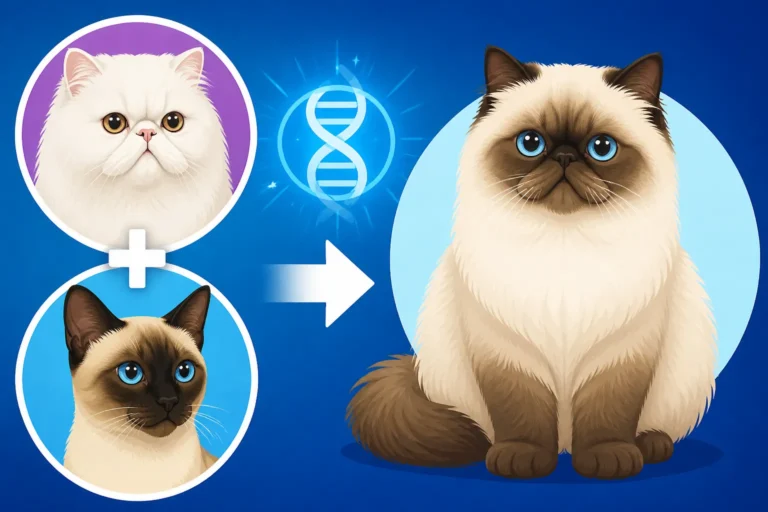
The decision to cross Persians and Siamese cats was brilliant in its simplicity, yet profound in its implications for genetic study. The Persian cat brought with it the magnificent longhair gene. This breed was already known for its luxurious, dense coat, which was a stable and easily identifiable trait. On the other hand, the Siamese cat was the quintessential bearer of the colorpoint gene, the very genetic mystery Keeler and Cobb wanted to unravel. Siamese cats display the unique characteristic of having darker "points" (ears, face mask, paws, tail) and a lighter body, a temperature-sensitive gene expression that captivated researchers.
By bringing these two distinct genetic profiles together, the researchers could observe how the longhair trait and the colorpoint trait interacted and were inherited. It allowed them to precisely track the journey of these genes through successive generations. The aim of Why Harvard Crossed a Persian With a Siamese to Make the Himalayan was to understand Mendelian inheritance patterns in cats, using these two breeds as perfect genetic blueprints. They wanted to see if they could combine the long coat of the Persian with the striking point coloration of the Siamese, and then analyze the genetic ratios that appeared in the offspring.
The Initial Results and Observations
The early generations of these experimental crosses were meticulously documented. The researchers observed that the colorpoint trait, when crossed with a non-colorpoint (like the solid-colored Persian), behaved as a recessive gene. This meant that the first generation (F1) offspring would typically be solid-colored, but would carry the gene for colorpoint. It's similar to how human eye color might be inherited, with hidden genes waiting to be expressed.
It was in subsequent generations (F2 and beyond), when these F1 carriers were bred together, that the colorpoint pattern would re-emerge, often alongside the longhair trait from the Persian side. This confirmed the recessive nature of the colorpoint gene and allowed them to study how Why a Himalayan Needs Two Copies of the Point Gene to show its distinctive coloration. The combination of the long Persian coat and the Siamese points was a visually striking result, a happy accident of scientific inquiry. These early "Siamese-Persian" crosses, as they were initially known, were essentially the prototypes for what we now cherish as the Himalayan cat. The information gleaned from these observations was vital for understanding feline genetics and ultimately, how to consistently produce cats with these combined characteristics.
From Laboratory to Living Room: The Himalayan's Legacy
It’s one thing to create something in a lab; it’s another for it to capture the hearts of cat lovers worldwide. The journey from a research subject at Harvard to a beloved family pet was a testament to the undeniable charm of these early crosses.
The Shift from Research Subject to Recognized Breed
While the initial crosses at Harvard were purely for scientific understanding, the striking beauty of the resulting cats did not go unnoticed. Imagine seeing a long-haired, blue-eyed cat with those distinct points for the first time! It was captivating. Enthusiastic breeders, both in North America and internationally, soon picked up where the academic researchers left off. They saw the potential to develop these beautiful animals into a distinct breed. The early "Siamese-Persians" evolved into the Himalayan as we know it, through careful and selective breeding focused on establishing a consistent appearance and temperament.
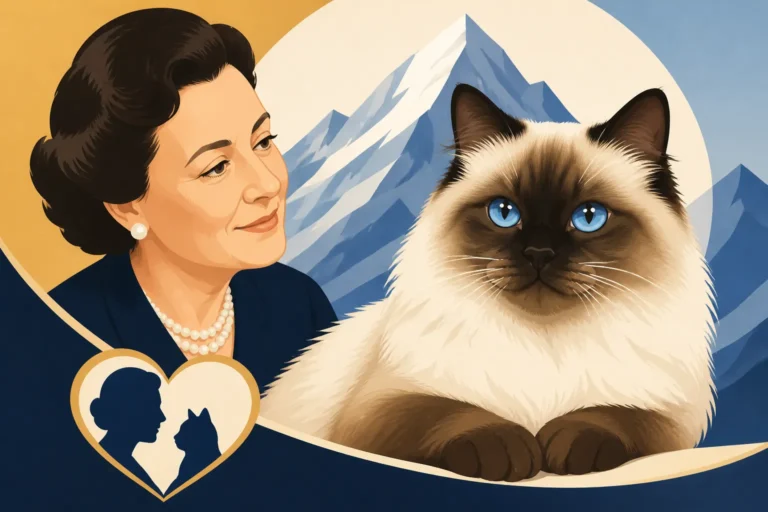
Individuals like Marguerita Goforth in the United States played a crucial role in advocating for the breed's recognition and establishing its place in the cat fancy. They took the foundation laid by Harvard's genetic studies and translated it into a breeding program that emphasized specific aesthetic and temperamental qualities. This transition wasn't immediate; it involved years of dedicated work, establishing lines, and convincing cat registries that this new "colorpoint Persian" deserved its own identity. Many owners today might pick up supplies from a brand like Chewy and not even realize the deep history behind their cat's unique look.
Why This Origin Story Matters for Owners Today
Understanding the Himalayan's origins at Harvard isn't just a fun trivia fact; it offers valuable insights for current and prospective owners. Because the breed was born from a scientific cross of Persians and Siamese, Himalayans inherently carry traits from both parent breeds. For example, their long, luxurious coats come directly from the Persian side, and as any Himalayan owner knows, that coat requires The Daily Comb a Himalayan Cannot Skip. It’s a commitment, and knowing its genetic lineage helps explain why it’s so dense and prone to matting.
Similarly, the Siamese influence explains their conversational nature – while perhaps not as vocal as a purebred Siamese, Himalayans often have a distinct meow and will "talk" to their owners. Their laid-back, affectionate demeanor also carries the hallmark of their Persian ancestry, making them wonderful, calm companions.
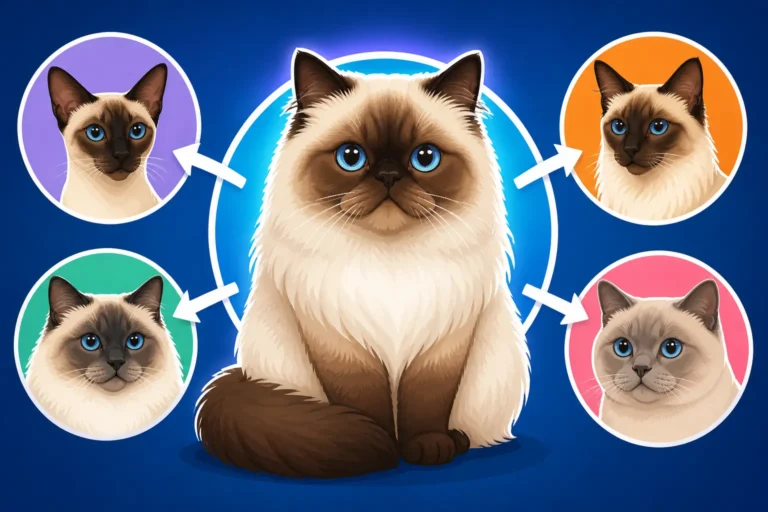
Furthermore, knowing about the genetic study helps us appreciate the intricacies of their point coloration. The color is temperature-sensitive, meaning warmer parts of their body produce less pigment, and cooler parts (like the ears, tail, and paws) develop darker fur. This is why A Himalayan's Point Color Is a Record of Where It Sleeps and why a shaved patch might grow back darker. This genetic quirk means that their appearance can actually change subtly throughout their lives and depending on their environment.
The deliberate nature of their creation also highlights the importance of responsible breeding practices today. Reputable breeders understand the genetic heritage and strive to maintain the health and beauty of the breed, ensuring that the legacy of those early Harvard experiments continues to bring joy to families. When looking for a Himalayan, always seek out breeders who prioritize genetic health testing, often found through resources or products from brands like Chewy, to ensure a healthy companion with a well-understood lineage.
| Aspect of Himalayan | Originating Breed | Implication for Owners |
|---|---|---|
| Long, Dense Coat | Persian | Requires daily grooming; prone to mats. |
| Colorpoint Pattern | Siamese | Temperature-sensitive coloration; unique visual appeal. |
| Blue Eyes | Siamese | Distinctive feature; sometimes associated with specific eye care needs. |
| "Cobby" Body Type | Persian | Sturdy, compact build; prone to weight gain if overfed. |
| Mellow Temperament | Persian | Generally calm, affectionate lap cats. |
| Vocal Tendencies | Siamese | More vocal than Persians, less so than Siamese. |
| Brachycephalic Face | Persian | Can lead to breathing, dental, and tear-staining issues. |
This rich history, starting from scientific curiosity at Harvard, truly makes the Himalayan a special breed with a story worth telling and understanding.
Disclaimer
This article is for general informational purposes only and does not constitute professional advice. Laws, prices and regulations vary by location and change over time. Consult a qualified professional for guidance on your specific situation.