Why Britain Will Not Use the Name Himalayan
It can be incredibly confusing when you’re deeply in love with a Himalayan cat, or you’re thinking of bringing one home, and then you discover that not everyone even calls them Himalayans. Especially if you're looking for information or even a kitten across the pond, it’s frustrating to search for your beloved "Himalayan" only to find a completely different terminology used in the UK. This guide is here to shed light on why Britain has taken a distinct path in naming this stunning breed, helping you understand the historical and practical reasons behind the "Colorpoint Persian" designation.
The Historical Divide: How the Himalayan Name Took Root Elsewhere
You might wonder how a cat that looks so distinctly "Himalayan" in one part of the world gets a different label somewhere else. It really comes down to the fascinating history of the breed itself and how different cat registries evolved their standards and naming conventions over time. In America, the "Himalayan" became a recognized breed through a deliberate breeding program, and that name stuck fast.
The American Genesis of the Himalayan
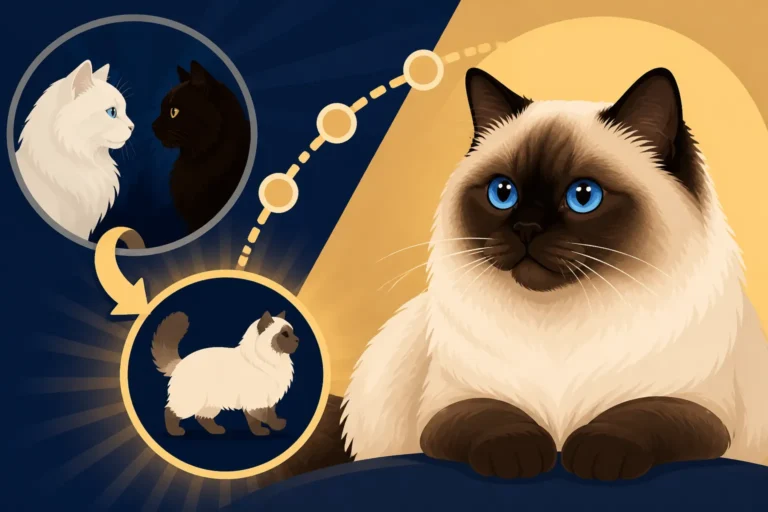
The story of the Himalayan actually begins with some pretty groundbreaking genetic research in the United States. Back in the 1930s, at a little place called Harvard, scientists like Clyde Keeler and Virginia Cobb were doing some fascinating work. Their goal wasn't initially to create a new pet, but to understand coat color inheritance. They crossed Siamese cats with Persians, specifically looking at how the "point" coloration gene, characteristic of the Siamese, would manifest in a long-haired cat. It was a scientific endeavor that laid the foundation for the breed we adore today. If you're curious about the very beginning, you might want to read about The Himalayan Was Made at Harvard in the 1930s.
This early work eventually led to individuals like Marguerita Goforth taking up the mantle, refining the lines, and working tirelessly to establish the cat as a distinct breed. The name "Himalayan" was actually borrowed from a rabbit breed that sported similar point coloration, a nod to the unique genetic trait that makes these cats so striking. This name, "Himalayan," quickly gained traction in North America, becoming the standard identifier for these long-haired, blue-eyed, pointed beauties. It reflected their unique genetic make-up and set them apart as a distinct entity in the American cat fancy.
Early Recognition and the Breed Name
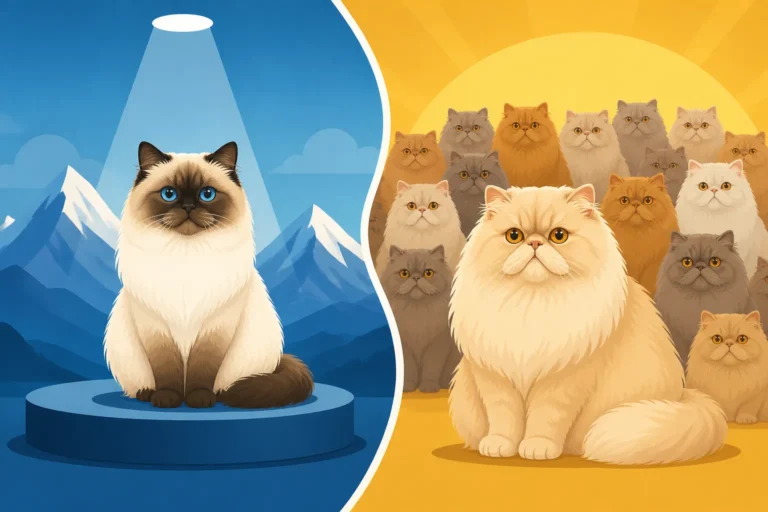
When breed associations began formally recognizing these cats, the American approach was to embrace "Himalayan" as a standalone breed. This meant they had their own separate class at shows, their own specific standard, and their pedigrees proudly proclaimed "Himalayan." However, even within the US, the journey wasn't entirely straightforward. The Cat Fanciers' Association (CFA), one of the largest registries, initially recognized the Himalayan as a separate breed. But later, in a move that still sparks debate among fanciers, they decided to merge the Himalayan into the Persian breed, designating it as a "Himalayan Division" of the Persian. This meant that while they retained their unique appearance and point coloration, their official paperwork started reading "Persian (Himalayan Division)." This change happened in 1984, and it certainly caused a stir at the time. To understand more about that decision, check out Why CFA Made the Himalayan a Persian Division in 1984. Other registries, like TICA, maintained the Himalayan as a distinct breed, leading to some ongoing variations in how these cats are classified, even within North America. So, even on this side of the pond, there's a nuanced history to the name.
The British Perspective: A Different Path for a Beautiful Cat
Across the Atlantic, cat fanciers in the United Kingdom were also captivated by these stunning pointed longhairs, but they approached their recognition and naming from a slightly different philosophical angle. While they loved the cats, they saw them as a variant of an existing, well-established breed rather than a completely new one.
The 'Colorpoint Persian' Designation
In Britain, the cat we affectionately call a Himalayan is officially known as a "Colorpoint Persian." This designation isn't just a different name; it reflects a different way of thinking about the breed's lineage and characteristics. The British cat fancy historically emphasized the core Persian type – the cobby body, the luxuriant long coat, the round head, and the short nose. When the point coloration came into play, they viewed it as a specific color pattern applied to the Persian, rather than creating an entirely new breed. It was like adding a new paint job to a classic car model; it’s still the same car underneath.
This means that a cat registered in the UK will have "Colorpoint Persian" on its papers, and it will be judged according to the Persian standard, with the added specification for its point coloration. This approach emphasizes the strong genetic connection to the Persian breed, acknowledging that the structure, coat quality, and overall conformation are fundamentally Persian, just with that striking Siamese-derived color. For those diving into the British cat show scene, understanding that your "Himalayan" will be competing as a Colorpoint Persian under the Persian standards is absolutely crucial.
Why the Distinction Matters to British Fanciers
For British fanciers, this distinction is more than just semantics; it's about preserving breed integrity and historical lineage. By calling them Colorpoint Persians, they are reinforcing the idea that these cats are, at their heart, Persians that simply express a particular color gene. This helps maintain a clear focus on breeding for the robust Persian type, ensuring that traits like coat quality, eye shape, and body structure remain paramount, rather than potentially drifting towards a "Himalayan" type that might prioritize the points over other foundational Persian characteristics.
It also simplifies the understanding of the breed's genetics. They recognize that the point gene is recessive and can be carried by solid-colored Persians. Thus, breeding a solid Persian to a Colorpoint Persian is a common practice to maintain genetic diversity and ensure good type, producing offspring that might include both solid Persians and Colorpoint Persians in the same litter. This integrative approach is fundamental to their breeding philosophy. If you're looking into pedigrees, understanding this difference helps you interpret what you're seeing on the paperwork. What you'd refer to as a "Himalayan pedigree" in the US might be simply a "Colorpoint Persian pedigree" in the UK, but the cat itself is the same gorgeous creature.
Navigating the Terminology as an Owner
So, you're an owner or soon-to-be owner of one of these magnificent felines. How does this difference in naming actually impact your day-to-day life, especially if you're engaging with the broader cat community or seeking information? It's less about the cat itself – a Himalayan/Colorpoint Persian is still the same loving, fluffy companion – and more about how you interact with resources and official channels.
What to Expect on Pedigree Papers
If you acquire your cat from a breeder in the UK, or from a cattery that adheres to British standards, your cat’s official registration papers will almost certainly state "Colorpoint Persian." This might come as a surprise if you've been used to seeing "Himalayan" in North American contexts. It's not a sign of a mixed breed or anything unusual; it's simply the recognized breed name under their system.
Here's a quick comparison of what you might see:
| Registry Location | Common Name Used | Official Registration |
|---|---|---|
| United States | Himalayan | Persian (Himalayan Division) or Himalayan (TICA) |
| United Kingdom | Colorpoint Persian | Colorpoint Persian |
When you're looking at a kitten's pedigree, especially if you're importing or dealing with international lines, understanding this nomenclature is key. Don't be alarmed if the UK-sourced kitten you bought as a "Himalayan" has papers that say "Colorpoint Persian." It's perfectly normal and reflects their specific classification system. This is a common question, and knowing What Your Himalayan's Certificate Actually Says can really clear up any confusion you might have. Always ask your breeder about the specific registration body and the official name they use, just to be sure.
Finding Supplies and Information
For the most part, daily care for a Himalayan is universally understood, regardless of what you call them. Whether you call your fluffy companion a Himalayan or a Colorpoint Persian, their needs for grooming, diet, and attention remain the same. However, when you're searching for specific advice or products, especially online, using both terms can sometimes yield better results.
For example, if you're looking for specialized grooming tools for their incredibly dense coats, you might search for "Himalayan cat comb" but also try "Persian cat grooming tools" or even "longhair cat de-shedding brush" to broaden your search. When it comes to food, brands like Chewy often cater to specific breed needs, so you might find products marketed for "Persian cat food" which would be perfectly suitable for your Colorpoint Persian, given their shared physical characteristics like a flattened face.
The same goes for health information. If you're concerned about a common issue like polycystic kidney disease, which comes down the Persian side of the family, searching for "Himalayan PKD" or "Persian PKD" will likely give you the same relevant results. The underlying genetics and physical traits are consistent, even if the names differ. Just remember that their unique flat faces, luxurious coats, and potential for certain hereditary conditions like PKD (Polycystic Kidney Disease) are commonalities that transcend geographical naming conventions. Don't let the different terms deter you from seeking out comprehensive care advice or connecting with other enthusiasts!
Implications for Breeding and Showing
For those involved in the serious business of breeding and showing these magnificent cats, the naming convention in Britain has very practical and significant implications. It dictates how cats are entered into competitions, what standards they are judged against, and even influences breeding decisions.
How British Shows Judge Colorpoint Persians
In British cat shows, a "Colorpoint Persian" will be judged as a Persian. This means the emphasis is heavily placed on adhering to the overall Persian breed standard: the cobby body, the massive head, small ears, large round eyes, and, crucially, the "ultra-typed" or "Peke-faced" profile that is so valued in the show ring. The point coloration is, of course, a key feature, and the clarity and contrast of these points are important, but they are evaluated within the framework of a Persian.
Judges will be looking for the classic Persian "brick-like" body, the luxurious double coat, and that distinctive flat face. Traits that might be acceptable or even desired in a North American "Doll Face Himalayan" (which has a slightly less extreme facial structure) might be considered a fault in a British Colorpoint Persian show cat, where the extreme type is often preferred. This means breeders have a very clear objective: produce a cat with impeccable Persian type and the beautiful point coloration. If you've ever wondered about the specifics of what judges are looking for, researching What the Persian Standard Asks of a Himalayan will give you a detailed insight into the criteria.
Breeding Practices Under the British Naming Convention
The "Colorpoint Persian" designation also influences breeding practices. Since they are considered a division of the Persian breed, British breeders often integrate solid-colored Persians into their Colorpoint Persian breeding programs. This cross-breeding is done strategically to bring in fresh bloodlines, improve type, and maintain genetic diversity without "outcrossing" to a completely different breed. A solid Persian can carry the recessive point gene, and when bred to a Colorpoint Persian, can produce pointed kittens.
This flexible approach allows breeders to select for the best overall Persian characteristics, rather than solely focusing on the points. It’s a way to ensure that the cats retain the robust health and conformation of the Persian breed, while still producing those stunning pointed individuals. This practice is quite different from registries that might keep Himalayans and Persians as entirely separate breeds, where such crosses might be considered outcrossing or might only produce "experimental" offspring. Understanding this integrated breeding strategy helps explain why the British fancy views the Colorpoint Persian as an integral part of the larger Persian family. It also means that a litter might have both Colorpoint Persian and solid Persian kittens, all from the same parents, all considered purebred within their respective divisions.
The world of cat fancy can be wonderfully complex, and the naming conventions for our beloved Himalayans—or Colorpoint Persians, depending on where you are—are a perfect example. While the name might change across borders, the essence of the cat remains the same: a beautiful, affectionate, long-haired companion with stunning blue eyes and a distinctive personality. Whether you call them Himalayan or Colorpoint Persian, you're embracing a feline friend with a rich history and a captivating presence.
Disclaimer
This article is for general informational purposes only and does not constitute professional advice. Laws, prices and regulations vary by location and change over time. Consult a qualified professional for guidance on your specific situation.