Why a Himalayan Struggles in a Warm Climate
A Himalayan may seek the coolest tile in the house long before the room feels hot to you. Its dense Persian coat, compact build, and often shortened muzzle can make warm weather harder to manage than it is for many cats. This guide explains why heat is a concern, what signs to watch for, and how to make home and outdoor time safer.
Why warm weather can be harder for a Himalayan
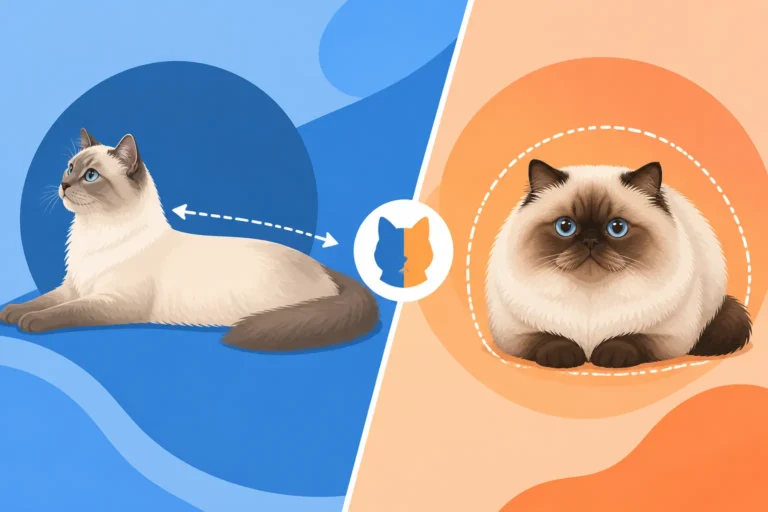
A thick coat holds warmth close
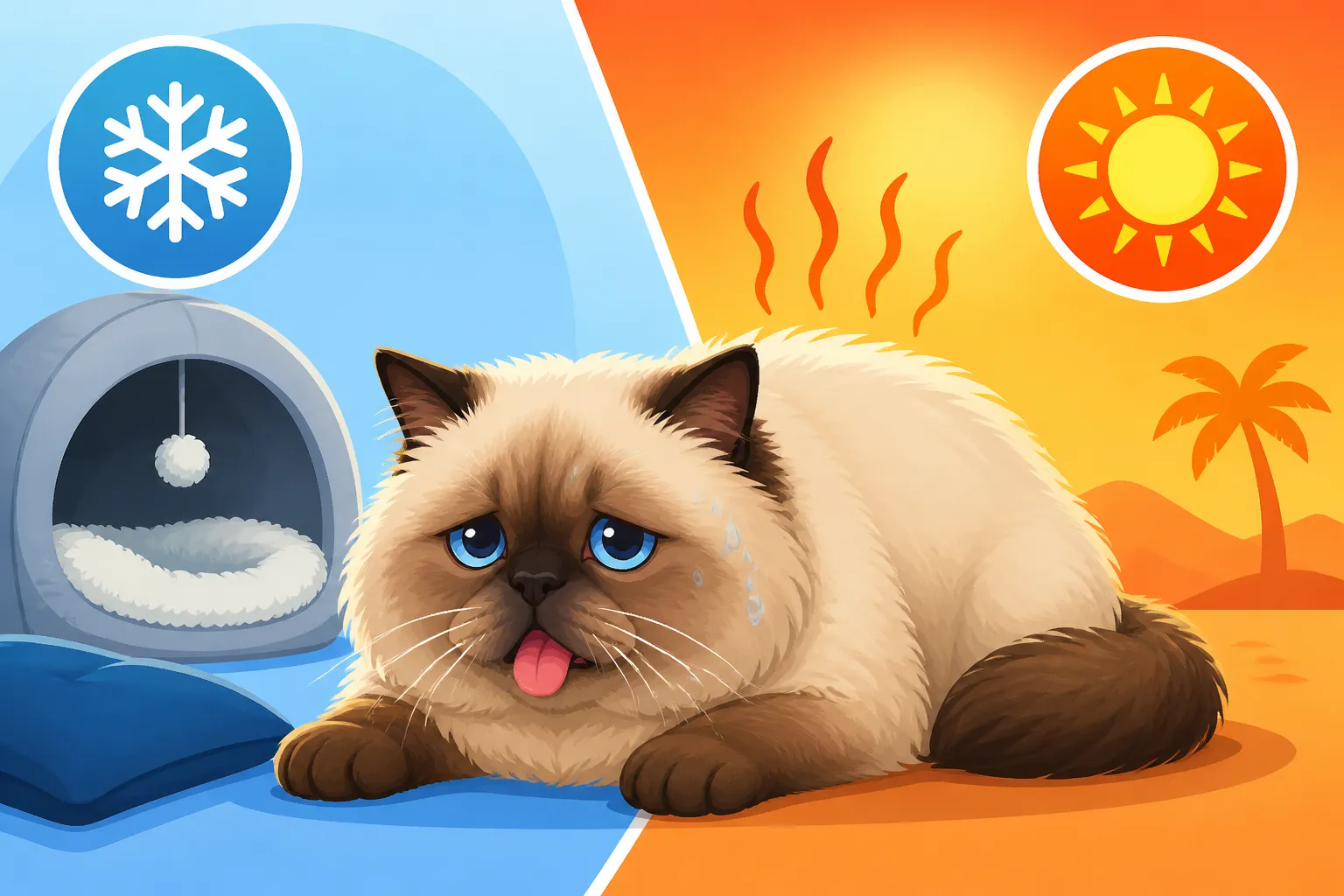
Himalayans have a long, dense coat that insulates their bodies. That coat is beautiful, but it can make heat management more challenging when the weather warms up, especially in a sunny room or a home without reliable airflow. A cat who looks relaxed on the rug may still be uncomfortable if the space around them is hot and stuffy.
The coat is not a reason to shave your cat as soon as summer arrives. Fur also provides some protection from sunlight and the environment, and shaving does not fix the underlying problem of a warm room. Instead, focus on keeping the coat free of mats, which can trap heat and make grooming uncomfortable. A daily comb-through helps you spot tangles before they tighten against the skin. See The Daily Comb a Himalayan Cannot Skip for more on maintaining that coat.
A lion cut may be appropriate for some cats when matting or other care needs make the coat difficult to manage, but it is best discussed with a veterinarian or experienced groomer. If you are comparing grooming tools or supplies at Chewy, check that the tool suits a long, dense coat and use it gently. A brush that only smooths the top layer may leave tangles underneath.
A compact muzzle can complicate cooling
Cats cool themselves in part by grooming and by moving to a cooler place. They may also pant when stressed or overheated, but panting is not a reliable everyday cooling strategy. In a Himalayan with a shortened face, the airway may already be less open than in a longer-faced cat. That can make breathing effort more important to notice, particularly during warm weather or vigorous play.
Not every Himalayan has the same facial structure or breathing ability. A cat with a more pronounced flat face may have a harder time than one with a less shortened profile. Listen to your cat when they are resting: persistent noisy breathing, repeated snoring while awake, or obvious effort to breathe deserves attention rather than being dismissed as “just how the breed sounds.” The guides Why a Himalayan Struggles in a Warm Climate and What a Well Built Himalayan’s Breathing Sounds Like can help you think about the breed’s airway concerns.
Heat and breathing issues can combine. For instance, a Himalayan who has been chasing a toy in a warm room may need to stop and recover sooner than another cat. Keep play gentle when the room is warm, offer water, and let the cat choose a cool resting place. If your cat is panting, struggling to breathe, unusually weak, or unable to settle, contact a veterinarian promptly.
Body shape and activity matter too
Many Himalayans have a sturdy, cobby build and may prefer lounging to strenuous activity. A heavy coat can also make it harder to judge body condition by sight. Extra weight can add to the work of moving around and may make warm-weather activity less comfortable.
That does not mean every quiet Himalayan is in danger, or that every cat with a thick coat will overheat. Individual health, age, weight, facial structure, room temperature, humidity, and activity all matter. A senior cat, a kitten, or a cat with heart or respiratory disease may need extra care. When in doubt, ask your veterinarian how your own cat’s health affects their heat tolerance.
| Factor | Why it can matter in warm weather | Practical response |
|---|---|---|
| Dense coat | Mats can trap warmth and make the skin harder to inspect | Comb regularly and address tangles early |
| Shortened muzzle | Breathing may be less efficient in some cats | Keep activity gentle and notice changes in breathing |
| Extra body weight | Movement and grooming may take more effort | Ask a vet to assess body condition and feeding needs |
| Direct sun | A sunny window or enclosed porch can become much warmer than the rest of the home | Provide shade and let the cat move away freely |
| Poor airflow | A still, warm room can become uncomfortable | Improve ventilation or offer a cooler room |
How to keep a Himalayan comfortable at home
Set up more than one cool resting place
Give your cat access to shaded, well-ventilated areas, and make sure they can move between rooms if one spot gets warm. A cool tile floor or a shaded corner can be appealing, but do not force your cat to stay on a cooling mat or in a particular room. The point is to offer choices, not to make them use a product they dislike.
A cooling mat can be one option, but it should not replace a cool room, water, and supervision during very hot periods. If you compare mats at Chewy or another retailer, check the care instructions and make sure the mat is large enough for your cat to lie comfortably. Watch your cat the first few times they use it, and remove it if they chew or damage it.
Avoid relying on a single fan as the whole heat plan. Fans may help air circulate, but they do not make every room safe, and some cats dislike the noise or airflow. Keep cords out of reach, and make sure your Himalayan can move away from the fan. In a particularly warm home, use the coolest available room and follow local guidance for keeping the indoor environment safe.
Keep water easy to reach
Place several fresh-water options around the home instead of expecting your cat to cross a warm or busy room to drink. Wide, shallow bowls can be easier for a flat-faced cat to use than narrow or deep dishes. Clean the bowls regularly and refresh the water so it remains appealing.
Some cats drink more readily from a fountain, while others prefer a still bowl. If you are shopping for water bowls or fountains at Chewy, compare the shape and ease of cleaning rather than assuming one style suits every cat. Keep a familiar bowl available if you introduce a new one, and check that your Himalayan can reach the water without pressing their face awkwardly against the rim. For more on bowl shape, see Which Bowl Shape a Flat Faced Himalayan Can Use.
Wet food can contribute to a cat’s water intake, but it is not a substitute for drinking water or veterinary care. Keep meals in a comfortable, cool area and pick up food that has been left out according to safe food-handling practices. If your cat suddenly drinks much more or less than usual, mention the change to your veterinarian. A shift in drinking habits can be a health clue, not simply a weather preference.
Adjust grooming and play to the weather
Comb your Himalayan gently and regularly, choosing a cooler time of day if the room warms up. Short sessions are often easier than one long grooming session, especially if your cat becomes restless. Pay particular attention to areas that tangle, such as the armpits, behind the ears, and the britches. Mats can pull on the skin and may need professional help rather than scissors at home.
Plan active play for cooler parts of the day and stop if your cat seems tired, breathes harder than usual, or walks away. A short wand-toy session with breaks is usually a better choice than encouraging repeated sprints in a warm room. See When to End a Himalayan’s Play Session for cues to watch, and remember that your cat’s own normal behavior is a useful comparison point.
If your cat tolerates grooming supplies better when they are introduced gradually, Chewy may be one place to compare combs and grooming tables. Choose equipment for comfort and safe handling, not just convenience. If your Himalayan is already distressed by brushing or has painful mats, ask a veterinarian or professional groomer for a plan instead of trying to force a long session.
Recognizing heat distress and responding safely
Notice changes before they become severe
A cat who is warm may seek shade, stretch out on a cool floor, groom less, or become less interested in play. These behaviors are not automatically an emergency, but they are useful signals to reduce activity and improve access to cooler spaces. Know what is typical for your cat so you can spot a meaningful change.
More concerning signs include persistent panting, open-mouth breathing, excessive drooling, weakness, vomiting, confusion, or collapse. Breathing effort is especially important in a flat-faced cat. If you see signs that suggest heat distress, move your cat to a cooler, quiet place and contact a veterinarian or emergency veterinary clinic for guidance. Do not wait for the cat to “sleep it off.”
Do not immerse an overheated cat in ice water or apply extreme cold. Sudden, harsh cooling can cause additional problems. Follow veterinary instructions, and avoid delaying care while trying home remedies. The article When a Himalayan’s Open Mouth Breathing Needs a Vet explains why open-mouth breathing should be taken seriously.
Be careful with cars, patios, and enclosed spaces
A parked car can heat rapidly, even when the weather outside feels manageable. Never leave your Himalayan unattended in a vehicle. A shaded patio, sunroom, greenhouse, or enclosed porch can also become much hotter than expected, so check the conditions rather than assuming that being outdoors or near a window is automatically comfortable.
If your cat has access to a catio or screened porch, provide shade, water, and a clear route back indoors. Do not assume that a spacious enclosure is safe if it has little airflow or receives direct sun for hours. A Himalayan may prefer to lie down rather than explore, so watch for signs of discomfort and bring them inside if the space feels warm.
Travel requires similar care. Choose a well-ventilated carrier, avoid leaving it in direct sun, and keep the trip as calm as possible. Some airlines restrict travel for flat-faced cats, and airline policies can vary, so check directly before making plans. The guide Why Airlines Refuse a Flat Faced Himalayan covers why this breed can face extra travel concerns.
Make a simple warm-weather routine
A predictable routine reduces the chance that grooming, play, and meals happen during the hottest part of the day. You do not need an elaborate setup; a few consistent habits can make a difference. Keep water available, check that the coolest room is accessible, and make sure your cat is not shut in a sunny space.
Use this checklist when warm weather is expected:
- Check the indoor environment. Notice whether the rooms your cat uses are warm, stuffy, or exposed to direct sun.
- Offer cool choices. Keep shaded resting places open and let your cat move away from heat without being blocked by closed doors.
- Refresh water. Put clean water in easy-to-reach locations, using bowls your cat can comfortably drink from.
- Keep grooming manageable. Comb gently, look for mats, and avoid turning a warm day into a long, stressful grooming session.
- Limit strenuous play. Choose brief, low-key activity and stop if breathing or energy changes.
- Watch for warning signs. Treat panting, open-mouth breathing, weakness, or collapse as reasons to seek veterinary help.
- Review individual risks with your vet. This is especially useful for older cats or Himalayans with known breathing, heart, or other health concerns.
A Himalayan can live comfortably in a warm region when their environment and routine are managed thoughtfully, but the breed’s coat and facial structure call for close observation. If you are planning a move or choosing a cat for a hot climate, consider whether you can maintain a cool indoor space and provide daily coat care. For breed-specific background, see Why Heat Reaches a Himalayan Before Any Other Cat and How to Cool a Long Coated Himalayan in Summer.
Disclaimer
This article is for general informational purposes only and does not constitute professional advice. Laws, prices and regulations vary by location and change over time. Consult a qualified professional for guidance on your specific situation.