Why a Himalayan’s Eye Injury Cannot Wait Until Monday
It’s a scenario no cat parent wants to face: you notice something off with your beloved Himalayan's eye on a Friday evening, and your regular vet is closed until Monday. The immediate instinct might be to wait it out, hoping it’s just a bit of irritation, but with a Himalayan, that delay can have devastating consequences. Their unique facial structure makes their eyes especially vulnerable, and an injury that seems minor can quickly escalate into a vision-threatening emergency, making an immediate vet visit absolutely critical.
The Unique Vulnerabilities of Himalayan Eyes
Himalayan cats, with their distinctive features, unfortunately, carry some inherent predispositions that make their eyes more susceptible to injury and subsequent complications than many other breeds. It’s not just about their beauty; it’s about their biology.
Exposed Blue Eyes and Corneal Ulcers
Those stunning, large, round blue eyes that are a hallmark of the Himalayan breed are also a significant vulnerability. Unlike cats with longer muzzles and deeper-set eyes, a Himalayan’s eyes, whether they have a more traditional "Doll Face" or the flatter "Peke Face," tend to be more prominent and exposed. This means they simply don't have the same level of bony protection from bumps, scratches, or foreign objects.
Think about it: even a playful swipe from another pet, a piece of dust in a gust of wind, or an accidental brush against furniture can cause a minor abrasion on the surface of the eye, known as the cornea. Because their eyes protrude slightly, they are often the first point of contact. What might be an innocuous flick for a Siamese could be a direct hit for a Himalayan.
These seemingly small abrasions are not just uncomfortable; they are open invitations for infection. The moist, warm environment of the eye, combined with a breach in its protective outer layer, creates a perfect breeding ground for bacteria. A simple scratch can, in a matter of hours, develop into a painful and potentially blinding corneal ulcer. If you've ever heard of What a Corneal Ulcer Looks Like on a Blue Eyed Himalayan, you know these aren't minor scrapes; they are serious, deep-seated wounds that require aggressive and timely treatment to heal without permanent damage or scarring.
Tear Staining and Chronic Irritation
Another common trait in Himalayans is the infamous tear staining that often streaks down their faces. While many owners see this as a cosmetic issue, it's actually a sign of underlying anatomical characteristics that contribute to eye vulnerability. Their shortened tear ducts often struggle to drain tears effectively, leading to a constant overflow of moisture around the eyes and into the facial folds. This is why you might wonder Why a Himalayan's Eyes Water All Day.
This persistent dampness is more than just unsightly. It creates a constantly moist, warm environment that is an absolute paradise for bacteria and yeast. Even if there's no initial injury, this area can become chronically irritated, inflamed, and prone to secondary infections. For owners accustomed to seeing some degree of tear discharge and staining, it can be incredibly difficult to differentiate between "normal" irritation and a burgeoning infection or injury. You might dismiss early signs of trouble, thinking it's just another day of managing the tear stains, when in reality, something far more sinister is brewing. Being able to discern Telling Ordinary Himalayan Tear Staining From an Infection is a critical skill for any Himalayan owner.
When an actual injury occurs, this pre-existing moist, microbe-rich environment acts like a fast-forward button for complications. A minor corneal abrasion can rapidly become infected and inflamed, turning a manageable problem into a severe crisis within a surprisingly short timeframe.
Entropion and Inward-Rolling Eyelids
Entropion is a common conformational condition in Himalayans where a portion of the eyelid, usually the lower one, rolls inward towards the eye. This means that the eyelashes and the fur from the eyelid are constantly rubbing against the delicate surface of the cornea. Imagine having a piece of grit in your eye, all day, every day – that's what a cat with entropion experiences.
Even mild entropion causes chronic irritation, inflammation, and can lead to recurrent corneal abrasions or ulcers over time. It's a painful condition that often requires surgical correction to prevent ongoing damage. When an acute eye injury occurs in a Himalayan already suffering from entropion, the situation is compounded dramatically. The constant friction from the inward-rolling lid aggravates any new wound, preventing it from healing properly and driving bacteria deeper into the tissue.
A cat with entropion and an acute eye injury faces a much higher risk of deep, severe infection and permanent vision loss. The structural defect makes effective treatment harder and healing slower. This is why understanding What Entropion Does to a Himalayan's Blue Eye is so important for owners. It's a pre-existing condition that can turn an urgent situation into an absolute emergency with astonishing speed.
The Rapid Progression of Ocular Issues in Himalayans
One of the most critical reasons an eye injury in a Himalayan cannot wait is the sheer speed at which ocular problems can escalate. A delay of even a few hours can significantly impact the outcome, potentially turning a treatable condition into a devastating one.
Speed of Infection and Inflammation
The eyes are incredibly delicate and complex organs, and unfortunately, they are not particularly robust when it comes to warding off rapid deterioration once injured or infected. In a Himalayan, whose eyes are already somewhat predisposed to issues, this speed is amplified. Once the protective barrier of the cornea is breached, bacteria can enter and multiply at an alarming rate.
The resulting infection triggers a powerful inflammatory response, which, while meant to protect, can itself cause secondary damage. Swelling, redness, and discharge become intense very quickly, making the cat incredibly uncomfortable and making it harder for diagnostic tests to get a clear picture of the underlying issue. This rapid onset of infection and inflammation means that treatment needs to be initiated swiftly to prevent the bacteria from causing irreversible damage to the cornea or even spreading within the eye. The longer the infection festers, the more aggressive and prolonged the treatment will need to be, and the higher the risk of lasting scarring or vision impairment.
Impact on Vision and Comfort
Beyond the immediate threat of infection, delaying treatment for an eye injury in a Himalayan has profound implications for their vision and overall comfort. Cats rely heavily on their sight for navigating their environment, playing, and interacting. Even a seemingly small injury, if left untreated, can lead to permanent corneal scarring. This scarring can obstruct vision, much like looking through a foggy window, or in severe cases, cause complete blindness in the affected eye.
Moreover, eye injuries are intensely painful. Cats are masters of disguise when it comes to discomfort, a survival instinct that makes it hard for us, their human companions, to know just how much they're hurting. A Himalayan might not cry out or overtly show signs of agony, but they're likely suffering in silence. You might notice subtle changes, like them being less active, hiding more, or simply appearing withdrawn. Often, by the time you pick up on Why a Himalayan Hides Illness Behind an Expressionless Face, the pain has been ongoing for some time.
Delaying a vet visit not only prolongs this intense discomfort but also increases the likelihood that the treatment will be more invasive, more complicated, and ultimately, more expensive. What could have been treated with eye drops and rest might, with delay, require surgical intervention or even lead to the necessity of removing the eye in the worst-case scenario. It’s not just about saving sight; it’s about alleviating excruciating pain and ensuring their quality of life. Even if a Himalayan is losing its sight due to conditions like retinal atrophy, as explored in How Retinal Atrophy Blinds a Himalayan by Five, a sudden injury exacerbates any existing ocular vulnerability.
What to Do Immediately When You Suspect an Eye Injury
Given the speed and severity with which eye injuries can progress in Himalayans, knowing what to look for and what steps to take is paramount. Don't fall into the trap of thinking you can "wait and see."
Visual Cues and Behavioral Changes to Look For
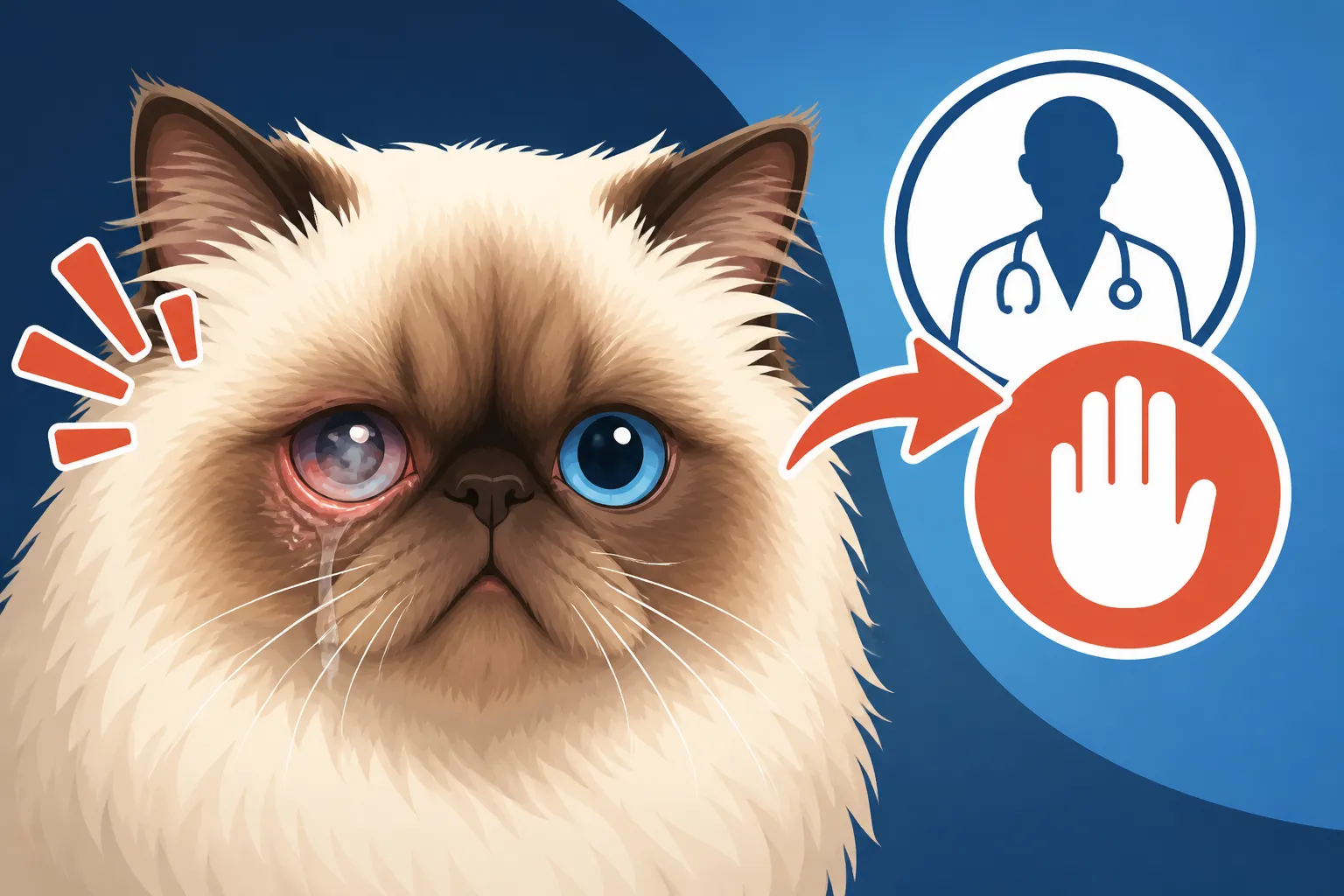
Your Himalayan might not tell you directly that their eye hurts, so it's up to you to be a diligent observer. Don't wait for obvious blood or extreme swelling. Instead, watch for subtle indicators. Common visual cues include squinting or holding one eye partially or fully closed, excessive blinking, or a noticeable increase in tearing. The tears might be clear, or they could appear rust-colored, yellowish, or green, which often signals infection. Look closely at the eye itself: is the white part redder than usual? Is the cornea (the clear surface) cloudy, hazy, or does it have a visible scratch or lesion? You might also notice a difference in pupil size between the two eyes, or the affected eye might simply look duller or less clear than the healthy one.
Beyond the eye itself, pay attention to their behavior. A cat with an eye injury will often rub at their face or eye with a paw, or rub their head against furniture. They might become more withdrawn, less playful, or hide in unusual spots, trying to escape light or stimulation. While a Himalayan is known for its calm demeanor, a sudden shift in their usual routine, like refusing to eat their favorite wet food or being reluctant to jump on their favorite chair, can be a big red flag for pain. Recognizing these changes can help you act quickly. If you want to know How a Himalayan Behaves as Its Sight Goes in other contexts, it can also inform your understanding of eye health.
First Aid Steps and Immediate Vet Contact
The absolute most important first step when you suspect an eye injury in your Himalayan is to call your veterinarian immediately. If it's after hours or on a weekend, call your nearest emergency veterinary clinic. Describe clearly and concisely what you've observed, mentioning that you have a Himalayan and you're concerned about a potential eye injury. Vets understand the urgency associated with this breed's eye health.
Crucially, do NOT try to treat the eye yourself with over-the-counter human eye drops, ointments, or old pet medications you might have lying around. Many human products contain ingredients that are toxic or severely irritating to cats, and even older pet medications might be inappropriate for the specific type of injury or infection present. You could inadvertently make the situation much worse. Resist the urge to Google remedies; time is of the essence, and professional diagnosis is non-negotiable.
While waiting for instructions or en route to the clinic, avoid rubbing or applying any pressure to the eye. If your vet advises, you might gently flush the eye with a sterile, preservative-free saline solution specifically designed for ocular use, but only if they explicitly tell you to. The goal is to get to a professional who can properly diagnose the problem without further delay. This is why a Himalayan's eye injury simply Why a Himalayan's Eye Injury Cannot Wait Until Monday.
The Importance of Emergency Veterinary Care
Let's be blunt: eye injuries are emergencies, full stop. For a Himalayan, this truth is even more pronounced. Waiting until Monday morning for an injury that occurred on Friday or Saturday can literally mean the difference between a successful treatment with a full recovery and permanent blindness or even the need for enucleation (surgical eye removal). The rapid progression of infection and inflammation in their vulnerable eyes means that every hour counts.
Emergency veterinary clinics are staffed 24/7 precisely for situations like this. They have the diagnostic tools, such as fluorescein dye stains to detect corneal ulcers, and immediate access to appropriate medications, including strong antibiotics and anti-inflammatory drugs, that your regular vet might not have on hand after hours. They can provide immediate pain relief and stabilize the condition, giving your cat the best possible chance for recovery.
While it might feel inconvenient or costly to rush to an emergency vet on a weekend, consider the alternative: a much more severe problem that will require more extensive, more painful, and ultimately, far more expensive treatment down the line. Investing in pet insurance, from providers like Healthy Paws, can provide immense peace of mind for these unexpected, urgent situations, ensuring you can make decisions based on your pet's health needs rather than immediate financial concerns. Prioritizing immediate veterinary care is not just about saving your cat's sight; it's about preventing prolonged suffering and ensuring their overall well-being.
Comparing Minor Irritation to Urgent Eye Injury in Himalayans
It can be tough to distinguish between a simple, fleeting irritation and something that needs immediate attention, especially with a breed prone to tear staining. This table might help you decide when to drop everything and head to the vet.
| Symptom / Sign | Likely Minor Irritation (Monitor at home for up to 12-24 hours) | Urgent Eye Injury (Seek immediate veterinary care) |
|---|---|---|
| Eye Discharge | Clear, watery, minimal increase from normal tear staining | Thick, yellowish-green, excessive, bloody discharge |
| Redness | Mild redness, especially if rubbing eye, quickly subsides | Pronounced redness, especially in the white part of the eye, worsening |
| Squinting/Holding Eye Closed | Intermittent, resolves quickly, often after a single rub | Persistent, severe squinting, eye held completely shut, signs of pain |
| Swelling | Very minor, localized, or absent | Noticeable swelling around the eye or eyelid |
| Appearance of Cornea | Clear, shiny, no visible changes | Cloudy, hazy, dull, visible scratch, ulcer, or foreign body |
| Behavioral Changes | Slight increase in rubbing eye, otherwise normal | Hiding, lethargy, loss of appetite, pawing at eye continuously, aggression when touched |
| Pupil Size | Normal and reactive | Uneven pupil sizes (anisocoria), non-reactive pupil |
| Response to Light | Normal | Sensitivity to light (photophobia), cat avoids bright areas |
Remember, if you're ever in doubt, it is always safer to err on the side of caution and contact your vet or an emergency animal hospital.
Disclaimer
The information provided in this article is for educational purposes only and is not intended to be a substitute for professional veterinary advice, diagnosis, or treatment. Always seek the advice of your veterinarian or other qualified health provider with any questions you may have regarding a medical condition or the health and welfare of your pet. Never disregard professional veterinary advice or delay in seeking it because of something you have read in this article.